


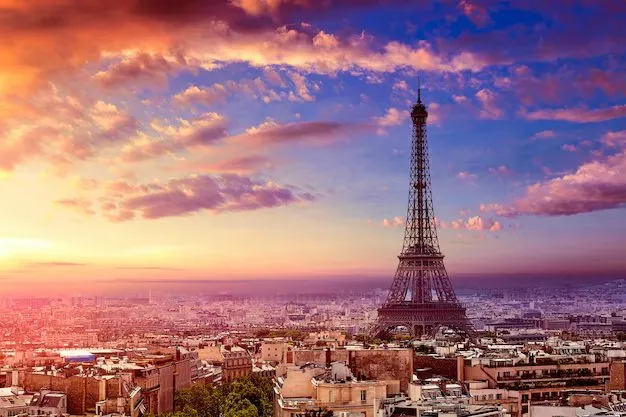
Something happens when you watch Emily in Paris. At some point — probably around episode three — you stop caring about who Emily’s kissing and start staring at the buildings behind her. The light on the limestone. That small square with the fountain and the croissant shop. The ridiculous, almost offensive beauty of it all.
Then the thought lands: I want to go there.
Millions of people have had the same reaction, which is why a handful of quiet Parisian streets now get mobbed by tourists clutching phones and wearing berets they bought at the airport. But here’s what makes the show different from most TV tourism bait — nearly everything you see on screen is real. Emily’s apartment building, Gabriel’s restaurant, the bakery, the office entrance, the bridges, the parks. All there. Mostly within walking distance of each other.
So this is a guide to those actual places. Real addresses, what you’ll find when you show up, and where the show took liberties with the truth. If Paris isn’t in the budget just yet, you could try building up that travel fund on Dragonslots UK while you plan from the sofa — but honestly, just knowing where everything is makes rewatching the show twice as enjoyable.
Emily’s Neighbourhood — Place de l’Estrapade
The show’s centre of gravity is a small square in the 5th arrondissement called Place de l’Estrapade. Latin Quarter, about two minutes on foot from the Panthéon. This is where Emily lives, where Gabriel cooks, where croissants get bought, and where half the drama of five seasons plays out within about fifty metres of pavement.
It’s a genuinely pretty spot. Little garden, fountain in the middle, benches, classic apartment buildings on every side. The kind of place you’d walk past and think “yeah, that’s nice” without necessarily stopping — until Netflix turned it into a pilgrimage site. Fun bit of history the show skips over: “Estrapade” refers to a torture method that was carried out in this square during the 1600s. Doesn’t quite fit the aesthetic.

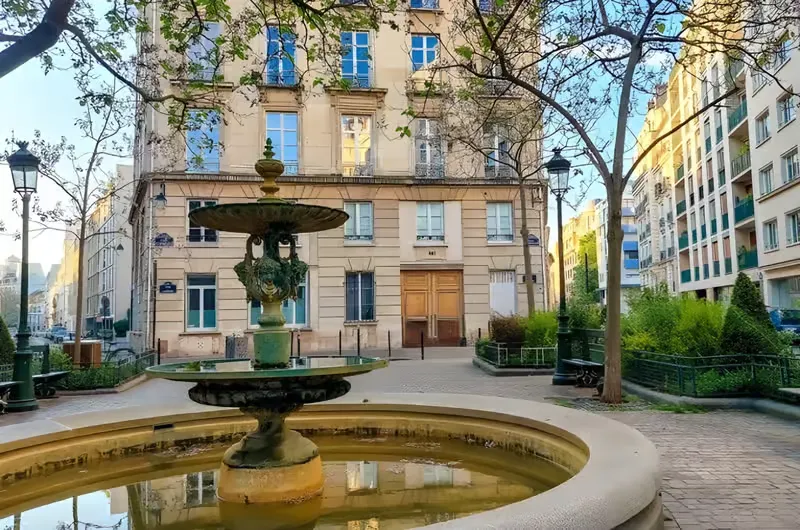
- The apartment building sits at 1 Place de l’Estrapade. Corner of the square, heavy brown front door, narrow spiralling stairs inside that Emily dramatically clomps up and down in heels. The shutters aren’t pink in real life — standard Parisian grey. Interiors are all shot on a soundstage out in the suburbs, but the exterior and the door are the real thing. Gabriel lives here, too, in the show, and later Mindy, Camille, and Sofia all end up in the same building at various points. Expect a queue of people photographing the door. It’s someone’s actual home, so don’t ring buzzers or try to get in.
- Gabriel’s restaurant is at 18 Rue des Fossés Saint-Jacques, right behind the garden, practically facing Emily’s building. The show calls it Les Deux Compères at first, then Chez Lavaux, then L’Esprit de Gigi — because apparently one name wasn’t enough. In real life, it’s Terra Nera, an Italian place that’s been there for years before the show existed. The food is Italian, not French, which always catches people off guard. Reviews since the show blew up are mixed — some visitors love it, others reckon it’s coasting on the Netflix connection. Sitting outside with a glass of wine and a view of the fountain is the main draw.
- The bakery is next door at 16 Rue des Fossés Saint-Jacques. Boulangerie Moderne — and it actually keeps its real name in the show, which is unusual. This is where Emily buys her first pain au chocolat in episode one and gets her pronunciation corrected by a thoroughly unimpressed French woman behind the counter. One thing worth knowing: a local who walks past regularly says the bakery is often shut or boarded up when they’re not filming. If it’s open, grab the pain au chocolat. If it’s closed, there are about forty other excellent bakeries within ten minutes.
Where Emily Works — Place de Valois
The marketing agency — Savoir originally, then Agence Grateau after the split — is in a completely different part of the city from the apartment. The exterior shots use Place de Valois in the 1st arrondissement, a tucked-away little square right beside the Palais Royal and a short walk from the Louvre.
You’ll spot it easily because it sits next to Galerie Patrick Fourtin, an antiques shop. Like most locations in the show, the interiors are built on a set, but that entrance is unmistakable if you’ve seen even a handful of episodes — Emily walks through it constantly.
The surrounding area is worth poking around on its own. Palais Royal gardens are right there (this is where Emily first meets Mindy), and the striped columns of the Colonnes de Buren in the courtyard show up in selfie scenes throughout the series. Good lunch options in this neighbourhood too, which is useful because the Latin Quarter is a 25-minute walk south or one quick Metro ride.
The Bridge Everyone Remembers — Pont Alexandre III
If you remember one single Paris image from the show, it’s probably this bridge. Pont Alexandre III over the Seine. Absurdly ornate, gold-plated sculptures, art nouveau lamp posts, views in both directions that look like someone hired a painter to do the sky. This is where Savoir films the perfume commercial in season one — the scene where Emily first clashes with French advertising culture — and the bridge keeps coming back for key dramatic moments through later seasons.

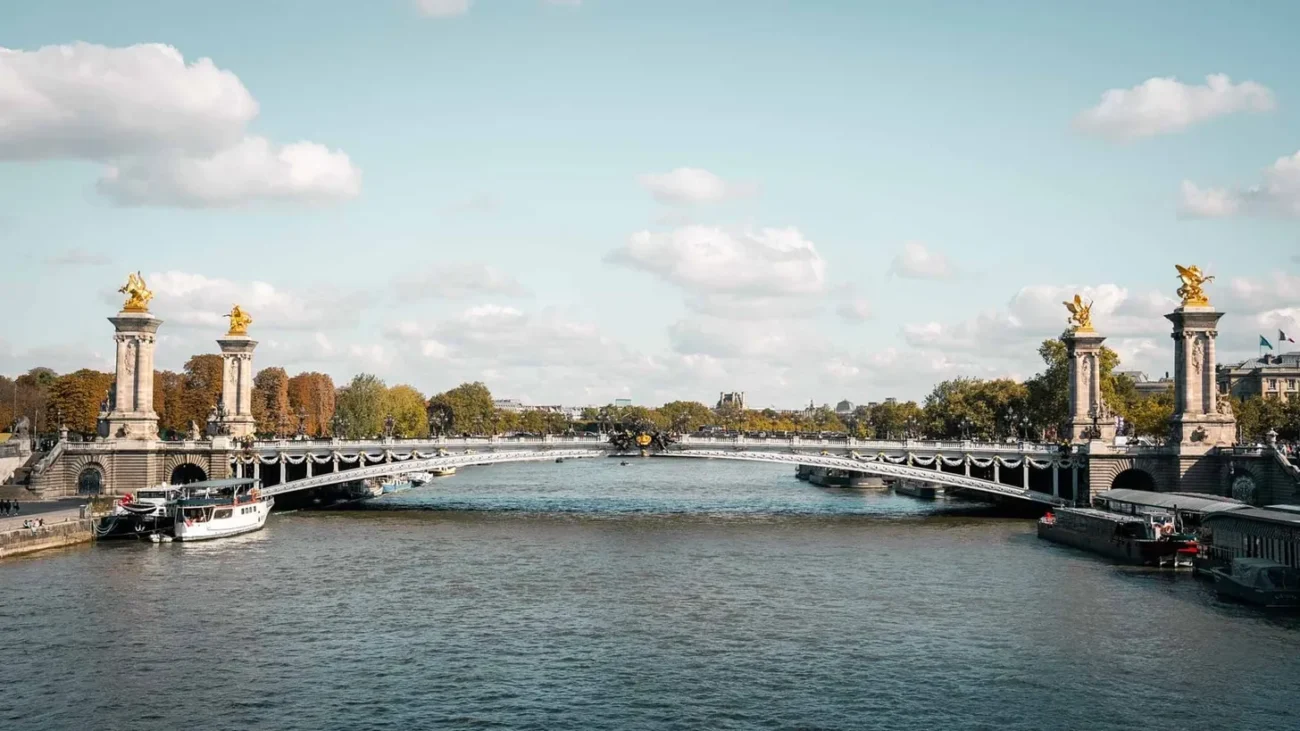
It really is that photogenic. Connects the Champs-Élysées quarter to the Invalides, and sunset is the time to be there if you want the full cinematic effect. It’s free to walk across, obviously, and there’s no wrong angle for a photo.
Emily’s Breakup Spot — The Panthéon
Couple of streets from the apartment, the Panthéon is where Emily stands on the steps while she dumps her boyfriend Doug over the phone in one of the early episodes. It’s the kind of building that makes a breakup feel appropriately dramatic — neoclassical dome, massive columns, the final resting place of Marie Curie, Victor Hugo, Voltaire, and Louis Braille.

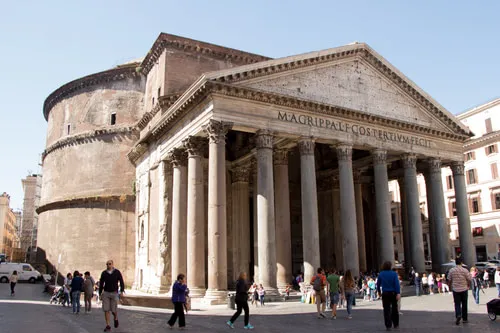
The dome dominates the skyline of the 5th arrondissement and you’ll spot it in the background of outdoor scenes throughout all five seasons. If you’ve got the time and the entry fee, the interior is worth it. If not, just standing on the same steps as Emily and looking out over the square does the job.
Café de Flore — 172 Boulevard Saint-Germain
The show uses Café de Flore as a recurring spot for Emily’s various coffee meetings, friend catch-ups, and romantic near-misses. In the real world, this is one of the most storied cafés in Paris. Sartre and de Beauvoir basically lived here. Hemingway was a regular. It’s been pulling in writers and thinkers since the late 1800s.
A coffee costs more than you’d like — you’re paying for the history and the leather banquettes and the people-watching as much as the espresso. The art deco interior is beautiful though, and the Saint-Germain-des-Prés location puts you in the middle of one of Paris’s best neighbourhoods for wandering afterwards. Get there early for an outside table or you’ll be waiting.
Emily’s Running Route — Jardin du Luxembourg
Emily jogs through the Jardin du Luxembourg, which is one of those Paris spots that looks like it was specifically designed to appear on screen. Formal gardens, tree-lined paths, that octagonal pond where kids sail model boats. It’s in the 5th/6th arrondissement overlap, roughly ten minutes on foot from the apartment.

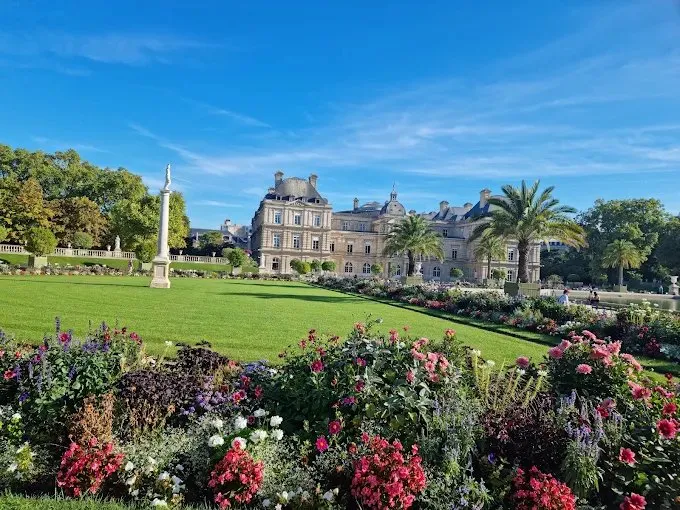
Locals actually use this park — it’s not just a tourist attraction. That makes it feel different from a lot of the show’s more famous locations. If you’re doing the filming spots on foot, it’s a natural stop between the Latin Quarter cluster and the Saint-Germain locations, like Café de Flore.
Montmartre and “The Prettiest Street in Paris”
Several scenes across the five seasons end up in Montmartre, the hilltop neighbourhood in the 18th arrondissement that’s been attracting artists, drinkers, and romantics for over a century. Mindy drags Emily to Rue de l’Abreuvoir and calls it the prettiest street in Paris. She might not be wrong — cobblestones, vine-covered facades, a village atmosphere that feels nothing like the rest of the city.
Montmartre is further out from the Latin Quarter, so treat it as a separate half-day trip rather than trying to cram it into the same walking route. The climb to Sacré-Cœur is steep. Wear real shoes. While you’re up there, Place du Tertre still has street artists with easels, the backstreets are full of character, and there are some properly good restaurants if you dodge the obvious tourist traps.
The Fancy Bit — Place Vendôme
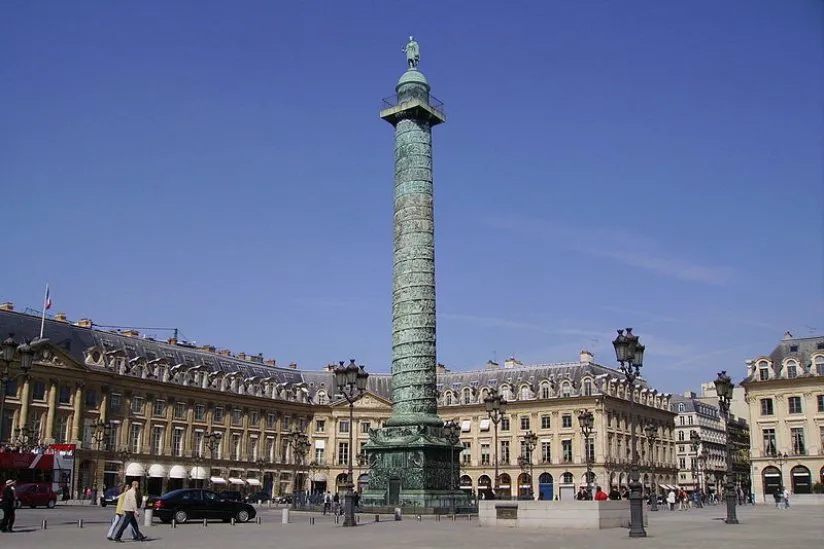
Place Vendôme appears when Emily crosses paths with Pierre Cadault, the eccentric designer. This is the square with the Ritz, the Cartier boutique, the Van Cleef & Arpels shop, and a general concentration of wealth that feels almost performative. Beautiful to walk through, even if you’re spending nothing. Uniform architecture, a tall bronze column in the centre, and the kind of quiet that only exists in extremely expensive postcodes. In the 1st arrondissement, easy to combine with the Savoir office visit.

The Opera House — Palais Garnier
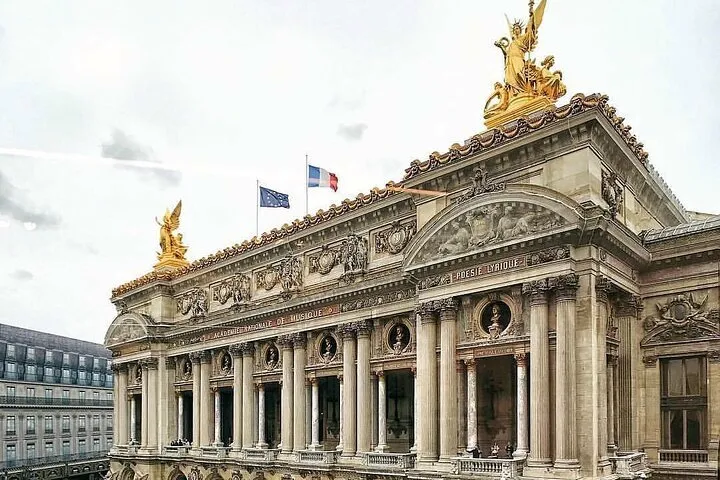
Emily attends a ballet here with Thomas, the philosophy professor who turns out to be exactly the pretentious bore Gabriel warned her about. (“Swan Lake is for tourists.” Charming.) The Palais Garnier is a 19th-century building that somehow manages to be even more extravagant inside than out — grand staircase, Chagall ceiling, gilded everything.
You don’t need a show ticket to visit. Daytime self-guided tours get you into the public areas, and it’s far less crowded than most big Paris attractions. If you do want to see a performance, book well ahead.

Further Out — Loire Valley, Versailles, and Rome
The show doesn’t stay in central Paris forever. Camille’s family vineyard scenes use the Château de Sonnay in the Loire Valley. The French Riviera pops up in later seasons. Season five splits between Paris and Rome, with Emily running the Italian office out of spots like Piazza Costaguti and Palazzo Fendi.
Versailles gets a big moment too — the Hall of Mirrors hosts a fashion show scene. It’s about 45 minutes by train from central Paris, and you’ll need timed tickets bought online beforehand. Budget a full day. Don’t try to squeeze it into your Latin Quarter morning — you’ll rush both and enjoy neither.
If You’re Actually Planning the Trip
Some practical stuff:
- The Latin Quarter locations are clustered tightly. Apartment, restaurant, bakery, Panthéon — all within five minutes of each other. You could see everything in under an hour, or stretch it over a morning with stops for coffee and food.
- The 1st arrondissement spots (Savoir office, Palais Royal, Place Vendôme) are about 25 minutes north on foot, across the Seine. Or one Metro ride if your feet are done.
- Montmartre is its own trip. North of the city, uphill, and best given a proper half-day rather than being tacked onto the end of a long walk.
- Terra Nera gets rammed with fans. Weekday lunch is calmer than weekend dinner. Or photograph the exterior and eat somewhere else nearby — the Latin Quarter has no shortage of brilliant restaurants.
- Be decent at the apartment. It’s a real residential building. Photograph the outside, enjoy the square, don’t camp by the door or hassle the neighbours. They’ve been dealing with this since 2020.
- Allow 2–3 hours for a central walking tour, more if you’re stopping to eat and drink. A full day covers everything, including Montmartre, comfortably.
The show makes Paris look hyperreal — colours cranked up, light always golden, every shot perfectly composed. Actual Paris isn’t quite that polished, but it doesn’t need to be. The real streets, squares, and buildings are plenty beautiful on their own. And standing where they filmed specific scenes gives you that satisfying little jolt of recognition — the screen version overlaid on the real thing, and somehow the real thing holds up.