


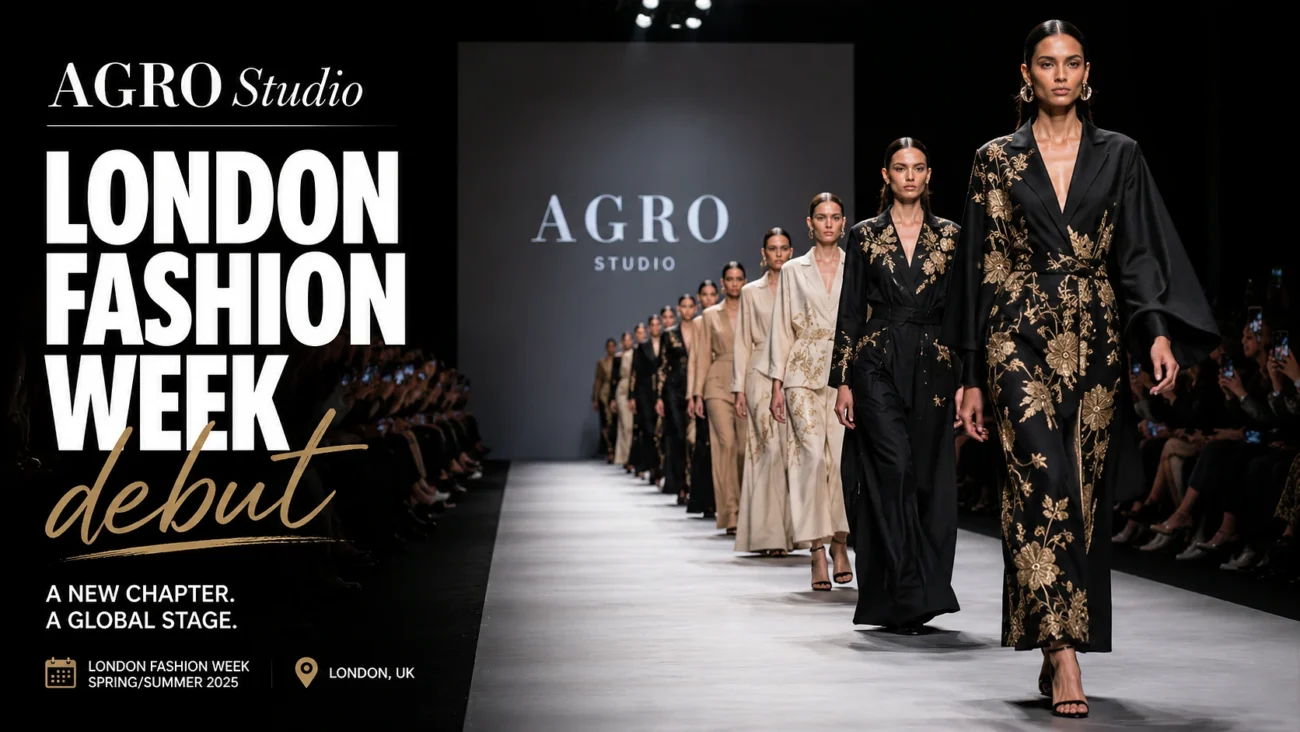
A few weeks before AGRO Studio’s first show on the official BFC schedule, co-founder Angus Cockram was in their East London studio near Hackney Central dealing with a bespoke order from Charli XCX that had come in that morning and was needed by the evening. That’s not unusual for them. The studio has built its reputation making custom pieces for Beyoncé, Lady Gaga, PinkPantheress and Zara Larsson, turning around high-pressure commissions under timelines that would flatten most houses. But the February show was different. This wasn’t a one-off piece for a pop star’s stylist. This was The Wanderer, a full AW26 collection presented on the main London Fashion Week schedule on Thursday 19 February at 13:00, and it was the first time AGRO had been on the official BFC lineup.
The backstory matters because it wasn’t exactly a smooth climb to get there. George Oxby, who co-founded and co-directs the house with Cockram, told Man About Town that their previous season had been shown through Fashion Scout, and the whole thing was put together in two and a half weeks with no creative control over the environment, models or production team. “We’re super grateful for everyone involved with that,” Oxby said, “but it didn’t feel like the honest truth or a true expression of what we wanted to do.” The AW26 show on the official schedule was a deliberate correction full creative control, proper lead time, and a footwear collaboration with Untitlab built into the collection.
In a separate interview with 1883 Magazine, Oxby was blunter about the business reality underneath. Asked what people misunderstand about building a fashion house, he didn’t talk about fabric or silhouette. “In reality it’s infrastructure,” he said. “Cash flow, production timelines, supplier relationships, contracts, VAT returns. The creative output is only possible because of a lot of invisible systems underneath it.”
That honesty sat alongside a real structural change happening at the BFC. New CEO Laura Weir waived show fees for the second consecutive season at the February 2026 edition of LFW, covering designers presenting physically on the main schedule. Fashionista, Drapers and FashionNetwork all confirmed it. Weir, who joined from Selfridges, introduced the waiver for the September 2025 season and has also doubled the BFC’s investment in the international guest programme to bring more overseas press and buyers to London. She’s been vocal about stopping the loss of British design talent to Paris and Milan, which she’s attributed not to creativity but to “a lack of infrastructure to support our designers to make, create, show and importantly to scale in this country.”
The infrastructure language is almost identical to what Oxby was saying about AGRO. The fee waiver helps, but the total cost of a runway show runs well beyond the scheduled fee venue, production, models, hair and makeup, PR, sample production to runway-finish standard, fittings, rehearsals, and backstage logistics. For an emerging house operating on a small-batch and made-to-order model out of an East London studio, committing to the official schedule carries real financial weight. AGRO was listed alongside Clara Chu, Ewenki, Gravalot, Liberowe, Raw Mango and Selasi as first-time additions, sitting on the same week as Burberry (who closed the entire event on Monday evening), Erdem, Simone Rocha, Richard Quinn and a returning Temperley London, back for the first time since September 2019.
The collection itself pulled references from all over the place and somehow made them cohere. Icelandic sheepskin in raw rusts and greys. Aviator leathers. Distorted flags painted onto silk, reading almost as camouflage. Outerwear referencing the theatrical designer Léon Bakst. Underneath all of that, the AGRO signatures corsetry, engraved denim, hand-dyed knits, high-shine PVC — worked alongside structured tailoring in a way that felt deliberately contradictory. Oxby described the tension as “protection and exposure existing at the same time,” and cited everything from King Lear to club culture, folklore to what he called “engine oil and sweat.” The mood was endurance and movement. A wanderer collecting wear and memory, not arriving anywhere particular, just going.
The SS26 collection shown the previous September had been called Prophet, which Oxby described as “a zeitgeist of where we want to go.” The Wanderer was the next step in that direction, and the shift from Fashion Scout to the BFC schedule came with a noticeably more resolved production. Cockram told Man About Town that the studio specialises in “made-to-measure work for leading figures in music and performance,” and that understanding of staging, timing and visual impact clearly carried over into how the runway itself was handled.
Oxby’s answer about what he hopes lingers was the one that stuck. “A mood,” he said. “A sense of atmosphere. If people leave carrying the feeling of the world we built, rather than just remembering individual looks, then it’s done what it needed to do.”
Whether The Wanderer achieved that is partly subjective and partly down to what the press and buyers do with it over the coming months. The next London Fashion Week runs 17 to 21 September 2026, and whether AGRO returns to the main schedule will depend on whether the AW26 show converted that first official appearance into the kind of industry relationships, stockists, press coverage, and editorial placement that justify the cost of doing it again.
What’s less subjective is that the house went from a two-and-a-half-week Fashion Scout show to a full official-schedule debut in one season, while simultaneously turning around same-day bespoke orders for one of the biggest pop artists in the world, and the founder was openly talking about VAT returns while doing it. That combination of creative ambition and operational honesty isn’t common at any level of fashion.