


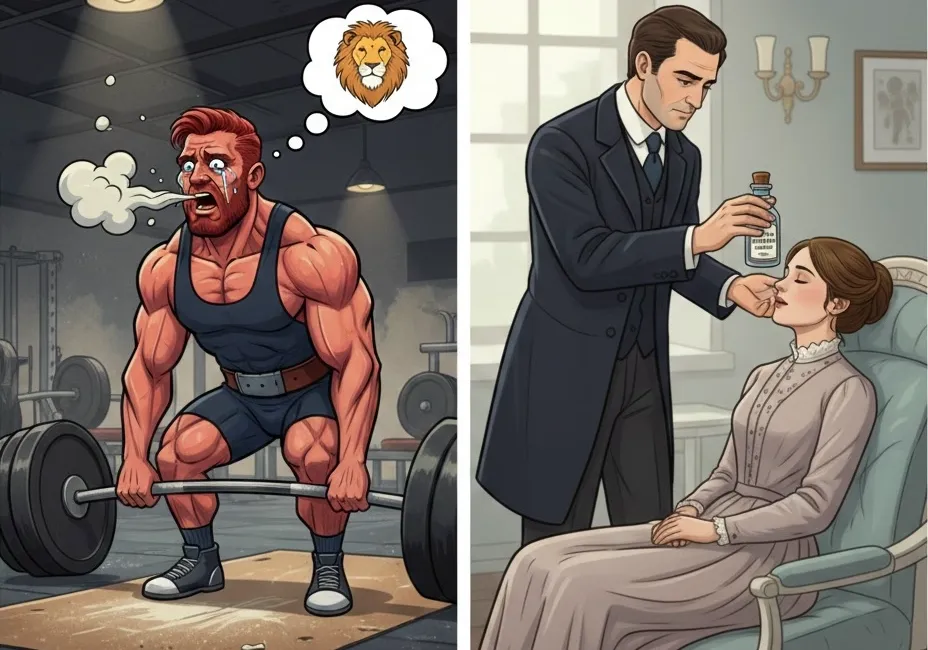
If you’ve ever watched a powerlifter at a competition, chances are you’ve seen it — some enormous bloke snaps a capsule under his nose, his eyes go red, his face twists like he’s been slapped, and then he calmly walks over to a barbell and deadlifts the weight of a small car. It looks insane. It is a bit insane. And yet it’s become so normal in strength sports that nobody blinks anymore.
Smelling salts have been around for centuries. Doctors in the Victorian era cracked them under the noses of fainting patients to bring them round. Sports trainers stashed them in first aid kits. Somewhere along the way, gym culture picked them up and turned them into a pre-lift ritual right alongside chalk, wrist wraps, and questionable grunting.
But the safety picture shifted in 2024 when the US Food and Drug Administration issued a formal consumer warning about ammonia inhalant products marketed for alertness and energy. Then in 2025, the NFL pulled them from sidelines over concussion concerns. So the question’s become a bit more pressing: are these things actually safe, are they doing anything useful, and should you be sniffing them?
What Are They?
The technical name is “aromatic ammonia spirit.” Less romantic than “smelling salts” but more accurate. They’re a mix of ammonium carbonate, water, and alcohol — sometimes with added scent, though the ammonia does most of the talking. They come in single-use capsules you snap to activate or bottles you uncap and waft under your nose.
The active bit is ammonia gas. When the capsule breaks or the bottle opens, ammonia vapour escapes. It’s seriously pungent. If you’ve ever caught a noseful of heavy-duty cleaning product and had your head snap back involuntarily, that’s a mild preview of what concentrated smelling salts feel like.
What Happens When You Inhale Them
Ammonia vapour irritates the mucous membranes in your nose and lungs. Your body doesn’t appreciate that, so it fires off an involuntary gasp — a hard, sharp inhale that spikes your breathing rate, heart rate, and blood flow to the brain. It’s basically tricking your nervous system into a fight-or-flight response without any actual danger being present.
The whole process takes seconds. You go from flat and drowsy to wide awake and buzzing with adrenaline. That heightened state sticks around for anywhere from a few seconds to a couple of minutes, then drops off. No lasting changes to blood pressure or anything else. It’s a jolt, not a shift.
What They’re Actually Good For
Two things, and they’re quite different.
Bringing someone round after they’ve fainted. This is the original use and it works. The sharp ammonia stimulus triggers a reflex that rouses someone who’s lost consciousness. Aromatic ammonia spirit is listed in drug databases specifically for treating syncope (the medical term for fainting).
A pre-lift wake-up in sport. This is where it gets complicated. A 2014 survey of 256 International Powerlifting Federation athletes found that nearly half had used ammonia inhalants during competition (Pritchard, Stannard & Barnes, 2014 — Journal of Australian Strength and Conditioning). Among users, the deadlift was the overwhelming favourite: 89.7% cracked a capsule before pulling. And 78% believed it actually made them lift heavier.
The catch is that believing it works and it actually working aren’t the same thing. A 2018 study tested ammonia inhalation against a water control before deadlift one-rep max attempts (Vigil et al., 2018 — Journal of Strength and Conditioning Research). No significant difference in the weight anyone lifted. The adrenaline hit is real. The feeling of being more alert is real. Whether that turns into measurably heavier weight on the bar in a single max effort — based on what’s been studied so far — probably not.
There’s some suggestion they might help more during repeated high-intensity bouts when fatigue’s already built up. Late in a long powerlifting meet, for instance, when you’re mentally and physically drained and you’ve still got a third-attempt deadlift to pull. That scenario hasn’t been studied enough to say anything definitive, though.
So the honest version: smelling salts reliably make you feel sharper and more awake. Whether they make you genuinely stronger is mostly psychological. And that’s not worthless — confidence and aggression matter in strength sport — but it’s worth knowing where the line between real and perceived sits.
The Risks
Mild side effects are common and not particularly alarming. Coughing, watery eyes, a runny nose, brief headache, sometimes nausea. You’re voluntarily inhaling an irritant gas, so your body reacting to that isn’t exactly surprising.
It’s the more serious stuff that matters.
| Risk Level | What Happens | Most Likely To Affect |
|---|---|---|
| Mild (occasional use) | Coughing, watery eyes, temporary headache, nausea | Healthy adults using infrequently |
| Moderate (frequent use) | Burns to nasal passages, tolerance requiring stronger doses, elevated heart rate | People using them regularly in training |
| Serious (misuse or underlying conditions) | Chemical burns to tissue or eyes, whiplash-type neck snap, bronchospasm, worsened respiratory disease | Anyone with asthma, COPD, heart problems, or head injuries |
The neck injury one surprises people. The involuntary gasp from ammonia can involve a violent head jerk — especially if someone else holds the capsule under your nose without warning. In a contact sport where players are already dealing with neck strain and potential concussions, that sudden reflex snap is a real problem.
Which leads to the biggest controversy. Smelling salts can temporarily make a concussed person seem more alert and cognitively sharp than they actually are. That means someone with a brain injury might pass a sideline assessment when they shouldn’t be back on the pitch at all.
This is exactly what drove the NFL’s decision. In August 2025, the league’s Head, Neck and Spine Committee recommended banning teams from providing smelling salts to players during pregame, games, and half-time. The recommendation followed an incident where Bills quarterback Josh Allen was handed an ammonia packet by team staff right after emerging from a medical tent, having just been cleared of a concussion. The NFL cited the FDA’s August 2024 warning, which stated that manufacturers marketing ammonia inhalants for alertness and energy had not demonstrated their products to be safe or effective. The league sent a memo to all 32 clubs.
The NFLPA clarified within a day: the policy doesn’t ban player use. It stops teams from supplying the product. Players can still bring their own. George Kittle said he was “distraught.” 49ers guard Nick Zakelj called it a “meathead thing” and brought his own stash to camp. So the salts haven’t disappeared from football — they’ve just shifted from team-issued to bring-your-own.
For anyone using them heavily or over a long period, there’s another layer. Prolonged ammonia exposure can damage lung tissue and nasal passages. At extreme concentrations — we’re talking industrial-level, not gym capsule level — it can be lethal. The trace amounts in smelling salts are far below that threshold. But repeated daily use, especially with increasingly strong formulations as tolerance builds, pushes you into territory where nobody’s studied the long-term effects properly.
Who Should Stay Away
Some people shouldn’t touch them. Not “be careful.” Shouldn’t use them at all.
Asthma, COPD, or any chronic respiratory condition. Ammonia vapour can trigger a bronchospasm or a full attack. The irritant effect that’s just unpleasant for healthy lungs is actively dangerous when your airways are already compromised.
Heart conditions and high blood pressure. The fight-or-flight spike in heart rate and blood pressure isn’t something you want happening if your cardiovascular system is already under strain. It’s a sudden, involuntary jolt — you can’t control the intensity of the response once it’s triggered.
Pregnancy and anyone under 18. Not enough is known about the effects in either group, and the risk-reward calculation doesn’t make sense.
History of seizures. The FDA’s adverse event reports from consumers who used ammonia inhalant products included seizures among the documented reactions.
Recent head injury of any kind. If you’ve taken a knock to the head — in any sport, at any level — smelling salts are the worst thing you can reach for. They can mask the symptoms that tell medical staff you need attention, and the involuntary head snap can worsen an existing neck or brain injury.
If you’re not sure whether they’re safe for you personally, talk to a doctor before trying them. That applies even if you think you’re perfectly healthy.
How to Use Them Properly
For a healthy adult using smelling salts occasionally — before a competition lift, say — the risks are low if you follow some basic sense.
Distance matters. Hold the capsule or bottle 10 to 15 centimetres from your nose. That’s roughly 4 to 6 inches. Jamming it right against your nostrils is how you get chemical burns to the inside of your nose, and that’s a genuinely unpleasant injury.
Quick exposure. One to two seconds of wafting is plenty. The reflex triggers almost instantly. You’re not trying to inhale as much ammonia as humanly possible.
Ventilation. Do it somewhere with airflow. Not in a tiny changing room where the vapour hangs in the air and everyone around you cops a dose they didn’t ask for.
Never use on someone with a head injury. If a person’s been knocked out from a blow to the head, the last thing they need is a violent involuntary head jerk from ammonia. Call for medical help. Don’t play doctor.
Keep it off your skin and out of your eyes. Concentrated ammonia burns. If it gets in your eyes, flush with water immediately and keep flushing.
Single-use capsules over bottles. Capsules give a consistent dose. Bottles lose potency once opened (store them sealed, somewhere cool and dark) and it’s harder to control the concentration.
Don’t build a habit. If you’re using smelling salts every training session, you’re building tolerance. You’ll need stronger hits to feel the same effect. That pattern leads to the moderate and serious side effects in the table above. Save them for comp day or genuinely maximal sessions.
Quality varies enormously between products, and after the FDA sent warning letters to seven different manufacturers in 2024, it’s worth paying attention to what you’re buying. If you want options specifically formulated for gym and competition use, you can browse smelling salts online from Cerberus Strength to compare what’s available.
Alternatives
Cold water splashed on the face does a surprisingly effective job of waking you up. It triggers the mammalian dive reflex — a genuine physiological response that increases alertness and heart rate without inhaling anything.
A few hard, deliberate breaths — deep inhale through the nose, sharp exhale through the mouth — can sharpen focus before a heavy lift. It’s not as dramatic as ammonia but it works.
Caffeine is the most researched ergogenic aid in existence and actually has evidence supporting its effect on strength performance. The timescale is different (you need it 30 to 60 minutes before, not 5 seconds), but it does the thing smelling salts mostly just make you feel like they’re doing.
Light movement — dynamic stretches, a brisk walk, some bodyweight squats — gets blood moving and pulls you out of that sluggish fog without any substance at all.
And if you keep feeling faint or lightheaded, that’s not a smelling salts problem. That’s a medical problem. Recurring fainting episodes can signal cardiovascular or neurological issues that need actual investigation from someone who went to medical school.
When to Call for Help
If someone doesn’t come round after smelling salts, call an ambulance. Prolonged unconsciousness is a medical emergency regardless of the cause.
Stop using them and get help if you experience severe breathing difficulty, chest pain, persistent dizziness, or any allergic reaction — swelling, hives, wheezing. These aren’t typical responses, but they’re documented. The FDA’s adverse event reports from ammonia inhalant users included shortness of breath, seizures, migraines, vomiting, diarrhoea, and fainting.
Smelling salts are not medical treatment. They give you a few seconds of heightened alertness. If the underlying issue is a concussion, a cardiac event, or repeated fainting episodes, they’ll either mask it or make it worse.
So, Are They Safe?
For a healthy adult who uses them occasionally and correctly — yeah, mostly. The risks at that level are mild and temporary. The ammonia concentration in a single capsule is well below anything dangerous for someone with normal lung and heart function.
For anyone with respiratory issues, heart problems, or a recent head injury — no. Genuinely not safe. The fight-or-flight response they trigger is exactly the wrong thing for compromised lungs or an overtaxed heart, and the concussion-masking risk is serious enough that the NFL and FDA both moved on it.
The performance question is its own thing. Nearly half of competitive powerlifters use them. The vast majority think they work. The research says the perceived benefit is probably more psychological than physiological — at least for single maximum efforts. Whether that matters to you depends on how much you value the mental side of lifting heavy, and for a lot of people, that mental edge is the entire point.
Use them sparingly. Use them properly. If anything feels wrong — tightening in your chest, a headache that won’t clear, breathing that doesn’t settle — put them down and see a doctor.