



So you’ve decided you want to learn hair extensions. Maybe you’re stuck in a job that pays the bills and nothing else, maybe you’re already a stylist and tired of watching clients spend hundreds somewhere else for a service you could be doing yourself. Either way you’ve started looking at courses, and that’s usually where it gets confusing, because every academy says the same things. Award-winning. Leading. Beginner-friendly. After three websites it all blurs together.
Here’s the thing worth knowing before you spend anything. Extensions are real money now. KM Hair Extension Training reckons the UK market is worth around £3.7 billion a year, and even if that exact figure is a bit of marketing, the everyday version is simple enough — a single fitting on a high street can run from £399 to well over £1,500. That’s what pulls people in. Career-changers with no salon background at all, mobile stylists wanting one high-value service instead of ten cheap ones, hairdressers who’ve spent years watching that money walk out of the chair and into someone else’s till.
But a certificate on its own won’t get you booked. Plenty of people finish a course, get the laminated proof, and still can’t take a paying client the week after because they practised on three heads and froze on the fourth. What separates a good course from a forgettable one is whether you leave it actually able to work. Small groups so the tutor sees your hands. A kit that doesn’t need topping up before your first job. And someone you can message on a Friday night when a fitting has gone wrong and the client is still sitting there. Those things matter far more than a logo on a wall. Here are four UK academies that hold up when you look past the marketing.
#1 By Danielle Alexandra
By Danielle Alexandra has trained somewhere over 770 students since 2016, and what’s more telling than the number is the focus. This isn’t a general hairdressing school that does a bit of everything. It’s built around hair extensions and hair loss work, and that shows in what it teaches — nano beads, tape-ins, weave, the methods that genuinely book out, plus partial mesh integration for hair loss clients. That last one is a quietly useful niche. Most beginner courses skip it completely, and hair loss clients tend to be loyal in a way that fashion-led extension clients sometimes aren’t.

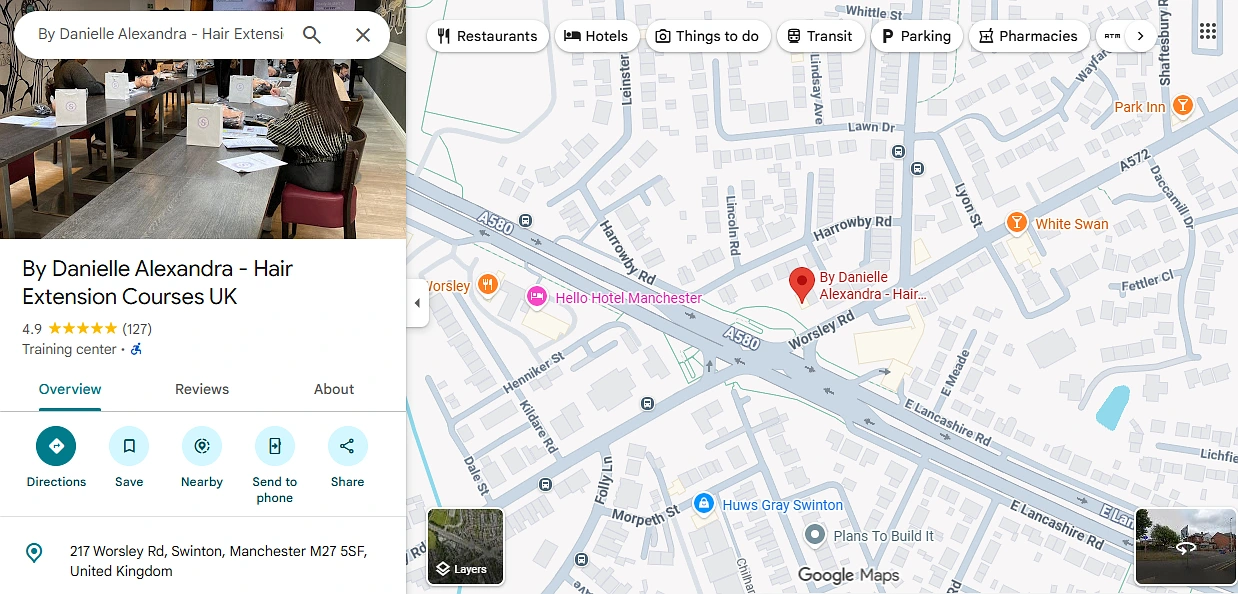
The main beginner course is a one-day intensive, currently £599 with a professional kit included, and the class is capped at 14. Training runs in Manchester, London and Birmingham, with online options as well. It’s all ABT accredited. You can spread the cost through Klarna, which for someone changing careers without much in savings is often the difference between starting this year and putting it off.

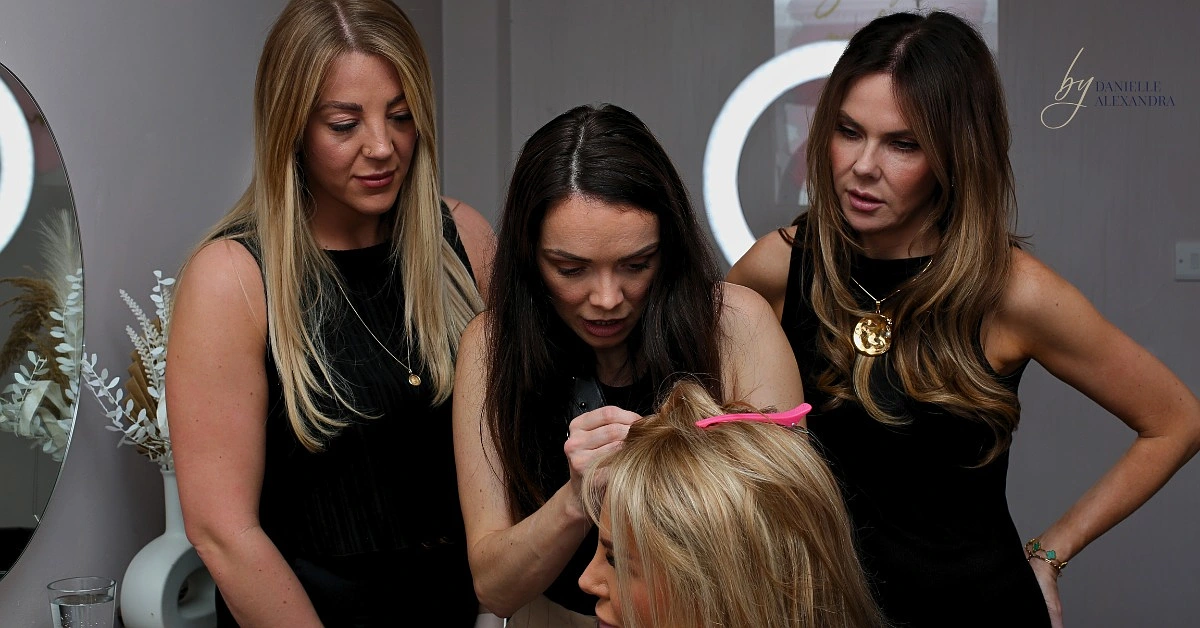
What reviewers keep mentioning isn’t the certification. It’s Danielle’s patience with people who walk in knowing nothing. You read review after review from career-changers who admit they turned up anxious, no hair background whatsoever, and the pace settled them quickly. One honest thing to check though. That one-to-one warmth is easiest to deliver in a small room, and a fuller class of fourteen is a different setting — if the personal attention is what you’re paying for, ask which session you’re being booked onto. Across more than a hundred Google reviews the academy holds a 4.9, and there’s a graduate community and direct WhatsApp access to the tutor afterwards.
#2 Maxwell Melia
Maxwell Melia runs at a different scale, and the thing it does best is reach. Courses run across 23 UK locations — Belfast, Bristol, Edinburgh, Exeter, Glasgow and plenty more. If you don’t happen to live near Manchester or London, that isn’t a small detail. For a lot of people it’s the whole decision.


The headline option is a complete four-method extension course, and the academy leans hard on making the money work. The cost can be spread interest-free over 12 months through Pay It Monthly, or you take 10% off by paying in full. There’s a guaranteed pass as long as you complete your assessment within three months, feedback on the work you submit, and free refresher courses for up to three months afterwards if your confidence hasn’t quite caught up with your certificate — which, honestly, is a more common gap than the brochures admit. For anyone who’d rather learn at their own pace, online courses start from £145 per method.

It also goes broader than extensions, and that’s the reason to take it seriously if you’re thinking a few moves ahead. There’s hair loss integration training, men’s hair replacement, and a Level 3 Award in Education and Training — the actual qualification you need if you ever want to teach your own courses one day. The academy is part of the Associated Beauty Therapists and has won Best Hair Extension Academy awards in past years. Take “award-winning” with the usual caution, but having that spread of courses under one provider is a genuine advantage.
#3 KM Hair Extension Training
KM calls itself the UK’s leading hair extension academy. So does nearly everyone else on this list, so file that claim where it belongs. The detail that actually stands out is its claim that training has been delivered to Toni & Guy salons. If that holds up it’s a far better credential than the word “leading”, because it means working salons sent their staff there.

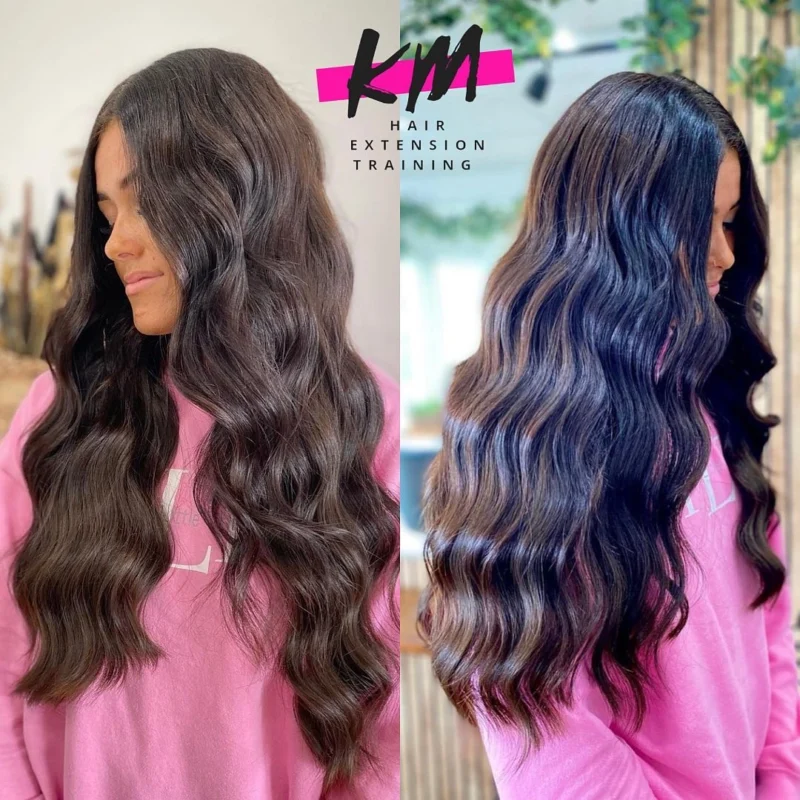
The course names are pure marketing theatre — “Bond Like a Boss”, “Ultimate Glue Free”, a one-day weaving masterclass. Underneath the branding the offering is sensible enough. Accredited courses covering micro rings, nano rings, tape and shrink tubes, taught in major UK cities, with a free kit included. KM also makes a point of taking complete beginners, so a lack of hairdressing experience isn’t a barrier to getting on a course.

One thing does need flagging, because it’s the kind of figure that quietly sets people up for disappointment. KM mentions trainees going on to earn £300 to £2,000-plus a week. Read that as a ceiling, not an average. The upper number assumes a full client book, regular maintenance appointments coming back round, and someone working extensions full-time rather than as a weekend thing. It’s what’s possible on a very good run. It isn’t what most people earn in their first month.
#4 SW Hair Training Academy
SW Hair Training Academy is the longest-running provider here, with over 20 years of fitting and styling extensions. Where the others sell speed and accessibility, SW sells the paperwork — which sounds dull until you remember why it matters.

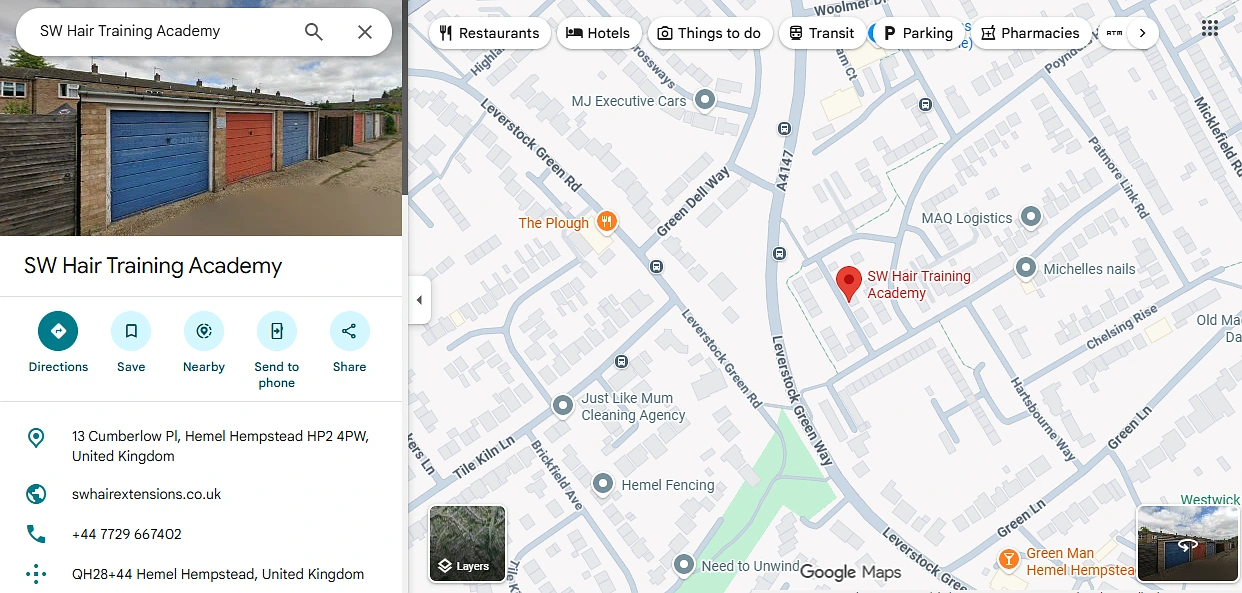
Its courses are CPD accredited and written to meet government-specified National Occupational Standards, and the trainers carry serious credentials — Level 3 and Level 4 NVQs in Hairdressing, a Higher National Diploma in Trichology, assessor and internal verification qualifications. Here’s the practical reason that should affect your decision. When you go to arrange insurance to take clients of your own, the insurer wants to see recognised accreditation, and a thin certificate from a quick weekend course can become a problem at exactly the wrong moment. That paper trail is what stops the conversation before it starts.

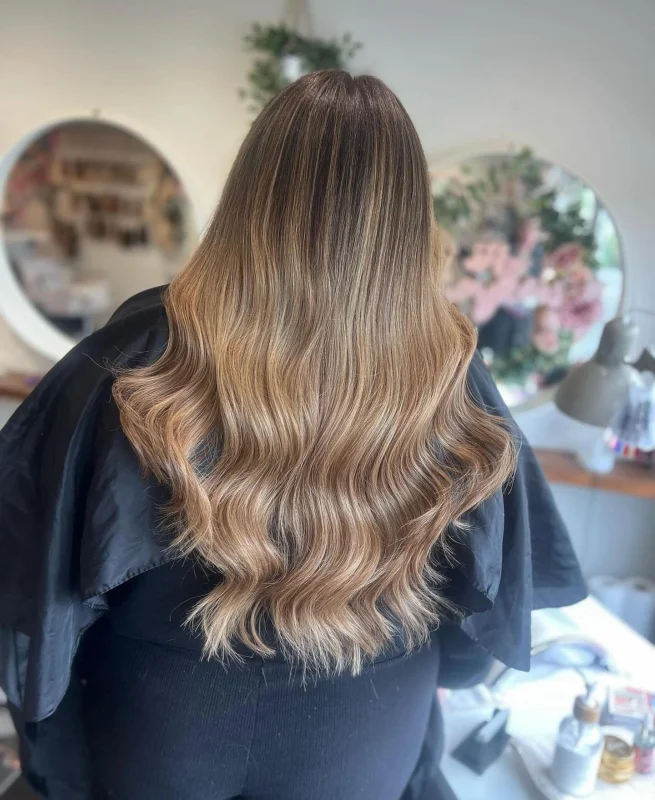
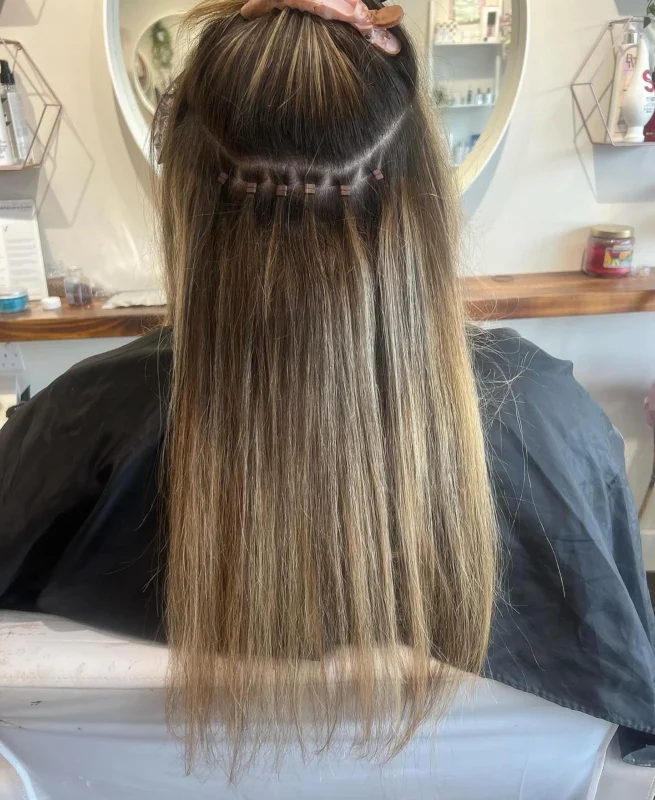
Courses usually run one to two days, taught in small groups or one-to-one at the London training salon, at locations around the UK, or on-site with your team. SW also supplies extension hair across a range of grades — Indian Remy through to Russian Slavic and European virgin hair — so you can keep sourcing stock from the same people you trained with rather than gambling on a stranger’s supplier. Phone and email support carry on after the course ends.
A Few Things to Weigh Before You Book
Decide first whether you actually want one intensive day or something slower and more drawn out. That answer says more about how you learn than about the course itself. Check, before you pay rather than after, that the accreditation is recognised by the specific insurer you intend to use. And look hard at what happens once the certificate is in your hand, because that’s where these academies really differ.
Speed and price are easy enough to compare on a webpage. What isn’t on the webpage is whether anyone picks up the phone when your first real client is sitting in front of you, half-fitted, watching your face for signs of panic. The academies that stay reachable at that moment are the ones earning their fee. With extension demand still climbing across the UK, the right course isn’t really an expense — it’s the first appointment you book.