


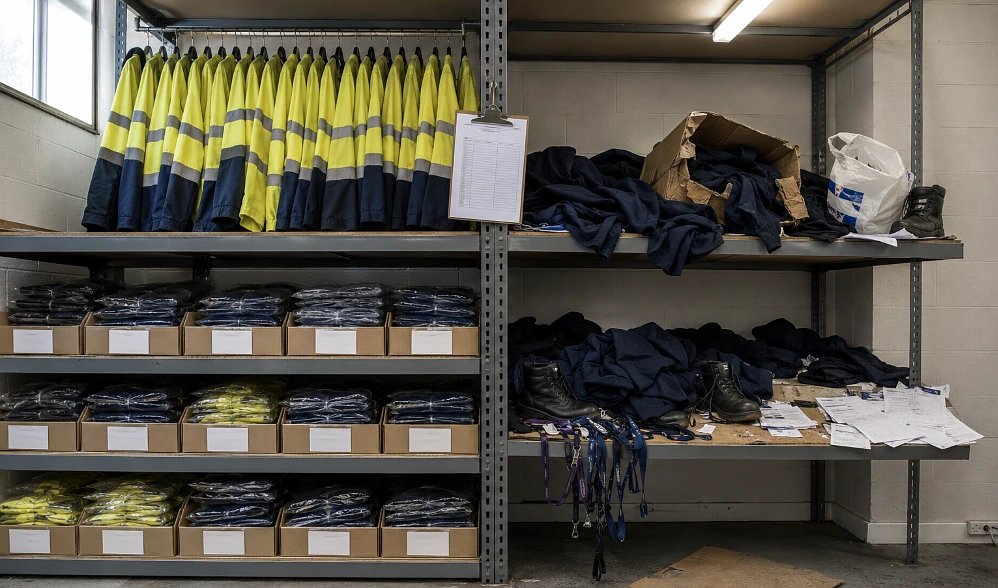
A housing association in County Durham recently went out to market for workwear. The contract ran from March 2026 to February 2028, with an option to extend to 2030. Four years, planned from the start.
It also split the team in two, repairs and maintenance separately from office staff, and listed each garment category on its own line. Occupational, industrial, weatherproof, corporate, protective and safety.
Most fifteen person businesses order some branded polos and do the same thing again when they go bobbly.
The PCIAW Summit Is the One UK Event Where Uniform Buyers and Manufacturers Meet
The Professional Clothing Industry Association Worldwide runs it, and the 2026 Summit, Exhibition and Awards returns to London, with award entries open since spring.
What makes it different from a general trade show is the Uniform Buyers’ Network, the procurement side of the industry. The event exists mainly to get those buyers in front of manufacturers directly.
At the 2024 edition in Birmingham, chaired by Ed Grigg of Incorporatewear, the themes were traceability, supply chain resilience, digitalisation and designing out waste. Twenty one awards across design, manufacturing, supply and innovation.
Traceability Questions Reach Small Firms Through Their Clients, Not Through Regulators

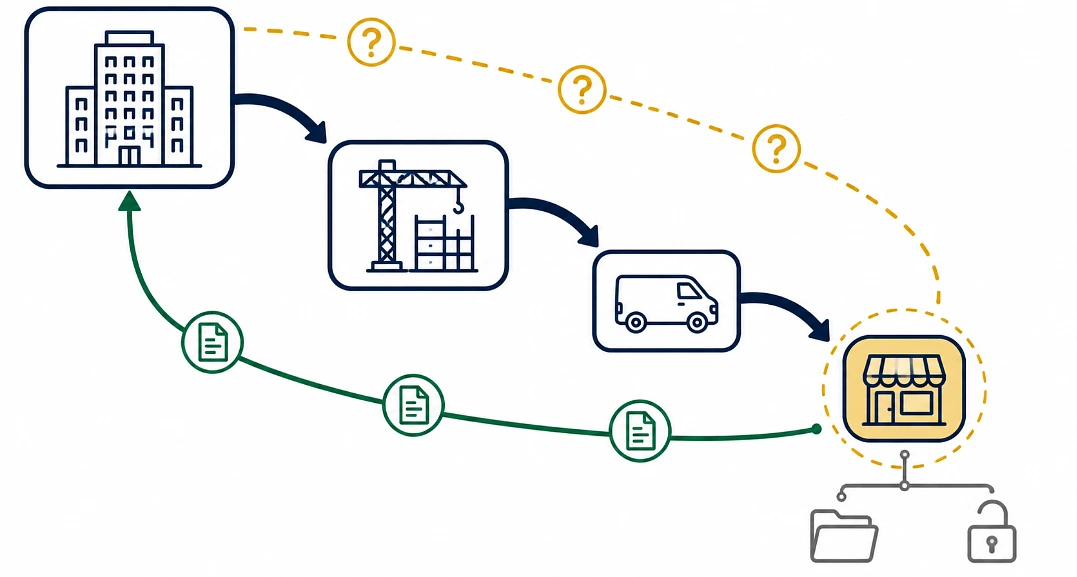
This is the part that only gets explained after it has cost you something, and I am going to take the long way round because the short version always sounds like scaremongering when it is really just how the market works now. The traceability conversation happening at the top of this industry does not stay at the top, it moves downhill, because the people asking those questions are the same people your clients are trying to win contracts from. A main contractor gets asked to evidence its supply chain, so it asks its subcontractors, so somebody asks you, and a nine person business is suddenly being asked which mill the fabric came from and whether the garments meet a standard your office has never heard of. If you bought workwear from three different places across four years with no record of any of it, you cannot answer, and “we just get it from wherever” is the answer that loses the work. It is not a moral argument about sustainability. It is a paperwork argument about whether you can produce a spec when somebody asks for one. The same applies to safety, because if your team goes anywhere near a site, the PPE and high visibility elements are legally your problem and not your supplier’s, and being able to say what you issued, to whom, when, and to what standard is the difference between a routine insurance conversation and a very bad one. Big buyers solved this years ago by treating workwear as a managed function with a spec, a review cycle and a named supplier. Small firms mostly have not, because the alternative to a programme gets sold as flexibility when it really means not knowing what your own staff are wearing.
A Bundle Per Role Gives You a Specification Without a Procurement Department

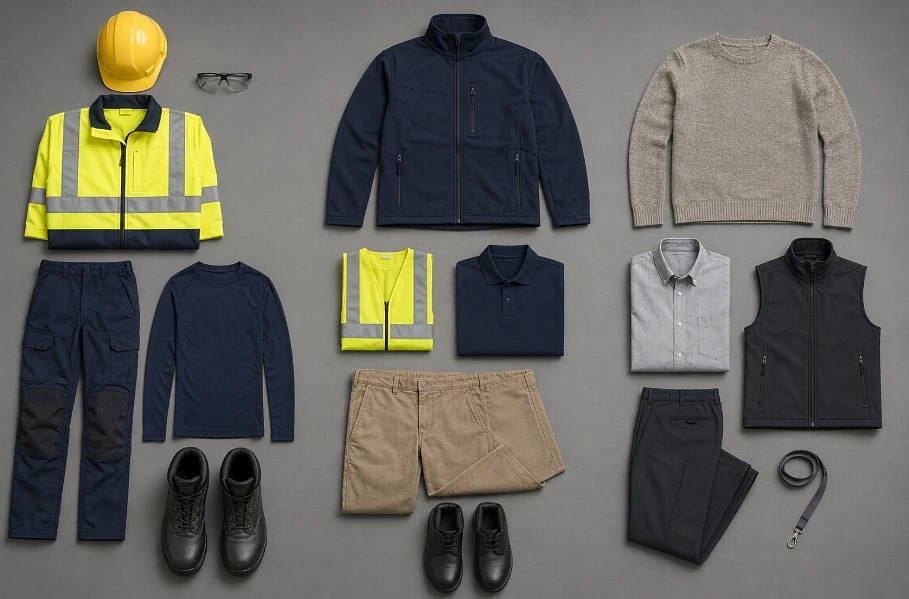
Big buyers can price every garment individually because they have people whose job that is. You do not.
Define one package per role type and order it in the quantity you need. That is a specification, even if you never write the word down, because “site team gets bundle A, office gets bundle B” is exactly what a spec does. New starters become one order line. Replacements become predictable.
Ranges like the workwear bundles from JRS Industrial Supplies are built around that logic, and the saving against individually specced garments usually covers your branding setup, whether that is logo digitisation for embroidery or screen setup for print.
Map the roles first. A site manager at client premises, a warehouse operative and a desk based admin have three different requirements, and a bundle chosen for the average of those three fits none of them.
The Awards Categories Double as a Spec Sheet Checklist
The Fibre, Fabric & Material Innovation Award is judged on durability, circularity, comfort and protection. Four words worth taking to a supplier.
Budget Workwear Annually, Not as a One Off Purchase

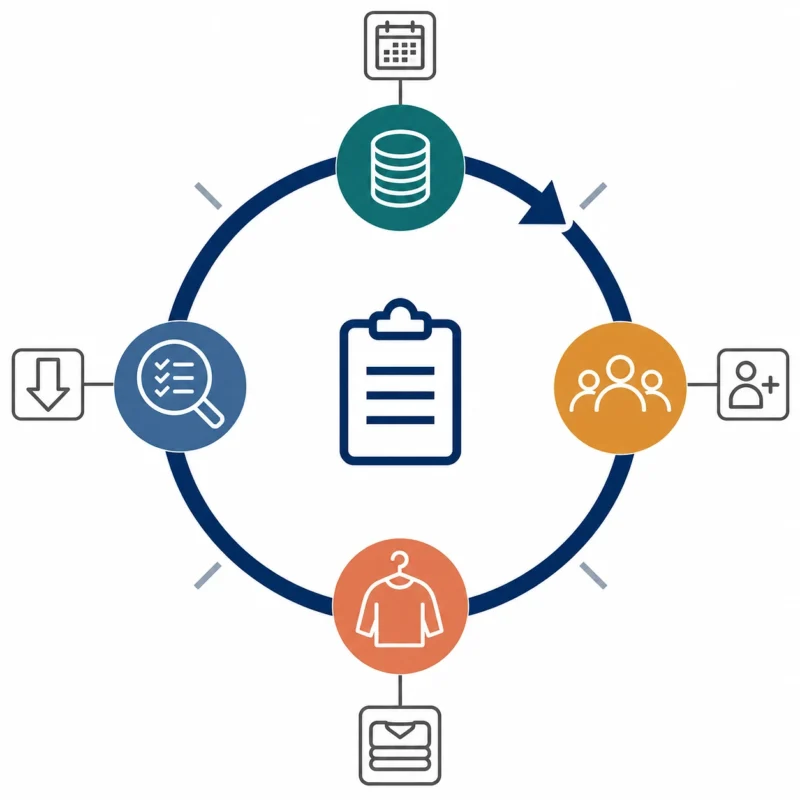
Garments wear out, staff leave, roles change, seasons turn.
Build an annual figure covering replacement cycles, your normal turnover rate and new starter kit. Without it you reach October with the budget gone and a new hire in his own clothes.
Review the Programme Once a Year and Use Your Growing Volume as Leverage
Three questions each time. Does the spec still match what people actually do, is the supplier holding quality, and has your order volume grown enough to move the price.
Volume is negotiating leverage and most small businesses never ask for it.
Ask Staff Before Rollout or They Will Stop Wearing It

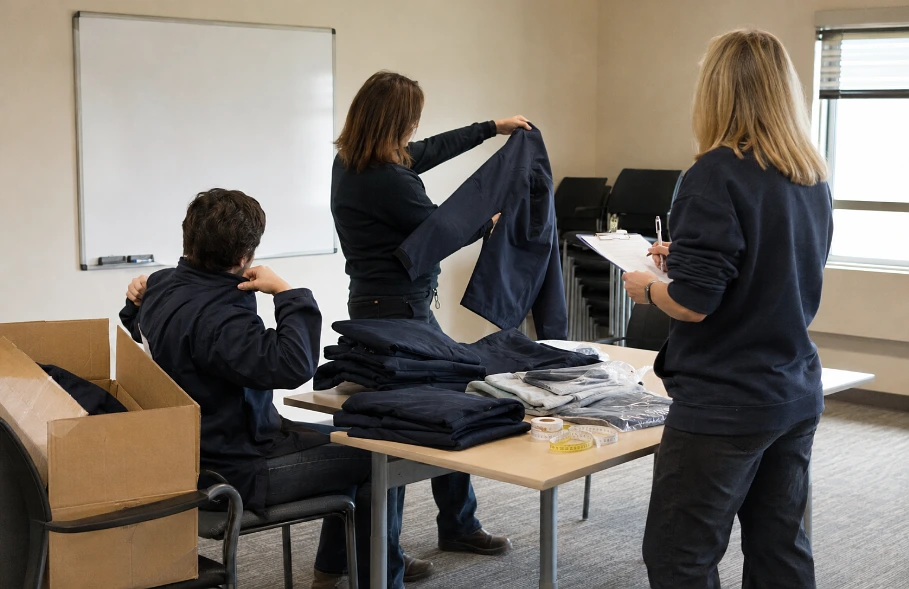
People will tell you what is wrong with the fit if you ask. If you do not, the kit ends up in a locker.
A trial with three or four people costs a fortnight and saves you ordering forty of something that never gets worn.
The whole thing comes down to writing down what you bought and who got it. That is the only real difference between a workwear programme and a drawer full of receipts.