


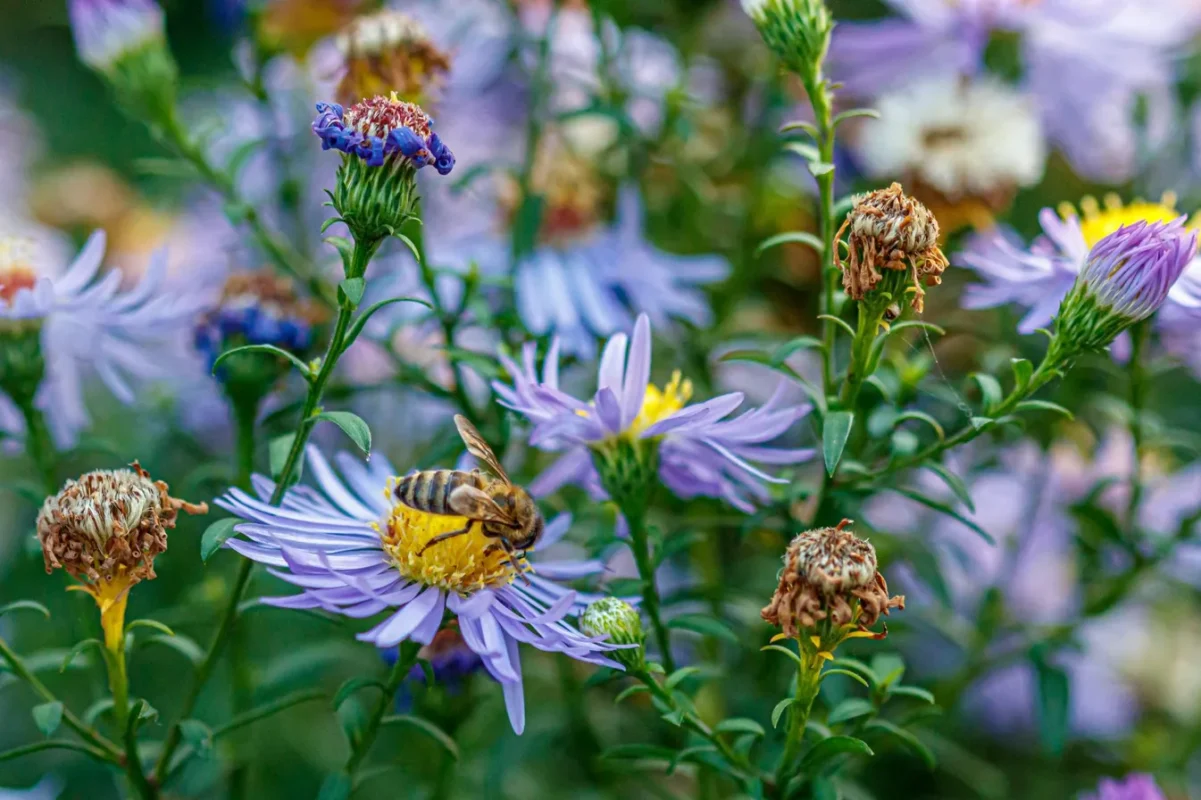
Ninety-seven per cent. That’s how much wildflower meadow Britain has lost since the 1930s. Kew Gardens cites it. The National Trust cites it. The UK government cites it. The original figure came from a Nature Conservancy Council study, and nobody has seriously disputed it since. Over three million hectares of hay meadow were reduced to roughly 12,000 hectares. Flower-rich grassland now covers about 1% of England’s land.
Everything that lived in those meadows went with them. Obviously.
The Bumblebee Conservation Trust’s monitoring data for 2024 was grim — the worst year since records began, with bumblebee numbers down nearly a quarter against the 2010–2023 average. The Red-tailed Bumblebee, one of our commonest species, crashed 74% in a single season. A miserable, cold, wet spring was the immediate cause, but one bad spring shouldn’t collapse a population that far unless the population was already running on fumes. Which it was.
JNCC tracks 393 pollinator species across the UK. Their 2024 indicator shows overall distribution down 23% since 1980. Thirty-eight per cent of those species have become less widespread over the long term, with 22% in strong decline. Thirteen bee species have gone extinct in Britain since 1900, and another 35 are currently threatened.
The economic side of this, if that’s what moves you: pollination is worth roughly £690 million a year to UK farming. Seventy-five per cent of global crop species depend on insect pollinators to some degree. These aren’t fringe creatures doing optional work. They’re infrastructure.
Wildflowers and Why They’re the Answer
Bees need pollen and nectar across the season — spring through autumn, reliably, in varieties they recognise. Native British wildflowers are what they co-evolved alongside over thousands of years. Oxeye daisies. Bird ‘s-foot trefoil. Red clover. Knapweed. Self-heal. These are the species local pollinators are adapted to forage from, and they’re exactly what disappeared when the meadows did.
Research published in Nature Communications in 2019 by the Centre for Ecology & Hydrology analysed over 700,000 biological records of bee and hoverfly species across Britain from 1980 to 2013. One finding that stood out: conservation actions like wildlife-friendly gardening showed measurable, lasting positive effects on wild pollinator populations, in both rural and urban areas. Dr Claire Carvell, a co-author, specifically noted that these effects need refining to benefit a wider range of species — but the baseline finding is clear. Planting wildflowers works.
You don’t need a meadow for this. A window box on a flat in Hackney counts. A strip along a fence in a Bradford back garden counts. A few pots on a balcony in Edinburgh count. The Bumblebee Conservation Trust and the Wildlife Trusts both make the same point: individual patches add up into foraging networks that pollinators can actually navigate between. Enough small efforts in enough places create something functional.
Wildflowers prefer poor soil, by the way. No feeding. No fussing. Stick seeds in, water occasionally until established, then mostly leave them alone. If you’ve been looking for a home project that costs almost nothing, takes minimal effort after the first fortnight, and does something genuinely useful, a pollinator patch is hard to beat.
Where Seed Paper Fits In
Leicester-based SeedPrint makes stationery from handmade recycled paper embedded with native British wildflower seeds, business cards, wedding invitations, greeting cards, and postcards. You use them, then plant them. Paper breaks down in the soil. Seeds grow. Wildflowers appear.
“The idea is that nothing goes to waste,” says Tom Willday, SeedPrint’s founder. “The paper breaks down in the soil, and the seeds grow into wildflowers that actually feed bees and other pollinators. It started as a solution to paper waste, but the pollinator angle has become just as important to us.”
The seeds are native British varieties — species that belong here and that local pollinators actually use.
From a small business angle, this is worth paying attention to. Branding choices say something about how you operate, and a business card that becomes a wildflower patch rather than landfill says it without being preachy about it. Wedding planners are ordering invitations that guests can plant after the reception. Freelancers handing out cards at networking events that double as seed packets. It adds a story to what would otherwise end up in a bin within a week.
The UK uses around 12.5 million tonnes of paper and cardboard annually. Seed paper won’t dent that figure in any serious way. But it shifts the lifecycle of the printed materials it does replace from waste to growth, and for businesses already thinking about sustainability, it’s a swap that takes zero extra effort.
Bees, Green Spaces, and How You Feel
There’s a thread here that connects to something more personal than pollination statistics. A 2019 King’s College London study (the Urban Mind project) found that exposure to natural elements — trees, birdsong, sky — was associated with improved mental wellbeing, with effects persisting for hours afterwards.
Wildflower patches attract bees, butterflies, hoverflies, and the birds that follow them. A pot of cornflowers and poppies on a July balcony creates a tiny moving ecosystem right outside your window. Around 40% of UK workers — roughly 22.7 million people — now work from home at least some of the time, according to ONS-based data. For anyone spending part of their week at a home desk, something alive and humming outside the window is a different kind of screen break than scrolling through their phone.
The RHS references research showing regular gardening reduces stress, supports mood, and benefits cognitive function. You don’t need an allotment or a greenhouse to access that. A window box of wildflowers that you check on most mornings and watch attract its first bumblebee in June genuinely qualifies. It’s small-scale gardening with a purpose beyond decoration, and the mental health payoff is real even if the patch itself is tiny.
Something worth considering if you’ve been meaning to do something with that bare balcony or neglected garden corner but haven’t figured out what.
Keeping It in Proportion
Plantable stationery is not going to reverse what happened to British meadows. The scale of destruction was enormous — driven by agricultural intensification, post-war food policy, the switch from hay to silage in the 1960s, and decades of hedgerow removal and chemical fertiliser use. Fixing it properly needs policy change, agricultural reform, and serious money directed at habitat restoration.
But individual patches of wildflowers do add up. The science supports that. And objects that would otherwise become waste, turning into something that feeds pollinators — a birthday card growing into cornflowers, a business card becoming bird’s-foot trefoil in someone’s garden — connect people to the problem in a way that reading statistics doesn’t.
Britain has over 250 bee species. They’ve been on this island far longer than humans have. The work they do underpins farming, wild plant reproduction, and the food chains that depend on both. They ask for nothing except flowers to visit, and we’ve spent the last ninety years removing most of them.
Putting a few back, even from a desk, even from a window box, even from a piece of post — that’s a reasonable place to start.