


Yes, British buyers can own Antiguan property outright, freehold, in their own name. There is no nationality restriction, no residency requirement before buying, and no rule pushing foreigners into leasehold. One licence, a set of known percentages, and patience with the timeline, that is the whole entry price. And for a British buyer the island is about the easiest fit in the Caribbean: a direct flight of around eight and a half hours from London, English as the language, driving on the left, a legal system built on the same common law yours is, and the EC dollar pegged to the US dollar so the currency behaves itself. Most overseas enquiries for second homes are coming from exactly two places, English Harbour and Jolly Harbour, and a large share of those enquiries are British.
Now the conditions, one by one, because this is where the original plans usually go wrong.
The licence is the real condition, everything else is procedure
A British buyer outside the citizenship programme needs a Non Citizen Land Holding Licence, and understand three things about it:
- The cost. Most current guides put the fee at 5 per cent of the property value, though some local agencies are quoting 7 per cent. That disagreement is itself the lesson, confirm the current rate through your Antiguan attorney before you budget, not after. The application fee itself is a token EC$100.
- The wait. Allow three to six months from application to licence. Plans of completing by next month end in frustration, so start the paperwork the moment your offer is accepted. Helpfully, once Cabinet approval is granted, completion can usually proceed even before the formal licence document is issued.
- The safety net. Your 10 per cent deposit sits in a lawyer’s escrow account and is refundable if the licence is refused, and your attorney registers a caution against the property so it cannot be sold from under you while you wait.
The licence is also specific to the property you applied for, not a general permission. Fall in love with a different villa mid-process and the clock restarts.
The full bill, so no number surprises you at closing

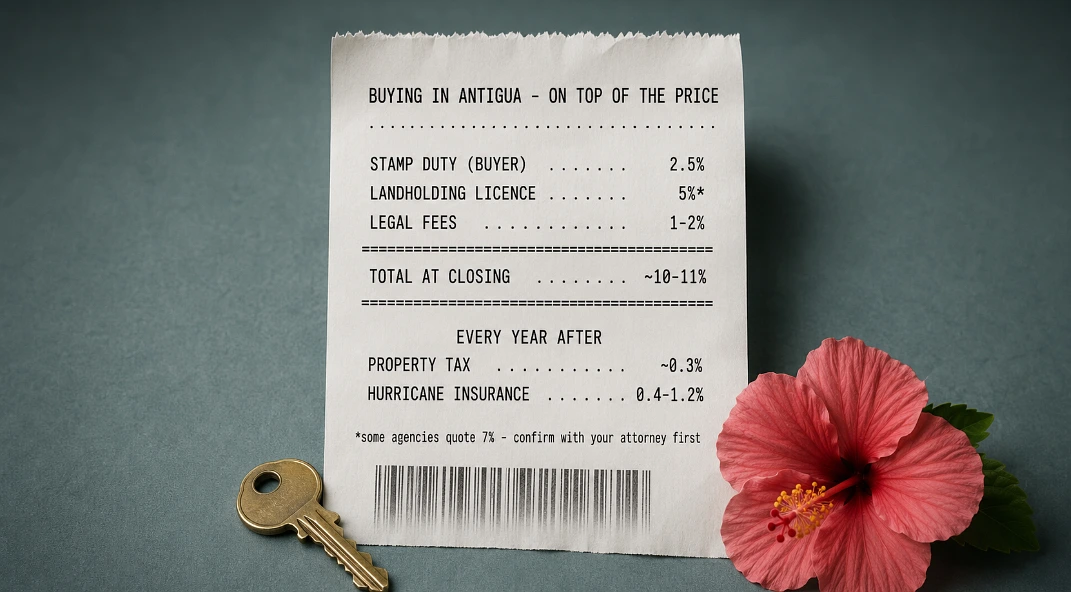
- Buyer stamp duty: 2.5 per cent.
- Licence fee: 5 per cent (see the note above).
- Legal fees: 1 to 2 per cent.
- Realistic total on top of the price: roughly 10 to 11 per cent.
- Ongoing: annual property tax is low, around 0.3 per cent of assessed value, but hurricane insurance runs a further 0.4 to 1.2 per cent of rebuild value each year, and skipping it is not an option any sensible owner takes.
- Selling later: the seller side carries 7.5 per cent stamp duty, and non-citizen sellers can face a 5 per cent appreciation tax on gains. Worth knowing on the way in, because it shapes the exit.
One negotiating move the professionals use: the seller’s 7.5 per cent is negotiable territory. A slightly higher offer in exchange for the seller absorbing fees can lower the cash you need on completion day.
Two routes in, and the lifestyle decides which one is yours

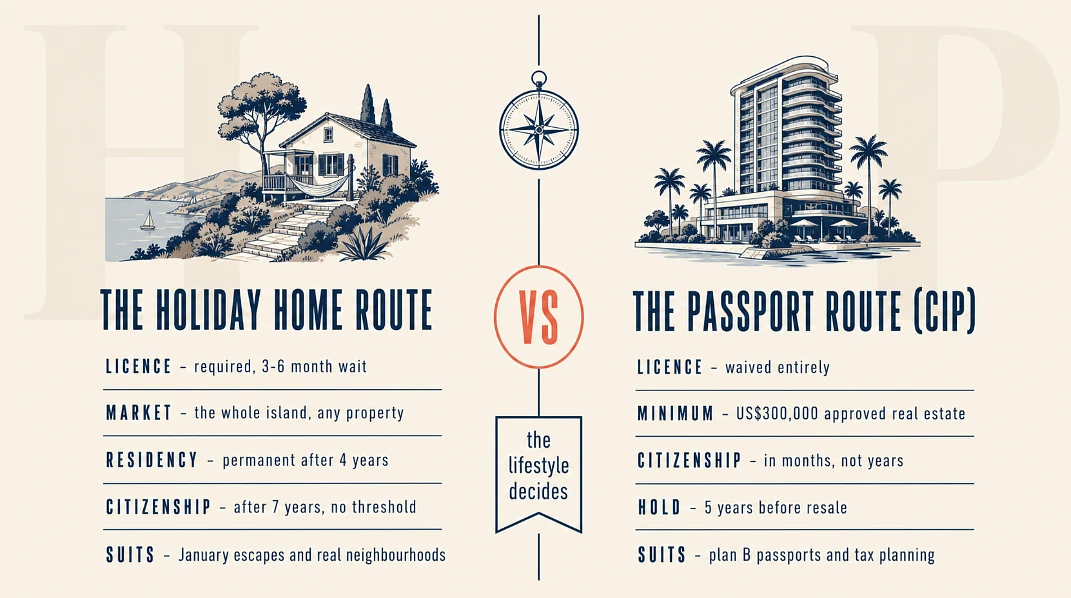
Picture the two buyers, because the routes are built for different lives.
The first is buying a holiday home or a retirement base. Somewhere to spend January while Britain does its worst, a place in a real neighbourhood with local life around it rather than a resort compound. This buyer takes the standard route: licence, stamp duty, done. And the residency ladder is genuinely attainable, permanent residency after four years of residence, citizenship after seven, no investment threshold attached. Browsing Antigua homes for sale with that life in mind, the standard route is almost always the answer, and the whole market is open to you, not just approved developments.
The second buyer wants an investment with a passport attached. The Citizenship by Investment Programme takes a minimum of US$300,000 in approved real estate, waives the landholding licence entirely, delivers citizenship in months rather than years, and requires the property be held five years before resale. For a Brit the second passport is less about visa-free travel, your current one already does that job, and more of a plan B and a family asset, plus Antigua charges no personal income tax, no capital gains tax and no inheritance tax, which is where the accountants start paying attention. The trade-off is that approved CIP stock is mostly resort developments and hotel shares, not a cottage above a fishing bay.
Renting it out pays, once two tax realities are respected
The villa earning its keep while you are back in Britain is the standard plan, and it works, but two rules first:
- Antigua applies a 25 per cent withholding tax on rental income paid to non-residents, so a local property management company handling compliance with the Inland Revenue Department is not a luxury, it is the difference between passive income and penalty letters.
- HMRC has not forgotten you. A UK tax resident declares worldwide income at home, Caribbean rental included, so brief your UK accountant the same week you brief the Antiguan one.
Barbuda plays by different rules entirely
The sister island runs on communal land, and foreigners cannot buy freehold there at all. Long-term leasehold is the only route, the land itself stays with the local community, and anyone set on Barbuda needs a specialist attorney before anything else. For nearly every British buyer, the practical answer is simpler: the purchase happens on Antigua.
One last habit worth copying from the careful buyers: Antigua’s Landfolio portal lets you verify title and ownership history online before committing, and the foreigners who skip that step are the ones who end up funding the cautionary tales. Do the checks, respect the timeline, and the paperwork ends with a set of keys and a January that looks nothing like Britain’s.