


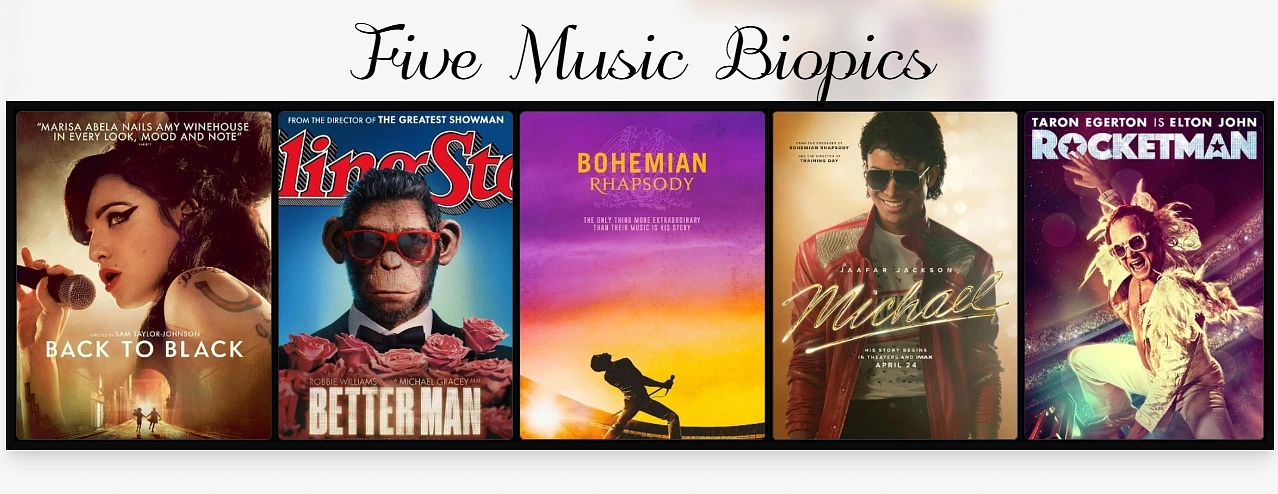
So the thing about music biopics that actually stay with you is they’re almost never really about the music, and I didn’t fully get that until I’d watched a few of them back to back over a couple of weeks and noticed what I was actually thinking about afterwards. It wasn’t the songs. The songs were already in my head before I pressed play. What stuck was the loneliness. The specific way fame cracked open someone who wasn’t built for it yet, or the moment you realise the person writing the song you’ve been singing in the shower for fifteen years was genuinely falling apart while they put it together.
These five all managed that in different ways. Not all of them are perfect films. A couple of them have real problems I’ll get into. But each one left me sitting there after the credits thinking about the person rather than the performer, which is the thing that separates a music biopic that works from one that’s basically a Wikipedia article with a soundtrack.
Back to Black makes you angry more than it makes you sad

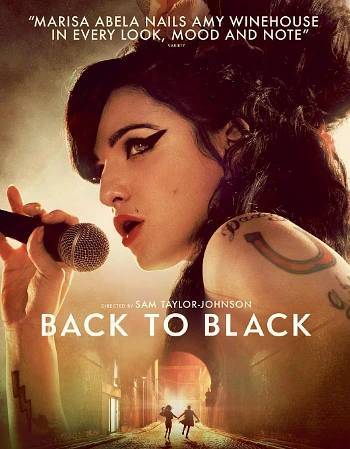
Marisa Abela plays Amy Winehouse and the performance is good, really good actually, but the thing that makes Back to Black genuinely hard to watch isn’t the performance, it’s everything around it. Or more accurately, everything that isn’t around it. The absence of anyone who’s actually protecting her.
The beehive is there, the eyeliner, that north London bite in the vocals. All of it. But the film’s real argument is much quieter than any of that. It’s asking what happens when someone who writes with that level of raw emotional honesty gets famous before they’ve got the support or the privacy or honestly even the emotional wiring to survive what comes with it. Not the drugs and the tabloids, those are what happened after the real failure, which is that nobody around her said stop early enough. The scenes where Amy is clearly struggling and the people around her just keep the machine moving are the ones that hit me hardest because you already know how the story ends and you can see nobody in that room is going to change it.
Came out in 2024. You can rent it digitally or find it on selected UK streaming platforms right now.
Better Man shouldn’t work and I still can’t fully explain why it does

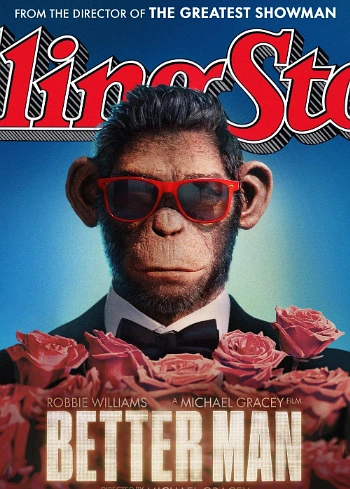
I’ll be honest, when I heard the premise of this one I thought it was a joke. Robbie Williams was played by a CGI chimpanzee. The whole film. That sounds like the kind of idea someone throws out in a writers’ room at 11pm when everyone’s tired and someone takes it seriously by accident.
And then you watch it and it just… works? He voices the chimp himself, which helps, and the film plays the concept completely straight, never winking at the camera, never apologising for the choice. It’s funny and it’s chaotic and it’s very self-aware, which you’d expect from anything Robbie touches. What caught me off guard was the vulnerability. There’s a bit where the chimp version of Robbie is performing to a massive crowd and you can feel the gap between the showman exterior and the panic underneath, and somehow the fact that it’s animated makes that gap more visible rather than less. Like the metaphor of the performing animal stripped away one layer of defence that a human actor would have kept up.
- Not subtle. Doesn’t need to be. Robbie’s whole career has been about being weirdly honest about the cost of being Robbie Williams.
- 2024 release. On Amazon Prime Video and major digital rental platforms in the UK.
Rocketman did something most biopics are too scared to try

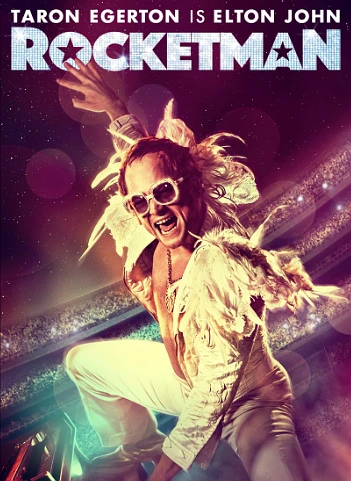
Taron Egerton is spookily convincing as Elton John and not just the glasses and the costumes, he gets the shyness right. The young Reginald Dwight who turns into this sequined peacock is still visible inside the performance the whole way through, and the film never lets you forget that the flamboyance was partly armour.
What made this one different for me, and I’ve thought about this a fair bit since, is that it’s structured as a fantasy rather than a documentary. The musical sequences go surreal. People float. Colours explode. It’s not pretending to recreate what literally happened on a given Tuesday in 1974, it’s trying to show you what it felt like from the inside, which is a much harder thing to pull off and a much more interesting film when it lands. The addiction and burnout sections are genuinely difficult to sit through but the hopeful ending feels earned because the film didn’t pretend recovery was easy or quick.
Made $195 million at the box office worldwide. 89% critics and 92% audience on Rotten Tomatoes, which is about as close to universal approval as a biopic gets.
Bohemian Rhapsody won four Oscars and I’m still not sure how I feel about it

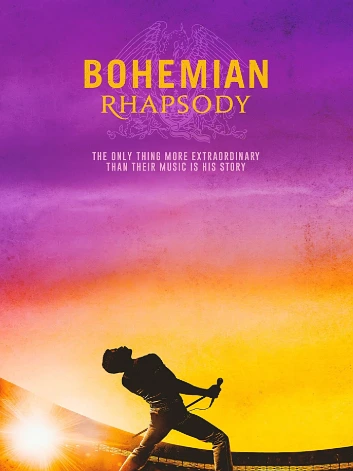
When cultural historians look back at the twentieth century they’re going to land on Freddie Mercury as one of the names that defined it. A performer who could make 72,000 people at Wembley feel like the whole stadium was in the palm of his hand. Rami Malek‘s performance earned him the Best Actor Oscar and the film took home four Academy Awards total, which is a lot for a film that a significant number of critics found frustratingly safe.
The Live Aid sequence is extraordinary. I’ve watched it three times and those twenty minutes is genuinely hard to argue with. But the rest of the film plays fast and loose with the actual timeline of Queen’s career and the handling of Freddie’s personal life felt like it was being careful where it should have been brave. You walk out humming the songs and feeling good, which is fine, but I also walked out wondering whether the real Freddie Mercury was more complicated and more interesting than the version the film was willing to put on screen.
Held the record as the highest-grossing music biopic ever at $910.7 million worldwide for eight years. Lost that title about two months ago.
Michael smashed every record and started a fight that isn’t going away

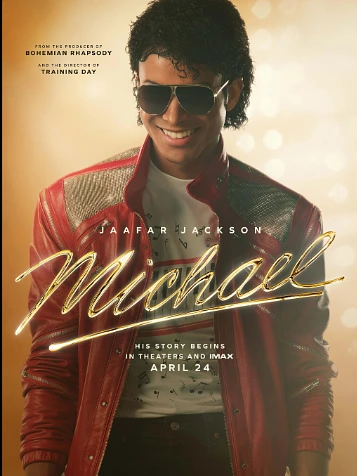
The numbers on this one are genuinely hard to believe. $97 million domestic opening weekend. $217 million globally in the first three days. It’s now crossed $911.9 million worldwide as of mid-June, overtaking Bohemian Rhapsody to become the highest-grossing music biopic of all time, and it might still hit $1 billion with Japan opening this month.
Jaafar Jackson plays his own uncle, and the physical resemblance is startling. There are moments where you forget you’re watching an actor, which is impressive and if you think about it for a second slightly eerie. The audience response has been massive, 97% audience score on Rotten Tomatoes with a “Verified Hot” tag, and it’s clear that the general public loves this film.
The critics don’t. 39% critics score. The consensus is that Jaafar’s performance is remarkable but the film around it plays like a greatest hits album that forgot to include the liner notes. And the controversy around the third act is real. The original screenplay dramatised one of Jackson’s accusers, but a clause in a past settlement barred any depiction of that person in film or television. Lionsgate spent $50 million rebuilding the third act entirely, and the film now ends during the Bad tour in 1988, before the most complicated chapters of Jackson’s life.
Personally, I think a story that chooses to stop before the hardest parts is a story that chooses comfort over honesty. But the box office says most people disagree with me on that, and maybe the second film that’s reportedly in development will tackle the rest. We’ll see.
Released April 24, 2026. Now on digital/PVOD platforms and still playing in cinemas.
Where to find all five in the UK
Streaming catalogues move around constantly so the best move is checking JustWatch before committing to anything. It aggregates current UK availability across every platform and saves you the guessing. Rentals typically run £3.49 to £4.99 for SD and £4.99 to £6.99 for HD depending on the platform, with Michael sitting at the higher end because it only just left cinemas.
One thing worth knowing if you’re travelling, UK streaming catalogues look completely different the moment you land somewhere else because the licensing is regional. A VPN for streaming sorts that out and lets you access your usual UK services while you’re abroad, which matters if you’re halfway through one of these and suddenly can’t find it because you’ve crossed a border.