


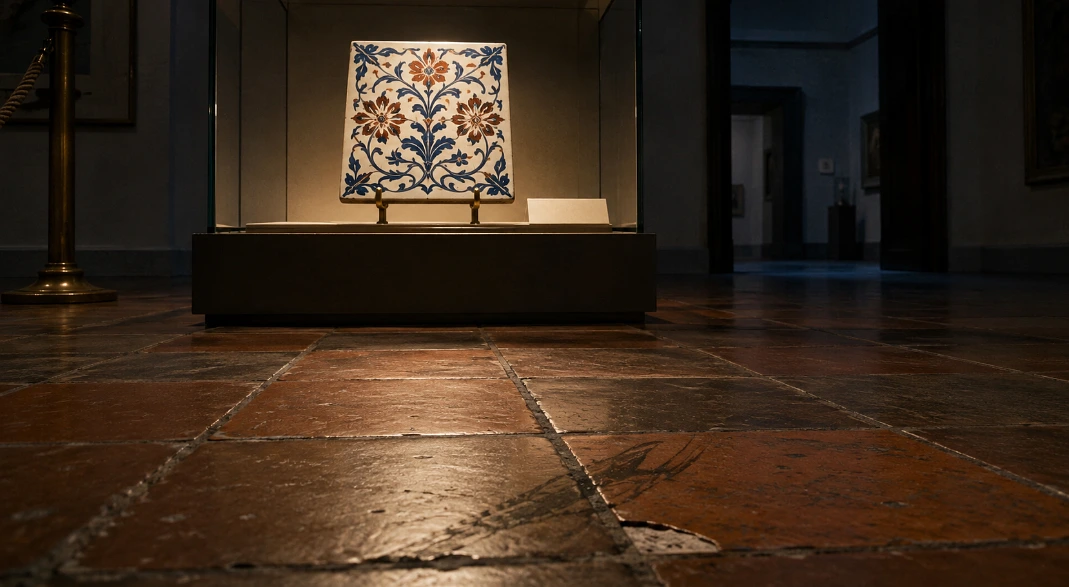
Tiles are the only art form in the world that most people willingly step on. Which is a strange thing when you think about it. You can hang a painting worth £50,000 on a wall and treat it as an heirloom. You can pop a ceramic vase on a mantelpiece for £632,750 (Grayson Perry, 2017, if anyone is wondering) and know that if it falls off you have basically bankrupted yourself. Meanwhile, an actual William De Morgan tile the size of a slice of toast, worth several thousand pounds, was designed to sit on a fireplace surround while the family dog walked across it with wet paws.
This is the world of collectible tiles. It has always been slightly odd. And it is also where some very serious money is quietly being moved around.
The following are five tile designers and traditions whose work has commanded genuinely serious money at auction, museum acquisitions, or private collector sales. Every price listed is from a verified auction result or reported valuation.
| Designer or Tradition | Origin | Highest Documented Value |
| William De Morgan | Britain, Arts and Crafts | Multi-tile panels above £15,000 at Bonhams; individual tiles £1,050-£3,500 |
| Iznik Tiles, 16th century | Ottoman Turkey | £325,000 for a calligraphic tile at Christie’s |
| Delft Tiles, 17th century | The Netherlands | $111,523 for a plaque at Christie’s London |
| David Hockney (Roosevelt Hotel pool) | Britain / Los Angeles | Valued at $1 million by the hotel |
| Piero Fornasetti | Italy, mid-20th century | Wall panels in the mid-four figures, complete rare sets significantly higher |
Before the individual stories, a quick author take on each one:
- William De Morgan. The one William Morris kept close and Britain kept quietly forgetting. His ruby lustre tiles are what serious Arts and Crafts collectors chase, and Arthur Balfour, an actual Prime Minister of Britain, was one of them. Which is a nice thing to know.
- Iznik. Where a single 16th-century tile from Ottoman Turkey can cost more than a Chelsea flat. And where the guy who owns the best gallery in Istanbul is quietly saying no to Gregg Popovich, which is a beautiful mental image on its own.
- Delft. Blue and white, sober, absurdly durable, and painted into the corners of Vermeer paintings if you look carefully. Cheaper than Iznik. More of them survived. That’s a decent quiet result.
- David Hockney. The Hollywood Roosevelt pool, painted in four hours with a broom and a can of blue paint, valued at a million dollars, and the only commercial swimming pool the artist ever agreed to touch. Which tells you a fair bit about Hockney, honestly.
- Fornasetti. Twentieth-century Italian design at its most obsessive. The face of an opera singer he never met, printed in five hundred variations across nearly everything ceramic he ever produced. Nice obsession.
Now the actual stories.
William De Morgan, Best Friend Of William Morris And Still Turning Up At Christie’s
De Morgan was born in London in 1839 and worked until his death in 1917. He was one of William Morris’s closest collaborators through the Arts and Crafts movement, and his ceramic tiles came out of factories in Chelsea and later at Merton Abbey during the 1870s and 1880s. Which sounds like most Victorian ceramic biographies until you look at the tiles themselves.
His signature was the ruby lustre glaze, a shimmering red-copper finish he spent years perfecting through his own kiln experiments.
Nobody else in England got close.
He drew heavily on Iznik tiles from Ottoman Turkey, which you will read about in the next section, and honestly it shows. The results are the most collectable British ceramic tiles of the entire 19th century, and even collectors who do not particularly like the Arts and Crafts movement tend to make an exception for his work.
The recent auction context tells the story properly. Duke’s of Dorchester sold 44 lots of William De Morgan tiles consigned by descendants of Arthur James Balfour, Earl of Balfour and Prime Minister of Britain from 1902 to 1905. Balfour is understood to have bought them directly from De Morgan at his London factory in the 1880s.
That is provenance you cannot fabricate.
Recent individual tile prices from the UK auction circuit:
- A ruby lustre tile with mythical beast, Mendip Auction Rooms, January 2017. £1,100.
- Dragon and Foliage tile circa 1880 in ruby lustre, Mallams, December 2016. £1,050.
- Black and white squirrel design on a bleu de ciel ground, Martel Maides, December 2016. £3,500.
- A magnificent tile panel with Birds and Serpents circa 1885, Bonhams, 2008. Significantly higher.
The prices hold because De Morgan tiles were individually hand-painted by named decorators. His main artists were the Passenger brothers, Charles and Fred.
Not a factory production line. A workshop.
The V&A has one of the largest public collections of his work, and museum collectors chase specific pieces relentlessly. The Duke’s of Dorchester sale of the Balfour family lots proved that even 140 years later, the tiles keep finding buyers who care about provenance.
£325,000 For A Single 16th Century Iznik Tile

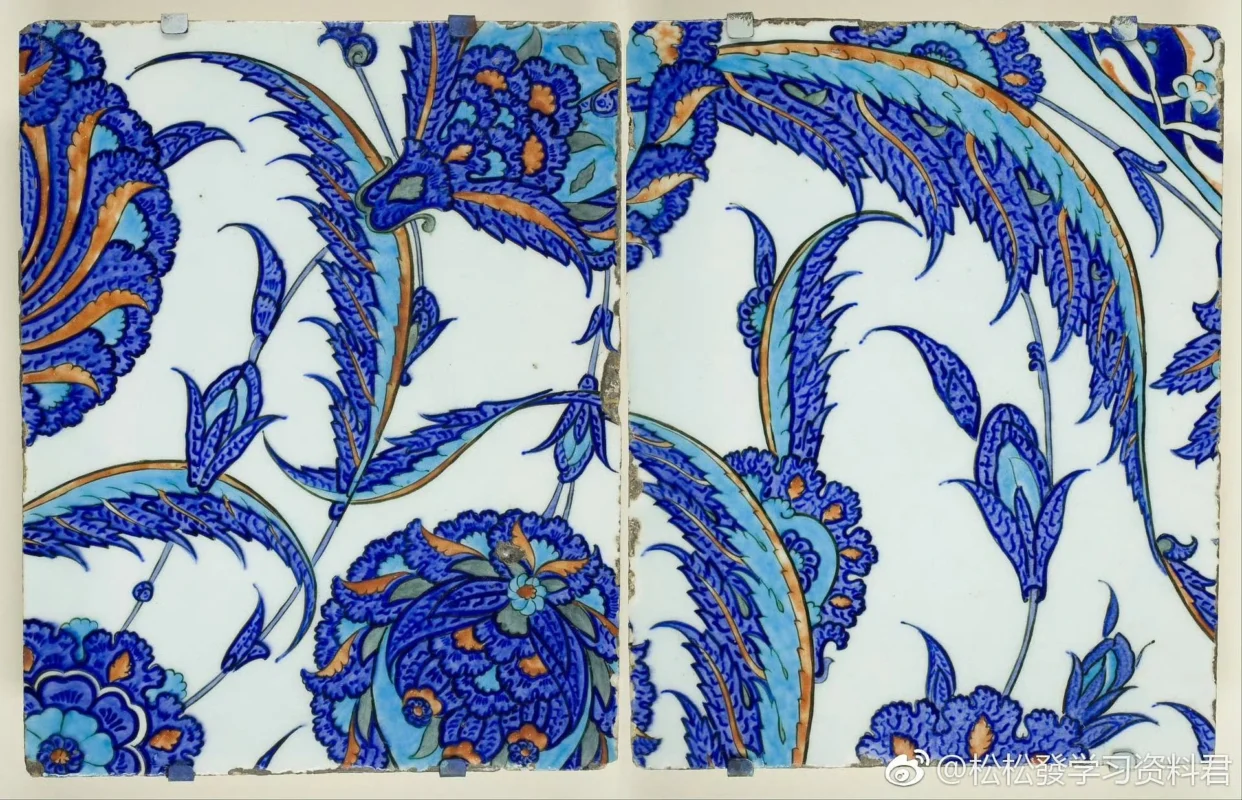
The 16th-century Iznik tradition is the peak of Ottoman ceramic craft, and the auction records for the best surviving examples read like modern art prices.
Christie’s sold a monumental calligraphic Iznik tile circa 1565 for £325,000 at their Islamic Arts sale. That is roughly $446,550 at the time. A Christie’s lot of 15th-century Iznik pottery dishes sold in 2006 for over $500,000. And in Istanbul, the Iznik Classics gallery in an alley behind the Blue Mosque currently holds one panel priced at $1 million and refuses to lower it. The owner, Tahir Eğinci, tells the story that Gregg Popovich, coach of the San Antonio Spurs, is a regular visitor who checks in every few years to see if the answer has changed. It has not.
Iznik tiles came out of the small Ottoman town of İznik between the late 15th and 17th centuries. The signature is cobalt blue, turquoise, and a specific tomato red painted on a bright white ground. The Blue Mosque in Istanbul has more than 20,000 of them lining its interior walls, which is how the mosque got its name.
Genuinely, 20,000 tiles. That is the scale.
The floral designs are the reference for essentially every European ceramic tradition that followed, including De Morgan’s ruby lustre work in London three hundred years later.
What the private collector market values:
- Individual mid-16th century tiles with documented provenance: £5,000 to £30,000 depending on condition and design.
- Calligraphic tiles carrying Ottoman inscriptions: significantly higher.
- Complete panels with matching designs: six-figure sums at institutional-level sales.
- Anything associated with named royal Ottoman commissions: essentially unlimited market.
The tiles that turn up on eBay or 1stDibs from Turkish dealers labelled “16th century Iznik” are mostly not 16th century Iznik. Real ones have documented chain of custody and typically come through Christie’s, Sotheby’s, or specialist Islamic Arts auctions in London or Doha.
Delft Tiles, Which Vermeer Painted Into His Corners

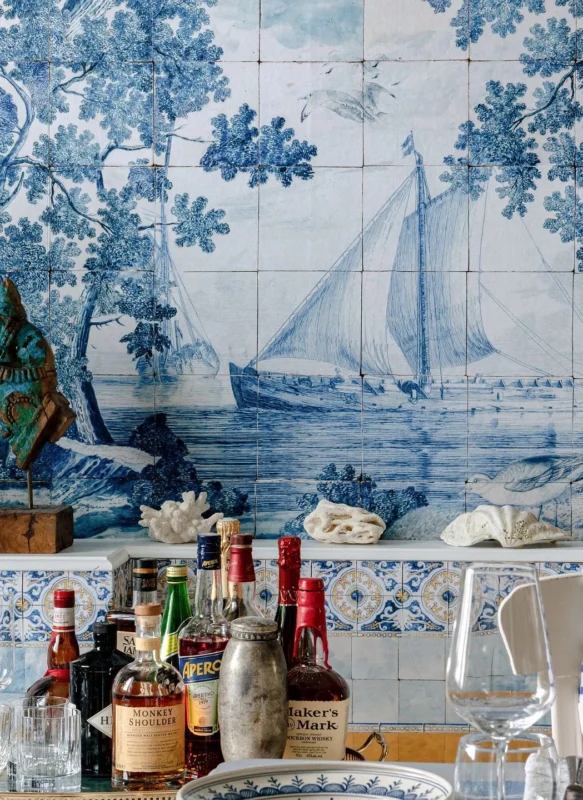

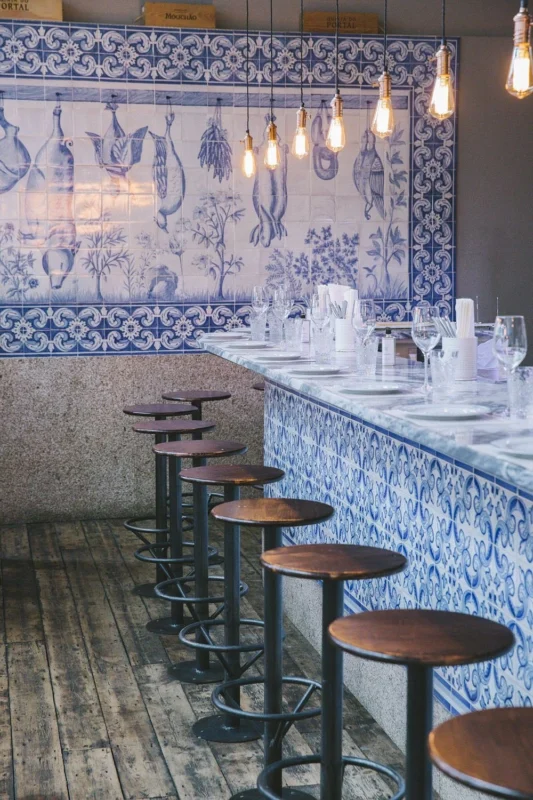
Look closely at a Vermeer interior painting. Anywhere Vermeer showed you a room with a tiled skirting board, those small blue-and-white tiles are Delft. The Dutch painter used them as visual proof of a middle-class Dutch domestic interior in the 1660s.
The tradition was already at commercial scale by then. The Dutch town of Delft became the European ceramic tile capital in the 17th century, riding the wave of consumer demand for the blue-and-white aesthetic that had come to Europe on Chinese porcelain trade routes. When Chinese porcelain imports halted around 1620, Delft potters filled the entire European market. Thousands of tiles left the Dutch workshops between roughly 1625 and 1700.
The auction house prices for surviving 17th-century Delft plaques and rare panels:
- Christie’s London, October 2002. A Delft plaque sold for $111,523 against a $62,000 to $93,000 estimate.
- Christie’s London, September 2015. A Delft plaque sold for £13,750.
- Daily Mail reported in 2015 that a discovered cache of Delft tiles was valued at £50,000.
Individual antique Delft tiles from the 17th century typically sell for £200 to £2,000, depending on rarity of the subject. Rare subjects like travelling merchants selling spectacles (yes, that is genuinely a category), cherubs surrounded by foglie ornament, or specific mythological scenes fetch multiples of that. Full nautical tile panels depicting ships at full sail sell for £8,000 to £15,000 at auction.
The reason for the price steepness is straightforward. Delftware from the earliest workshops is roughly 400 years old and mostly fragile. Basically no examples survived intact from the 17th-century initial period. Anything that did is valuable purely on rarity, before you even get to the artistic quality.
The Only Commercial Swimming Pool David Hockney Ever Painted
This is not tiles in the strict sense. It is a painted pool floor. But it belongs in this list because it is one of the most famous decorated floors in the world, and the story around it is genuinely remarkable.
The Tropicana Pool at the Hollywood Roosevelt Hotel in Los Angeles. In 1988, David Hockney walked in one morning with a can of blue paint and a paintbrush attached to the end of a broom. Over four hours, working in the empty pool, he covered the entire floor with his signature circular brush strokes. Once the water went back in, the paint appeared to weave and dance beneath the surface in the Los Angeles sunlight.
Don Jacinto, the hotel’s General Manager, has said publicly:
“This was the last pool mural artist David Hockney ever did and it is valued at $1 million.”
The Roosevelt is the only commercial pool Hockney ever painted. Every other Hockney pool piece was either a canvas painting or a private residential commission. The Roosevelt version was also designated a Historic-Cultural Monument by the Los Angeles Cultural Heritage Commission, alongside the hotel building itself. Professional conservators from RLA Conservation of Art and Architecture restored the mural in early 2019, working with matched paint colours to preserve the original 1988 palette.
To understand the $1 million valuation properly, look at what Hockney’s related work commands at auction. His painting Portrait of an Artist (Pool with Two Figures) sold at Christie’s New York in November 2018 for $90.3 million, briefly holding the record for the most expensive work sold at auction by a living artist. It was surpassed by a Jeff Koons sculpture in May 2019.
When a single Hockney pool canvas sells for $90.3 million, the $1 million valuation on the actual bottom of a hotel pool starts to feel almost modest.
Hockney was born in Bradford in 1937 and remains one of the most significant living British artists in the world.
Piero Fornasetti, The Italian Who Put Lina Cavalieri’s Face On Everything

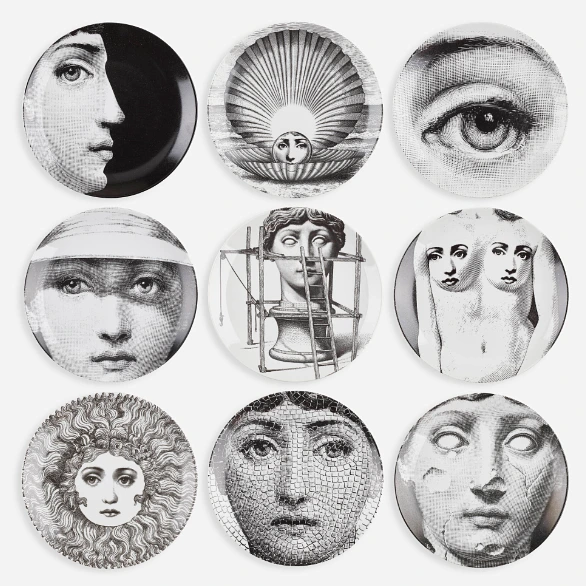
Fornasetti was born in Milan in 1913 and died in 1988. Over his working life he produced roughly 13,000 designs. He was a painter, a printmaker, a furniture maker, and a ceramicist, and his signature motif was the face of the Italian opera singer Lina Cavalieri, whom he reproduced in around 500 variations across plates, tiles, chairs, umbrella stands, tables, and lampshades.
The tile connection specifically runs through his work with the Italian manufacturer Ceramica Bardelli. Fornasetti designed multiple tile series for Bardelli including the 1953 “Ultime Notizie” newspaper series, which reproduced the front pages of international newspapers on individual glazed tiles. Complete 20-tile wall panels from the Bardelli production have appeared on the secondary market at prices in the mid-four figures.
Recent auction market for Fornasetti pieces:
- A 20-tile “Ultime Notizie” wall panel produced by Ceramica Bardelli. Prices reflecting mid-four-figure sums for the full panel.
- Individual Fornasetti plates from the 1950s. Typically £300 to £2,000 each.
- Complete rare sets like Giornali (Newspapers) or Adamo (Adam). £5,000 to £10,000 for authentic period pieces.
- His trays and larger printed metal pieces from the 1950s appear at Lyon and Turnbull auctions regularly.
Piero’s son Barnaba took over the Fornasetti Atelier in 1988 after his father’s death, and the workshop continues producing original Fornasetti designs under licence. This is unusual in the collector market. It keeps the brand alive and keeps prices strong for authentic period pieces because the aesthetic remains in cultural circulation.
What This Actually Means For Your Bathroom Floor
I say this as someone who has both looked at William De Morgan tiles at the V&A and put down LVT in a working family bathroom. The two categories are not competing.
Every single tile in this article was made to be looked at. Not walked on. De Morgan’s ruby lustre tiles are decorative panel work. Iznik and Delft were architectural but they were built for interior walls, mosque interiors, and courtyard displays. The Hockney pool is a viewing surface (you swim in the water, you look at the paint through the water; it is not high-traffic). Fornasetti’s tiles were, essentially, wall art. The auction values above reflect what collectors, museums, and private buyers pay for objects that were designed to be beautiful, not durable.
Which is why the practical bathroom flooring conversation for most UK households does not involve Christie’s or Sotheby’s. Most bathroom renovations in the UK now use luxury vinyl tile flooring because it delivers the look of natural stone or ceramic while handling water, footfall, cleaning, and the school run without the maintenance or the price tag of the pieces above.
LVT is what actually sits in a working bathroom today while the William De Morgan tiles sit in a museum case with the temperature controlled to two degrees.
Both categories exist for good reasons.
The tiles that sell for millions belong to a collector’s world where beauty, provenance, and history matter more than durability. The tiles that sit on the bathroom floor belong to a different world where the priority is what still looks decent after ten thousand wet feet have walked across it.
Neither category is trying to be the other. And if you have ever wondered whether a tile could genuinely be worth serious money, the answer is that a small handful of them are. Just not the ones on your kitchen splashback.
Those are for a different reason entirely, and that is fine too.