


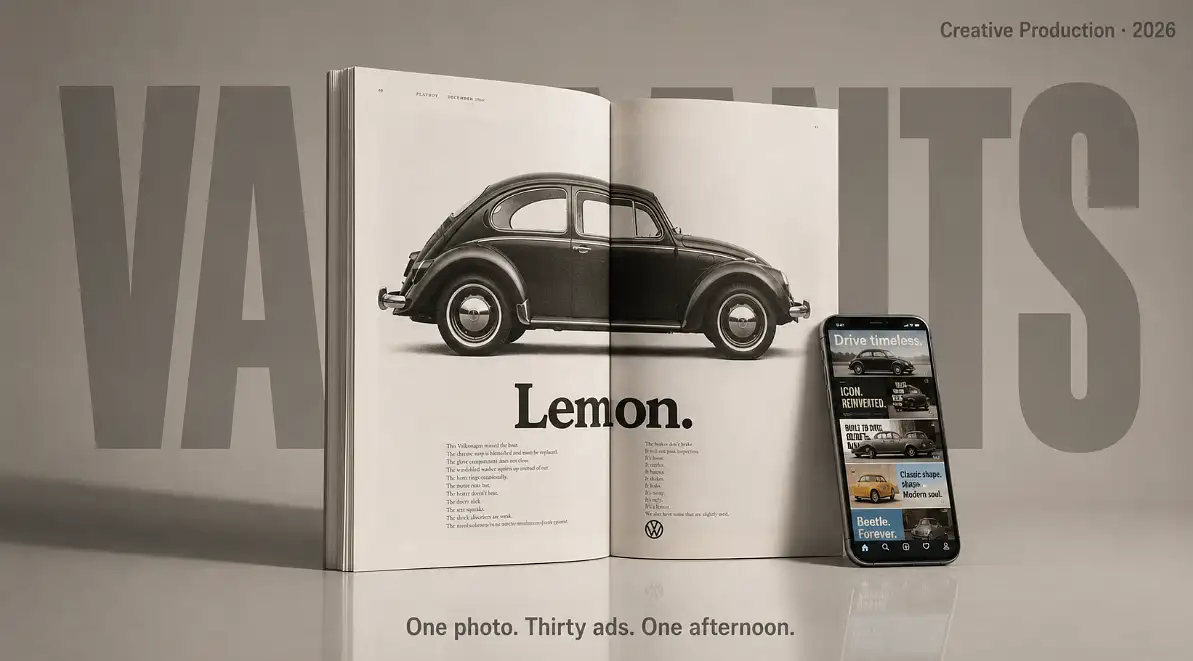
A Volkswagen Beetle. Black-and-white photograph, plenty of empty space around it, the word “Lemon” sat underneath. That advert ran in 1960, made by Doyle Dane Bernbach, and almost every advertising textbook since has called it one of the best of the twentieth century. One photograph. One product. One idea. That was the whole campaign.
You’d think that the magazine and poster industry, which has been using a single image for advertising for nearly a hundred years, would not need any help with creating advertising from a single product photo. But that’s what’s happened recently – and it’s happened to those who never had a Doyle Dane Bernbach budget in the first place.
So, creative production as a noiseless one of the largest budget problems in performance marketing. The number of ad variants required to truly test anything on all of the platforms from Meta, TikTok and YouTube continues to grow, and the creative teams continue to be about the same size as they were five years ago. Three versions of an ad to launch a product are now becoming 30. They are all cut for different places, different audiences and different spots in the funnel. It is this pressure in operation that drives AI-powered ad generation out of the novelty stage.
It’s becoming a way of doing business for many e-commerce brands, especially those that aren’t that large. One of the names that often surfaces in those discussions is Pollo AI, and it’s no wonder.
1. Magazine art directors used to do this work for £40,000 a campaign
Have a look through any decent design book covering the 1960s through the 1990s and you’ll see the same craft repeating across thousands of campaigns. A single product photographed properly. Then that one image extended across magazine spreads, billboards, bus shelters, point-of-sale, every format the agency could buy media for.
The Marlboro Man wasn’t dozens of different cowboys; it was a small set of carefully art-directed shoots reused for decades. The Apple “Think Different” run from 1997 worked the same way — one portrait, one subject, extended into print, posters and outdoor media. Saatchi & Saatchi’s “Pregnant Man” poster from 1969 was a single staged photograph that ran in print and in tube stations and is still studied at design schools.
The catch was always the cost. To get to one strong product image that could carry a campaign, you needed an art director, a stylist, a photographer, location hire, retouching, and someone holding the whole thing together. An average shoot for a glossy print campaign back then ran somewhere between fifteen thousand and forty thousand pounds before media buying ever started. That’s why this kind of single-image craft sat with the brands who could afford it — the Volkswagens, the Marlboros, the big perfume houses — and stayed mostly out of reach for everyone else.
What’s different now isn’t the creative principle. The creative principle is exactly the same. What’s different is who can afford to do it.
2. So what is an AI ad generator actually doing with your product photo?

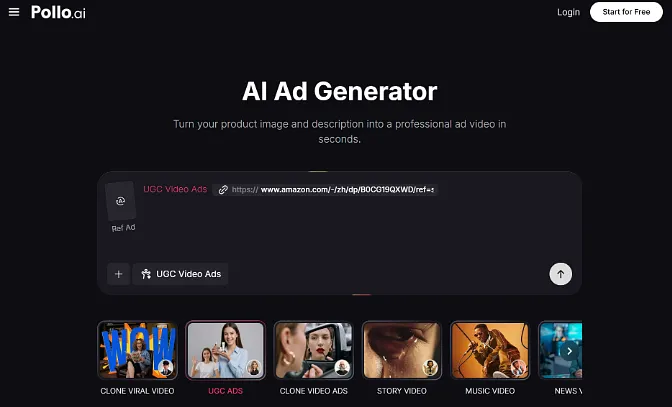
Take a clean product shot. White background, decent lighting, the kind of image any small brand has sitting on their Shopify product pages already. An AI ad generator like the one Pollo AI runs takes that image and produces variants. Different aspect ratios. Different background contexts — the trainers placed in a styled flat-lay, on a city street, beside a coffee cup. Different text overlays and call-to-actions for different platforms. Different motion treatments if you want short video output rather than stills.
What used to take an art director three days now takes a media buyer about an afternoon. That sentence sounds like marketing copy, but the operational maths is fairly boring once you sit with it. Run the same advert too long and frequency fatigue kicks in — click-through rates start sliding, acquisition costs creep upward, and the data tells you something you’d rather not hear. The fix has always been more variants. Hiring more designers is slow and expensive. Generating more variants from one source asset is fast and cheap.
So a single performance marketer can sit down with one good product photo and produce dozens of variations in an afternoon. Different hooks. Different framings. Different formats for different placements. Instead of waiting three days for a designer to turn around new concepts, they respond to live performance data almost immediately and cut what isn’t working before the budget bleeds out. The brands winning on paid social aren’t the ones with the single best advert. They’re the ones testing the fastest.
The structural shift here matters more than the headline. When creative production drops from days to hours, testing cadence accelerates. Learning compounds. The team that was previously stuck waiting on assets finds itself stuck on strategy instead, which is, by any measure, the better problem to have.
3. The bit where it works well, and the bit where it really doesn’t
What an AI ad generator handles well is roughly what a junior art director used to handle on the second day of a shoot — repurposing, reformatting, adapting a hero image into adjacent contexts.
Where it works:
- Clean product-on-white-background shots become lifestyle scenes, with motion, text overlays and platform-correct aspect ratios
- A vertical 9:16 video that owns a TikTok feed gets reframed for Facebook sidebar, square for Instagram grid, horizontal for YouTube — same idea, different packaging
- Aspect-ratio reformatting that used to mean reshooting for every placement now happens from one source file
- Avatar selection, scene composition and text animation timing are controllable enough for brand-conscious advertisers who need ads to look distinct rather than generic
Where it doesn’t:
The strategy itself. The point of view. The reason a Volkswagen Beetle with the word “Lemon” underneath was funny in 1960 and stopped people on a train platform. AI tools don’t invent that. They never have. A marketer who feeds the tool a clear sense of audience and value proposition gets back usable variants quickly. A marketer who expects the tool to invent the strategy from scratch gets back generic, forgettable output that scrolls past the eye and out of memory.
The other gap is the one a magazine art director would spot from across the room: lighting that’s almost right but slightly wrong, hands that have the wrong number of fingers, fabric that drapes in a way fabric doesn’t actually drape. AI-generated imagery has improved dramatically over the last eighteen months, particularly with image-to-image and image-to-video pipelines that start from a real product photograph. But it still produces tells if you push it too far from the source material. The trick most people learn quickly is to start with a strong real photograph and let the tool extend it, rather than asking it to invent the entire scene.
That’s where the input-quality conversation matters. The quality ceiling of your output is mostly determined by the quality of what you feed in. Spending twenty minutes getting a clean, well-lit product photo will save you far more time than regenerating mediocre variants from a blurry phone snap. The brands getting the best results from tools like Pollo AI aren’t necessarily using the most advanced features — they’re feeding the tool decent source material and applying actual editorial judgement to what comes back.
4. You’ve already scrolled past one of these without noticing
Most likely more than one. With careful use, the new AI-generated ad output isn’t a terrible experience like it used to be, so you don’t always need to clock it as you scroll. Last week’s small candle brand Instagram Reels ad.The small candle brand ad that was on your Instagram Reels last week. The fashion micro-brand on TikTok that is displaying the same dress in 5 different locations. That kitchenware company that has the same tone of light for all of its product images.That kitchenware brand that uses the same lighting style for all of its product photos. Of those, some are true shoots. Many of them aren’t.
In reality, that translates to a tacit benchmark for small brands’ advertising being higher than ever. Five years ago, a little old boycott brand on Instagram was still little old boycott, with a few slightly off-centre photos, some odd backgrounds, homemade photos that some people loved, and some they didn’t. Those brands can now create feed content which can sit next to campaigns from much larger competitors. The distance between a £400 product launch budget and a £40,000 one will not seem as far as much when considering what the end result looks like when it arrives in someone’s feed.

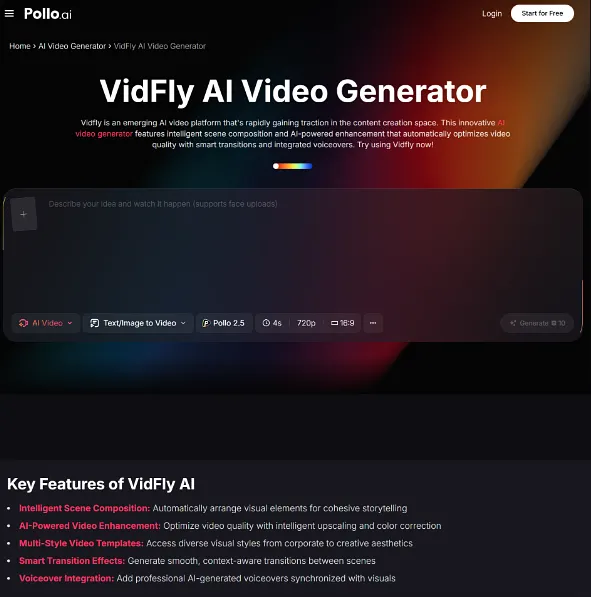
Vidfly AI has built a following in the rapid video-ad space, particularly with dropshippers and marketplace sellers running fifty SKUs at once to find three winners. Speed matters more than brand consistency for that audience. Pollo AI takes a different angle, with more granular creative control — features matter more for brand-conscious advertisers who need their adverts to actually look distinct in a crowded feed rather than blend into the algorithmic mush. The trade-off between raw speed and creative control is real, and the right call depends entirely on what your strategy is actually trying to do.
5. The teams getting this right treat it like a magazine production process, not a magic button
The very intentional process of setting up a magazine production team is baked in to the proper integration of AI ad generation. Asset libraries. Style guides. Briefs submitted that are cited. Those who take these tools as a magic-button shortcut end up frustrated. The teams that surround them and build the small system around them get a definite advantage.
A good beginning: appoint a single person, even as part of a larger job, as the person responsible for the creative operations. They own the asset library, have the prompt templates that have worked well in the past and know which formats to use for which platforms and different customers. After some time, that person acquires enough knowledge and experience in using the tool that it becomes increasingly useful, as opposed to having to train the team again for each campaign.
The high leverage move that is underutilized, is creating a tagged library of product assets. The ease with which a media buyer can instantly access “navy trainer, white background, three-quarter angle” and input it into the generator makes the gap between insight and action more negligible than ever before. If they need to wade through a mess of a shared drive, half the speed advantage goes down the drain before the tool opens.
This is something that magazine art departments discovered decades ago. They referred to them as stock libraries. The rule remains the same.
Magazine art departments figured this out decades ago. They called them stock libraries. The principle hasn’t changed.
The payoff compounds. With the engine up and running (assets arranged, prompts noted, quality parameters established), production can proceed without the usual production “clash. The team that worked hard for 2 weeks on January to get it right is now outproducing the competition by a ratio of 3:1 in the spring. Not due to their increased effort. They had the constriction they didn’t notice removed. The days of the art director and the right budget are over, and now it’s available to everyone with a good product photo and the drive to create a system around it.
Without a true photographer, honest art direction and sound decision making regarding what made the advert work, this Volkswagen “Lemon” advert wouldn’t have been possible. That’s the same piece of code and it likely will be. What has changed is all of the other numbers around it — and for the small brands and independent retailers, who never had to deal with Doyle Dane Bernbach numbers, that’s what really counts.