


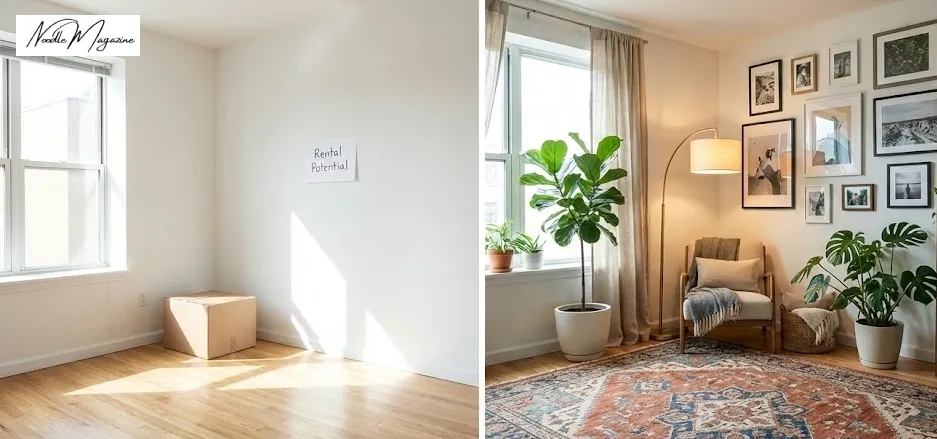
I have been living in rental apartments across three different cities, and there is something I noticed that happens every single time I move. My decorating style changes completely. Not because I suddenly got new taste or saw some inspiration on Pinterest, but because each new place quietly taught me what worked in that space and what absolutely did not work.
Living in a rental does not mean you cannot create a beautiful space that feels like yours. The temporary nature of renting has actually taught me to be more creative with my decorating choices than I ever was when I thought about buying a place someday. You just need to understand how your surroundings influence your aesthetic decisions and work with that instead of fighting against it.
Why New Environments Reset Your Aesthetic Instincts
When you walk into a new rental for the first time, your brain goes into this assessment mode that you do not even realize is happening. The light feels different than your last place. The ceiling height changes how you see the space. The street noise outside makes you rethink which rooms feel peaceful. You are not sitting there consciously making a list of these details, but your mind is already deciding what will work here and what will not.
This automatic response actually helps you. My first rental had these massive windows that made bold colors look incredible during the day. Then I moved to a place with smaller windows and the same bold colors just looked dark and heavy. Neither approach was right or wrong, they were just responses to different light conditions.
I learned this when I tried to recreate my favorite deep blue accent wall in a new flat. In my previous place with south-facing windows, that blue looked rich and moody in a good way. In my new north-facing flat it looked like I was living in a cave. The environment had changed, so my decorating approach needed to change with it even though I loved that blue color.
Architecture Shapes Your Visual Choices Whether You Realize It or Not
The buildings we live in teach us aesthetic lessons just through constant exposure to them. When I moved from a Victorian conversion with high ceilings and all these ornate details to a modern flat with clean lines and basically no features, my furniture choices shifted within a few months without me planning it.
In the Victorian space, I could layer textiles and bring in vintage finds and it all felt natural together. The architecture already had personality built in, so my decorating could have personality too. In the minimalist modern flat, I found myself buying simpler pieces with clean lines instead. The sparse environment did not support the same visual complexity.
Tall buildings push your eye upward constantly. You start noticing vertical lines everywhere, appreciating height, thinking about how to use your wall space efficiently because floor space is limited. Low, sprawling layouts make you think horizontally instead, with wider furniture arrangements and layered rugs and spreading things out rather than stacking them up to save space.
Materials matter too in ways I did not expect. Living in a flat with exposed brick made me appreciate rougher textures in my throw pillows and blankets. When I moved to a place with smooth painted walls and laminate floors everywhere, I wanted softer elements to add some warmth the space did not have naturally.
Rental Apartments and Creative Constraint
There is this beautiful irony about rental living that took me years to appreciate. The restrictions actually make you more creative instead of less creative. When you cannot paint walls or change fixtures or do any of the permanent modifications homeowners can do, you learn to work magic with what you can change.
British renters have gotten incredibly good at this over the years. We have developed this whole toolkit of damage-free solutions that let us personalize our spaces completely while keeping our deposits safe. Command hooks, removable wallpaper, tension rods, these are not just workarounds anymore. They are legitimate decorating tools that happen to be completely reversible when you move out.
The temporary nature of renting also gives you permission to experiment in ways permanent homeownership does not. When I painted that deep blue disaster I mentioned earlier, I lived with it for two years because repainting felt like too much commitment and expense. In a rental with peel-and-stick wallpaper, I can try a pattern I am not completely sure about, knowing I can remove it in an afternoon if it does not work the way I hoped.
This experimental freedom has refined my judgment about what works faster than owning a place ever could have. Each rental becomes a testing ground where some ideas succeed and others fail, but every attempt teaches you something about your own preferences and what actually works in real life versus what looks good in photos online.
Most Popular Ways to Decorate a Rental Apartment in British Homes

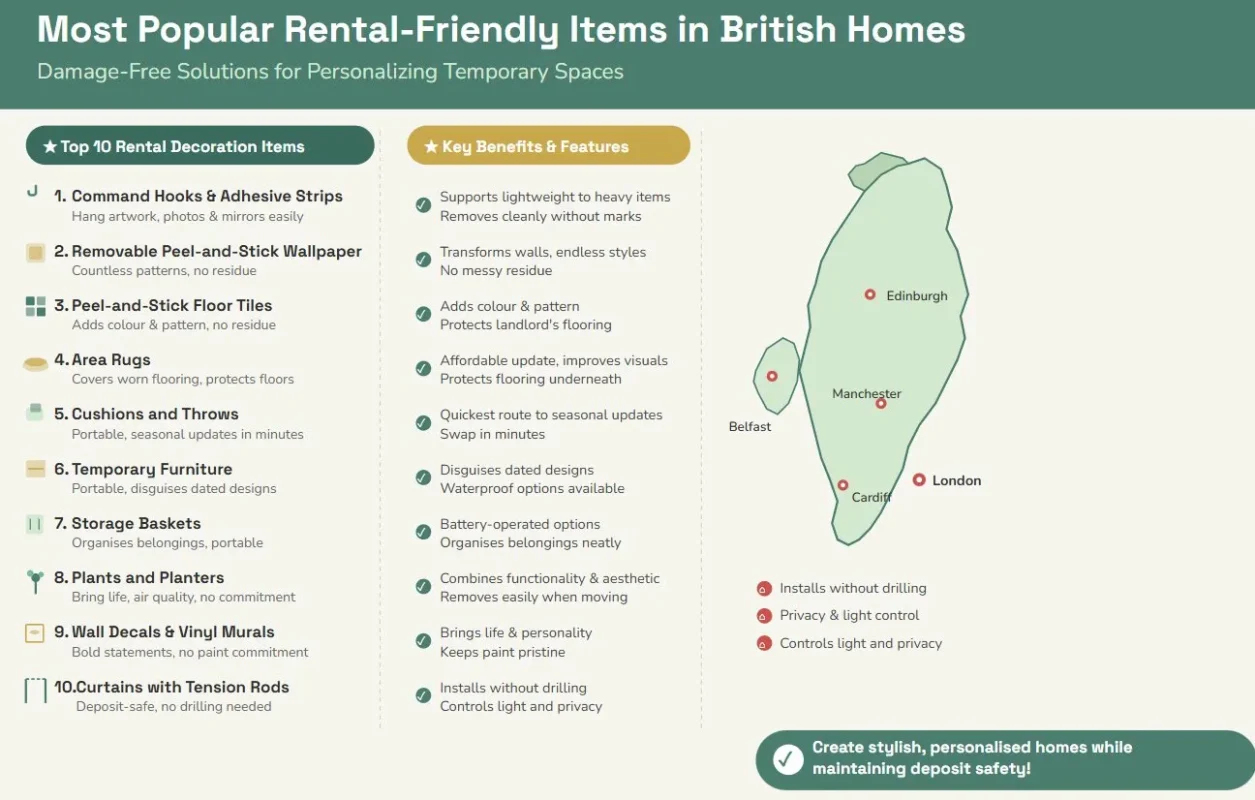
Now I will discuss ways to decorate a rental apartment. I have noticed the same items appearing again and again in successfully styled rental spaces. These are not trendy purchases that will be outdated next year. They are practical solutions that genuinely work for the constraints we face.
Command Hooks and Adhesive Strips
- These have completely changed rental decorating for everyone I know
- They support everything from lightweight picture frames to fairly heavy mirrors
- Remove cleanly without marking walls or pulling off paint
- Available in different sizes for different weight capacities
- Every renter I know has a drawer full of these somewhere in their flat
Removable Peel-and-Stick Wallpaper
- Installation takes a few hours instead of days of painting prep work
- The pattern options now rival anything in traditional wallpaper
- When you move out, it peels off without leaving residue behind
- Creates feature walls without violating your tenancy agreement
- Lets you try bold patterns you would never commit to with paint
Area Rugs
- Cover worn or dated flooring that the landlord will not replace
- Define functional zones in open-plan spaces
- Introduce color and pattern without any permanent changes
- Layer easily over existing carpets or directly on hard floors
- Protect the landlord’s flooring from additional wear while you live there
Peel-and-Stick Tiles
- Give you the kitchen backsplash update you want without breaking lease rules
- Install directly over existing tiles you cannot stand looking at
- Heat-resistant versions work safely near cookers and hobs
- Waterproof options suit bathrooms and shower surrounds
- Simple removal leaves the original surfaces undamaged for inspection
Cushions and Throws
- Provide the absolute fastest route to seasonal room updates
- Change your entire living room mood in under ten minutes
- Winter schemes use chunky knits and deep colors
- Summer styling uses lighter fabrics and brighter colors instead
- Brilliantly portable and also protect the landlord’s furniture from wear
Statement Lighting
- Changes the entire ambiance without requiring any electrical work
- Floor lamps add task lighting and visual interest to dark corners
- Table lamps create atmosphere and warmth
- Battery-operated options work when you do not have enough outlets
- String lights introduce personality and coziness without leaving marks
Storage Baskets
- Combine functionality with making the space look better
- Woven baskets suit natural and bohemian decorating schemes
- Wire designs complement industrial spaces
- Fabric bins work well in children’s rooms where you need flexibility
- Move easily to your next home without hassle
Plants and Planters
- Bring life and personality to rental spaces instantly
- Improve air quality naturally while adding color and texture
- Create focal points without permanent installation
- Freestanding planters avoid wall mounting requirements
- Hanging varieties use rental-appropriate ceiling hooks instead of drilling
Wall Decals and Vinyl Murals
- Offer bold visual statements without paint commitment
- Range from subtle geometric patterns to dramatic full-wall scenes
- Application requires no special skills or tools
- Removal leaves walls completely pristine for final inspection
- Work particularly well in children’s rooms where tastes change
Curtains with Tension Rods
- Replace permanent fixtures with adjustable alternatives
- Install without drilling holes in walls or window frames
- Support lightweight to medium-weight fabrics effectively
- Let you replace dated window treatments the landlord installed
- Control light levels and add privacy without risking your deposit
The Emotional Journey of Decorating a New Space

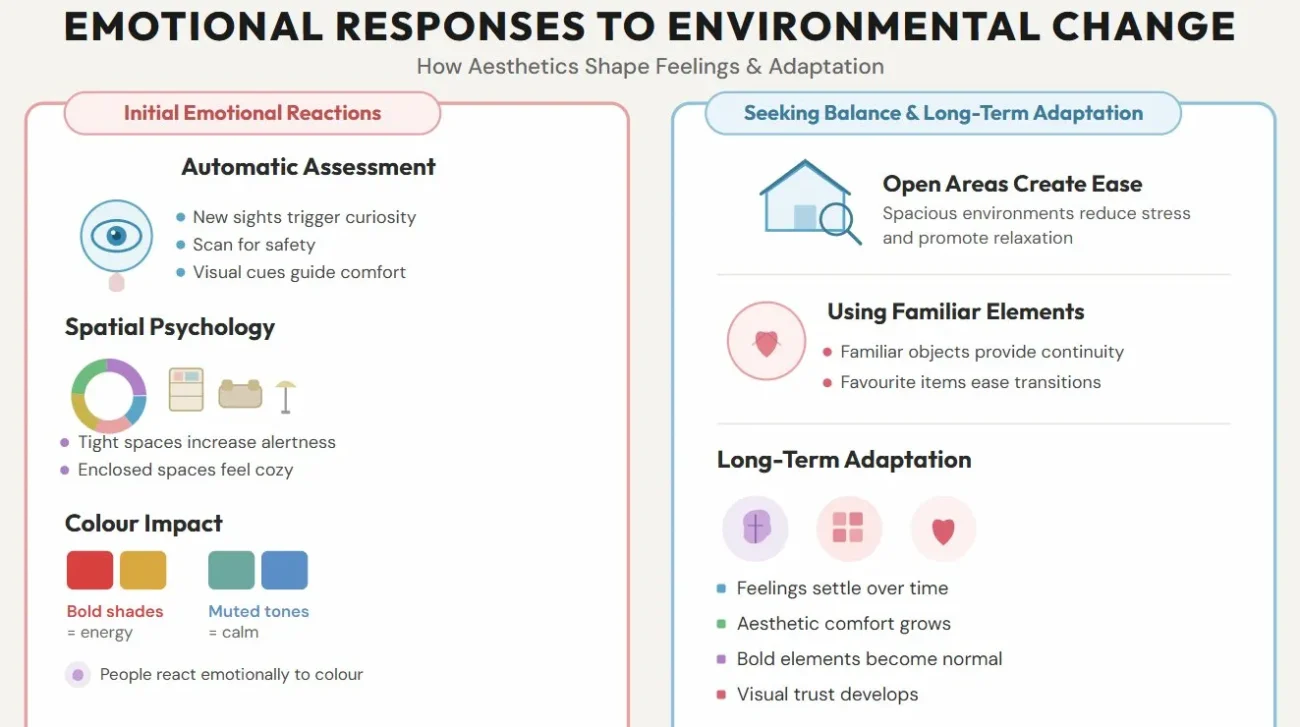
Moving into a new rental triggers this emotional response that most people do not consciously recognize while it is happening. When I walked into my current flat for the first time, before I had unpacked even a single box, I felt simultaneously excited about the new space and overwhelmed by how foreign it felt. The proportions were different from my previous place. The light came in at angles I was not used to seeing.
That initial uncertainty is completely normal and everyone experiences it. Your brain is scanning for safety and familiarity, processing visual cues faster than your conscious thoughts can keep up with. Open areas create ease in your mind because clear sightlines register as psychological relief at a subconscious level. Tight spaces increase your alertness, not necessarily in a bad or threatening way, but you definitely feel the difference in your body.
I remember unpacking my favorite throw blanket first thing, even before I set up my bed properly. That familiar texture and color became my anchor point in the space. One familiar object in an unfamiliar environment provided this emotional continuity while I processed everything else that felt new and different.
Color hits you emotionally before you have time to form rational opinions about whether you like it or not. My new flat’s previous tenant had painted one wall this bright coral orange color. My immediate reaction was almost physical discomfort because it felt too bold, too much energy, too attention-demanding for my taste. But after living with it for three weeks because I was too busy with work to deal with repainting or covering it immediately, something shifted in how I perceived it. The energy that initially felt overwhelming started feeling warm and welcoming instead. Bold elements become normal over time as your emotional reactions soften and stabilize through familiarity.
This is exactly why I tell friends who are moving into new rentals to live with the space for at least two weeks before making any major decorating decisions. Your emotional response changes as familiarity grows with the space. What feels jarringly different on day one might feel perfectly natural by day fifteen. And what seems fine initially might start bothering you once the excitement of moving fades and you are living your normal daily routine there.
The goal is not to eliminate emotional reactions to your space, it is to understand them and work with them instead of against them. If tight corners make you feel alert and uncomfortable, use mirrors to expand the perceived space visually. If open areas feel too exposed and make you anxious, create cozy zones with rugs and strategic furniture placement that give you those smaller contained areas within the larger room.
Building Confidence Through Experience

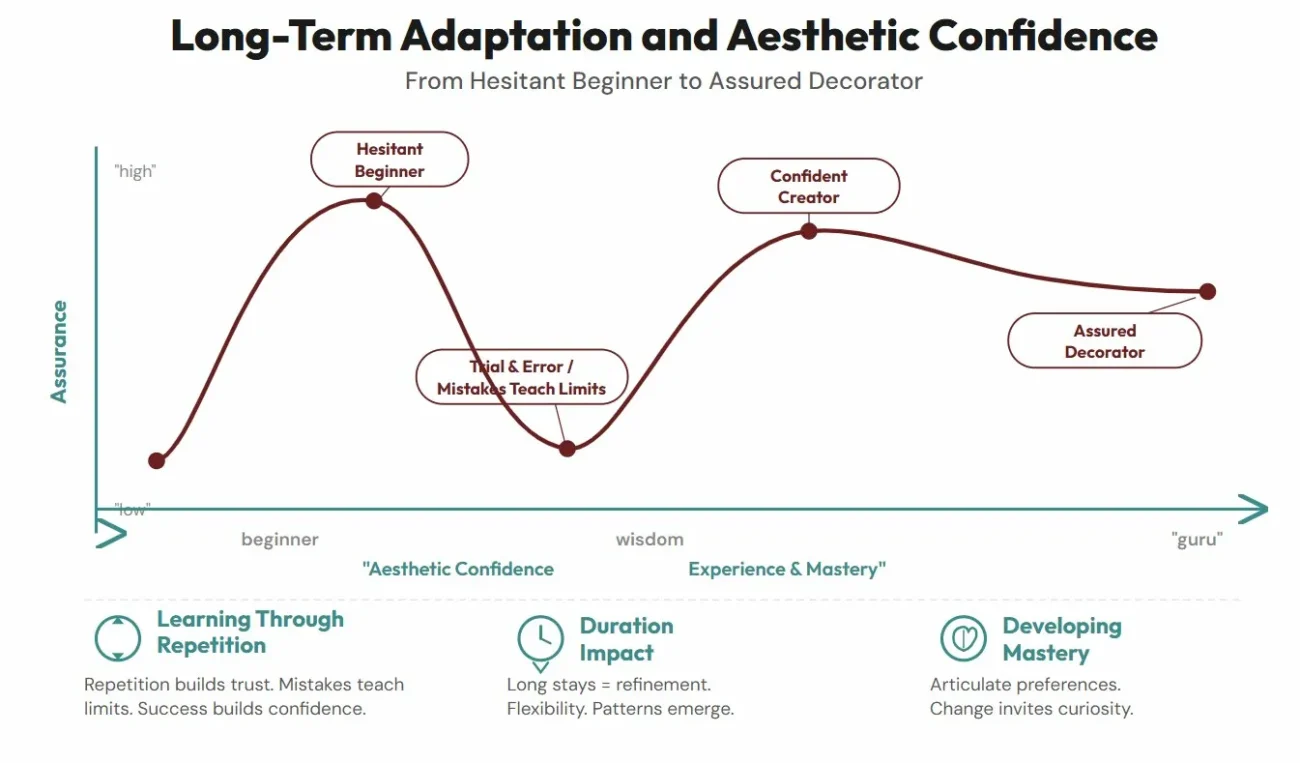
There is something nobody tells you about rental living that I wish someone had told me years ago. It turns you into a confident decorator faster than homeownership ever could because you get repeated practice in different spaces.
When I first started renting someone else’s house, every single decorating decision felt fraught with doubt. Do I want to hang art over here, or would it look better over there? Would it mesh or clash with the flooring already there? Is this lamp too big for the room, or not large enough? I second-guessed every single thing because I didn’t know my own instincts yet on what worked.
After five rentals, however, I have the experience to walk into a new room and spend an hour figuring out just what it needs to express its rightness. Not because I became some design savant who majored in interior decorating but, rather, because repetition trains pattern recognition in your brain. I’ve witnessed what works in north-facing rooms versus south-facing ones. I know how varying a ceiling height changes how big furniture looks in proportion to your space. I know what the temporary solutions that actually stick around are and which ones cause more problems than they solve.
Negative experiences tell you more than positive ones, to be honest. That costly rug I picked up that fit the light in the shop but looked all wrong at my house? Great lesson in bringing home fabric swatches first, and looking at them in your actual space before making larger commitments. Is it because the wallpaper I put on is just ever so slightly crooked. An object lesson in why you don’t rush peel-and-stick appliqués just because they look simple.
Long stays and short stays teach you different lessons, both of which are important. There’s something to be said fro living in a place for three years and being given the opportunity to get it right through complete familiarity, see how the light changes seasonally has an impact on the space, observe how pattern of traffic flows ebb and flow throughout 12 months, or even just become subtly aware that a room doesn’t function quite like you thought it did when you first moved in – all of which are harder to do if your stay is shorter because you aren’t afforded the leisure time required to figure things out over years.ClipClops require some level of quick fire decision making because we can’t afford you ages.
The confidence of the rental experienc, is another great thing, is fully transportable! I am taking the combined set of visual judgments I have developed with me into every new home. I’m no longer the insecure novice who hopes things will work. I’m somebody who knows the way that environments work, the way that aesthetics interface with different architectural features, and I am capable of creating places that work however odd things can be.
Change does not disrupt my perception of spaces anymore, it invites curiosity instead. Each new rental is an opportunity to apply everything I have learned while experimenting with something different than my previous approach. That shift from anxiety about making wrong choices to excitement about new possibilities makes all the difference in how you experience moving. The environment becomes something supportive rather than challenging, and decorating transforms from a stressful obligation into genuine creative expression that you actually enjoy.
Creating Your Personal Style Within Rental Constraints
I have learned through renting that constraints do not necessarily check creativity. They actually focus it. Which in face when every option is available to vou becomes a complete overwhelming bombardment of decisions. When vou know just what vou can change and what vou cannot change, yout creativity focuses on the real world possibilities inherent in your situation. When vou buy make sure those things that always make an place feel like home for vou are all present. For me this includes good lighting in every room, and at least one piece of bold pattern somewhere in the space. For you. it might be that there are plants everywhere and gallery walls of your own personal photos are on all the walls. Another person might need many cozy textiles around so space ceases to feel cold when they step into it. In short, figure out what is most important to you, invest in quality versions of those items which can accompany you from place to place. and create around those core elements.
Try ideas before committing your money and time to them. Buy one roll of removable wallpaper and put it in a small area before doing an entire wall. Test Command hooks with a few light-weight frames before hanging your heavy vintage mirror up. Place the furniture in three different configurations before settling on what will be the arrangement wherein you live. The reversibility of rental decorating allows you to conduct experiments there without fear of enduring consequences.
Remember what works and what doesn’t work in each place you live He keeps photos in my cell phone of every apartment have lived in with notes about what I love about that place and what would change if moved there again. That visual record has become incredibly valuable for faster and better decisions in new spaces since patterns show up over time. You get acquainted with your own aesthetic tendencies, learn what your actual non-negotiables are rather than the ones you had thought up before, and truly have confidence in your choices.
Above all. allow yourself to make a space vou truly love living in, even though vou know it is temporary and that vou will be moving again. Rental residing teaches vou that home has no firmness or ownership. It is actually all about clothing up wherever It currently looks like yours and making it comfortable. The decorating prowess vou pick up through obeying rental constraints turns into a portable trust that serves catharsis wherever life takes one next or whatever limits next host complains of.