


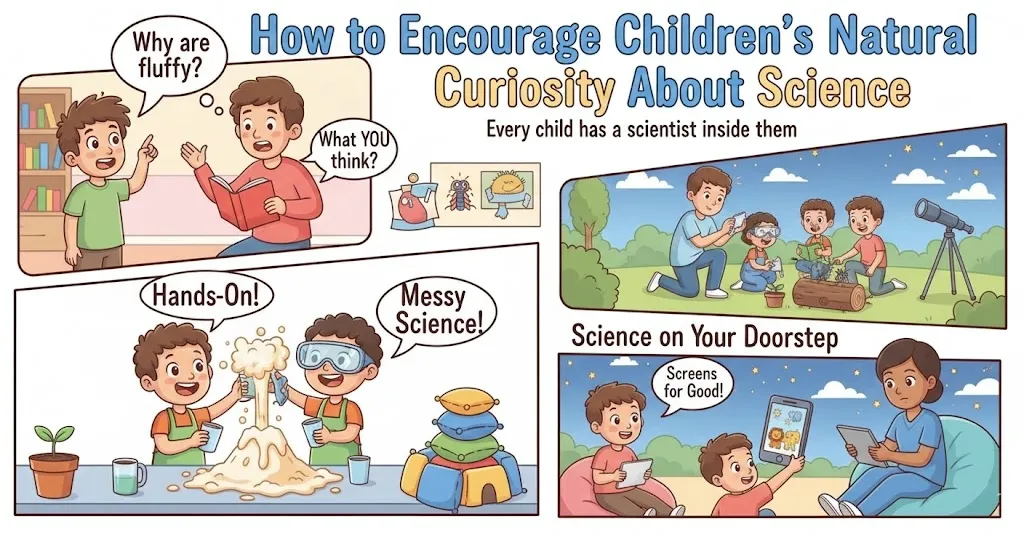
Every child has a scientist inside them, one that pops up when they drop a spoon for the tenth time just to see what happens, or when they ask why puddles disappear. This natural urge to poke, prod, and question the world is the very stuff of science. For parents and foster carers, the job isn’t about creating this curiosity from scratch; it’s about keeping that spark alive. It’s about seeing science less as a tricky school subject and more as a fantastic game of discovery played together.
Turn Questions into Adventures
That familiar chorus of ‘why?’ can feel draining, but each question is really a starting pistol for a small adventure. When a child stumps you with a query about clouds or spiders, it’s a golden opportunity. Instead of reaching for a quick, definitive answer, try turning it back to them: ‘That’s a great question. What do you think is happening?’ This simple move encourages them to think like a scientist, forming their own ideas. Finding the answer together, whether in a book or online, also shows them that grown-ups are learners too, and that not knowing is the exciting first step to finding out.
Get Their Hands Messy
Abstract ideas mean little to a child until they can see and feel them. Science needs to be a hands-on, and often messy, affair. You don’t need a pristine lab; the kitchen sink or a patch of garden offers more than enough potential for discovery. Think of the fizzing concoctions made with bicarbonate of soda and vinegar, the magic of watching a planted seed push its way out of the soil, or even the simple physics of building a sturdy cushion fort. Baking a cake is a brilliant chemistry lesson, as sticky ingredients are transformed by heat into something new and delicious. These experiences bring tricky ideas to life in a way no textbook can.
Find Science on Your Doorstep
The world outside is a living laboratory. A special trip to a science museum or discovery centre can be a fantastic day out, and for foster carers, the foster care payments can be a great way to fund these inspiring visits. But scientific discovery isn’t just for paid attractions. A simple walk in the park becomes a biology lesson when you start identifying different birds or looking for insects under a log. A clear night is a free ticket to the planetarium in your own back garden. These shared outings do more than just teach facts; they build a library of memories that connect a child’s world with the bigger picture of science.
Use Screens for Good
Screens often get a bad reputation, but when used with purpose, they can be a brilliant gateway to scientific knowledge. A well-chosen nature documentary can whisk a child away to the Amazon rainforest or the deep ocean. An app on a phone can suddenly give you the power to identify a star, a flower, or a bird’s call. When a really tough question arises, looking it up together online is not cheating; it’s modelling how to be a resourceful problem-solver. It teaches them to see the internet as a vast library, not just a source of entertainment.
Nurturing a child’s scientific mind has very little to do with having all the answers. It’s about having the right attitude – one of shared wonder. By welcoming their questions, getting stuck into practical activities, and exploring the world both on and off-screen, you create a home where curiosity is celebrated. This doesn’t just help with their schoolwork; it gives them the confidence to think critically, solve problems, and maintain a sense of awe about the world throughout their lives.