


There’s a version of looking wealthy that involves slapping a logo across everything you own. And then there’s what actually wealthy people in London do, which is more or less the opposite. No branding. No obvious flex. Just very good fabric, very good shoes, and a general air of not needing anyone to notice.
That’s quiet luxury, and London might be the best city in the world for it. The UK luxury market sits at roughly £27.43 billion and growing at about 4% a year, but the interesting shift is where that money goes. Less Gucci belts, more Sunspel polos. Less statement pieces, more stuff that just happens to be extraordinarily well made.
You don’t need a trust fund to pull this off either. A lot of it comes down to knowing where to look, what to prioritise, and understanding that the whole point is restraint — buying fewer things, but better ones.
What to wear
The wardrobe is the obvious starting point, and the good news is you can build something solid without remortgaging. A proper capsule of quiet luxury essentials — the kind of stuff you’d see on someone walking through Marylebone on a Saturday morning — comes in around £3,000 if you’re buying new. Less if you’re smart about it.
A few pieces that earn their place:
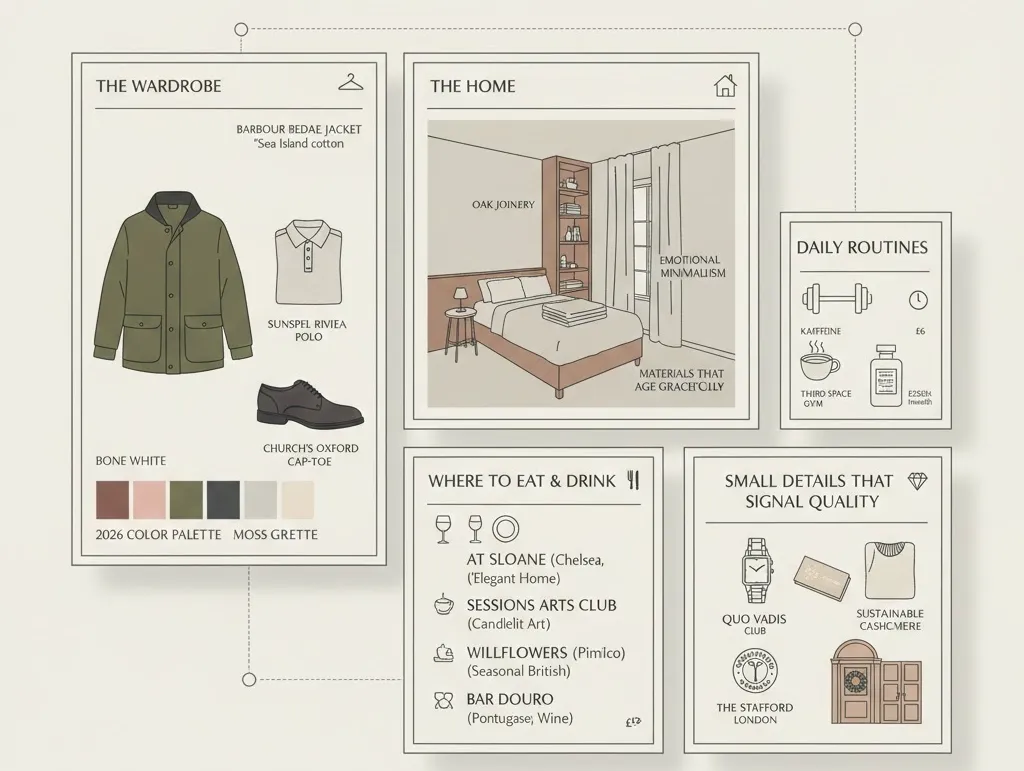
- Barbour Bedale jacket (around £289) — waxed cotton, utility pockets, zero branding on the outside. Looks equally right in the countryside and on the King’s Road. One of those coats that gets better the more you wear it.
- Sunspel Riviera polo (about £100) — Sea Island cotton, which feels noticeably different from anything you’d pick up on the high street. The fit is clean without being tight, and it breathes properly in warm weather.
- Church’s Oxford cap-toe (roughly £550) — the default shoe for anyone in London who takes footwear seriously. Polished, understated, lasts a decade with proper care.
The colour palette for 2026 leans towards bone white knits paired with camel trousers. Neutral, warm tones that work together without trying. Dusty pink and moss grey are creeping in as accent colours — not loud, but enough to stop everything looking beige.
If you want access to higher-end pieces without the full price tag, Hurr Collective rents designer items from around £50 a day. Handy if you want to try a £2,500 Row Margaux bag before committing, or if you just need something specific for an event.
Your home should feel the same way
Quiet luxury at home means the same thing it means everywhere else — quality over noise. No feature walls, no trend-chasing, no furniture that screams “I read a design blog.” Oak joinery, linen curtains, stone or marble surfaces, warm neutral tones. Materials that feel good when you touch them and look better as they age.
The Conran Shop on Marylebone High Street is probably the best single stop for this kind of thing. Their linen bedding (around £250) is a solid starting point — the sort of purchase where you immediately understand why people spend more on sheets. Frette percale at about £300 a set is another step up if the budget allows.
The broader trend for 2026 interiors leans towards what some designers are calling “emotional minimalism” — spaces stripped back to what actually matters, with warmth coming from materials rather than clutter. Walnut tones, deep charcoals, soft textures. Rooms that feel calm rather than curated.
Even renting, this works. A one-bed in Holland Park runs about £1,200 a month, and you can make it feel considered with relatively modest investment — better lighting, decent bedding, a few well-chosen objects. It’s less about spending and more about editing.
Where to eat and drink
London has a particular talent for restaurants that feel luxurious without performing luxury at you. No gold leaf on the dessert, no DJ in the corner, no menu that reads like a novel. Just a beautiful room, excellent food, and the sense that everyone there is having a genuinely good time.
| Restaurant | Where | What it feels like | Expect to spend |
|---|---|---|---|
| At Sloane | Chelsea, King’s Road | Victorian mews house, like dining in someone’s very elegant home | £95pp |
| Sessions Arts Club | Clerkenwell | Candlelit former courthouse, art on the walls, quiet buzz | £85pp |
| Wildflowers | Pimlico, Newson’s Yard | Calm neighbourhood spot, seasonal British cooking | £110pp |
| The Hero | Maida Vale | Cosy pub that happens to do exceptional food | £75pp |
At Sloane is the one that sticks with most people. It’s tucked into a mews off the King’s Road and feels like being invited to dinner at a house you wish you lived in. The seasonal tasting menu changes constantly and they don’t fuss about it — no twenty-minute explanation of each course, just food that speaks for itself.
For drinks, Bar Douro in Finsbury does Portuguese wines by the glass for about £12 in a setting that manages to be both minimal and warm. The Connaught’s Fumoir is the classic option if you want a martini in a room that feels like old money wrapped in velvet — about £22 a drink, but the experience is worth it at least once.
Daily routines that cost less than you’d think
The quiet luxury lifestyle in London doesn’t actually require spending obscene amounts daily. You can build a routine that feels genuinely elevated for around £500 a month beyond your normal costs.
Mornings: Kaffeine in Fitzrovia does matcha for £6. It’s a small, calm space run by people who take coffee and tea seriously without being insufferable about it. Better than any chain by a mile.
Fitness: Third Space in Soho costs around £250 a month, which isn’t cheap, but the facilities are exceptional and the atmosphere is discreet — nobody’s filming content, nobody’s posing. You go, you train, you leave. That’s increasingly rare in London gyms.
Fragrance: Le Labo Santal 33 (about £180) has become the default quiet luxury scent for a reason. Woody, warm, subtle enough that people notice it without being able to identify it immediately. It’s the kind of thing someone leans in and asks about rather than smelling from across the room.
The small stuff that signals quality
This is where quiet luxury gets interesting, because the details matter more than the big purchases. Anyone can buy an expensive coat. The people who actually live this way pay attention to things most others overlook.
A Cartier Tank Solo (around £4,500) says more than a watch five times its price covered in diamonds. It’s been the same design since 1917 and it works because it doesn’t try to impress — it just sits on your wrist looking right.
Business cards, weirdly, still matter. In a world where everyone just taps phones together, designing luxury business cards that provide a sleek matte finish with good paper stock makes an impression that a LinkedIn QR code doesn’t. About £40 for 250, and they last longer in someone’s memory than any digital exchange.
Sustainable cashmere is gaining ground too. LCY London does pieces from about £35 that feel far more expensive than they are. The quality-to-price ratio on sustainable knitwear has improved massively in the last couple of years — you’re no longer choosing between ethics and feel.
For social life, private members’ clubs remain part of the London quiet luxury world. Quo Vadis in Soho costs about £500 a year and has the kind of atmosphere — intimate, slightly bookish, good food — that makes the louder clubs feel exhausting by comparison. It’s a place to actually talk to people rather than shout over music.
If you’re visiting rather than living here, The Stafford London’s mews suites run about £650 a night and feel like staying in someone’s impossibly tasteful townhouse rather than a hotel.
A day that puts it together
If you wanted to experience this in a single day without planning too hard: start with a walk along Pimlico Road in the morning, when the antique shops and galleries are opening up and the street is quiet. Lunch at Wildflowers in Newson’s Yard — book ahead, the tables go quickly. Afternoon browsing at The Conran Shop, not necessarily buying, just absorbing what good design looks like up close. Evening drinks at Bar Douro or the Connaught, depending on your mood and budget.
Total spend for a day like that, including food and drinks: roughly £150. Not nothing, but not the thousands people assume when they hear “luxury” and “London” in the same sentence.
The whole point of quiet luxury — the actual point, underneath the aesthetic — is that it’s sustainable. Not just environmentally, though that’s part of it. Sustainable in the sense that you’re building a life around things that last and feel good rather than things that look expensive and fall apart. London happens to be one of the best places in the world to do exactly that.