


The most expensive mistake happens before a single UCAS form is opened: treating each stage of education as a separate hurdle instead of one long decision. A teenager picks A levels because they’re “good subjects.” A parent pushes economics because it sounds safe. Five years later the same student is sitting in a careers office with a decent degree underway and no idea what it was all for. The individual pieces were fine. They just never pointed anywhere.
Here are the specific mistakes underneath that, with the official numbers attached.
Collecting activities instead of building a direction

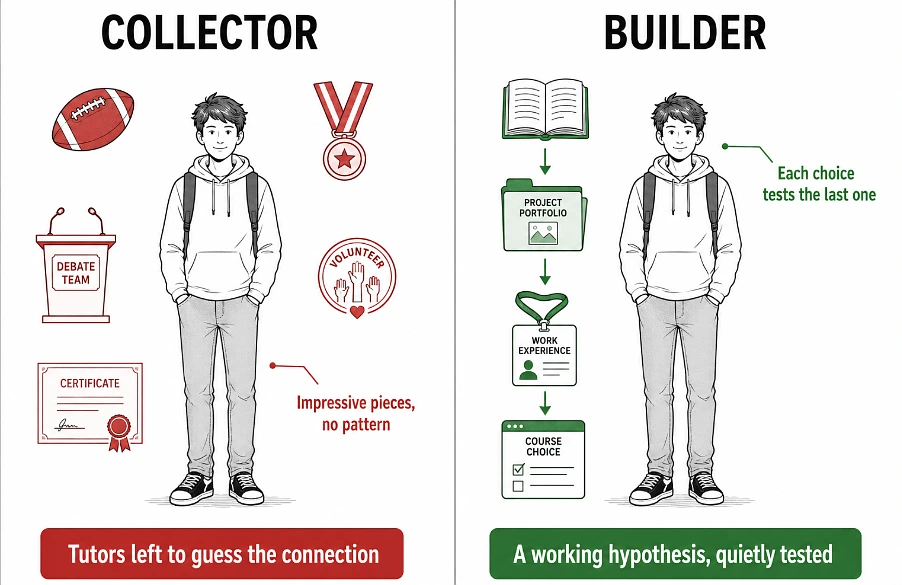
A folder full of impressive things is not the same as a persuasive application. A bit of sport, a bit of volunteering, a Duke of Edinburgh award, some debating, and admissions tutors are left to guess what connects it all. Usually they don’t guess, they move on.
The students who stand out show a pattern: an interest tested through reading, a small project, work experience that relates to the course. This is essentially the thinking the MBA admissions consultants sell to professionals in their late twenties, connecting past choices to a future goal. Sixteen year olds don’t need a life plan, but they benefit from the same discipline years earlier: a working hypothesis like “I’m interested in how businesses grow,” and choices that quietly test it.
Underestimating the new personal statement
The personal statement changed for 2026 entry, and plenty of applicants still haven’t clocked it. The single essay is gone. UCAS now asks three set questions: why you want to study the course, how your qualifications have prepared you, and what you’ve done outside formal education. The total limit stays at 4,000 characters, with a minimum of 350 per answer.
UCAS made the change after its own research found 83 percent of students called the old blank page stressful. The structure helps, but it also exposes thin preparation fast, because question three has to be filled with something real. Which loops back to the previous mistake: you can’t write convincingly about experiences you never built. One warning from UCAS worth taking seriously: statements run through a similarity detector, and pasted AI text can be treated as cheating by universities.
Missing the deadlines that carry consequences

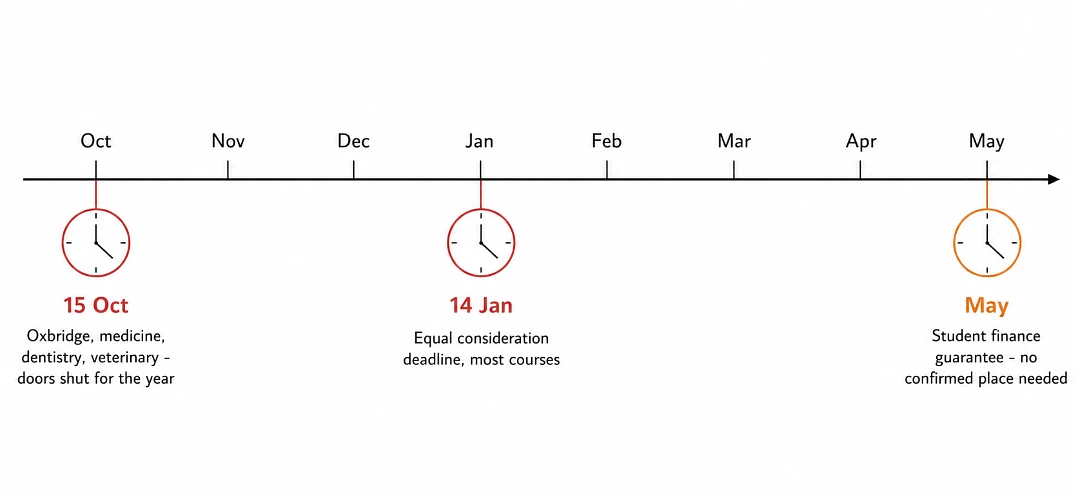
Three dates do most of the damage:
- 15 October, the deadline for Oxford, Cambridge and most medicine, dentistry and veterinary courses. Miss it and those doors shut for the year.
- Mid January, the equal consideration deadline for most other courses, falling on 14 January for 2026 entry.
- May, Student Finance England’s deadline for guaranteeing money arrives by the start of term. You do not need a confirmed place to apply, and late applications are the classic reason students start freshers’ week with no maintenance payment in their account.
Not running the money numbers early

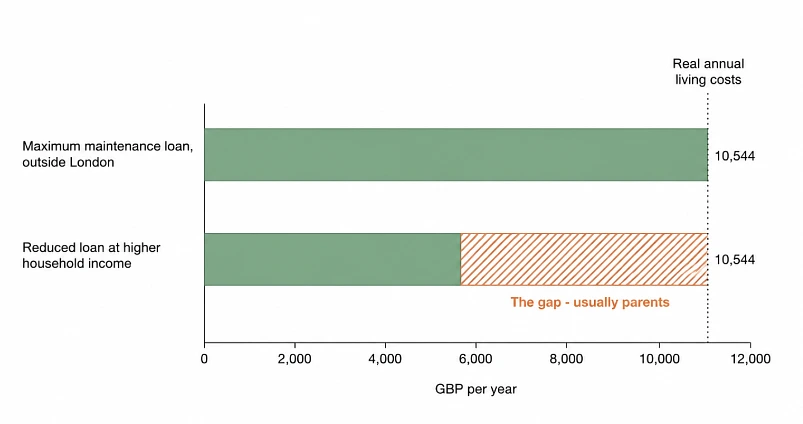
University in England now costs £9,790 a year in tuition for 2026/27, up from £9,535, with the government committing to inflation linked rises. The tuition fee loan covers that in full, paid straight to the university, so it’s the living costs that catch families out.
The maintenance loan is means tested against household income, and only households earning £25,000 or less get the maximum. For 2025/26 that maximum was £10,544 a year living away from home outside London and £13,762 in London, with amounts stepping down as household income rises. The gap between a reduced loan and real rent is expected to come from somewhere, usually parents, and families who discover this in August rather than Year 12 have run out of time to plan for it. Repayment, for what it’s worth, is gentler than the headline debt suggests: 9 percent of income above £25,000, with anything left written off after 40 years.
Choosing a course by its name
Office for Students data puts the continuation rate for full time first degree students at 89.5 percent, which means about one in ten don’t continue past their first year. Some of that is money or health, but a solid share is students who picked a course title without checking what the course actually contains. The corrective is free: Discover Uni, the official OfS site, publishes real data per course, including student satisfaction, continuation and what graduates earn. Twenty minutes there beats a glossy prospectus.
Assuming a US application works like a UK one

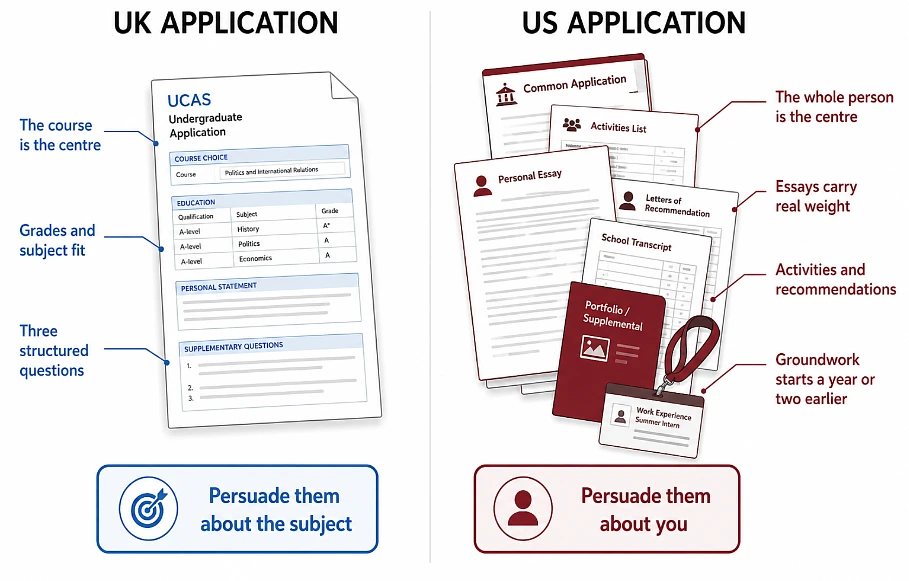
A growing number of British students add American universities to their list, and the mistake is sending UCAS thinking across the Atlantic. UK admissions is largely about the course; US admissions is about the whole person, with essays, activities and recommendations carrying real weight. It’s why Ivy League admissions consulting has become an industry in itself, the application is genuinely a different exercise, and a strong A level profile with no surrounding narrative tends to land flat at highly selective American universities. Anyone considering that route needs to start the groundwork a year or two earlier than their UCAS only classmates.
None of this requires a teenager to know their job title at 30. It requires choices that build on each other instead of drifting apart, made with the real dates and real numbers in front of you rather than discovered too late.