


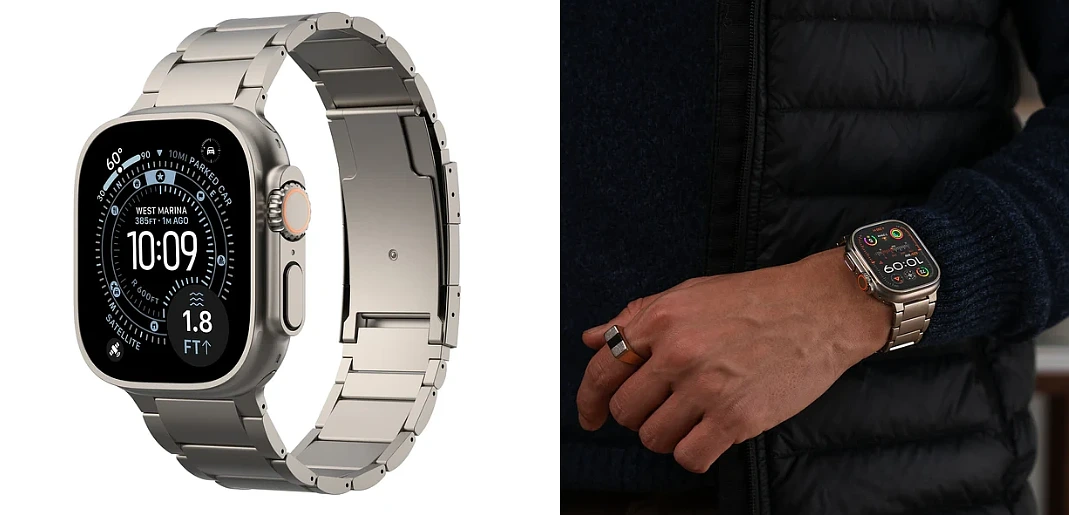
The Apple Watch Ultra is made from aerospace-grade titanium, and Apple ships it with a fabric loop or a silicone strap.
A bit like buying a proper mechanical watch and wearing it on a velcro strip from Argos.
The obvious fix is a titanium metal band, except most of them don’t actually match. The Ultra has this specific brushed finish, slightly warm tone, fine stippled texture, and it’s different from standard stainless steel and different from the titanium most third-party bands use. Get the wrong one and now you’ve got two metals sitting next to each other that are close but visibly off, and that gap between close and right will bother you every single time you look down, I promise.
Five bands worth looking at. They’re not all titanium, which matters. They’re not all the same grade of titanium either, which matters more than the brands would like to admit. Here’s how they stack up once you get past the marketing.
Robust Goods Titanium Band

Helsinki brand, makes and sells direct with no retail markup, which is why the pricing sits noticeably under everyone else here.
- T01 (butterfly clasp): ~£65
- T05: mid-range
- Titanium Band Pro (magnetic clasp): ~£145
- Material: Grade 2 titanium, 98.78% purity, DLC coated
- Weight: Under 70g across all models
- Wrist range: Up to 9 inches
The colour match is the reason this one sits first, and the reason is boring metallurgy rather than clever marketing. They use Grade 2 titanium, the same grade Apple used for the Ultra’s case. Same grade means same base colour and same surface tone, so the transition from watch to band in normal light is nearly invisible. That’s the whole trick and it’s kind of surprising how few brands bother with it.
The lug fit is where the engineering effort clearly went. The connectors are machined to the Ultra’s 49mm case, and when you slide the band in there’s no gap between the lug and the case edge, no wobble, no overhang. Achieving this kind of precision during product development often benefits from rapid prototyping, allowing manufacturers to test dimensions, fit, and design details before moving into final production Cheaper bands with sloppy lug tolerances leave a little line of daylight between band and case, and once you’ve spotted it on someone’s wrist you cannot unsee it, ever.
The magnetic clasp on the Pro works much like Nomad’s, low profile, sits flat, snaps clean, at roughly half the price and with a better colour match because of the Grade 2 material. Honestly though, the T01 at £65 is the one I keep coming back to, because nothing else at that money gives you genuine titanium with DLC coating and this level of lug precision. If you’re going to try one band from this list and see whether the whole metal-band thing is for you, the sixty-day return window on the Robust Goods Apple Watch bands makes that a fairly low-risk experiment, and the range runs from titanium through leather to sport options if metal turns out not to be your thing after a week of actually living with it.
Nomad Titanium Band

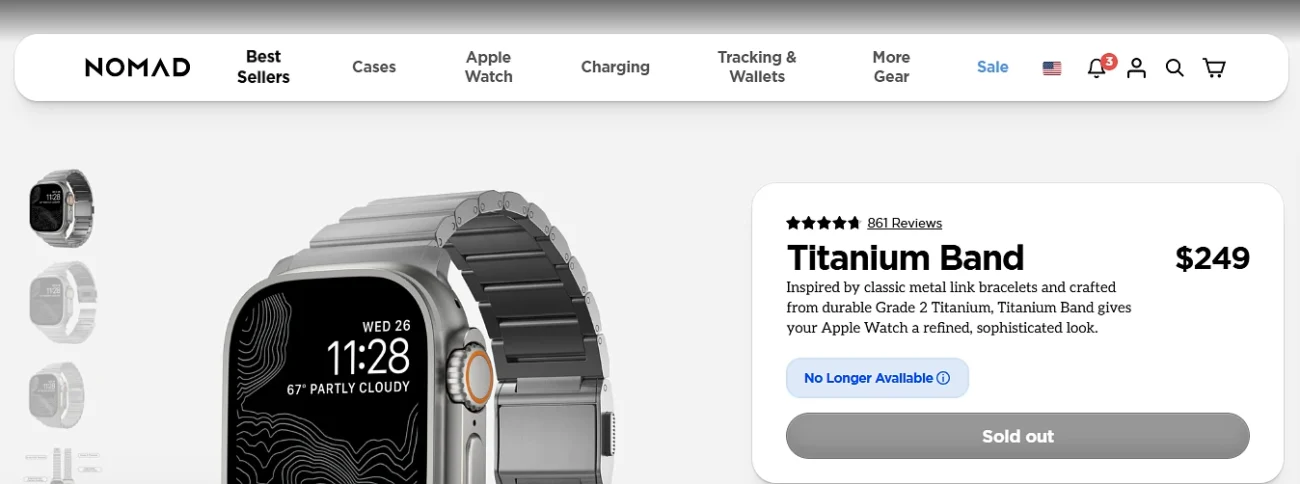
- Material: Grade 5 titanium, DLC coated
- Weight: 59g
- Clasp: Custom magnetic
- Price: £200–£250
- Stock: Frequently sold out
The magnetic clasp is the highlight. Custom design, sits almost flat against the underside of your wrist, snaps shut with this clean confident click. No fumbling with butterfly mechanisms, you press it and it’s done.
Colour match is good, not perfect. Grade 5 runs slightly cooler in tone than the Grade 2 Apple uses, and if you’re the particular type you’ll spot it in direct sunlight. Most people won’t care. I noticed, but then I’m exactly the sort of person who writes an article like this one.
The weight thing is real too. 59 grams doesn’t sound like much until you’ve worn a 45-gram band for a week and switch back, and then you feel it, especially in a workout where the extra mass moves around on your wrist.
The real problem with Nomad is you can’t buy one. They’ve had stock issues since launch, so wanting one means checking back every few weeks or sitting on a waiting list. It’s the premium option and it performs like one, but you’re paying a proper premium and then also queueing for the privilege, which makes it hard to recommend unless you’re genuinely patient.
Sandmarc Titanium Edition

Sandmarc started out making photography lenses and filters, and their band range does something nobody else on this list does, three titanium grades at three prices:
- Grade 2: ~£160, 57g
- Grade 4: ~£240, 74g
- Grade 5: ~£280
All three get the same DLC coating, and Sandmarc has its titanium independently tested through a California lab, which is more transparency than most brands bother with. The Grade 4 is probably the sweet spot, the links run wider than the competition and they’re cut for the 49mm Ultra case specifically, so the proportions look right instead of a skinny band hanging off a massive watch face.
The clasp is the letdown. It’s a butterfly mechanism in 316L stainless steel, not titanium, and you can feel the difference in your hand, the clasp end sits noticeably heavier than the link end. On a band you’re buying specifically because it’s titanium, having the bit that touches the inside of your wrist made from a different metal is a compromise worth knowing about before the money leaves your account.
Works fine. Locks securely. Won’t pop open on you. But at £240 and up, a stainless clasp reads as a cost-saving decision that doesn’t quite match the rest of the band.
Lululook Titanium Band

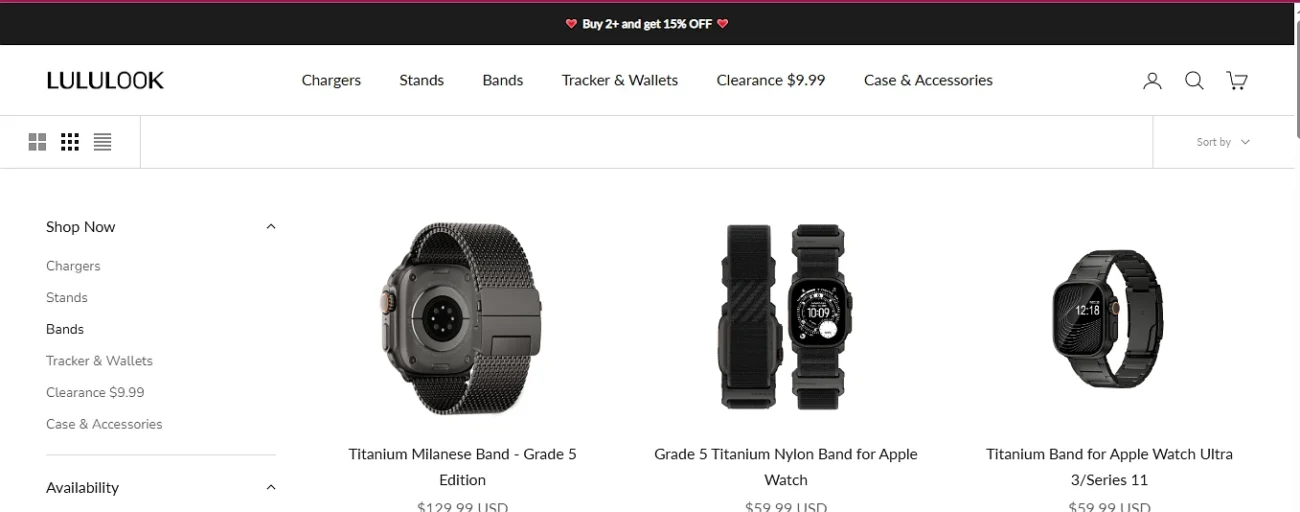
Multiple models, slightly confusing lineup. The one to pay attention to:
- Grade 4 magnetic clasp model
- Weight: 64g
- Width: 24mm, designed for the Ultra’s case
- DLC coated
- Price: £50–£60 full price, routinely drops to £30–£35 on sale
At thirty-odd quid the quality is honestly a bit hard to believe. Colour match is good, the magnetic clasp works, the sizing tool does the job.
Where it falls short, the link edges aren’t finished as finely as Robust Goods or Nomad, and the clasp has slightly more play in it. On the wrist and at arm’s length those differences mostly disappear, but hold it in your hand next to the expensive ones and you can tell which is which without looking at the price tags.
Wrist size maxes out at 8.5 inches, and the sizing tool wants a bit more patience than the ones the pricier brands include. Not a dealbreaker. Just a faff the first time.
For anyone who wants titanium specifically but isn’t ready to put £150 or more into a watch strap, this is the entry point that doesn’t feel like a compromise in daily wear.
Spigen Modern Fit “Titanium”

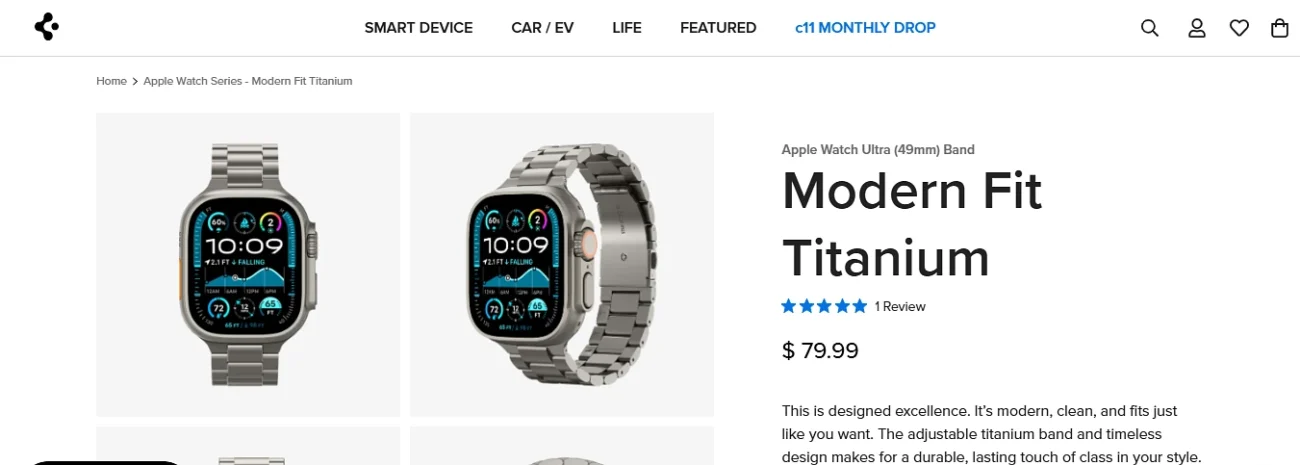
Included because it turns up on every roundup and because the name is genuinely misleading.
The Spigen Modern Fit Titanium is not titanium. It’s stainless steel. The word “Titanium” in the product name refers to the colour, it’s finished to match the Ultra’s natural titanium look. Spigen is upfront about this in the fine print, but the name catches people out constantly, and there are forum threads full of buyers who thought £55 was getting them a titanium band and unboxed steel instead.
Is it bad? No. The colour match is actually quite decent, the fold-over clasp is reliable, and it fits wrists up to 9.1 inches, the largest range on this list. At £55–£65 it’s the cheapest option by a distance.
Why the steel matters anyway:
- Heavier than titanium.
- Scratches more easily without DLC coating.
- Contains nickel, which can set off skin irritation if you have the sensitivity.
- Titanium is naturally nickel-free and hypoallergenic.
If none of that bothers you and you just want a metal band that looks right with the Ultra for the least money possible, the Spigen does that job. Just know what you’re buying, because the name makes it very easy to think you’re getting something you’re not.
What Does Titanium Grade Actually Mean on Your Wrist?
This is the bit that decides everything, so it gets its own section.
Grade 2 is commercially pure titanium. Softer, lighter, easier to machine into fine link tolerances, and it’s what Apple used for the Ultra’s case.
Grade 4 is the strongest of the pure grades. Harder than Grade 2, slightly heavier.
Grade 5 is an alloy, titanium mixed with aluminium and vanadium, the stuff of aerospace parts and medical implants. Harder still, noticeably denser.
Which matches the Ultra best? Grade 2, and the reason is almost stupidly simple, it’s the same material Apple used, so same base colour, same surface tone. Grade 5 carries a slightly cooler, more metallic hue that shows itself in certain light. Grade 4 sits somewhere between, and I’ll admit I couldn’t always pick the Grade 4 from the Grade 2 across a room, the difference is that fine.
The grade snobbery you find in watch forums is mostly people justifying whatever they already bought. What matters more is whether the clasp still works right after six months, because a gorgeous Grade 5 band with a clasp that’s gone loose is worse than a Grade 2 band that stays put.
And the colour matching problem is the whole reason this list exists in the first place. Apple built a watch out of Grade 2 titanium with a specific surface treatment and then simply never made a matching metal band for it, which, for a company that will sell you a £19 polishing cloth, is a strange gap to leave open. Some brands got closer than others, and it mostly comes down to whether they used the same grade or settled for a different one. Once you know that, the decision pretty much makes itself.