


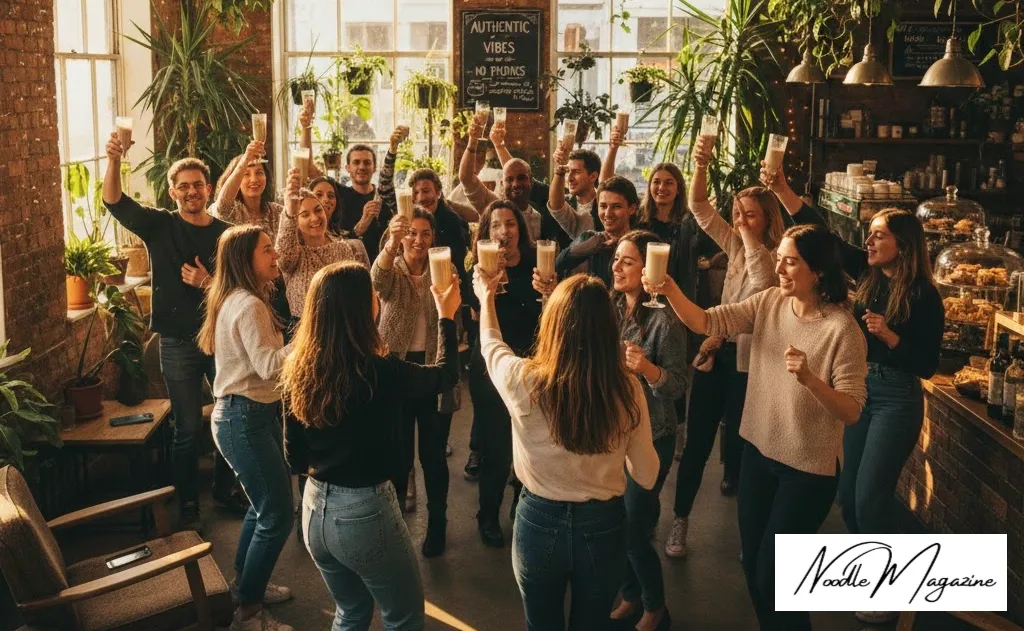
A few years back, a proper night out meant one thing. Queuing in the cold, paying fifteen quid to get in, shouting over bass drops until 3am, then feeling absolutely wrecked for the next two days. That was just what you did.
Something’s shifted, though. Younger people across the UK aren’t abandoning social lives—they’re just rebuilding them around different priorities. Quieter venues. Earlier finishes. Actual conversations you can hear. The whole thing has picked up a name: soft nights out.
And it’s not a small trend either. Eventbrite reported a 44% surge in daytime party events, with the busiest window now sitting between 4pm and 10pm. Sober-curious event ticket sales jumped 92% in 2024 alone.
What Actually Counts as a Soft Night Out
The definition stays loose, which is partly why it works. Wine bars instead of clubs. Live acoustic sets instead of DJs cranking speakers to painful levels. Supper clubs, pub quizzes, coffee shop raves that wrap up before eleven.
The common thread? You can talk to your mates without losing your voice. You’re not checking the time at 2am wondering how much longer you need to stay to justify the entry fee.
London’s seen some interesting versions pop up. Kasa Café runs sober morning raves. Carwash Nightclub started hosting Cardio Dance Parties at 10am. Creamfields added a gym to their festival grounds. Coffee clubbing events on Eventbrite grew by 478% last year—that’s not a typo.
It’s planned socialising that doesn’t punish you the next morning.
Clubbing Got Expensive and Exhausting
Drink prices have rocketed. A round in central London can easily clear forty quid now, and that’s before entry fees, transport, and the obligatory 3am kebab. Stack all that against a generation dealing with rent increases and stagnant wages, and the maths stops making sense.
But money’s only part of it. Gen Z reportedly drinks around 30% less alcohol than previous generations, with 61% actively trying to cut back for sleep, mental health, or fitness reasons. The post-night recovery that older generations just accepted—write off Sunday, maybe Monday too—doesn’t fit how younger people want to structure their weeks.
There’s also the safety angle. Late transport options remain patchy outside major cities. Waiting for night buses or walking home at 4 am carries risks people would rather avoid entirely.
Social Media Made Going Out Feel Like Work
Instagram and TikTok changed the dynamics of a night out in ways nobody really asked for. Suddenly, every evening needed documentation. The right outfit, the right venue, enough content to prove you were there having fun.
That pressure built up. A lot of people started noticing that nights out felt less like enjoyment and more like a performance. Getting home and immediately editing photos before posting isn’t exactly relaxing.
Soft nights out sidestep most of that. Nobody needs content from a Wednesday dinner with friends. A quiet cocktail bar doesn’t demand the same level of curation. You can actually be present, which sounds obvious but apparently became rare.
Comfort Stopped Being Something to Apologise For
There’s been a broader shift here too. Comfort-first clothing went mainstream years ago—athleisure, stretchy everything, trainers as acceptable footwear basically anywhere. Social habits followed.
People don’t want sore feet from standing for six hours. They don’t want ears ringing the next day. They don’t want to sacrifice sleep for an experience that often doesn’t even feel that memorable by the time Sunday rolls around.
That doesn’t mean staying home every night. But when people do go out, they’re choosing environments that don’t require physical endurance.
Some stay in entirely with Netflix, casual games, or low-key options online like secure non-GamStop play options for users—the kind of unwinding that doesn’t come with a hangover attached.
Where the Numbers Actually Land
The growth in different event types tells its own story:
| Event Type | Event Growth | Attendance Growth | Fastest Growing Cities |
|---|---|---|---|
| Coffee clubbing | +478% | +150% | Houston, Austin, Seattle |
| Morning dance parties | +20% | +13% | Denver, Nashville |
| Thermal gatherings (saunas, cold plunges) | +256% | +1,105% | New York, Atlanta, Dallas |
Thermal gatherings saw attendance spike by over 1,000%. Morning raves are pulling crowds that would’ve seemed impossible five years ago. The demand existed—venues just hadn’t figured out how to meet it yet.
Clubs Won’t Disappear, But They’re Adapting
Traditional nightlife isn’t going extinct. Clubs will still pack out on weekends. Big DJ sets will still draw thousands. Some people genuinely love that environment and always will.
What’s changing is the assumption that clubbing equals the default option. It’s not the only way to have a social life anymore, and venues are catching on. More pubs are hosting events. Cafés are staying open later with different programming. Festivals are adding wellness components alongside the main stages.
The industry’s following where people actually want to spend time rather than insisting everyone come back to what worked twenty years ago.
This Reflects How People Want to Live Now
Soft nights out aren’t about getting older or having less energy. Plenty of people in their early twenties are driving this shift. It’s about choosing experiences that add something rather than subtract.
A dinner where you actually catch up with friends. A gig where you can hear the music without earplugs. An evening that ends at a reasonable hour so tomorrow doesn’t feel like damage control.
Whether that’s a morning rave in a coffee shop, a quiet pub quiz, or a night in with mates, the point stays the same: fun that doesn’t cost you the next day.s down to picking experiences that resonate with people’s authentic emotions. “Soft nights out” are the best way to go for those who are refining what success, balance, and happiness represent.