


Switzerland’s healthcare and medical tourism sector isn’t standing still. In 2024 alone, University Hospital Zurich rolled out a multilingual concierge programme for international patients seeking cancer and cardiovascular care, and Klinik Hirslanden opened a robotic surgery centre that now draws patients from the Middle East and Central Asia. Industry estimates put the country’s medical tourism market at over $72 billion, with double-digit growth expected through the next decade.
At first glance, all the offers sound equally convincing: full support, the best doctors, guaranteed results. But behind these words, you’ll often find nothing more than a request forwarded to a clinic’s general intake desk, with no real expertise or personal contact with the doctors involved. That’s why Unique Services operates differently. It handles doctor selection, appointment scheduling, and support at every stage, rather than simply passing along clinic contact information.
Does the Company Have Real Contacts with Doctors, Not Just the Reception Desk

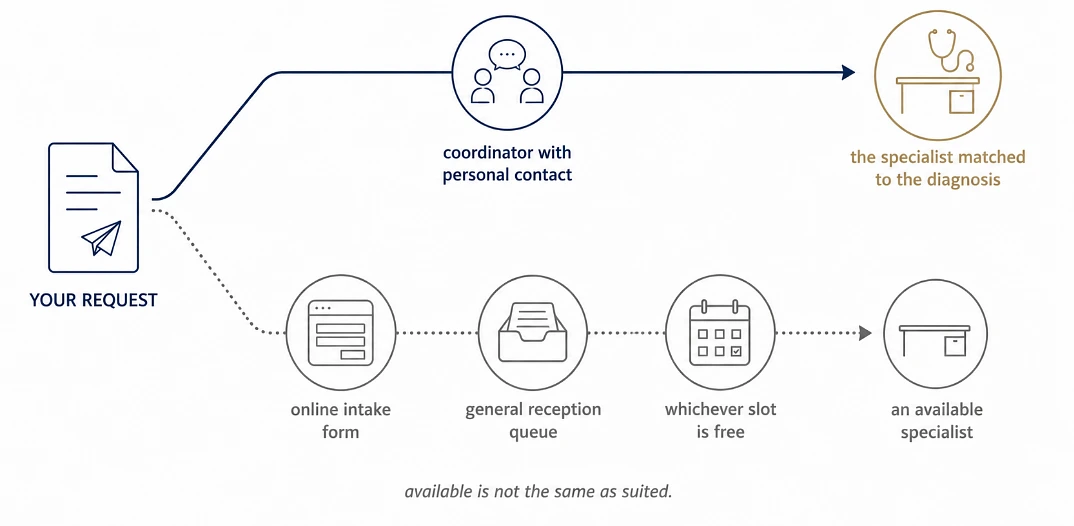
The first and most important question is this: Who exactly does the intermediary work with — clinic administrators or doctors directly? The difference is enormous. Large private networks like Hirslanden (17 hospitals) or Swiss Leading Hospitals (18 hospitals, 236 doctors) each have their own intake structures. A request submitted through a generic online form usually just reaches whichever specialist has a free slot. That’s not necessarily the one best suited to a specific diagnosis.
It’s worth asking directly how the specialist selection process works and whether the coordinator has personal contact with the doctor, not just access to a booking calendar.
What Should a Turnkey Support Service Include


Sorting out treatment in Switzerland usually means some paperwork, and how fast you get seen depends on the clinic, the specialist’s availability, and whether your documents are ready. A good concierge service explains the timeline and what you need and keeps you posted.
Before signing up, ask for a proper checklist, not just a promise. A well-run service usually covers:
- selection of a doctor based on the diagnosis;
- scheduling an appointment without a long wait;
- translation of medical documents;
- the presence of an interpreter at the appointment;
- arrangement of accommodation near the clinic;
- transfer from the airport to the clinic;
- follow-up communication with the doctor after treatment.
If even half of these items are missing from a company’s offer, it’s worth asking who will handle those tasks instead. On the Uniqueservices website, the full support cycle is laid out step by step, so patients can compare it against what other providers actually offer.
How Can I Know That Support Won’t End Immediately After My Doctor’s Appointment
Many companies disappear the moment the patient leaves the doctor’s office. As hospitals themselves invest in longer-term patient relationships — the Zurich concierge programme mentioned above is one example — patients have every reason to expect the same from an independent intermediary. Russo Unique Services, for instance, builds its work around contact before, during, and after treatment, rather than treating the appointment itself as the finish line.
A reliable partner offers direct communication with the relevant specialists and consistent support throughout the process — not just at the point of booking.
Conclusion
A medical concierge service isn’t a matter of a polished presentation. It comes down to concrete clarity on three points: who the company actually works with, what its support includes in practice, and whether that support continues after treatment. Ask these questions upfront. The answers show who actually helps — and who just passes you along.