

Blog
12 Million Car Finance Deals Could Qualify For Compensation, So Here Is How To Check The Next One Before You Sign
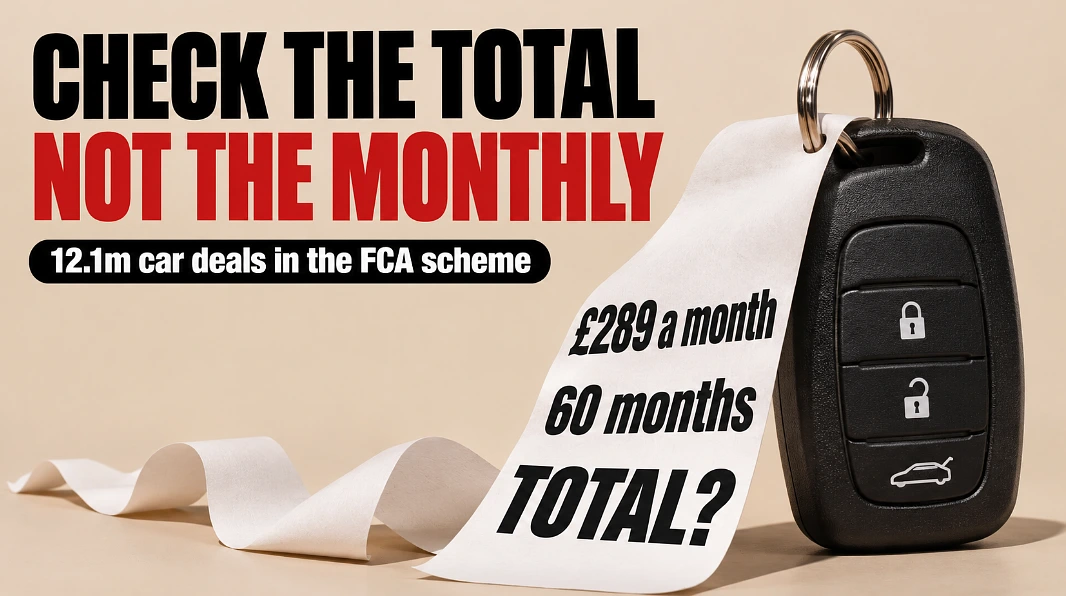
The Financial Conduct Authority confirmed a compensation scheme for car finance on 30 March 2026, estimating that 12.1 million agreements could qualify for payouts averaging about £830. The scheme is about commission and lending arrangements that were not properly disclosed to customers. For anyone taking out finance now, it is a reminder to ask how the deal works and to work out the total amount payable, not only the monthly payment.
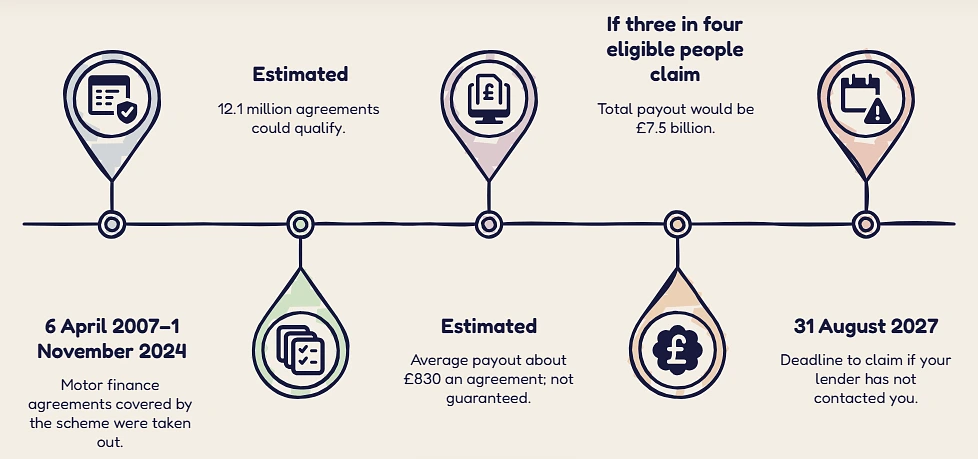
- Agreements covered: motor finance taken out between 6 April 2007 and 1 November 2024
- Number of agreements: an estimated 12.1 million that could qualify
- Average payout: about £830 an agreement, an estimate and not a guaranteed sum
- Total: £7.5 billion if three in four eligible people claim
- Deadline to claim if your lender has not contacted you: 31 August 2027
Taking out car finance in those years does not mean a payout. Compensation depends on the commission arrangement on the agreement, what was disclosed and the other eligibility rules. Personal contract hire, some high-value loans and agreements with no interest charged are excluded.
One thing to know about the timing. Parts of the scheme were put on hold by the Upper Tribunal on 2 July while a legal challenge is heard. The FCA has said the hearing will run from 16 February to 3 March 2027, with a judgment expected in the months after. Until then lenders do not have to calculate or pay under the suspended parts, though some may offer a settlement of their own accord. A complaint can still be made to the lender, and it costs nothing to make one without a claims firm.
The Monthly Figure Is Not The Cost Of The Car
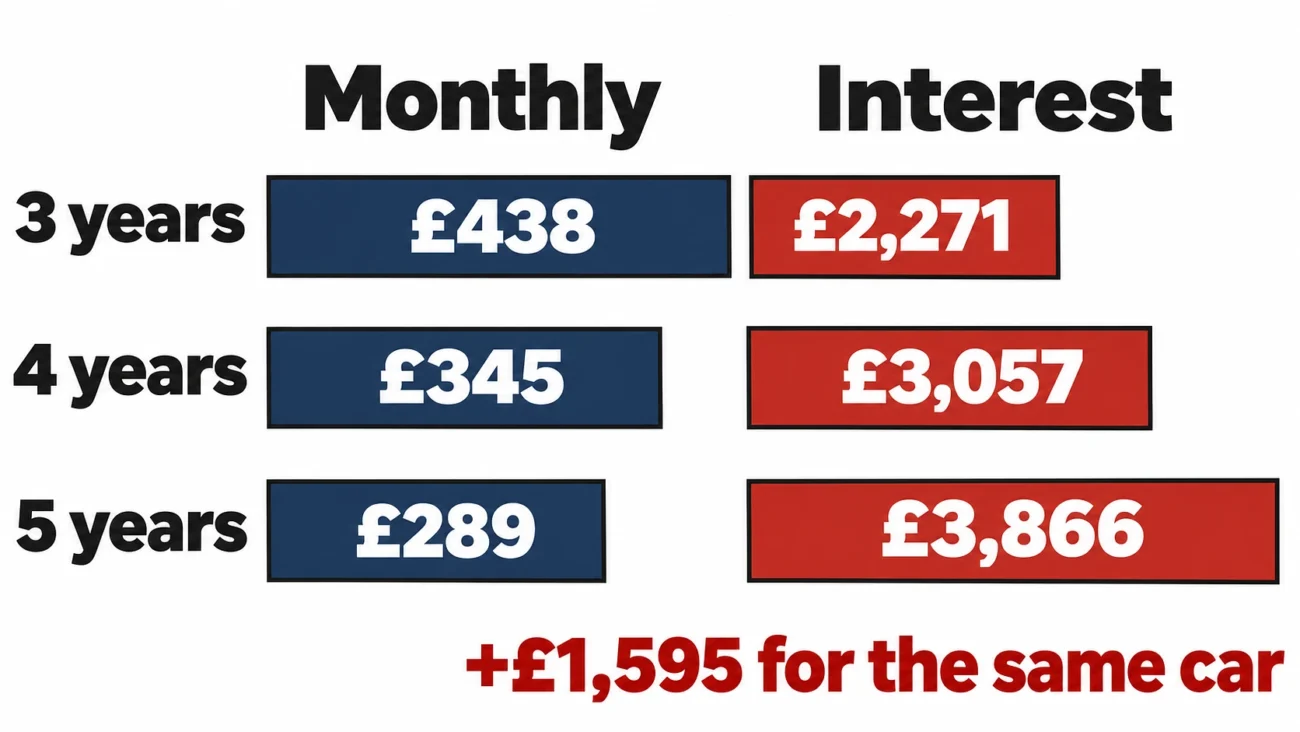
Most buyers compare car finance by the monthly payment. A longer agreement brings that payment down and pushes the total up. Here is one loan worked three ways: a £15,000 car, a £1,500 deposit, £13,500 borrowed at an example rate of 10.9 per cent APR. It is a straightforward fixed-rate loan with equal monthly payments, no fees and no final balloon payment.
- Over 3 years: £438 a month, £2,271 in interest
- Over 4 years: £345 a month, £3,057 in interest
- Over 5 years: £289 a month, £3,866 in interest
The five-year deal is £149 a month cheaper than the three-year one. It also costs £1,595 more in interest for the same car.
A Personal Contract Purchase, or PCP, works differently. The monthly payments are lower because part of the price is held back as an optional final payment, and interest is charged on that part too. Before comparing a PCP with a loan, check the final payment, the total amount payable, the mileage limit and any extra charges.
Try The Deposit And The Term Before You Visit A Dealer
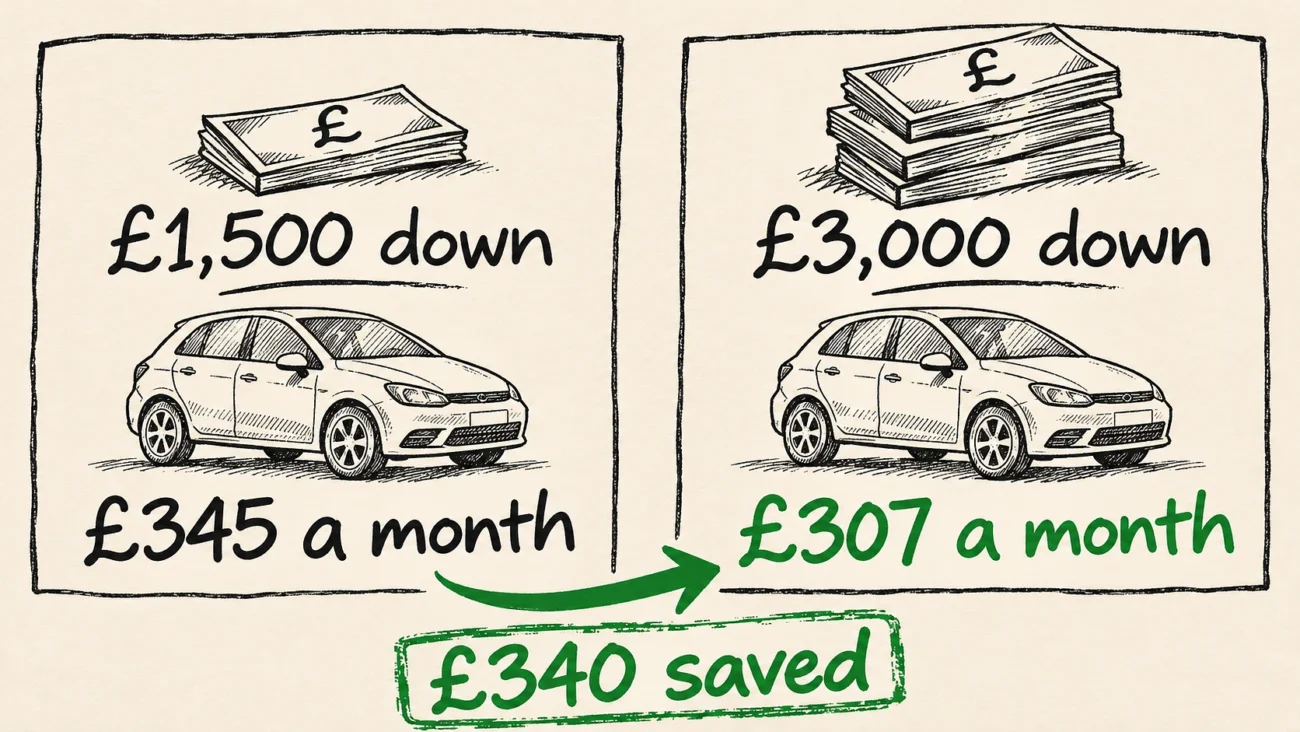
The deposit moves the figures as well. Put down £3,000 on that car in place of £1,500 and the four-year payment falls from £345 to £307 a month, with the interest down from £3,057 to £2,717. That is £340 saved for finding £1,500 more at the start.
These sums take a minute each, and using a car finance calculator to compare different deposits and terms shows them side by side before any credit application is made. The rate you are offered will depend on your credit record, so treat the first figures as a guide and run them again with the real quote.
What Already Leaves Your Account Each Month
A new payment has to fit beside the ones you already have. Write them down in this order:
- Rent or mortgage
- Council tax, energy, water, broadband and phone
- Existing credit: cards, loans, buy now pay later
- Food and travel
- Insurance, and for a car, road tax, fuel and servicing
The running costs of the car belong on the list too, because the finance payment is only part of what the car costs each month. If you share costs with a partner, agree who pays which bill before you add a new one. MoneyHelper, the government-backed service, has a free budget planner for this.
Leave A Margin For A Bad Month
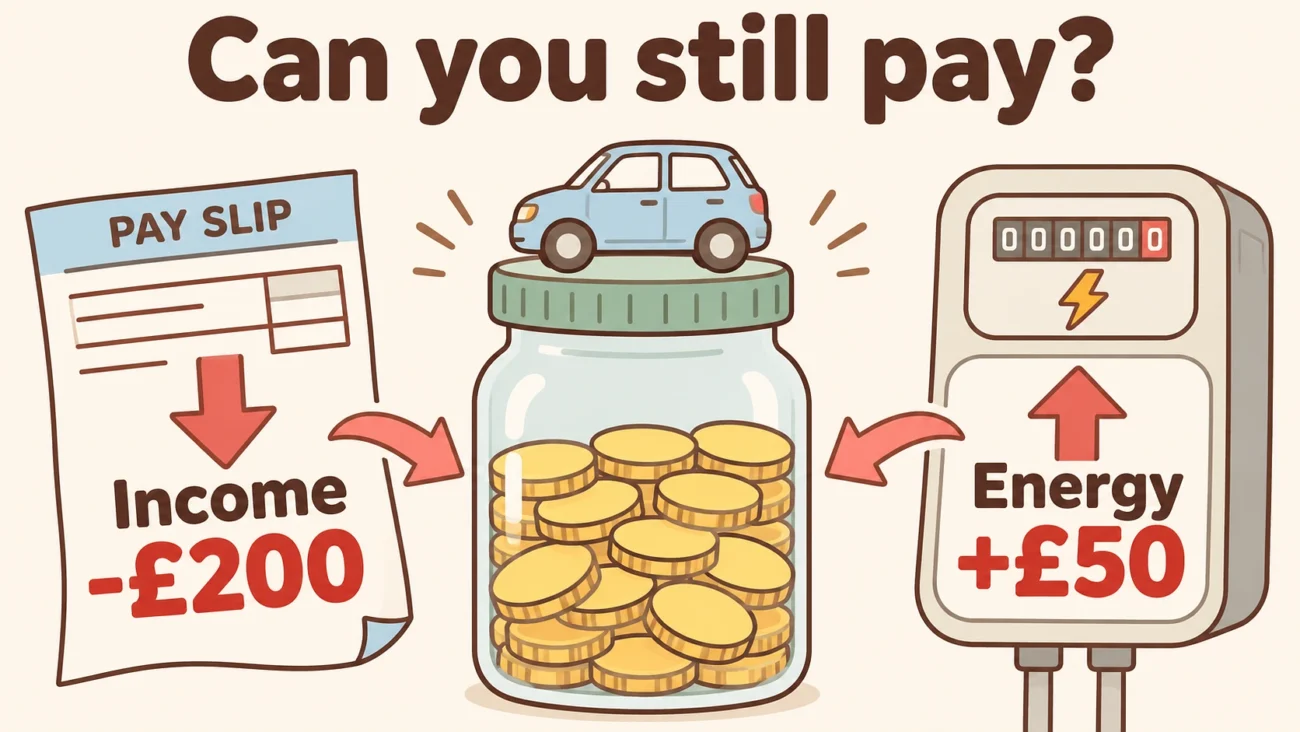
Car finance agreements commonly run for three to five years. Hours can be cut, a job can change and bills can go up in that time. A payment that uses every spare pound today will not survive any of those.
A simple test is to take the monthly payment and ask two questions. Could you still pay it if your income fell by £200 a month? Could you still pay it if your energy bill rose by £50? If the answer to either is no, borrow less or pick a cheaper car.
Being Approved Is The Lender’s Test, Not Yours
A lender must assess your creditworthiness and whether the repayments are affordable before it agrees to regulated finance. It may use information about your income, your spending and your credit history, depending on the circumstances. Approval does not guarantee that the payment will leave as much room in your monthly budget as you would like.
Borrowing less than the maximum you are offered leaves room for savings and for the months that go wrong. On the example above, the buyer who can manage £438 a month for three years pays £1,595 less than the buyer who takes five years because £289 looked easier.