

Blog
Quiet Breast Pump Checks For Offices And Shared Pump Rooms
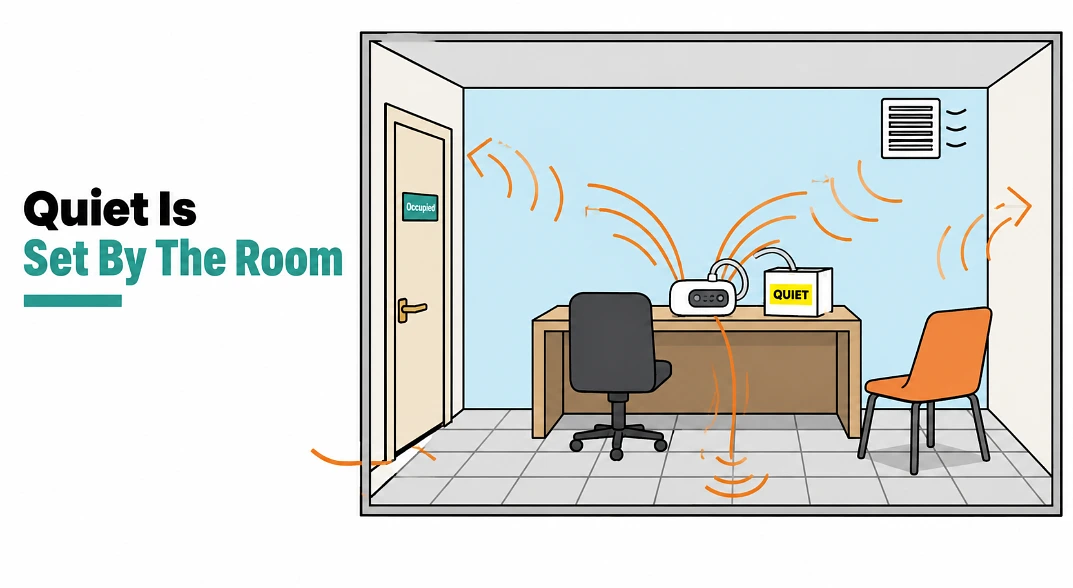
At home, a pump can sound fairly mild beside a running dishwasher or the telly going in the next room. Put the same motor in a small wellness room with hard walls, a hollow desk, and another person sitting three feet away trying to read, and every pulse is suddenly more noticeable. The room itself is becoming part of the test, which is something most product reviews never bother to mention.
That is why a quiet breast pump is better judged as a workday setup than as a label on a box. The question worth asking is not whether a motor makes zero sound, because none of them do. It is whether the motor, the valves, the clothing, and the room together are creating a level and type of noise that feels manageable in the place where pumping is actually going to happen.
What follows is a practical office check rather than another ranking. And there is room for an answer that the marketing does not love: sometimes the larger pump that stays on a desk is still the better work tool.
Define Quiet By The Room, Not The Product Label
How “quiet” a pump feels is depending entirely on the space around it. Soft surfaces like carpet and fabric furniture are dampening echo, while tile, glass, and bare hard walls are amplifying every pulse. A pump that fades into background noise in a busy breakroom can feel very noticeable in a small, empty shared room where the only other sound is the ventilation fan clicking on and off.
Product numbers can help with initial sorting, but they are not describing those conditions. Measurement distance, operating setting, room surfaces, background noise, and whether one or two motors were running all matter. Unless two pumps were measured under the same method, a small difference on a product page may not predict which setup is going to be less distracting at work.
If a wearable format is already suiting the routine, you can shop eufy breast pumps and compare the current model details, then carry the same room questions into each comparison.
Separate The Four Sounds You Are Actually Hearing
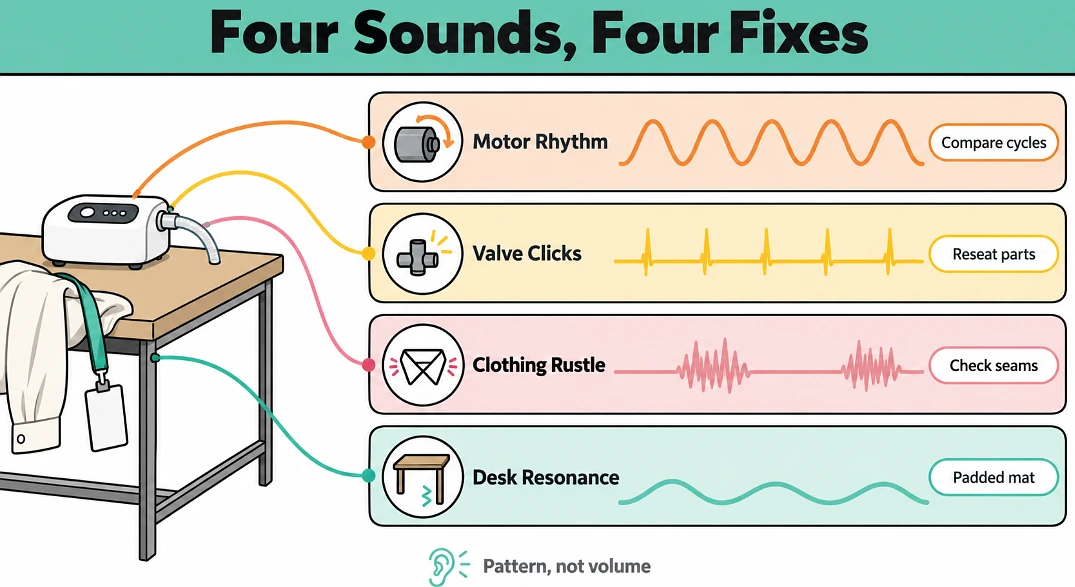
The motor gets most of the attention, though it is only one part of what you hear. A useful comparison is listening for four sources separately because each one has a different fix.
- Motor rhythm. Some pumps are producing a steady hum, while others have a more obvious rise and fall with each cycle. A steady sound may blend into office ventilation more easily. A pulsing one can draw attention even when it is not especially loud.
- Valve and membrane sounds. Valves may click, chirp, or make a soft wet sound as suction changes. Assembly matters here. A part that is damp, worn, loose, or seated incorrectly may sound different from the same pump assembled properly. Worth checking before blaming the motor.
- Clothing friction. A quiet wearable breast pump can still be creating rustling when a cup presses against a stiff bra seam, an ID lanyard taps the housing, or a loose blouse moves across its surface. This noise often appears only after turning, reaching for a bag, or leaning over a laptop. Easy to miss in a shop demo, obvious during the third session in the same room.
- Desk and counter resonance. A motor sitting on a hollow table is turning the furniture into a secondary soundboard, amplifying vibration and low-frequency hum. A padded, non-slip mat can reduce this, as long as it is not blocking the pump’s ventilation.
Listen for pattern, not just volume. A brief zip sound while getting settled is different from a click that repeats for twenty minutes. The second one is more likely to become tiring in a shared room, even if it is technically quieter on a meter.
Run A Five-Minute Office Noise Check
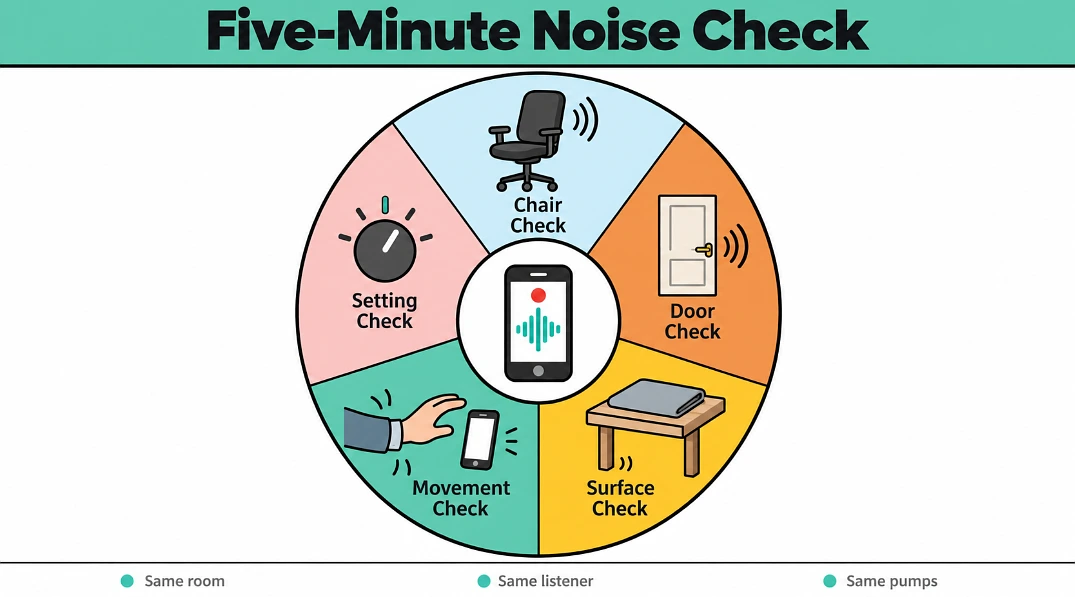
A phone recording and a trusted colleague can reveal more than a quick demo in a noisy shop. This is a practical side-by-side comparison, not a certified acoustic measurement. Use it to evaluate setups in the same room, not to publish formal decibel ratings.
Start with the room in its normal state. Close the door the way it would be during a session, turn the ventilation on, and place bags or soft furnishings where they usually sit. Run each pump with the parts assembled correctly and with water only if the manufacturer expressly permits that test method. Otherwise, listen during a normal pumping session without recording any private video or health information.
| Check | What To Do | What The Result Is Telling You |
|---|---|---|
| Chair check | Listen from the chair another room user would occupy | Whether pulsing, clicks, or clothing noise is becoming distracting at close range |
| Door check | Have a trusted person stand outside the closed door | Whether sound is carrying into a corridor under ordinary office conditions |
| Surface check | Test the pump on your usual desk and on a padded, stable mat | How much furniture resonance is adding to total noise |
| Movement check | Reach for a phone, turn slightly, and lean forward as the instructions allow | Whether bra fabric, clothing, jewellery, or a badge is creating more noise than the motor |
| Setting check | Compare the settings that are comfortable and normally used | Whether the sound character is changing across a realistic session |
Keep every comparison as fair as possible. Same room, same listener position, same number of pumps, similar background conditions. Do not chase the lowest reading from a phone app. Consumer microphones are processing sound differently, and a single number can hide an irritating pulse that a colleague sitting nearby would notice straight away.
Compare Wearable Or Desk Pump Noise Paths
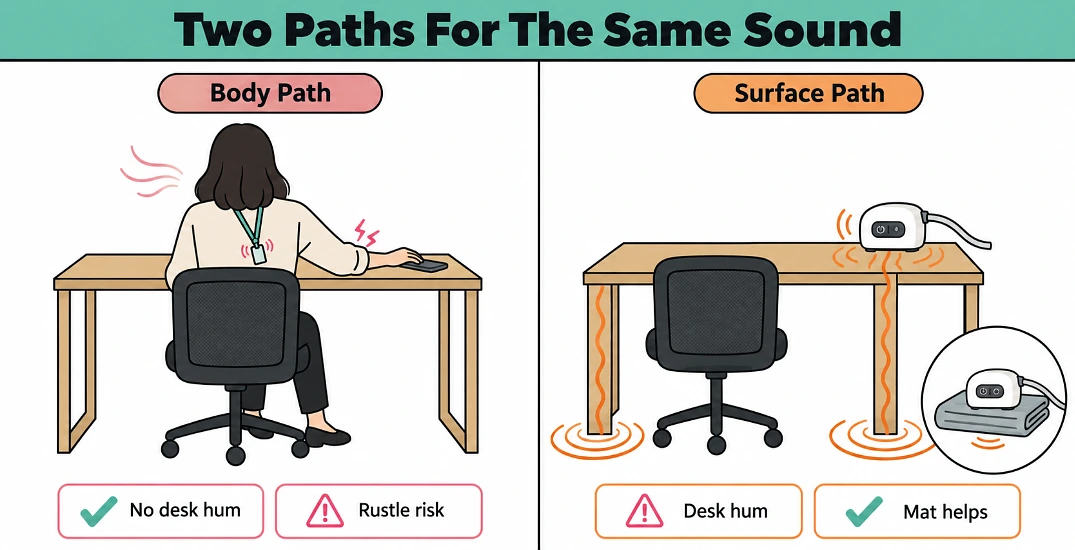
The useful difference between the two formats is the path the sound is taking through the room. A wearable is placing its motors against the body, while a traditional electric pump is sending vibration into whatever surface is supporting it. Either arrangement can be less distracting in the right room.
How Wearables Are Changing The Sound Path
Wearable pumps are eliminating desk resonance entirely by placing the motor against the body, and clothing can muffle higher-frequency sound. Fabric friction and movement are still creating rustling or tapping noises though. This style is performing best if your workspace only has hollow cabinets or loose tubing that would knock against furniture otherwise.
Always test the pump while sitting still and while moving around. The difference between those two conditions is often where the real noise surprise is hiding.
When A Desk Pump May Sound Better In Practice
A traditional desk pump can work just as well acoustically if you dampen surface vibration with a padded mat. Its steady hum is often blending more easily into background office ventilation than the dual-rhythm pattern some wearables produce. No format is automatically quieter. The room and the surface are deciding more than the product category.
Before replacing your pump entirely, try simple fixes first:
- Move the unit off a hollow cabinet onto a solid surface.
- Secure tubing to prevent it tapping against the desk edge.
- Add a stable mat under the motor.
- Check the valves are seated properly and not worn.
For rooms with a lockable door and set schedules, a desk pump can be perfectly practical without being worn inside clothing. A lot of parents who switched to wearable end up going back to desk format once they had a room with a proper door and a decent surface to put it on.
Apply The Check To One Wearable Option
For a parent who has already decided a wearable suits their work routine, the eufy Wearable Breast Pump S2 Pro is one in-bra option worth considering. Its official specifications are listing operation at under 46 dB, though perceived noise is varying by room and setup, so always test in your actual pumping space before settling on a verdict.
The format is the relevant thing here, not a feature list. In-bra placement is avoiding sending motor vibration directly into a hollow tabletop, but fit and clothing may introduce other sounds. The S2 Pro still needs the same chair, door, surface, movement, and setting checks as any other candidate.
Listen while seated, while making the movements the instructions allow, and from outside the closed room. If clothing rub is the main sound, changing the bra or outer layer may matter more than changing a pump setting. A colleague who has used a few different wearables over the past year will probably tell you the same thing, the bra fit decides more than the motor spec.
Set Reasonable Expectations In A Shared Pump Room
A shared pumping room works better when ordinary pump sounds are treated as expected rather than as a problem one person must hide. A clear occupied sign and agreed room limits can reduce interruptions, while headphones remain a personal option rather than a burden placed on another user. No one should have to give up a pumping break because a motor can be heard through a wall.
In the UK, the Equality Act 2010 protects breastfeeding mothers from discrimination, and ACAS guidance recommends that employers provide a private, clean, warm room with a lockable door, a comfortable chair, and access to a fridge for expressed milk. The Health and Safety Executive has published guidance on rest facilities for new and expectant mothers. These protections do not explicitly mention pump noise, but they do establish that the employer’s obligation is to provide a suitable space, not to require silence from the person using it.
For readers in the US, the Department of Labor’s Pump at Work guidance provides broadly similar protections: most nursing workers are entitled to reasonable pumping breaks and a private space other than a bathroom for up to one year after childbirth.
Policies vary by employer. Ask HR how shared-room access and privacy are being handled. This is practical guidance, not legal advice.
What The Check Is Really Measuring
At work, the right judgement about pump noise is made in the room, not on a comparison chart. Find the sound that is travelling first.
A hollow table may be the culprit. With a wearable, it may be clothing movement or a bra seam pressing against the housing. Fixing that single source can matter more than switching formats entirely.
A wearable may avoid desk vibration. A traditional pump may settle into the background more easily on a solid surface. Neither is winning by default. Choose the setup that remains manageable through a normal session, then confirm it from a nearby chair and outside the closed door.
The goal is not a perfect label on a product page. It is a workday setup that is not demanding extra attention from anyone in the room.