


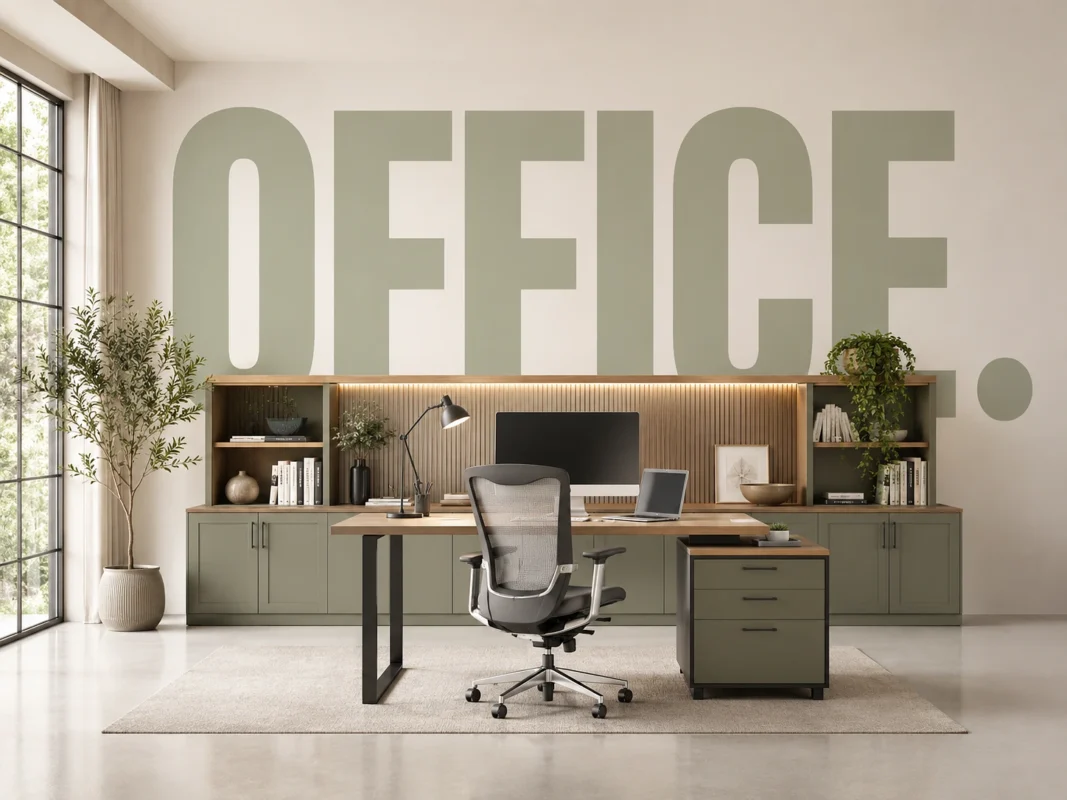
Working from home has stopped being a temporary arrangement for a lot of people, and a home office renovation is now one of the more common projects homeowners take on. Most of that renovation goes on the things you can see. Paint, bespoke storage, better lighting, a tidy layout. All of it matters. But there’s one decision inside that renovation that people consistently underspend on, and it’s the one their body actually notices at the end of every working week. The chair.
This is a narrow article on purpose. Not the entire makeover, just the seat, as it’s the component of a home office that subtly determines whether the completed space is a place where you can work or one that gradually causes back pain.
Why the chair is the part that gets skipped
Think about how a renovation budget usually gets spent. It pours into the visible stuff, because the visible stuff is what you photograph and what adds to the property’s value. The chair barely registers in a photo, so it ends up last in the queue, and by the time the room is finished the money has mostly gone.
So people pull up whatever was spare. A dining chair, an old task seat that came with a desk years ago, something from another room.
What it feels like if you skip it: for the first week the spare chair seems fine. By week three it isn’t. You’ve got the low background ache that never quite leaves, you’re shifting position every few minutes without noticing you’re doing it, and your focus is quietly draining away because part of your attention is always on the discomfort. Eventually you start finding reasons to work from the sofa or the kitchen table, which undoes the entire point of renovating the room in the first place.
What it feels like if you get it right: you sit down in the morning and the chair is simply not something you think about. No fidgeting, no ache building through the afternoon, no Friday stiffness. Your attention stays on the work because nothing is pulling at it. Every day, the room you invested money in refurbishing is used exactly as you had imagined.
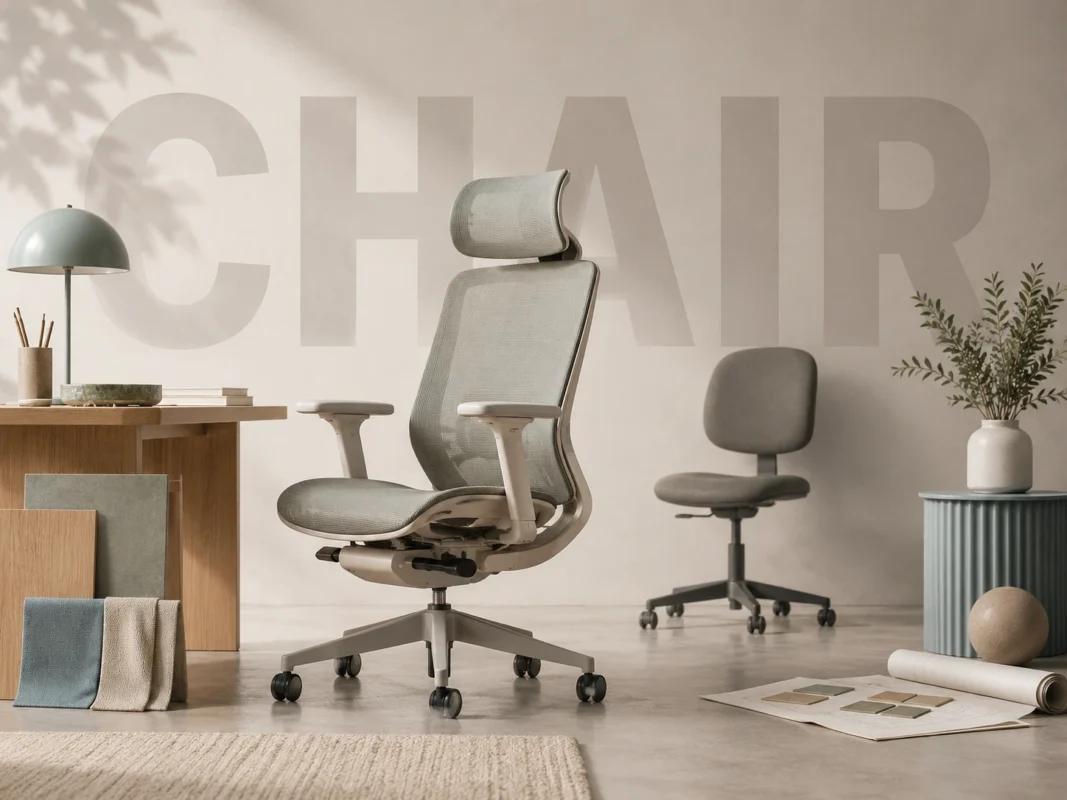
That is the main argument in favour of approaching the chair as a component of the renovation rather than an afterthought after it is finished.
The specific tip: match the chair to your hours, not your budget
Here’s the concrete one, because “buy a good chair” on its own is useless advice.
The mistake almost everyone makes is choosing a chair by price. They decide on a number, a hundred pounds, two hundred, whatever feels reasonable, and then buy the best-looking thing at that number. That’s the wrong starting point. The right starting point is honestly counting how many hours a day you’ll actually sit in it.
The solution works as three tiers:
- Under two hours a day — a decent mid-range task chair is genuinely fine, you don’t need to overthink it
- Two to four hours a day — you want, at minimum, adjustable seat height and proper lumbar support that meets the curve of your lower back
- Four hours or more a day — which is most full-time remote workers — you need seat height, back angle, armrests and lumbar support that all adjust independently, because no fixed-shape chair fits every body
So before you look at a single product, write down your real daily hours. Then shop only inside the tier that matches. It stops you overspending on features you’ll never use, and far more importantly it stops you underbuying a chair your body is then trapped in for forty hours a week. The hours decide the chair. The budget is the second question, not the first.
What to actually look for once you know your tier
For anyone doing genuine full-time hours in the room, this is where good office chairs earn their money. It’s worth knowing what each adjustment is actually for, rather than treating them as a feature list on a box.
- Seat height — feet flat on the floor, knees roughly level with your hips. Too high and your legs lose circulation, too low and your back rounds forward.
- Lumbar support — it should meet the inward curve of your lower back and hold it there. A flat backrest lets your spine slump over the course of the day, and that slump is where most desk-related back pain comes from.
- Backrest recline — being able to lean back slightly takes load off the spine. A backrest locked rigidly upright keeps you under tension all day.
- Armrests — they should let your shoulders drop and your forearms rest level. Too high and your shoulders lift towards your ears, too low and you lean to one side.
- Seat depth — a small gap between the seat edge and the back of your knees. Too deep and you either slump back or perch forward.
This is the practical reason ergonomic office chairs are built around independent adjustment. The word “ergonomic” gets used loosely and printed on a lot of products that don’t really earn it, so the thing to actually check isn’t the label, it’s whether those five things genuinely move and lock to fit your body. A chair that adjusts on all of them will fit you properly. A chair that only adjusts height, whatever the box calls it, is a height-adjustable chair, not an ergonomic one.
If you skip this check: you buy something labelled ergonomic, get it home, find the back doesn’t move and the arms are fixed, and you’ve spent real money on a chair that fits you by luck rather than design.
If you do this check: you end up in a chair that’s set to your body specifically, and the difference shows up as a working week that ends with you feeling steady instead of stiff.
Fitting the chair into the room you’re renovating
The chair doesn’t sit in isolation, so two quick points on the renovation around it.
First, position the desk side-on to the window. Facing the window gives you glare across the screen, backing onto it throws your shadow over the desk, side-on gives you the daylight without either problem, and good natural light reduces the eye strain that makes long days harder.
Second, leave the walking path to the chair clear of furniture. Regardless of how brilliantly you’ve arranged the space, a chair that you have to squeeze past a cabinet to reach makes the entire space appear small.
The paint, storage, and layout, among other aspects of a home renovation, make the space visually appealing. The chair is the part that makes it worth working in. Get the visible renovation right, and you’ve got a room that photographs well. Get the chair right, and you’ve got a room that your body is still happy to be in on a Friday afternoon. For more on styling a newly renovated room once the practical decisions are made, the Home & Garden section here at NoodleMagazine is worth a look.