


So you switched from a manual toothbrush to an electric one because your dentist told you to, and you probably assumed that was the end of the conversation. Better cleaning, healthier gums, job done. Except a few years later you’re noticing that your gum line has crept upward on a couple of teeth and there’s a sensitivity to cold drinks that wasn’t there before, and when you mention it at your next check-up the dentist says something about “recession” and you’re thinking, hang on, wasn’t the electric brush supposed to prevent this?
The answer is complicated and a bit uncomfortable, because the honest version involves admitting that how you brush matters at least as much as what you brush with, and that some electric toothbrushes are designed in ways that can make the problem worse rather than better.

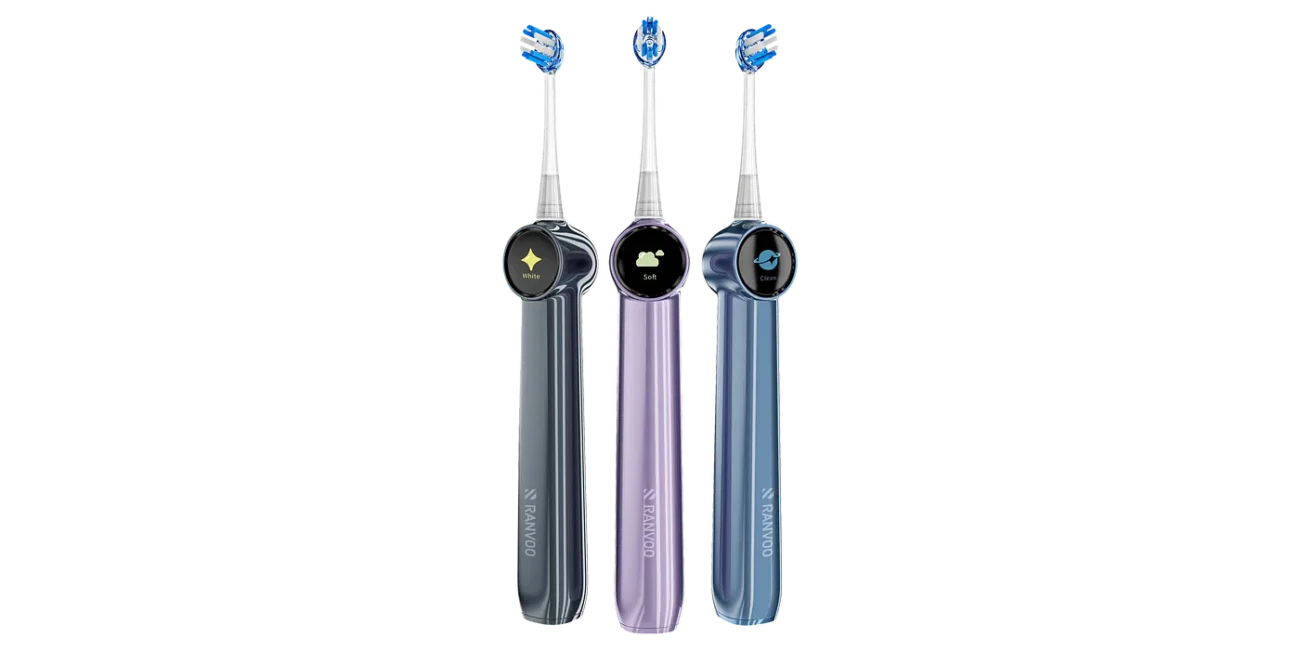
Gum recession has more causes than most people realise
Dentists will tell you that the primary cause of gum recession isn’t your toothbrush. It’s periodontal disease, which is the chronic inflammation of the gum tissue caused by bacterial plaque that gets underneath the gum line and provokes an immune response. That’s the big one, and it’s the reason your dentist keeps banging on about flossing.
But the toothbrush conversation is real too, particularly for people who already have some vulnerability. Aggressive brushing technique, meaning too much pressure and too much side-to-side scrubbing, causes mechanical damage to gum tissue over time. And this is where electric toothbrushes get interesting, because the engineering choices that go into them directly affect how much mechanical stress your gums receive during every two-minute session.

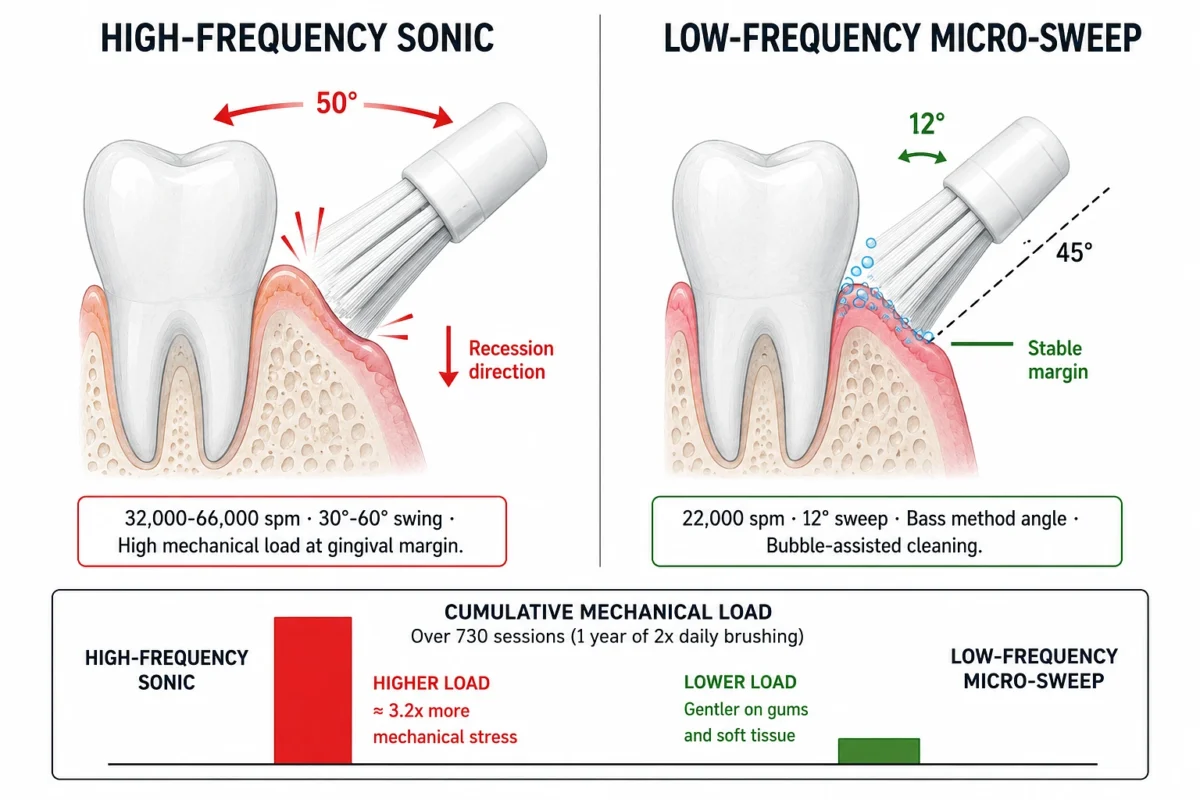
Most premium electric toothbrushes run at between 32,000 and 66,000 strokes per minute with swing angles of 30° to 60°. Those are big numbers and wide arcs. The cleaning power at those frequencies is real, but so is the cumulative mechanical load on gum tissue, especially at the gingival margin where the gum meets the tooth. Once gum tissue recedes, it doesn’t come back on its own. The clinical options at that point are surgical grafting or accepting the recession and managing the sensitivity.
That trade-off between effective cleaning and gum safety is what makes the RANVOO approach worth looking at, because they’ve tried to solve it from a genuinely different direction.
RANVOO’s AirJet cleans with bubbles instead of brute-force vibration
Rather than competing in the “who can vibrate faster” arms race, the AirJet X5 runs at a deliberately lower 22,000 strokes per minute with a 12° micro-sweep that follows the Bass brushing method, which is the technique most dentists recommend for gum health. That’s roughly a third of the frequency and a fifth of the swing angle compared to high-end sonic brushes.
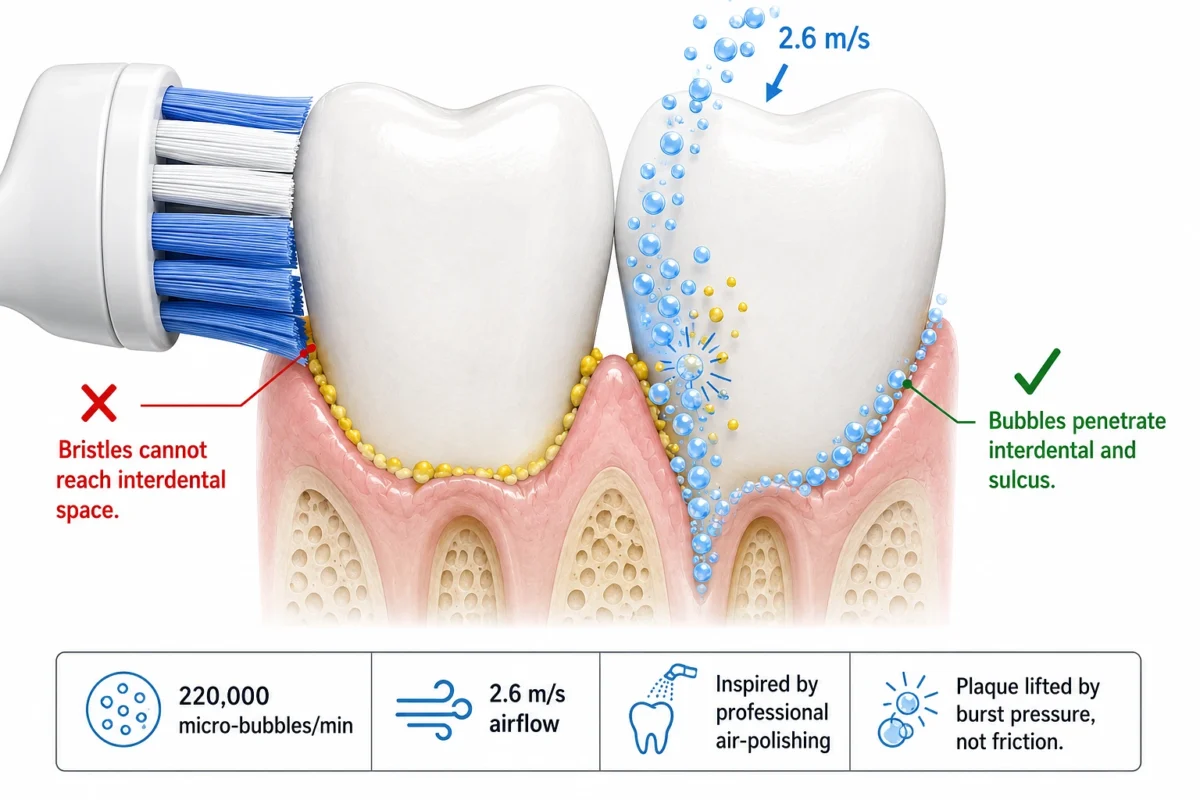
The obvious question is whether lower vibration means weaker cleaning, and the answer according to RANVOO is that the cleaning is handled by a completely different mechanism. The electric toothbrush generates a pressurised stream of micro-bubbles, around 220,000 per minute at 2.6 m/s airflow, that travel into interdental spaces and along the gum line where bristles physically can’t reach. The bubbles burst on contact with tooth surfaces, lifting plaque without the mechanical friction that traditional bristle scrubbing relies on.
It’s a concept borrowed from professional air-polishing tools that dentists use in-office, scaled down into a consumer device. The brand states the product has been endorsed by the ADA for plaque removal and gingivitis reduction, and is certified by TÜV and the FDA. It was also showcased at the FDI World Dental Congress, which is the main global gathering for dental professionals.
What the bristles actually feel like matters more than people think
One of the less discussed contributors to brushing-related gum damage is the bristle itself. Standard electric toothbrush heads use 0.152mm cylindrical nylon bristles that develop flat, frayed tips within a couple of months. Those frayed ends aren’t gentle on soft tissue, and most people don’t replace their brush heads as often as they should.
The AirJet X5 uses 0.01mm ultra-fine tapered DuPont bristles where each tip narrows to a soft point that bends on contact rather than scraping. The brush head itself is wrapped in food-contact-grade silicone which adds a cushioning layer between the bristles and the gums. The X5’s round compact head is also notably smaller than most sonic heads, which helps with reaching the back molars without having to jam the brush sideways into the back of your mouth, which is one of the ways people accidentally concentrate too much pressure on a small patch of gum.

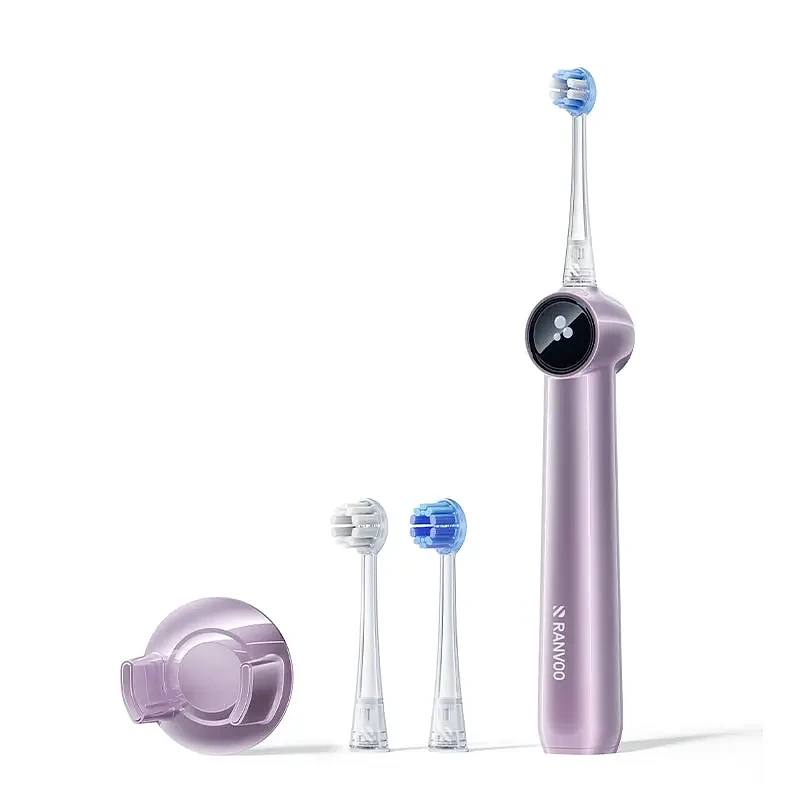
The real-world difference, according to the TechNuovo review from October 2025 (one of the few independent hands-on reviews), is that the bubble technology feels “quite strange” at first and “did need some getting used to,” but the reviewer’s teeth “feel nice and clean” after use. The honest quote from that review: “Whether they’re cleaner than using my £30 Oral-B? Unsure, but the feeling when using the bubble technology feels nice.”
That’s a fair and probably more useful take than any marketing claim, because it captures what the product actually feels like rather than what a spec sheet says it does.
The practical specs worth knowing before you spend £219
Because that’s roughly what this costs, and at that price point you’re competing with the Philips Sonicare DiamondClean and the Oral-B iO Series 9, so the comparison needs to hold up:
- Vibration frequency: 22,000 strokes/min (lower than competitors by design)
- Micro-sweep angle: 12° (follows the Bass method)
- Micro-bubble output: 220,000 per minute, 2.6 m/s airflow
- Bristle diameter: 0.01mm ultra-fine tapered DuPont (vs 0.152mm standard)
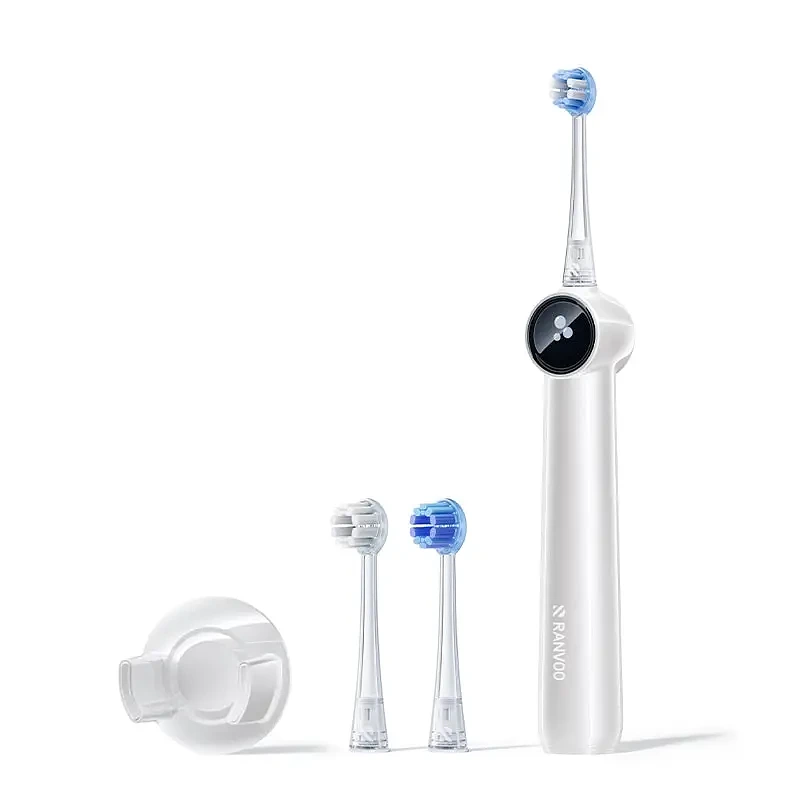
- Battery: 1600 mAh, roughly 60 days on a single charge (2×2 min daily)
- Charging: USB-C with magnetic wall-mount
- Waterproofing: IPX7 (fully submersible)
- Modes: 4 total, Clean, Whitening, Bubble, and Foam (the Foam mode is specifically for sensitive gums)
- Anti-mold: nano-coating on the handle, designed to resist bathroom moisture
- Certifications: ADA endorsed, TÜV certified, FDA certified
- Warranty: 1-year standard manufacturer warranty, with extended protection plans available depending on retailer
The 60-day battery is genuinely strong, most competitors sit at 14 to 30 days. The USB-C charging is a practical win over proprietary charging stands. The magnetic wall-mount is a smart detail because standing toothbrushes in cups is a mold problem that most brands ignore and RANVOO has clearly thought about.
The honest assessment on the health claims
The original marketing around this product leans hard into fear about gum recession, and some of the claims circulating online vary depending on which source you read. The plaque removal rate appears as 97% in some materials, 99.9% in others, and 100% in the Amazon product title. That inconsistency is worth being aware of. The “Level 1 cleaning efficiency” rating is referenced but the specific testing body and methodology behind it aren’t consistently named across sources.
What can be said with more confidence is this: the ADA endorsement is a meaningful credential because the American Dental Association doesn’t hand those out casually, it requires clinical evidence submitted for review. The TÜV and FDA certifications are real regulatory markers, not marketing badges. And the engineering approach (lower frequency, narrower sweep, bubble-based cleaning) is mechanically logical for reducing gum trauma, even without needing to accept the specific percentage claims at face value.
The product is genuinely different from anything Oral-B or Sonicare currently offers. Whether that difference translates into measurably better outcomes for gum recession specifically is something that independent clinical studies would need to confirm over time, but the design philosophy is sound and the certifications are legitimate.
Who this actually makes sense for
If you’ve already got healthy gums and your current brush is working fine, there’s no urgent reason to spend two hundred pounds switching. A well-used £30 Oral-B with proper technique and regular head replacements is still a perfectly good option.
Where the AirJet starts making genuine sense is if you’ve been told you’re brushing too aggressively, if you’ve noticed early recession or sensitivity, if you have orthodontic work that makes conventional bristle brushing uncomfortable, or if you’ve been through gum treatment and your dentist has specifically told you to use a softer approach. The combination of reduced mechanical friction and bubble-based interdental cleaning is exactly what that profile needs, and the dedicated Foam mode for sensitive gums exists specifically for that use case.
The price is premium. The technology is genuinely novel rather than incremental. The certifications are real. The independent reviews are limited but positive on feel if noncommittal on comparative performance. And the engineering case for why lower frequency plus bubble cleaning should be gentler on gums is straightforward enough that you don’t need to take RANVOO’s word for it, the physics makes sense on its own.