

Blog
Why Payment Systems Keep Breaking in UK Shops and How AI Powered Test Automation Fixes Them

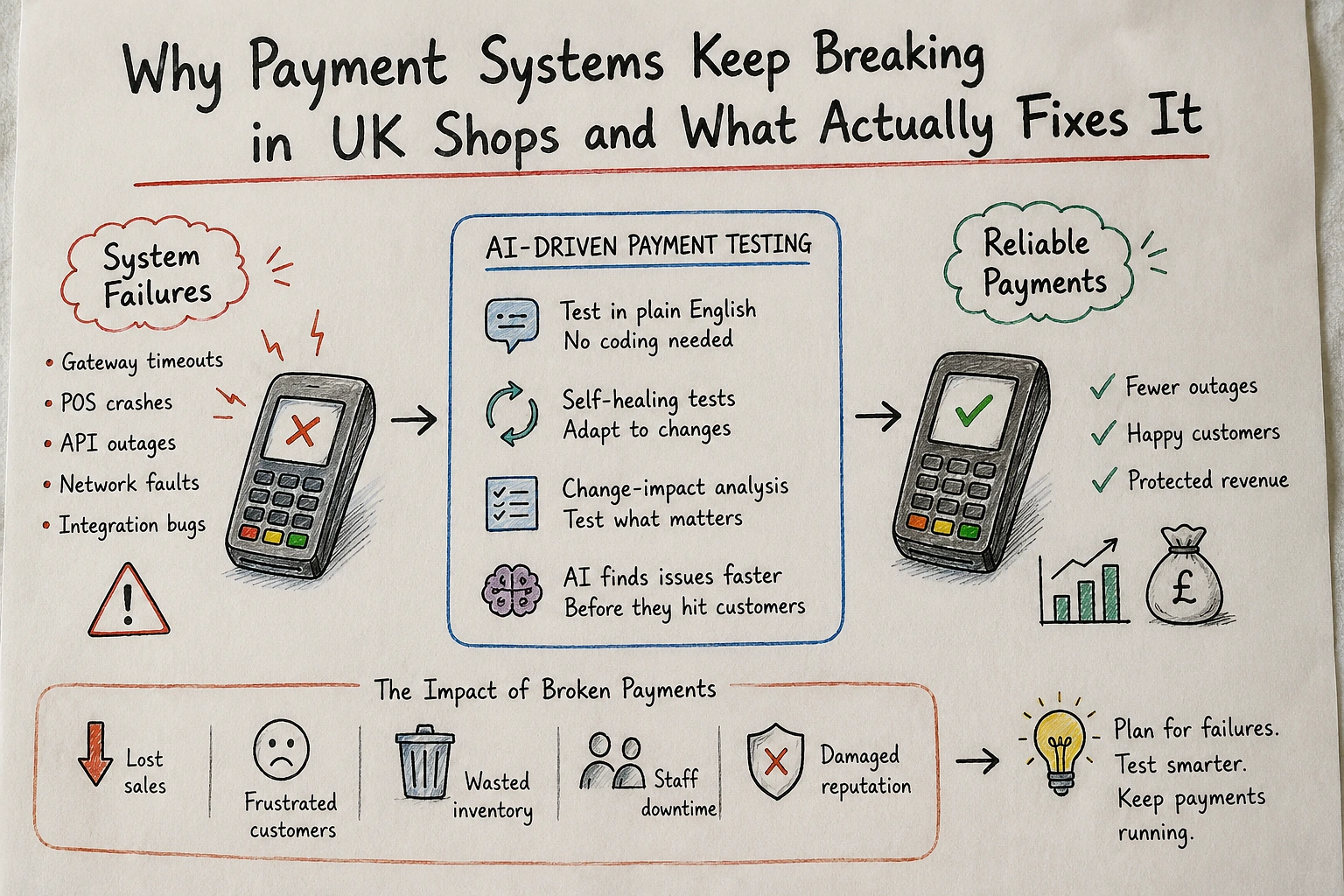
A study published in late April by FreedomPay with Retail Economics put a figure on this and it came in at one point seven billion pounds. That’s the estimated annual loss to UK retail and hospitality from payment system failures, with retail alone accounting for one point two billion of it and hospitality at four hundred and ninety-four million. The same research found UK businesses are now experiencing around five point two major disruptions per year on average, most of them happening, predictably, during peak trading hours when the financial damage is at its worst.
What’s underneath all of this is a software problem, and increasingly an AI-driven solution.
What 1.7 billion pounds of broken payments actually looks like
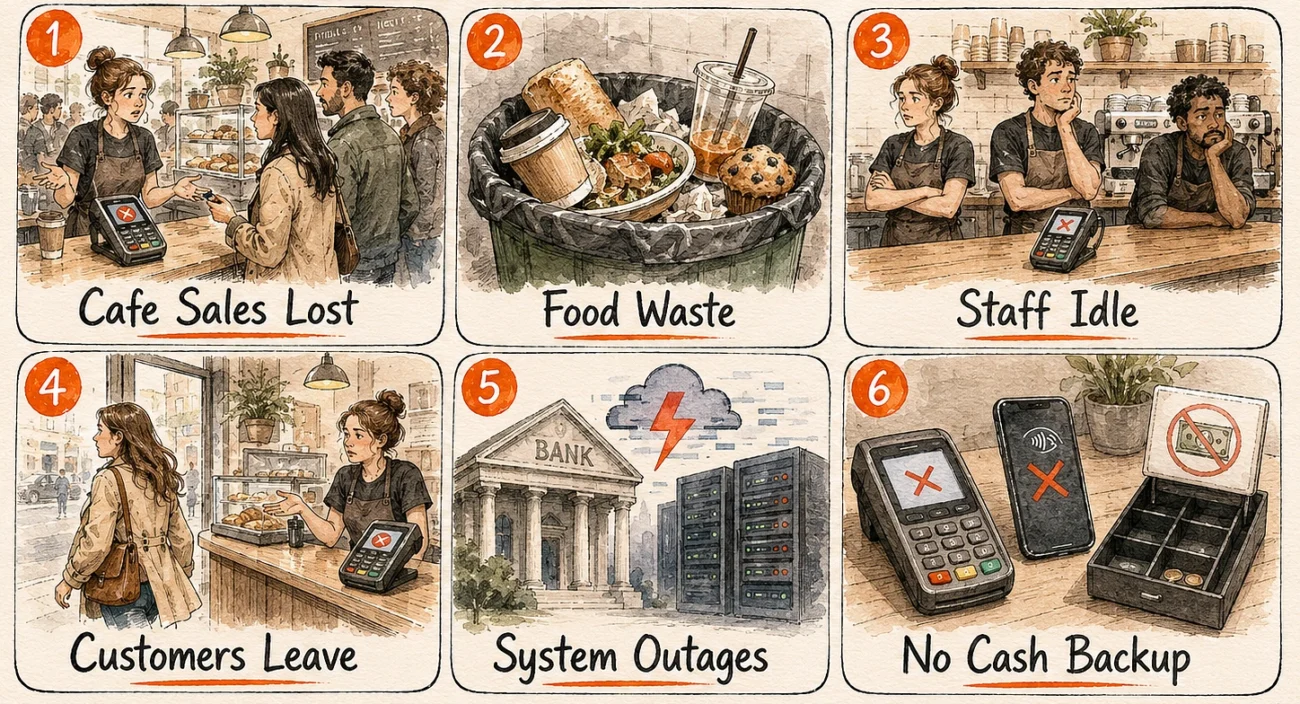
The numbers are easier to take in once you ground them in the small business reality. A busy independent café doing a Saturday lunch trade can lose three or four hundred quid in a single hour-long outage, and that’s just the direct loss, the food that was prepped and is now going in the bin, the staff sitting on a wage with nothing to do, the regulars who walked off and might not come back next week.
For chains the maths gets ugly faster. The Treasury Committee published data not long ago showing the nine biggest UK banks have racked up over eight hundred hours of unplanned IT outages between January 2023 and February 2025, totalling thirty-three days of disruption, and one analysis put the per-hour cost to investment banks specifically at over six hundred thousand pounds. That’s the headline-grabber. The retail and hospitality losses are quieter but they keep happening week after week and they hit smaller businesses harder because there’s no PR team to absorb the impact.
What people forget about all this is that fewer customers carry cash now. The fallback that existed even five years ago basically doesn’t exist anymore. If the system goes down, the customer leaves, and you lose the sale.
The reason this keeps happening is mostly testing
Behind every payment outage is a piece of software that did something it shouldn’t have, and behind that is almost always a testing gap. Enterprise platforms now update constantly, sometimes weekly, and the testing approach a lot of these systems still rely on hasn’t kept up. Testers write scripts, run them, find issues, fix them, then watch the next update break the scripts they just wrote, and the whole cycle starts again.
The pattern is consistent across the kinds of failures small businesses end up paying for:
● Payment gateway timeouts when traffic spikes during peak trading.
● Point-of-sale crashes when an update is pushed without sufficient real-world testing.
● Banking API outages that ripple through every retailer using that bank’s processing.
● Network provider faults that take down whole connectivity layers for hours.
● Third-party integration failures where one supplier’s bug breaks dozens of downstream systems.
The common thread is that none of these are exotic failures. They’re the kind of thing decent testing would catch. The reason it doesn’t catch them is that traditional testing methods can’t keep up with the speed at which modern systems change, and the staff doing the testing are spending so much time maintaining their own test scripts they don’t have time to write new ones.
What AI-driven testing is actually doing differently
This is where the conversation about AI in enterprise software gets genuinely useful rather than hype-driven. The new generation of AI powered test automation platforms is doing a few things that solve the actual bottleneck.
The first is that testers can now write test cases in plain English rather than code. You describe what the system should do, the platform translates that into the technical test, and you don’t need a specialist scripting team just to keep up with the volume. That alone cuts the time per test by a significant margin.
The second is what gets called self-healing. When the user interface changes, traditional test scripts break, and somebody has to manually update each one. AI-driven systems detect the change, work out what was meant to happen, and update the scripts themselves. The maintenance burden, which used to eat up most of a testing team’s week, drops sharply.
The third is change-impact analysis, which is the bit that actually matters for outages. When a software update is being prepared, the system identifies which business processes are affected, which tests need to run, and which can be skipped. Instead of running everything every time, which nobody actually has time for, you run the right things at the right time. That’s how you catch the bug before it hits the till in your corner shop on a Saturday afternoon.
The headline claim from platforms in this space is around an eighty percent reduction in manual testing effort. That’s vendor-supplied so worth taking with appropriate salt, but the underlying mechanism is real, and the gains are showing up in published case studies across enterprise software, healthcare systems, and financial services.
Where platforms like Opkey fit into the picture
The space has a handful of serious players now. Opkey is one of them, building AI-driven test automation specifically for the kinds of enterprise platforms (Oracle, Salesforce, Workday, SAP) that sit underneath the consumer-facing systems most UK shoppers and small businesses interact with daily. The pitch is essentially the one outlined above, plain-language test creation, self-healing scripts, intelligent change-impact analysis, all integrated into one platform rather than scattered across half a dozen tools.
What’s worth understanding about this category is that the buyers of these platforms aren’t small businesses or consumers, they’re the enterprises whose software the rest of us depend on. The payment processor your local pub uses doesn’t care what testing tools you’ve heard of, but they care a lot about whether their next update is going to take down five hundred merchants on a Saturday night. That’s what the enterprise testing market is solving for, and it’s why the FreedomPay numbers and the Treasury Committee findings matter, the failures are happening because the testing layer underneath isn’t keeping up.
What small businesses can actually do while the bigger picture catches up
The honest reality is that small businesses can’t influence which testing platforms their payment processors use. What they can do is plan for the failures while the wider infrastructure slowly improves.
A few things worth having in place:
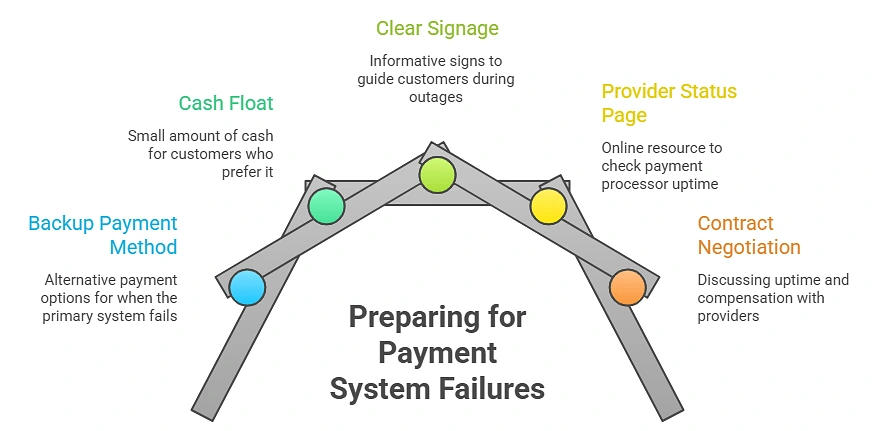
● A backup payment method that doesn’t depend on your primary system. Some shops are keeping a basic SumUp or Zettle reader as a contingency for when their main till fails.
● A cash float, however small, even though most customers won’t have any on them, because some will.
● Clear signage for when the system is down, because customers handle outages better when they know what’s happening.
● A note of your provider’s status page, because most processors have one and checking it tells you whether the issue is yours or theirs.
● Ask the question when you renew your card processing contract about what their uptime is and what compensation they offer for outages. Most providers won’t volunteer this information, but increasingly they’ll answer it if asked.
The bigger picture is that the UK payment infrastructure is going to keep wobbling for a while yet. The platforms behind it are improving, AI-driven testing is closing the gap between how fast systems update and how fast testing can verify them, but it’s not an overnight fix. In the meantime, the small businesses that survive the wobble best are the ones that planned for it rather than pretended it wouldn’t happen.