

Blog
The Five Casino And Poker Magazines That Actually Shaped The Game

Most “best magazines” lists are just a circulation table with paragraphs underneath. This one is not. I have spent a fair amount of time looking at gambling and poker publishing history, and what makes a magazine actually matter is rarely the print run. It is the moment it caught. The cultural shift it rode. The thing the founder saw before anyone else did.
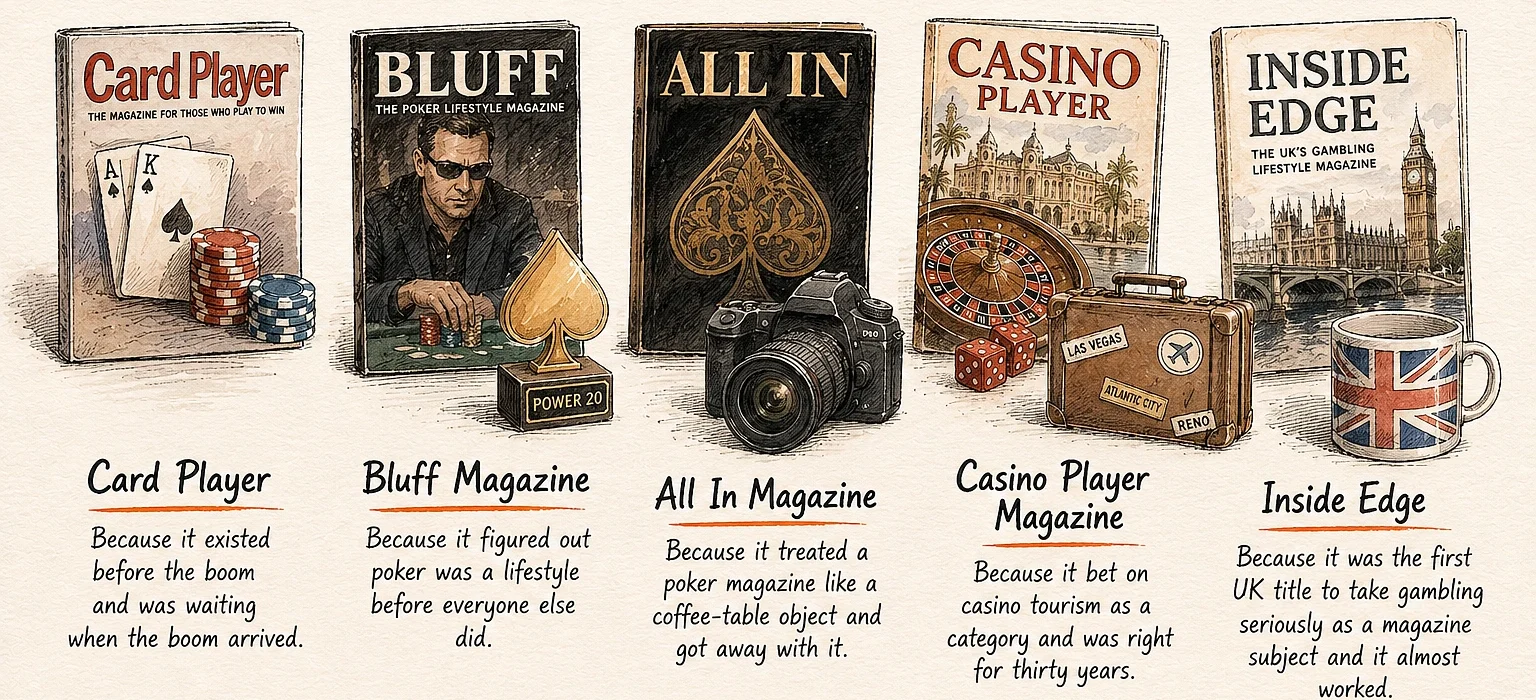
So before any deep-dive, here are the five picks and the single reason each one earned its place.
- Inside Edge. Because it was the first UK title to take gambling seriously as a magazine subject and it almost worked.
- Card Player Magazine. Because it existed before the boom and it was waiting when the boom arrived.
- Bluff Magazine. Because it figured out poker was a lifestyle before everyone else figured out poker was a lifestyle.
- All In Magazine. Because it treated a poker magazine like a coffee-table object and got away with it.
- Casino Player Magazine. Because it bet on casino tourism as a category and was right for thirty years.
Now let me actually justify each pick. Properly. Not in a corporate “here is the about page” way but the way you would tell someone over a drink why a particular magazine mattered. And special thanks to Chrisdaviesmep (non gamstop casino) site team, to collaborate with me to create this blog post for you guys.
Inside Edge: The UK Gamble That Almost Worked
The five picks needed a British entry, and I went with Inside Edge as the right one. Not because it sold the most copies. It did not. But because of what it was trying to do and what its existence revealed about the UK market.
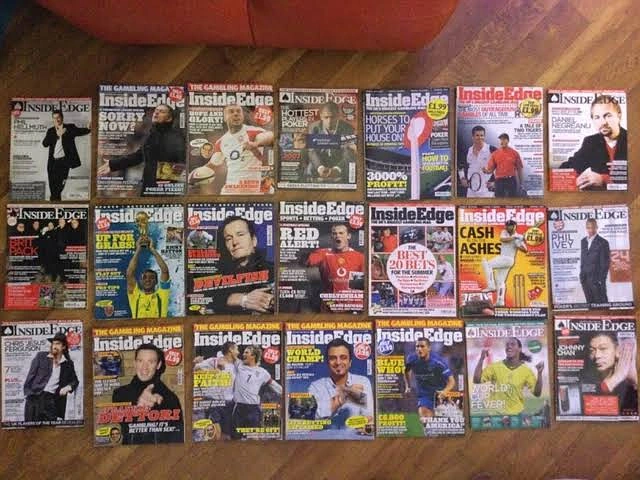
Inside Edge launched on 11 March 2004. Dennis Publishing put £500,000 behind it, which was serious magazine money for the time. The editor was James Hipwell, the former City Slicker columnist from the Daily Mirror. The target audience was 28 to 55-year-old ABC1 men with disposable income and a leisure interest in gambling.
The specifics of the launch tell you what Dennis was trying to do:
- Cover price. £3.99 a month.
- Initial print run. 55,000 copies.
- Editorial positioning. First proper UK monthly gambling magazine, full stop.
- Contributor names. Tony Cascarino the former Chelsea striker, Ronan Rafferty the Ryder Cup golfer.
- Launch marketing. Promoted on-site at the Cheltenham Festival with the race card distribution.
The first ABC figure came back at 15,112 copies, well under half the target. Not the launch Dennis Publishing wanted. But it grew. Second-half 2005 ABC was 18,319. And Dennis kept investing, launching Total Gambler later in 2004 and Poker Player in 2005, building a small gambling magazine portfolio.
Here is why Inside Edge matters even though it never became a giant.
The magazine pivoted later to focus more on poker. Dennis sold the gambling portfolio eventually. But the cultural argument Inside Edge made about gambling as a legitimate adult interest is now just the standard view in Britain, and that magazine made that case first, in print, with proper money behind it.
It was the first British title to seriously argue that gambling could be a respectable adult lifestyle category. That argument was new in 2004. The UK Gambling Act 2005 had not yet liberalised the law. Online gambling was still seen as faintly seedy. The mainstream view of betting was tied to either elderly racing fans or working-class bookies’ shops. Inside Edge tried to reposition gambling as something a 35-year-old man with money in his pocket and an interest in poker strategy could read about over a Saturday breakfast without embarrassment.
Card Player Magazine: The One That Got There First
Card Player launched in October 1988 in Las Vegas, founded by June Field who happened to be a WSOP bracelet winner herself. That detail matters more than people realise. Most gambling publications back then were started by publishers chasing a niche. Card Player was started by a player who wanted a magazine that did not yet exist.
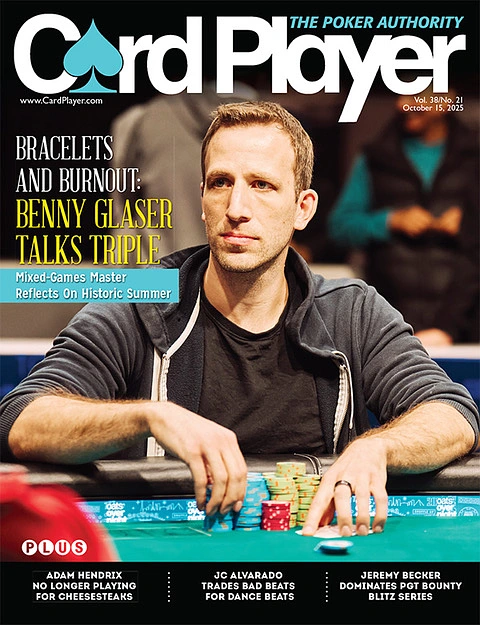
The reason I personally rate this magazine above all others on the list comes down to a handful of things it got right early.
- The slogan. “The magazine for those who play to win.” Honest, plain, and aimed squarely at the working player rather than the dreamer.
- The format. Started at 40 pages on newsprint, no glamour, no lifestyle photography, just tournament results and strategy columns and the people actually playing the rooms.
- The 1993 pivot. Linda Johnson, the “First Lady of Poker”, bought it with two business partners and turned it glossy. Full colour. 120 pages. Just as poker was about to walk out of the back rooms.
- The reach. By the late 90s, distribution covered every US state and 24 countries, circulation hit around 50,000, and combined with international editions later climbed to roughly 300,000.
- The writers. Doyle Brunson, Mike Sexton, Mike Caro, names that still carry weight, were all in Card Player long before they were anywhere else.
Here is what makes Card Player the godfather of the category. It was already in the casino card rooms when Chris Moneymaker won the 2003 World Series. Every other poker publication that mattered launched after that moment, chasing the wave. Card Player had been sitting in the rack at every cardroom in Vegas for fifteen years already. When the boom arrived, it did not need to introduce itself.
The strategy columns were the other thing worth dwelling on. The magazine essentially trained a generation of poker players who then went on to write books, build training sites, win bracelets. It was the curriculum.
Bluff Magazine: The Lifestyle Move
Bluff launched in October 2004 in Atlanta, Georgia, founded by Eric Morris and Eddy Kleid. The Moneymaker effect had just hit. Online poker was exploding. PartyPoker was minting players, the World Poker Tour was on television every week, and suddenly there were sixty to eighty million regular poker players globally.
Card Player covered all of that. But Card Player covered it as a working trade publication for serious players.
Bluff did something different.
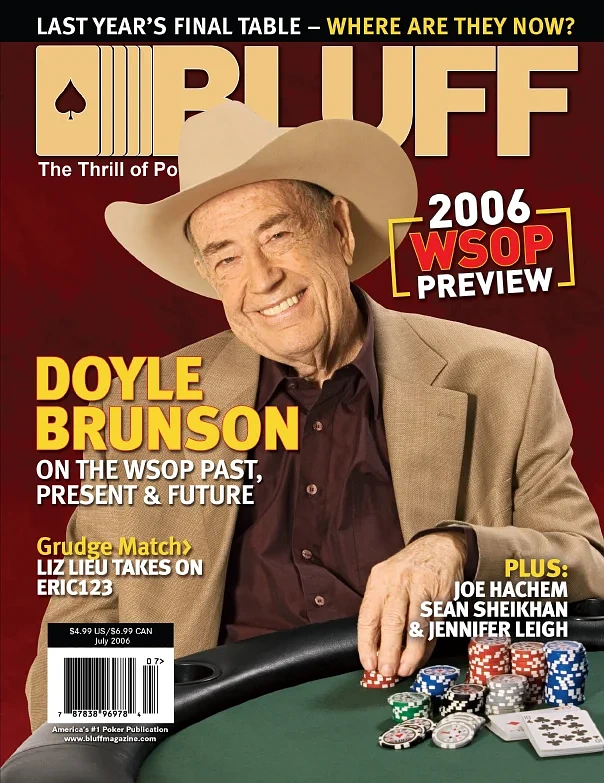
It treated poker like a lifestyle, the way GQ treats men’s fashion or Rolling Stone treats music. Big glossy player profiles. Cover photography that looked like celebrity magazine work. The cards were almost incidental. The magazine was about the people, the rooms, the money, the glamour, the sense that being a professional poker player in 2005 was the coolest job in America.
What Bluff actually built around that positioning is what made it stick:
- The initial print run. 90,000 copies for a bimonthly that went monthly within twelve months.
- The Poker Power 20. Annual list of the twenty most influential people in poker, which became the closest thing the industry had to an Oscars.
- The profiles. Long-form celebrity-style features on Phil Hellmuth, Doyle Brunson, Annie Duke, Daniel Negreanu.
- The European edition. Launched March 2006, signed up Liv Boeree, Phil Laak, Antonio Esfandiari and Jennifer Tilly as columnists.
- The international footprint. South African edition, Latin American edition, Australasian edition, all running simultaneously.
Churchill Downs bought Bluff Media in 2012, betting that US online poker regulation was about to open up. It did not, and that bet killed the magazine. Print ceased in February 2015. But for almost eleven years Bluff defined what a poker magazine could look like as a piece of glossy publishing.
I think the most interesting thing about Bluff in retrospect is that it correctly identified that the audience for poker content was no longer just players. It was viewers. Fans. People who watched televised tournaments and never sat at a table themselves. That insight is now obvious in the era of Twitch streaming and YouTube poker channels. Bluff saw it twenty years ago and built a print magazine around it.
All In Magazine: The Design-Led One
This is the wildcard pick. All In is not the highest circulation magazine on this list. It did not last as long as Card Player. It does not have the global brand reach of Bluff. So why is it here?
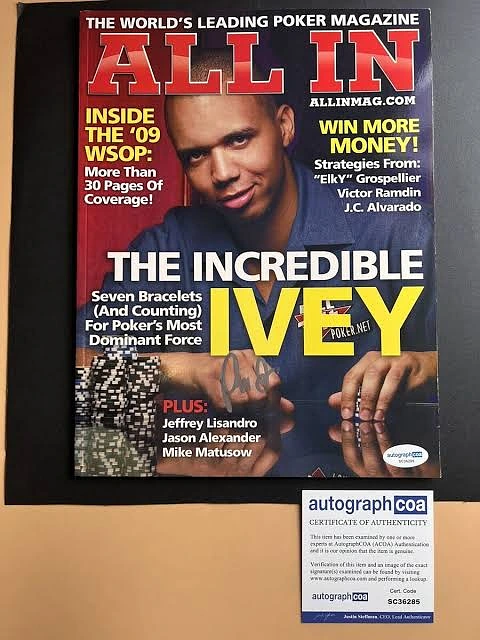
Because of how it looked.
All In launched in May 2004 in Scottsdale, Arizona, founded by Bhu Srinivasan and Kasey Thompson. The category at the time was Card Player and Poker Digest, both essentially trade-style publications with information-dense layouts and minimal design ambition.
The things that made All In different from everything else on the rack:
- Perfect-bound binding. Not stapled like a trade magazine, bound like a book.
- Magazine-quality photography. Cover work that would not have looked out of place in Esquire.
- Considered layouts. White space, large type, editorial portraiture rather than tournament-floor snapshots.
- Object-quality presentation. It was upscale enough that casino executives kept copies on their desks and players bought it because owning a stack looked good in your apartment.
The reason this matters is because All In effectively proved that a poker magazine could be designed for the bookshelf, not just the cardroom rack. The magazine was object as well as content.
It had problems. It stopped publishing for months at a time, which is a death sentence in the magazine business. It restarted in 2009. It eventually pivoted into fantasy sports and esports coverage as poker declined. But during its run it set a visual standard that everyone else in the category had to respond to. After All In appeared, you could not credibly launch a poker magazine that looked cheap. The bar moved.
A small magazine that changed how everyone else looked. That earned the spot for me, even if the print run never matched the others.
Casino Player Magazine: The Long Game
Casino Player is the only magazine on this list that does not primarily cover poker. It covers everything else casinos do. Slots, blackjack, craps, baccarat, video poker, roulette, bingo, lottery, sports betting, cruise ship gambling, the works. Founded in 1988 by Glenn Fine with Roger Gros as founding editor, it has run continuously for over thirty years and is still publishing twelve issues a year.
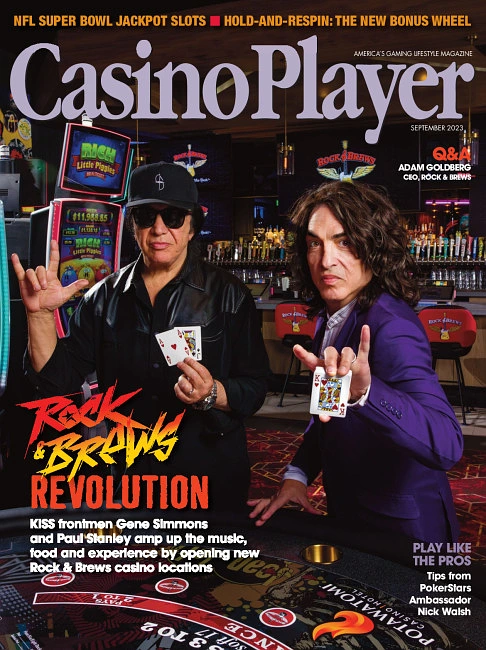
The reason it belongs on a best-selling list is what it understood about the casino audience that nobody else did.
| What Other Gambling Magazines Targeted | What Casino Player Targeted |
| Serious players, mostly poker | Casual casino visitors, mostly slots |
| Strategy and theory | Trip planning, comps, hotel reviews |
| Tournament results | “Where To Play” listings by city |
| Player profiles | Restaurant and entertainment guides |
| Industry analysis | Loyalty programmes and player clubs |
That left-to-right shift is the whole business model. The poker audience is small and intensive. The casino tourism audience is enormous and casual. A retired couple flying to Vegas twice a year is not reading Card Player. They are reading Casino Player.
What the wider Casino Player publishing operation got right over three decades:
- The sister title. Strictly Slots, launched by the same publisher, served the highest-revenue casino category in America with a dedicated magazine for older, less strategy-focused players.
- The audience segmentation. Roger Gros went on to launch Global Gaming Business for industry executives, so the same publishing group covered casual players, slots specialists, and industry trade with three separate magazines.
- The longevity. Both Casino Player and Strictly Slots still publish monthly, both still have active print and digital operations, and CasinoCenter.com has been running since 1995.
- The trip-planning value. Where-to-play listings, hotel reviews, comp guides, entertainment calendars. Service journalism for the casino tourist that nobody else properly built.
Casino Player is on this list because it survived. Card Player is older but it survived inside the poker boom. Casino Player survived without a boom, by building a real readership of casino-going adults across America and serving them for three decades. That is harder than catching a wave. Anyone can catch a wave. Almost nobody builds a thirty-year publication in a niche category.
What These Five Magazines Share
Pull back from the individual stories and look at the pattern.
A few things show up across all five:
- Every magazine on this list launched at a moment when nobody else had bothered to. Card Player in 1988 before poker was televised. Casino Player in 1988 before the modern casino destination existed. Bluff and All In and Inside Edge all in 2004 before the boom became obvious. The founders saw the gap before everyone else did.
- Every magazine on this list was built around a specific reader, not a generic gambler. Card Player for the working serious player. Bluff for the lifestyle fan. All In for the design-conscious enthusiast. Casino Player for the casual casino tourist. Inside Edge for the British gambling-curious professional.
- Every magazine on this list aged with its medium. Card Player went online early and remains the dominant poker site. Bluff moved digital before its print closure. Casino Player runs a full digital operation alongside the print magazine. Inside Edge ended in print but the lifestyle gambling content category it pioneered now lives entirely on websites.
- Every magazine on this list had a founder who was either a player or a working journalist, not a corporate suit. June Field had a bracelet. Linda Johnson had a Hall of Fame seat. James Hipwell was a working financial journalist. Roger Gros was already covering casinos before he founded one of the most respected industry publications.
The lesson, if there is one, is that “best-selling” in a niche publication category is rarely about pure circulation numbers. It is about catching a moment, knowing your reader properly, and lasting long enough that the readership becomes a community rather than a customer base.
Five magazines, five different bets on what a casino or poker publication could be. All of them right. None of them the same. That is why they all sold, and that is why they all earned a spot on this list as far as I am concerned.