Blog
Why Paint by Numbers Became My Answer to British Winter Evenings, and Apparently Half the Country’s Too

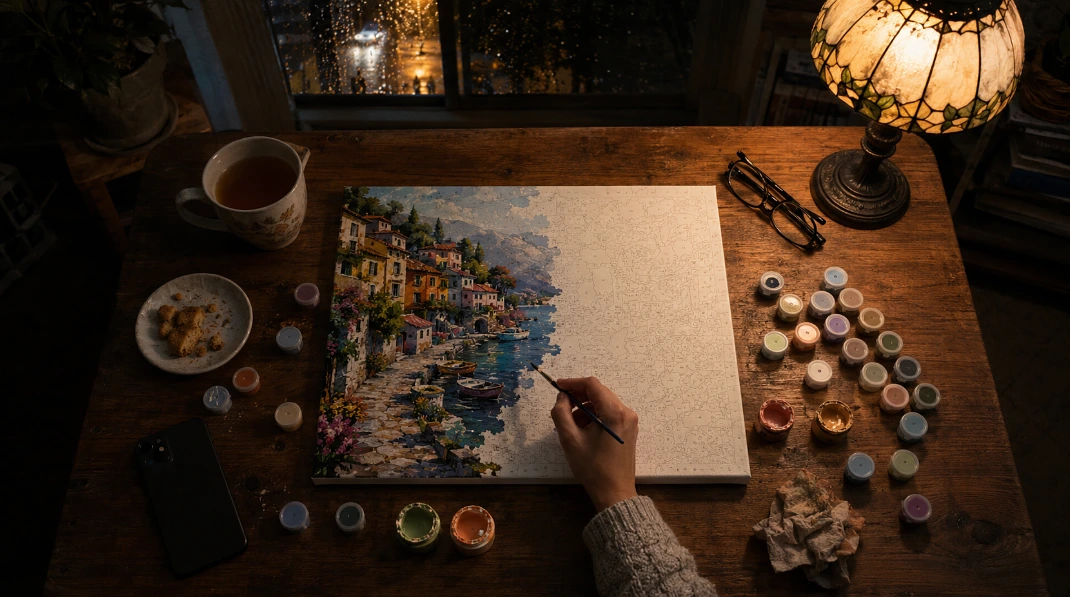
I want to tell you about the most unglamorous thing keeping me sane on weeknights, because I am clearly not alone in it. Britain is having a quiet hobby moment. After a decade of evenings spent scrolling, people are picking up brushes and needles and sketchbooks again, and not for Instagram either, just for the relief of doing something with their hands. Paint by numbers has somehow become the star of it, and I understand why, because I am one of the converts.
Let me be straight about what it is not. It is not marketed as therapy and it does not claim to fix anything. What it gives me is twenty quiet minutes where the only decision in my life is which pot of paint comes next. Pot 14 goes here. Pot 7 goes there. That is the entire job. And for a stressed adult with a full inbox, that turns out to be exactly the medicine.
The blank page was always my problem, and this removes it
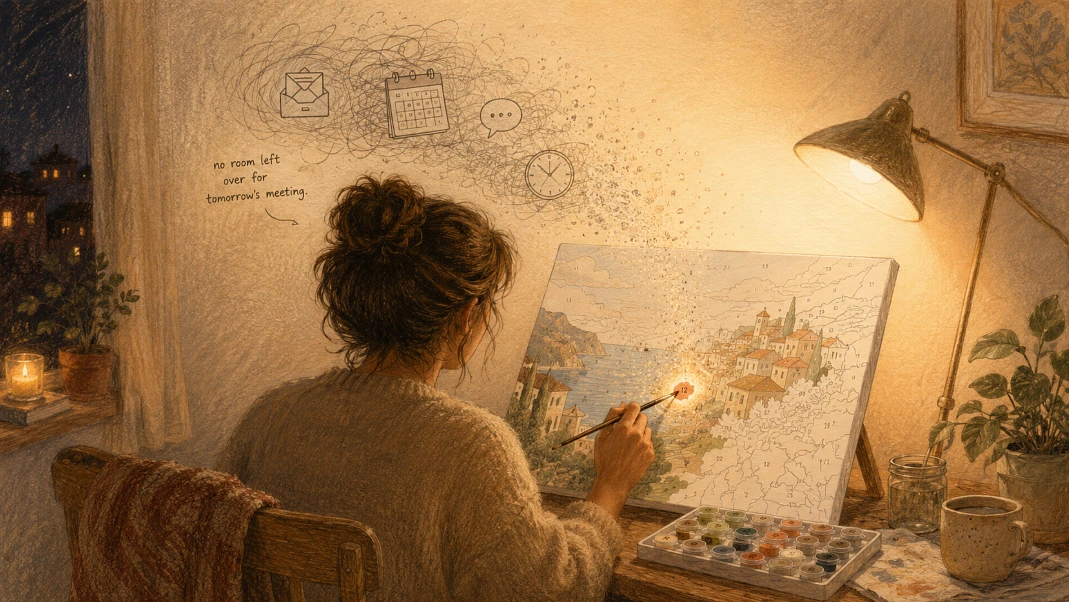
I used to think I was not a creative person. Wrong diagnosis. What I actually was, was a person frightened of blank canvases, that paralysing “what do I even draw” moment that kills the hobby before it starts. Paint by numbers deletes that moment completely. The picture is decided, the sequence is decided, my only task is showing up with a brush. Psychologists are calling this kind of absorbed, low-pressure focus a flow state, and the mechanism is honestly simple: the brain can only process so much at once, and when mine is busy matching a number to a shape, there is no room left over for tomorrow’s meeting.
And I went looking at the proper research on this, because I wanted to know if the calm was real or just me. It is real:
- A hospital study hosted on the National Library of Medicine found structured bedside art sessions measurably reduced anxiety, pain and low mood in patients, even in short sittings.
- A separate randomised trial found art-based sessions reduced burnout and stress in healthcare workers, and if it works on people doing hospital shifts, it will manage a Tuesday in an office.
Same mechanism both times: a structured, repetitive creative task is giving the ruminating part of the brain a night off.
The photo part is what got me properly hooked
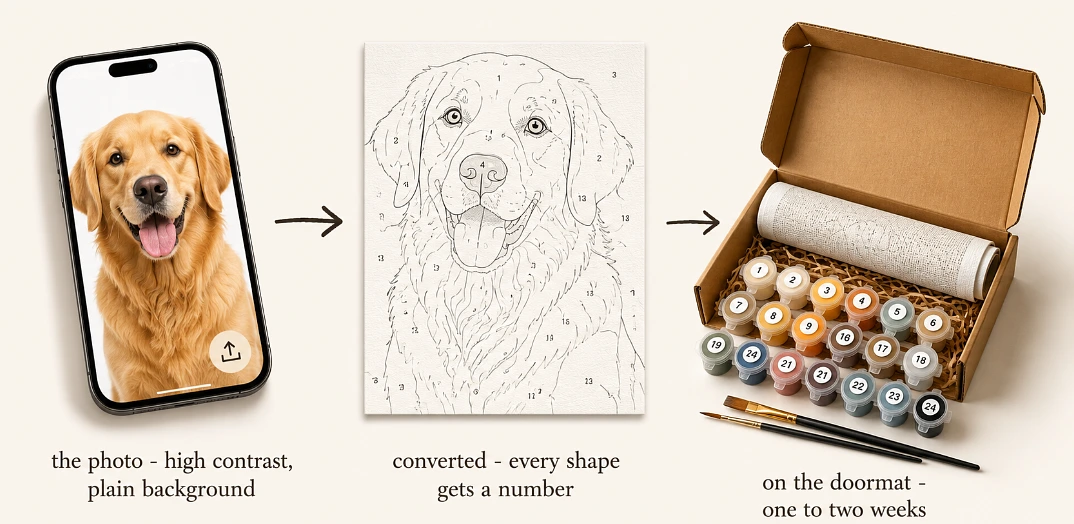
Here is where it went from a pastime to something I actually care about. You can turn your own photo into the canvas. I did it with a picture of my dog, and I will tell you honestly, painting an animal you love section by section for a few evenings does something a shop print never will. You upload the photo, a color by numbers painting kit comes back with the image converted into numbered sections, paint pots labelled to match, brushes in the box, usually one to two weeks from upload to doormat.
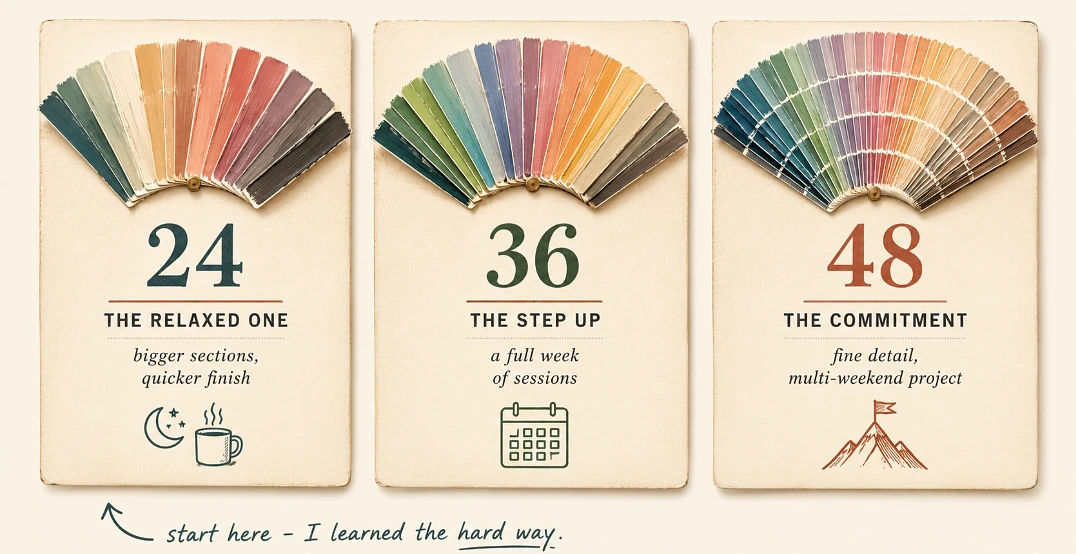
Most providers are letting you pick the complexity, and this choice decides your whole experience, so here is my honest guide to it:
| Colour count | What you are signing up for | Best for |
|---|---|---|
| 24 colours | Relaxed evenings, bigger sections, quicker finish | Beginners, unwinding after work |
| 36 colours | More detail, a full week of sessions | Second-timers wanting a step up |
| 48 colours | Fine detail, a proper multi-weekend commitment | Experienced painters, holiday projects |
My advice from experience: start low. I went straight for the high end and learned the hard way.
One more thing I learned. Choose a high-contrast photo. A single pet against a plain background, a close-up face, a clean holiday view. My first attempt was a cluttered garden shot and half the sections were the size of rice grains. The photo choice decides whether the process is soothing or squinting.
The gift angle, which I now push on everyone
A custom canvas from a couple’s wedding photo, or of a pet who has passed away, carries a weight no chain-store print manages, and I say that as someone who has now given three of them. The research crowd has a theory called broaden and build, the idea that creative engagement builds lasting psychological resources rather than a momentary distraction, and my plainer version of it is this: you are not gifting an object, you are gifting somebody thirty calm evenings, with a picture of something they love at the end of it.
Nothing about this hobby is grand, and that is the point. No training, no studio, no talent required, a kitchen table and half an hour. What I get back is a slower head and something on the wall that proves my evening happened. In a country leaning hard into cheap, meaningful ways to unwind, I am struggling to name a better trade.