

Blog
Blocked Fire Exits in Retail: How JD Sports and New Look Got Fined — and Why It Keeps Happening
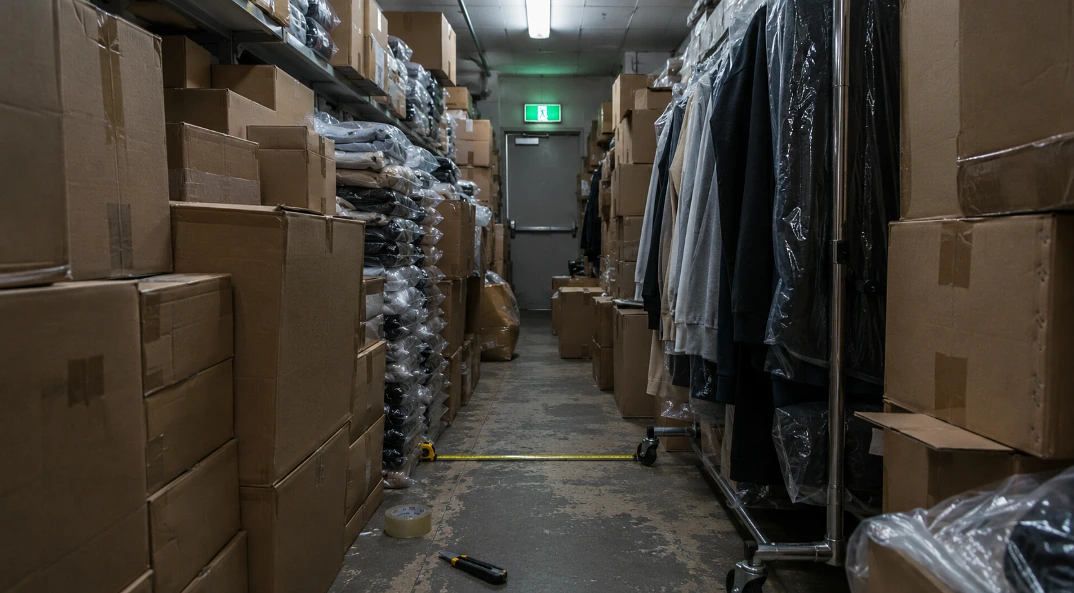
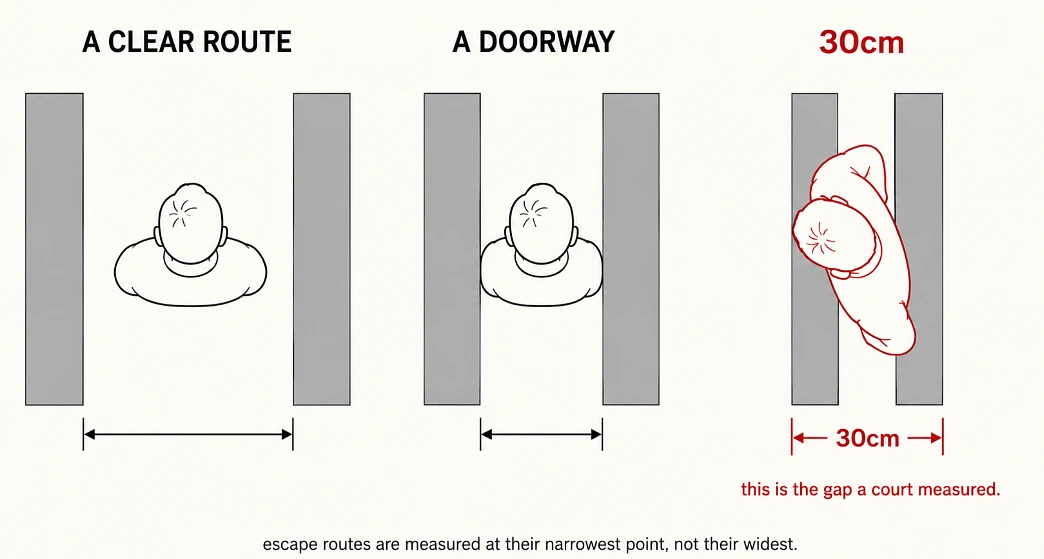
Thirty centimetres. That’s how wide the emergency corridor got left at a JD Sports store during the 2017 Christmas rush, stock piled against it faster than anyone bothered checking. Not blocked outright, which is somehow worse, nobody sat down and decided to seal an exit, they just kept stacking boxes until it happened by accident. Fire inspectors found it. £60,000, across six offences.
Ten years earlier, same failure, bigger stage. New Look’s flagship on Oxford Street caught fire in 2007, and it took 150 firefighters and 35 engines three straight days to fully put out. More than fifty other shops along the street lost trade while it burned. In court, New Look pleaded guilty to two breaches of the Regulatory Reform (Fire Safety) Order 2005, staff hadn’t had proper fire training, and the escape routes had been blocked, for storage. £400,000, the maximum available at the time.
A decade apart. Two major, recognisable high street names. Neither of them tripped up on anything exotic, no faulty wiring, no freak electrical fault, just boxes in the wrong place because nobody with the authority to notice actually looked properly that week.
What A Stockroom Actually Looks Like By Thursday
Nobody plans a blocked exit. That’s not how it happens, ever.
A delivery arrives faster than anyone’s had time to unpack it. Seasonal stock piles up because Christmas or the sale or the new range came in before there was anywhere sensible to put it. A corridor that was perfectly clear on Monday has quietly narrowed by Thursday, an inch here, a box left “just for now” there, and nobody owns the actual job of walking it and measuring it, because everyone’s busy doing the parts of retail that feel like the real job. Sales. Staffing. The customer stood at the till getting impatient.
Fire risk in a shop almost never comes from something dramatic. It comes from exactly this, unglamorous, boring, the kind of thing a busy manager genuinely doesn’t have the bandwidth to catch reliably, not because they don’t care, because they’re doing eleven other things at once and this one doesn’t shout.
Fifteen Stores Means Fifteen Different Versions Of The Same Problem
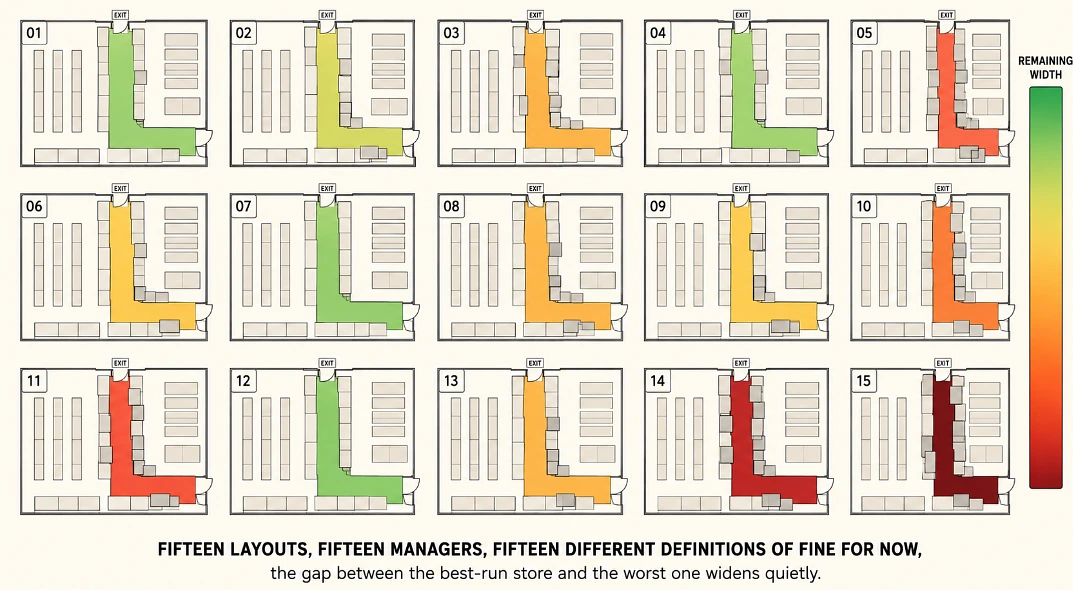
Multiply one store’s version of this by fifteen locations and it stops being a single risk and becomes fifteen slightly different ones, shaped by fifteen different building layouts and fifteen different managers with fifteen different tolerances for what counts as fine for now.
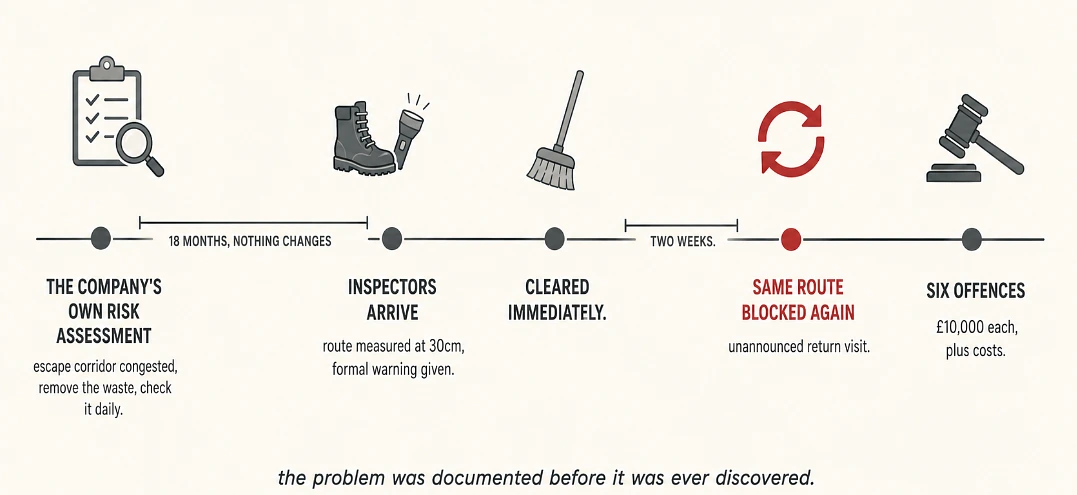
So what actually catches it, if the manager running the day to day genuinely can’t be expected to. That question is more or less Richard Gamble-Frost’s whole job. He’s the Director at GF Fire Solutions, an Approved Fire Risk Assessor, third party accredited, registered as an Advanced fire risk assessor under the NFRAR, and he’d already spent more than thirty years across construction, the emergency services and fire safety before he ever walked into a stockroom to assess one. That’s the kind of background that turns a vague hunch that someone should probably check this into an actual structured answer instead of a hope. He wasn’t the one who decided, three weeks ago, that the extra stock could live in that corner for now. He has no stake in the excuse. He’s just measuring the gap, and thirty years in, he knows exactly what a thirty-centimetre corridor actually means before it ends up in a court report.
Without that outside eye, the distance between the best-run store in a chain and the worst one grows quietly, month after month, until an inspector finds it. Or, worse, until a fire does.
The Fine Was Never Actually The Expensive Part
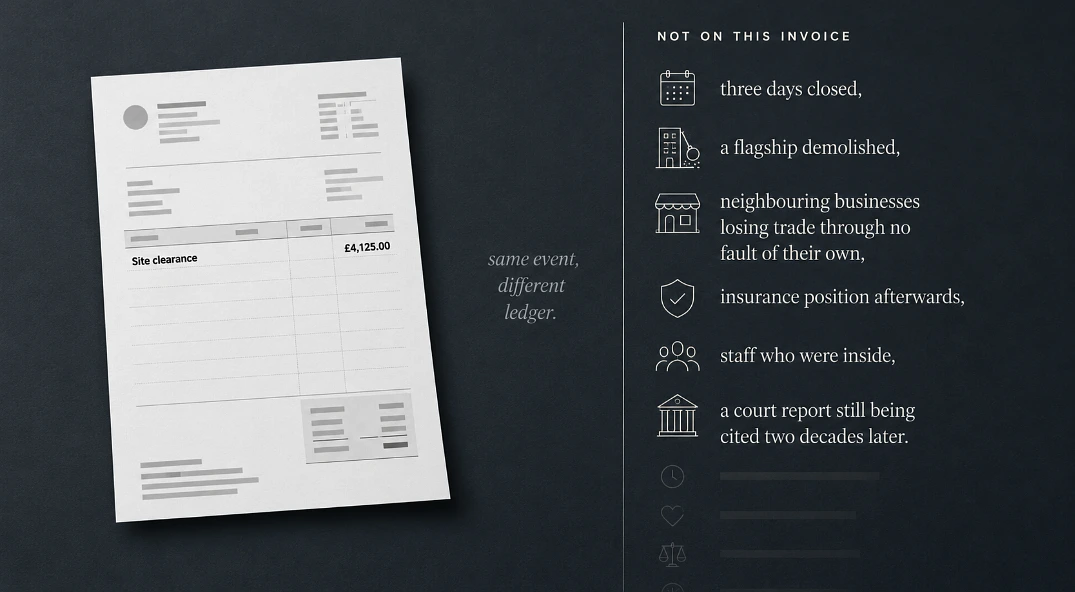
£400,000 reads like the headline from the New Look case. It wasn’t the real cost. Three days with a flagship store shut. Fifty neighbouring businesses losing trade because of a fire that wasn’t theirs. Court reports about it still turning up in trade coverage nearly two decades on, this piece included.
None of that shows up on the same invoice as the fine.
The boxes were never going to flag themselves as a problem. Somebody was always supposed to be the one who noticed first.