

Blog
Keeping Your Vintage Pieces Safe This Winter, And Why The Loft Is Usually Where It Goes Wrong

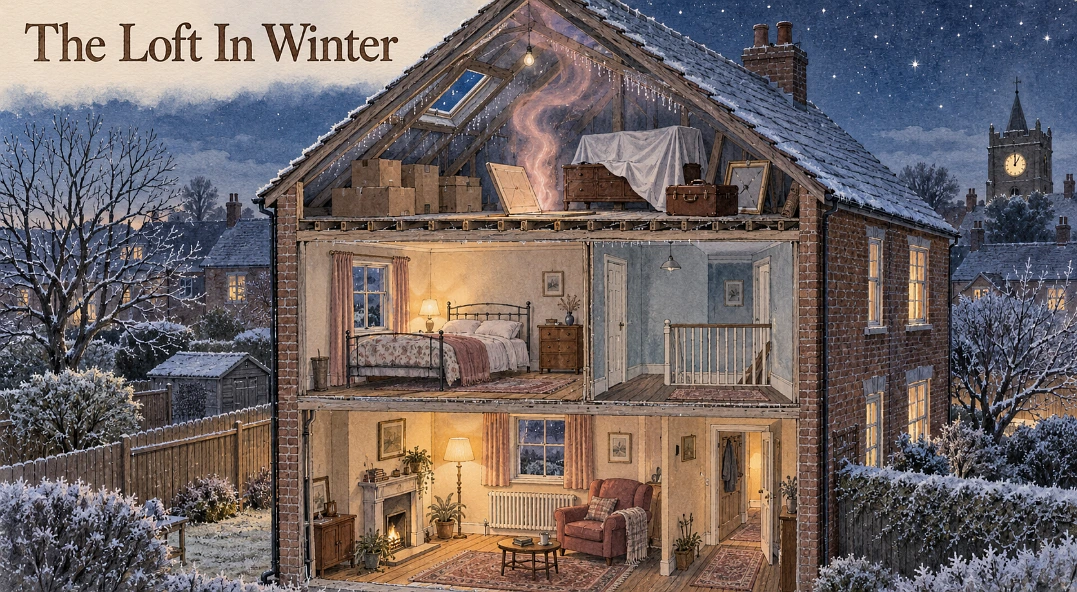
Anyone with a box of their mum’s or their nan’s things up in the loft should know this before the heating goes on properly, which for most of us will be the week the clocks go back on Sunday 25 October. The loft is about to have its worst few months of the year for old wood, paper and fabric, and bringing everything down into the warm is not the easy fix it sounds like either, so it pays to go through what does the damage first.
The figures here come from the Canadian Conservation Institute, which is the body museums go to for this sort of advice, and these are the ones that matter for a box in a house:
- Mould on leather and on old paper takes about 100 days at 70% humidity, about 10 days at 80%, and only about 2 days once the air gets to 90%.
- Clean paper and clean fabric hold out longer, and usually need 80% to 85% before mould is likely.
- Photographs can start sticking to each other, or to the glass in a frame, above about 75%.
- A house heated to 21°C with nothing adding moisture back can go very dry by December.
It Is The Up And Down That Does The Damage, Not The Cold
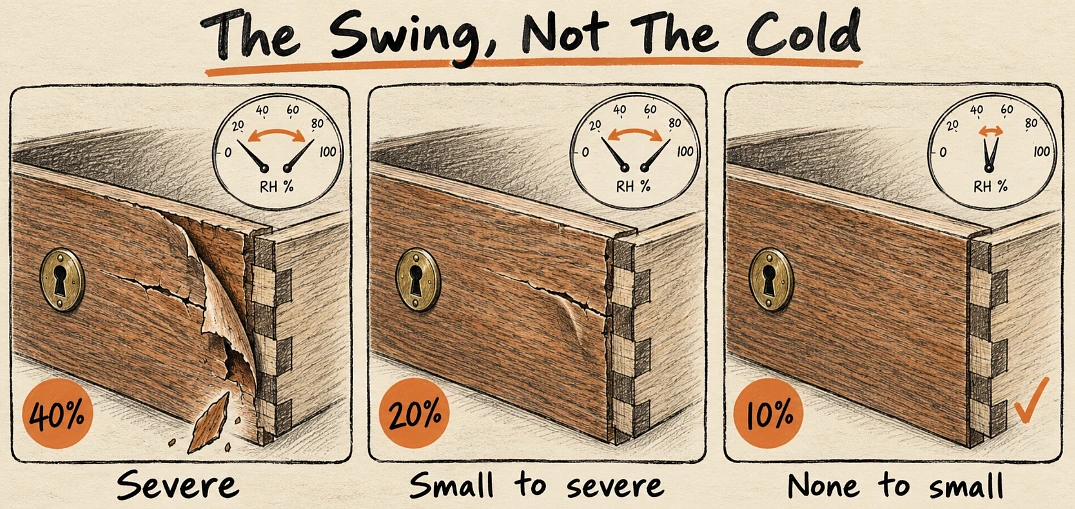
The cold on its own does not hurt an old chest of drawers much at all, and that surprised us when we first read it. What does the harm is the air getting damp and then dry and then damp again, because wood and paper and leather take moisture in and let it back out, and every time they do they swell or shrink a tiny amount.
A loft will swing more than any other room in the house over a winter, because warm damp air comes up through the hatch from the rooms below and the roof above it can be close to freezing on a clear night.
The institute has a table for how much damage each size of swing does to furniture, and the veneered pieces come off worst, because the thin veneer on top and the solid wood under it move by different amounts and end up pulling against each other. A swing of 40% up and down can do severe damage to veneer over joints, a swing of 20% can do anything from small to severe, and by the time it is down to a 10% swing the damage is none to small. So the steadier the air, the safer the piece, and the temperature hardly comes into it.
So Should Everything Come Downstairs?
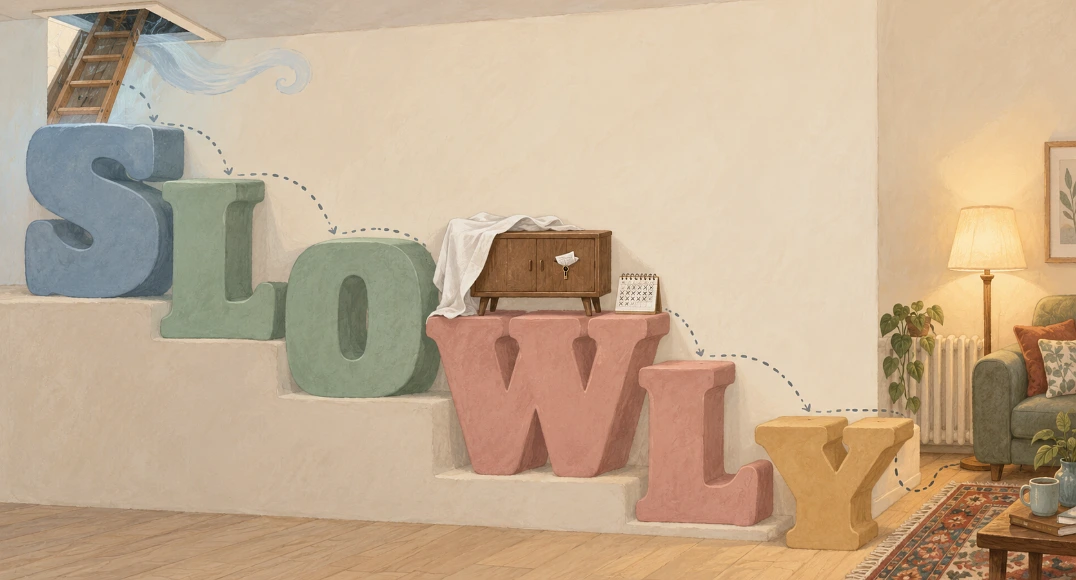
Not straight away, and this was the part that changed how we thought about all of it. The institute says an object that has already lived through a swing of a certain size is generally not at risk from one more swing of the same size, unless it has weakened in the meantime.
Which means a sideboard that has sat in your loft for 20 years has, in a way, already survived your loft. Bring it down into a living room at 21°C in December, where the air can go much drier than anything it has known up there, and the veneer could be in more trouble that week than it would have been in another winter upstairs.
If something does need to come down, the gentler way would be to put it in an unheated spare room or a cool landing for a few weeks first, so it gets used to the house a little at a time, and then move it into the room you want it in.
Packing It So The Air Inside The Box Changes Slowly
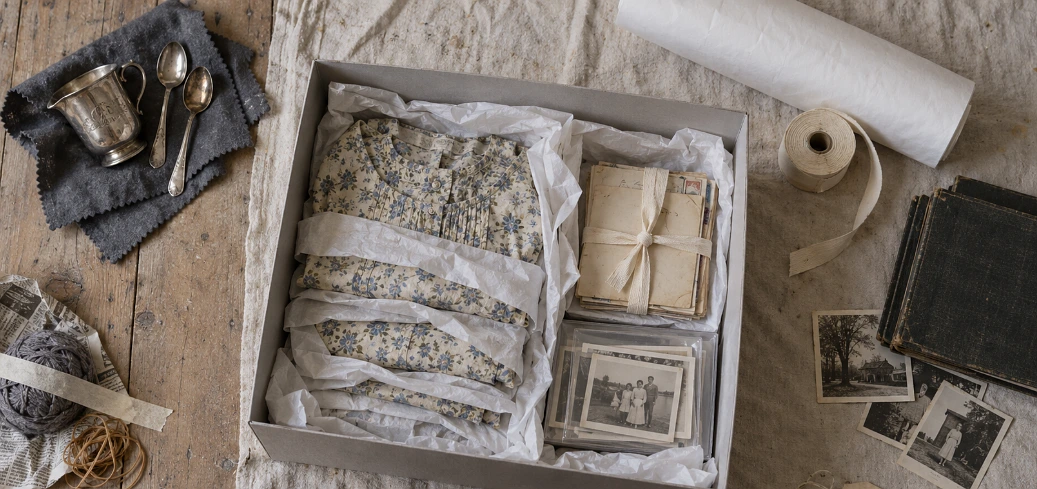
Good packing will not stop the air outside changing, but it will slow down how fast the change reaches the piece, and that is all it is for. A few things make a proper difference here:
- Acid free tissue between layers of fabric and around anything paper, because ordinary tissue and newspaper yellow and stain whatever they are touching.
- Cotton or an old sheet over furniture, never plastic sheeting, which will hold any damp right against the wood.
- Silver kept away from wool, rubber bands and cheap cardboard, because those give off sulphur and the institute says it is the sulphur, more than the damp, that tarnishes silver.
- Photographs in archival sleeves, out of the old albums with the sticky pages.
- Every box up off the floor on a shelf or a pallet, in case a pipe or the roof leaks.
When There Is Nowhere Steady Left In The House
Small things are the easy part, because a wardrobe on an inside wall changes temperature slowly and will do for a box of letters or a jewellery case. It is the big pieces that cause the headache, the blanket box, the long case clock, the dining table no one has room for any more, and in most modern houses the only places big enough are the loft and the garage, which are the two with the biggest swings.
That is where a storage unit that keeps a steady temperature through the winter starts to make sense, and a lot of people use one for exactly this now, not only when they are moving house. If you’re based in Northamptonshire, then looking for self-storage solutions in Corby might be sensible. Ask a few things before you sign up for one, though, like whether the unit is heated or only indoors, how easy it will be to get in and check on your things, and whether their insurance covers what is inside or you would need your own.
Once it is all packed, write down what is in each box and take a photo of anything valuable, and then when the clocks go forward again in March, open them up and have a look for lifted veneer, a white bloom on the leather, or photos that have stuck together.