

Blog
Poker in films and TV Series: Which Films Portrayed The Game Fairly, & Which Did Not

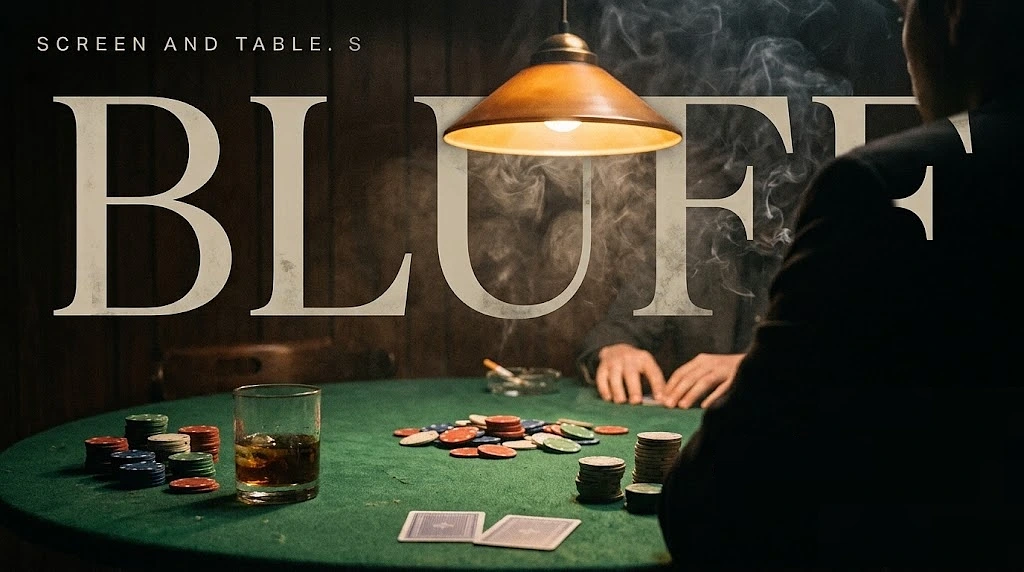
Poker has long since ceased to be merely a card game played at a green table – it has become a cultural icon, featuring in Hollywood’s highest-grossing blockbusters and cult TV series. The public’s interest in gambling has also extended to online formats, particularly non gamstop casinos uk, but it is cinema that has had the greatest influence on the public’s perception of poker. Scenes of bluffing, millions at stake and the intense stares of opponents look spectacular, but how much of this corresponds to reality? Filmmakers often sacrifice authenticity for the sake of spectacle, so the viewer is left with a distorted impression of how this intellectual discipline actually works.
Why poker is so ideal for the cinema
Cinema has always sought dramatic tension, and few things can rival a scene where a character’s fate is decided by a single card. Poker is unique in that it combines psychology, mathematics and human nature in a single ritual around the table. An ace up one’s sleeve has long been a metaphor for a hidden advantage, whilst a poker face is synonymous with emotional self-control. These images are so deeply ingrained in popular culture that even people who have never sat down at a card table instantly recognise their meaning. The problem arises when the desire for drama takes precedence over accuracy: screenwriters reproduce clichés rather than real mechanics, and this undermines the general understanding of what real strategy at the table entails.
Films that have portrayed the game honestly
Rounders (1998) – the gold standard of authenticity
Few films have earned such respect amongst real players as *Rounders*, starring Matt Damon and Edward Norton. The film adheres to the rules of Texas Hold’em with meticulous precision: pot odds, reading your opponent, bankroll management – everything is presented not as magic, but as a craft that takes years to master. The scene where the protagonist unerringly identifies his opponent’s hand from a subtle gesture with a biscuit is a textbook example of the authentic portrayal of tells – the non-verbal cues that experienced players use to read their opponents. The characters’ vocabulary, the betting structure, the atmosphere of the underground clubs – all are recreated with documentary-style rigour, which is precisely why the film is still recommended to newcomers who want to understand the logic of the game.
Molly’s Game and Casino Royale
Aaron Sorkin’s film about Molly Bloom offers a rare insight into poker from the perspective of a game organiser: there are no mystical prodigies here – instead, it shows the business mechanics of underground tables, customer loyalty and legal risks. The film rightly emphasises that a successful poker business is, first and foremost, a management discipline, and only then about the cards. ‘Casino Royale’ also stands out amongst spy blockbusters: the director chose Texas Hold’em over the outdated baccarat to make the tension accessible to a mass audience, and the central scene at least adheres to the basic rules of the game. Both films share an honest approach: showing what you know and not inventing magic where mathematics applies.
Where Hollywood cut corners
*Lock, Stock* and the TV series *Prison Break*
Guy Ritchie’s debut film is impressive in style, yet the poker scene is a classic example of ‘cinematic poker’, where the rules take a back seat to the drama: the hero is dealt a strong hand but loses to an even stronger one – a scenario that is statistically almost impossible, yet serves perfectly as a plot catalyst. In the TV series *Prison Break*, players read their opponents with supernatural accuracy without explaining any method of analysis, and different variants of the game are mixed arbitrarily depending on the needs of the scene. Typical mistakes in such films include:
- Physically impossible hands, where two extremely rare combinations appear in a single hand
- A lack of betting logic and pot odds in any form
- Reading a bluff is portrayed as a supernatural ability rather than the result of prolonged observation
What distinguishes realistic cinema from a poker fairy tale
The gap between reality and artistic fiction is measured by several specific criteria. A real game is based on probability theory and the expected value of bets: when a character on screen consistently makes irrational decisions and still wins – that’s a fairy tale, not a strategy. Poker films also love those dramatic moments of instantly spotting a bluff, whereas in reality it is a statistical analysis of long-term behavioural patterns, not a flash of insight in a split second. The best films honestly compensate for the format’s structural limitations: they do not simulate the real pace of the game, yet neither do they turn every hand into a spectacular firework display for the sake of box-office takings.
An inaccurate portrayal of poker creates false expectations among those approaching the table for the first time: they expect a constant adrenaline rush and guaranteed triumph through charisma. The real discipline involves patience, resource management and mathematically sound decisions in conditions of uncertainty. At the same time, high-quality films can genuinely inspire people to explore the intellectual side of the game – *Rounders* prompted thousands of people to study poker theory, which shows that cinema can serve as an effective bridge between popular culture and a serious hobby.