

Blog
Christian Eriksen has gone down on a football pitch twice now. Only one of those days needed a hero.

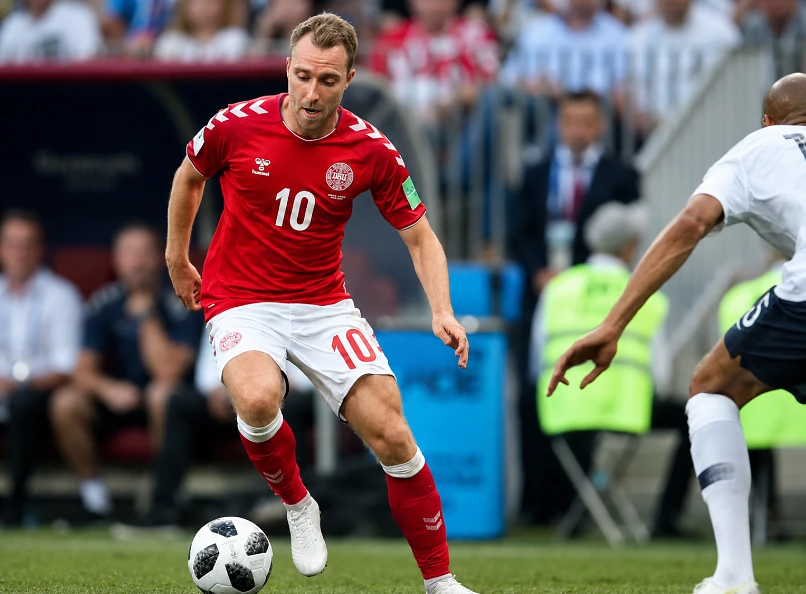
Odense, 7 June 2026. A friendly nobody expected to matter, Denmark leading Ukraine 2-1, and in the 65th minute Eriksen clutched his chest and went down. Players from both sides closed into a ring around him within seconds, the way they did once before, and the ground went quiet in that specific way a stadium goes quiet when everybody understands something is wrong and nobody is sure yet how wrong.
Here’s what actually happened, and it matters that we get it right because the wrong version is already going around. He was briefly unconscious and came back quickly. The implanted defibrillator he’s carried since 2021 appears to have done exactly what it was built to do, the team doctor said the device “responded as it should,” and Eriksen walked off the pitch himself while the match got abandoned around him. By the next morning he was in good spirits, with family, expecting to go home.
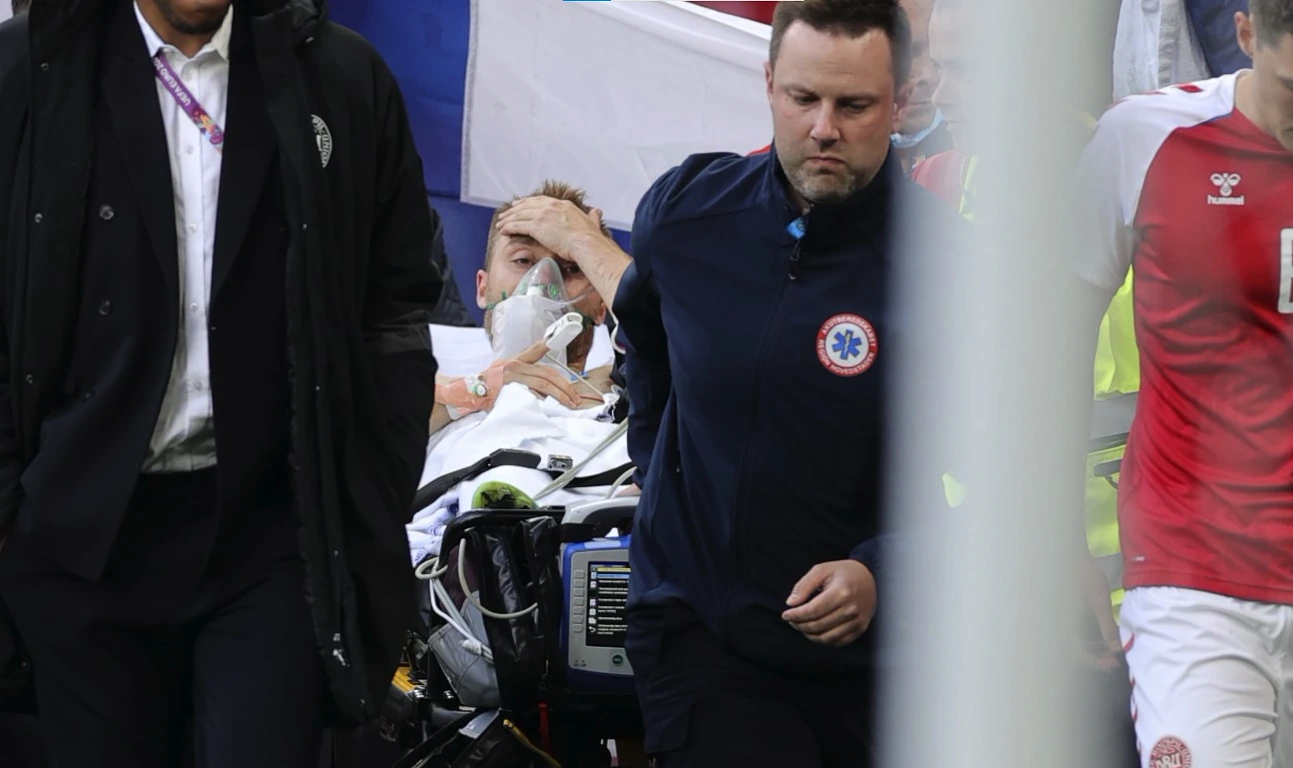
Walked off himself. Twenty minutes after his heart scared sixty thousand people for the second time in five years. That sentence is doing a lot of work, and most people scrolling past the headline never stopped to ask why it was even possible.
The answer starts five years earlier, with a man who wasn’t a doctor.
June 2021 was the day that needed hands
Rewind to Euro 2020, Denmark against Finland, 42nd minute, and that time it was the real thing. Cardiac arrest, around thirteen minutes of CPR on the grass, and Denmark’s team doctor Morten Boesen saying afterwards, in a line that deserves quoting more than it gets, that Eriksen “was gone” before resuscitation brought him back.
Captain Simon Kjær reached him first.
Not a doctor. Not a paramedic. A thirty-two-year-old centre back who’d sat through first aid training at some point, the kind most professional athletes tick off without thinking twice, and he cleared Eriksen’s airway, started the work before the medics arrived, and once they took over he turned to the second job, organising his teammates into a wall so a global broadcast couldn’t watch a man possibly die on live television.
Boesen put it plainly at the time. How quickly people react is the decisive factor. Not proximity to a hospital, not luck, just speed, and whether the person nearest the body has ever practised what their hands are supposed to do.
Why did a crowd of tens of thousands do nothing while one man did everything? Because that’s what the freeze response looks like at scale. It’s not a character flaw in a stadium full of Danes, it’s what an untrained nervous system does under sudden shock, and the same mechanism runs through a much smaller room whenever a coworker collapses in an office kitchen and everyone just stands there.
Most collapses don’t happen on a football pitch
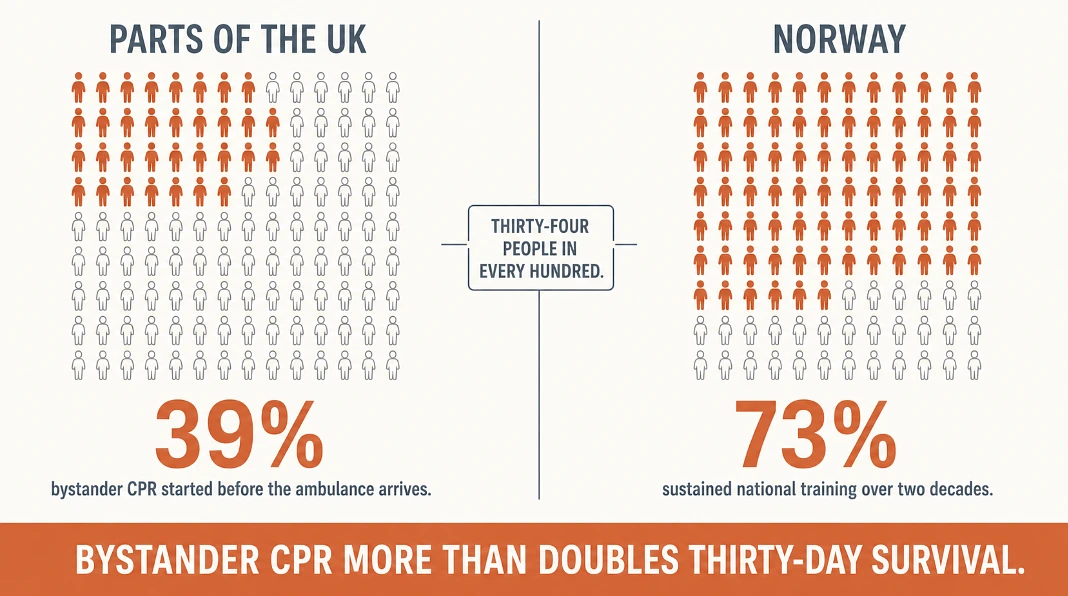
39%. That’s how low bystander CPR rates run in parts of the UK, according to the British Heart Foundation. Norway sits at 73%.
Eriksen has now had the best possible version of this event twice, trained people within arm’s reach, equipment on site or inside his chest, response measured in seconds. Most collapses get none of that. They happen in kitchens and car parks and gyms, and research in the New England Journal of Medicine found thirty-day survival more than doubles when whoever happens to be nearby starts CPR before the ambulance shows up. That gap between 39% and 73% is measured in actual people who didn’t need to die.
Closing it doesn’t take a medical degree. Kjær wasn’t a doctor, he’d sat through an ordinary CPR and First Aid course, the kind that exists in most towns, takes an afternoon, and mostly gets forgotten about until the one day it doesn’t.
The freeze isn’t a failure of nerve. It’s what happens when the hands have nowhere trained to go while the rest of the brain is still catching up.
2026 was the day the machine took over
And this is the part that makes the two incidents one story instead of two.
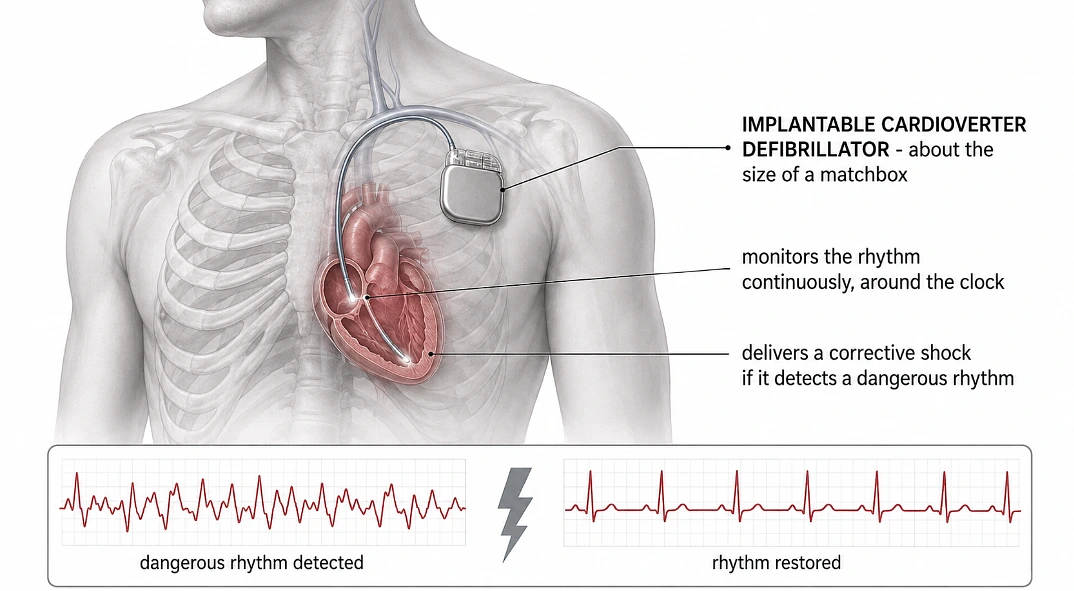
The reason June 2026 ended with a man walking off under his own power instead of thirteen minutes of chest compressions is that 2021 happened first. After Copenhagen, Eriksen was fitted with an implantable cardioverter-defibrillator, an ICD, a device that watches the heart’s rhythm around the clock and delivers a corrective shock if it detects something dangerous. Reports from Odense suggest that shock may well be what he felt when he grabbed his chest.
Italian regulations wouldn’t let a player carry one in Serie A, so his Inter Milan contract ended by mutual agreement, and the comeback happened in England instead. On 31 January 2022, less than eight months after his heart had stopped on a pitch, Eriksen signed for Brentford. He came on against Newcastle on 26 February and the reports from that afternoon describe the ovation running so long the match had to wait for it. He was good enough that Manchester United came for him that same summer, and there’s a Carabao Cup and an FA Cup in the cabinet from the seasons that followed.
So the chain reads like this. A trained teammate bought him his life in 2021. Doctors and a device protected the rest of it. In 2026 the device fired, the protocols around him worked, and a stadium chanted his name while he walked off. None of that chain starts without the man who knew where to put his hands.