

Blog
A British Man Got Back 61 Bitcoin He Bought For £1,500 In 2011 – Story Of The “Accidental Millionaire”

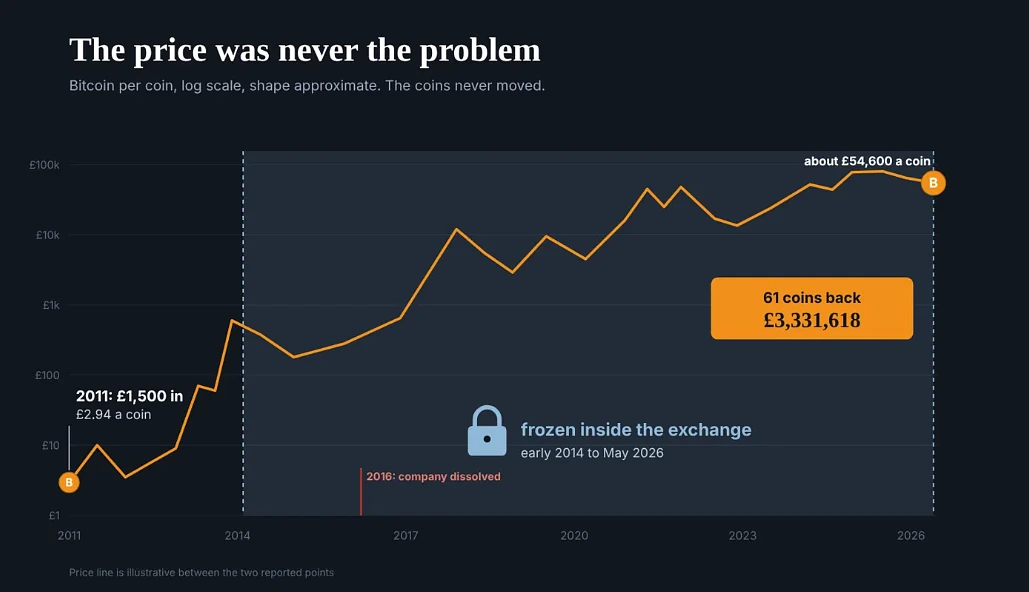
This one is about a man called Chris, and the reason it caught our eye is that it is the story everybody has thought about at least once, the what if I had bought bitcoin back when it was nothing. Chris did buy it back when it was nothing. He put £1,500 in back in 2011, when one coin was going for about £2.94, which is roughly the price of a cheap holiday, and in May this year he got 61 coins back worth £3,331,618. Three point three million, from a £1,500 punt, and he could not touch it for 12 years.
Now, the part that gets lost when people share this story is that the price was never Chris’s problem. The price did what the price did. What kept Chris away from his money was the company he bought it through, and that is the part we want to go through, because it is the part that could happen to anyone putting money online now.
How Chris Lost Access To His Bitcoin
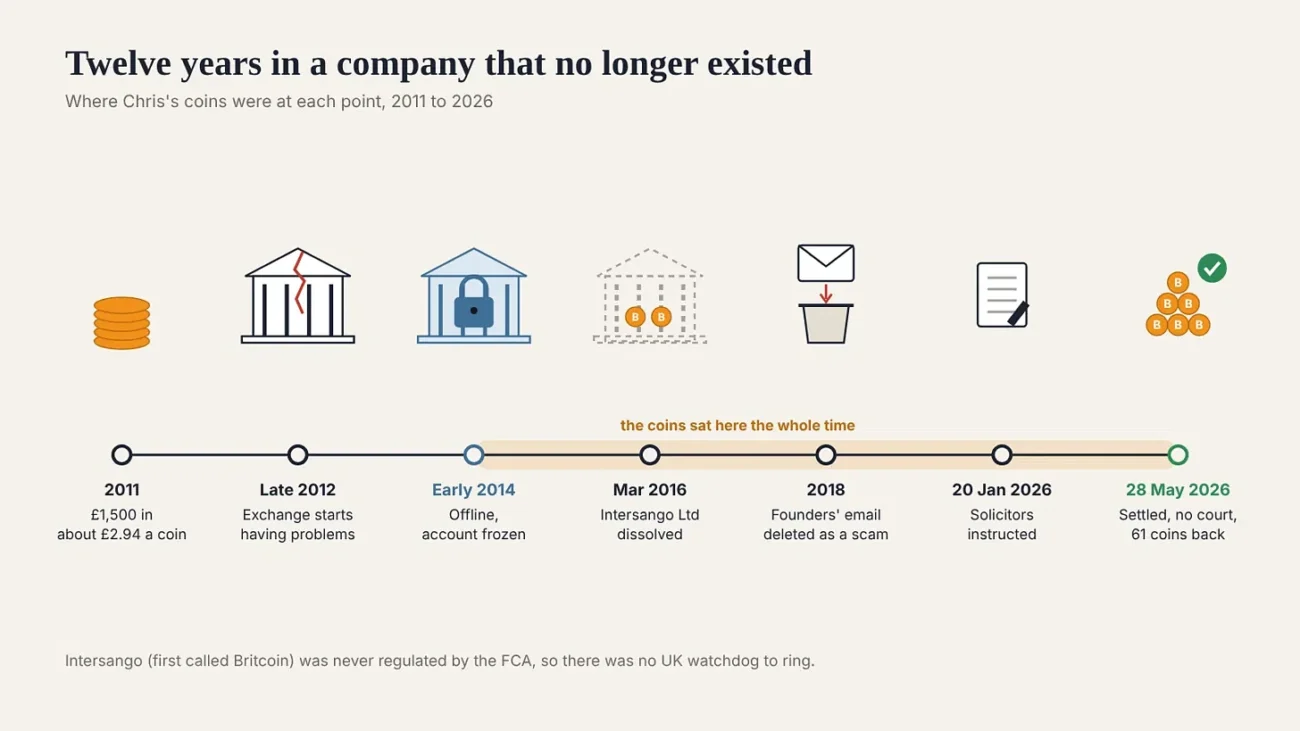
So Chris bought on Britcoin, which was one of the very first places in the UK you could buy bitcoin at all, and Britcoin later changed its name to Intersango. Going by what his solicitors and the reports have said, it went like this:
- 2011: £1,500 in, with coins at about £2.94 at the time.
- Late 2012: Intersango starts having problems.
- Early 2014: the Intersango website goes offline and Chris loses access to his account, with the coins worth about £4,000 at that point.
- 22 March 2016: Intersango Ltd is dissolved, so the company is just gone.
- 2018: 2 of the co-founders email old customers asking them to get in touch.
- 20 January 2026: Chris instructs CEL Solicitors.
- 28 May 2026: it settles by negotiation, without a judge deciding Chris’s own claim, though it sat alongside wider court proceedings in the US involving Intersango’s former operators, and the 61 coins come back.
So this was never described as a hack. Chris’s coins were held through an exchange that had stopped running, Intersango was never regulated by the FCA, and the hard part was proving the coins were his.
His solicitors say the 61 coins were every coin he claimed, and the published accounts do not give a full breakdown of what he bought and when back in 2011, so we will leave that there.
The Emails Chris Deleted In 2018
This is the bit where most of us would have done exactly what Chris did. The co-founders emailed in 2018 saying get in touch, and Chris thought it was a scam and deleted it. And honestly, fair enough, because an email out of nowhere saying you have crypto waiting for you is, like, the oldest scam going.
It was his wife who kept on at him to ring a solicitor, and that was another 8 years later. When it came back he said their “jaws dropped, eyes popped”, and he now checks the app “every single day, 20 times a day”, which, yeah, we would too. Some of the money is staying in crypto and some is going on a bigger house for his mother-in-law, who has disabilities, plus a family holiday.
James Howells Did Not Get His Back
Now, Chris’s story ends well, and the one most people in Britain have actually heard of does not. James Howells, from Newport, threw a hard drive out in 2013 with the keys to about 8,000 bitcoin on it, and it is the keys that were on it, not the coins themselves, and the drive went to the Docksway landfill in Newport, where as far as anyone knows the drive is still sitting.
Howells spent years trying to get Newport City Council to let him dig. A judge threw his claim out in January 2025, said it had no realistic chance, and permission to appeal was turned down that March. Then Howells tried to buy the part of the landfill where he thinks the drive is, and by August 2025 he was saying he would drop the landfill purchase and put his time into a crypto project instead. The drive has still not been found.
So Chris lost his coins to a company that went under, and Howells lost his to a bin bag. Which one do you think is easier to do now? We would say the company one, because at least you know where your own bin is.
What We Would Check Before Putting Money Anywhere
In both stories the bitcoin price was never the problem. Chris’s problem was an exchange holding his coins, and Howells’s problem was losing the keys he needed to get at his own. So the checks are about who holds your coins and how you get them back, not the price.
- Look the exact company up on the FCA register. Check its permissions, not just its name, because a crypto firm can be registered for anti money laundering without giving you the protections an authorised investment firm would. Check the FCA warning list too, though a firm not being on it does not prove it is safe.
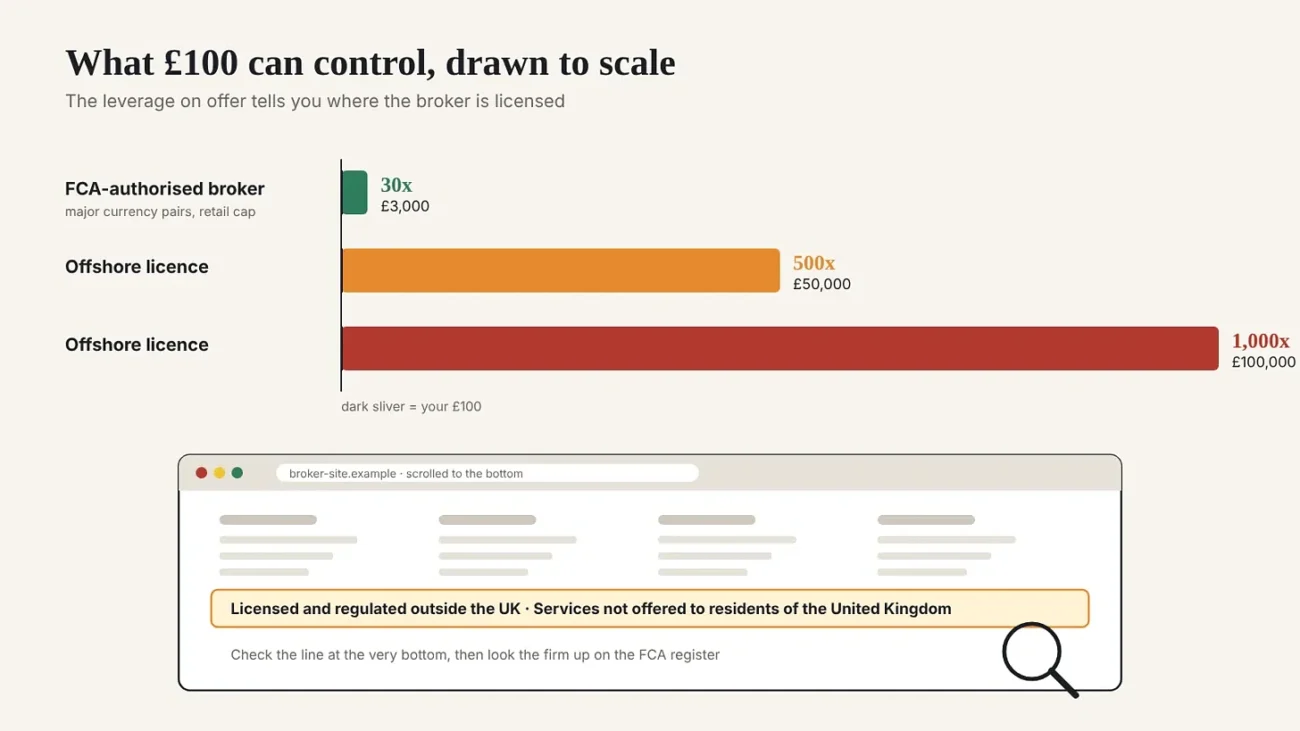
- Know what normal UK leverage looks like on forex. The FCA caps forex CFDs for a normal customer at 30 times their money on the main currency pairs, less on the others, so a platform offering a UK customer 500 or 1,000 times is outside those rules, and you would want to know which company it is, where it is authorised and whether it can serve UK customers at all.
- Read the footer of the website. The legal details sit right at the bottom, and a trading name is not enough to tell you who regulates your account. Weltrade, for example, has a South African company holding an FSCA licence, while the company providing the CFD trading is incorporated in Saint Lucia, and it says it does not take UK residents. If you want to see what that kind of page looks like, go to this website and scroll all the way down.
- Keep your own paperwork, and your own keys. Chris only got his coins back because he could prove they were his, with old account details his solicitors could put in front of the other side, and if you hold your own bitcoin, the recovery details want a safe backup, which is the lesson Howells learnt the hard way.
In 2011 there was no FCA crypto register, the FCA itself only started in 2013 and its crypto registration came in 2020, so Chris had far less to go on. Now it takes about 5 minutes, so if you have money sat on an app or an exchange somewhere, go and look up who actually holds it, and if you know a story like Chris’s or Howells’s, we would like to hear it.