

Blog
Herringbone is leaving the floorboards behind and heading upstairs

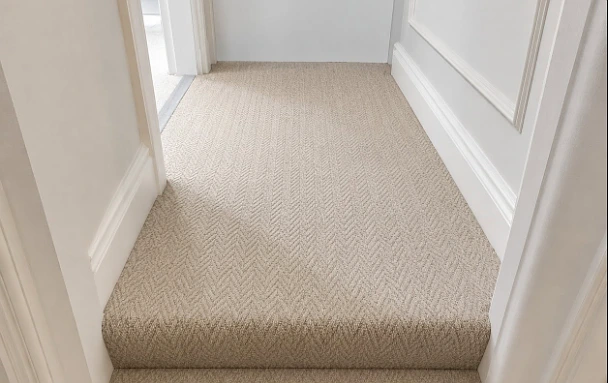
For a decade, British living rooms have mostly played it safe: flat greys, warm whites, very little pattern anywhere underfoot. That mood is starting to shift, and it is showing up in an unlikely place first, the stairs.
Herringbone, the diagonal weave most people associate with parquet and engineered wood floors, is turning up increasingly often as a carpet, on staircases, landings and in bedrooms rather than open-plan living spaces. UK searches for “herringbone carpet” have climbed 42% year-on-year, reaching around 8,100 a month and peaking at 9,541 in January 2026, according to analysis of Google search demand by Designer Carpet, an online luxury carpet store based in the UK.
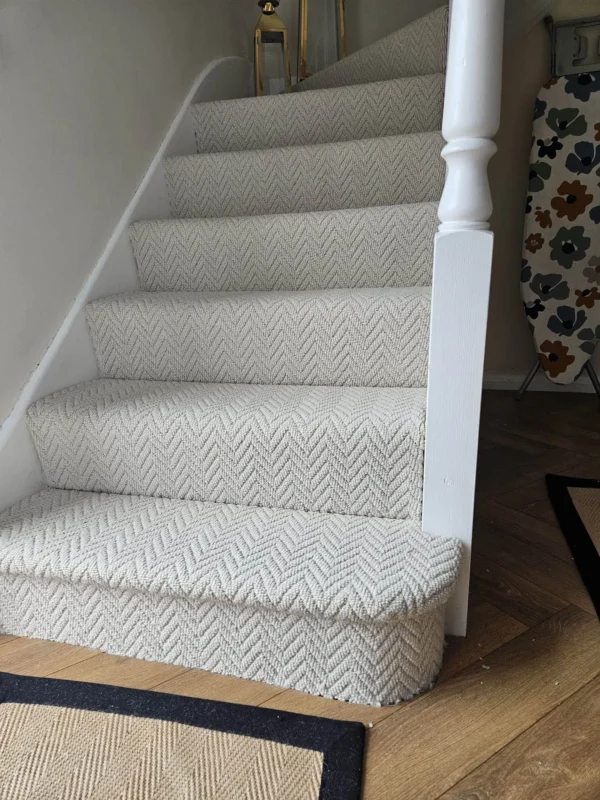
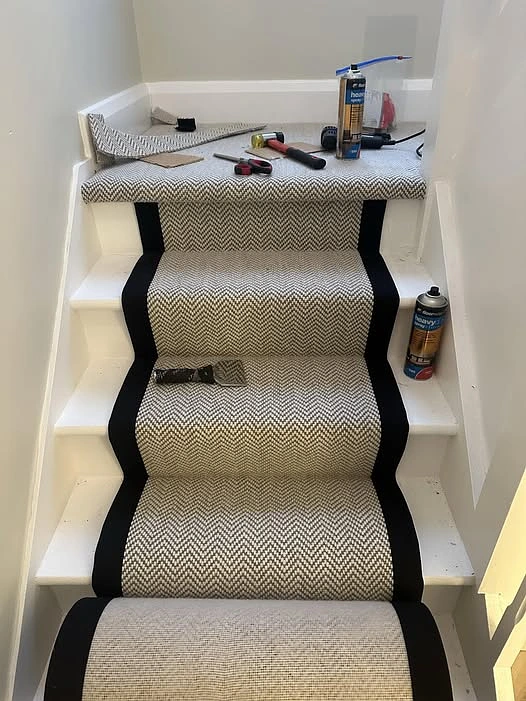
“Herringbone has spent years on people’s floors as parquet and engineered wood,” says Ben Herbert, Director at Designer Carpet. “What we’re seeing now is that same appetite for pattern moving onto the stairs and into bedrooms in carpet form, where it feels warmer and quieter underfoot than the wood version ever could.”
It is a comfort trend as much as a design one. Stairs and landings get walked over barefoot more than almost any other surface in the house, and a patterned runner does something a plain grey one never quite manages: it makes an ordinary transition space feel considered rather than incidental. Bedrooms are the next most requested room for it, usually in a softer, tonal colourway rather than the higher-contrast pairings that suit a hallway.
The pattern is growing faster underfoot than it is on the floor beneath it. Searches for “herringbone flooring” rose 30% over the same period, to around 53,000 a month, so the carpet version is now gaining ground quicker than the hard-floor original it borrowed its name from.
It is also a genuinely specific trend rather than a general swing towards busier interiors. “Patterned carpet” searches held flat year-on-year at around 1,700 a month, and “stair runner” was similarly static at about 17,800, which suggests the appetite is for herringbone itself rather than pattern in general.
Much of it comes down to households simply staying where they are for longer. With higher borrowing costs and stamp duty keeping many people in their current homes rather than moving, the money that might once have gone towards a new house is going into the one they already have, and increasingly into how the floors look and feel. Official figures back this up: repair, maintenance and improvement was the standout area of UK construction in early 2026, with private housing repair and maintenance the main positive contributor to output even as new-build housing fell, according to the Office for National Statistics. The RIBA Journal has been tracking the same “improve, don’t move” pattern across the wider building industry.
“A patterned carpet is one of the cheapest ways to make a room look considered, which is exactly what people want once they’ve decided to stay put rather than move,” Herbert says. “Herringbone does that without shouting about it, so it works as well in a Victorian terrace as it does in a new-build semi.”
The look is also older than it feels. The same diagonal weave dates back to Roman road-building and found its most famous domestic home in the parquet floors of Versailles in 1684, long before anyone thought to put it underfoot as carpet.
For anyone tempted to try it, stairs and landings tend to be the easiest place to start: a smaller area of pattern reads as a deliberate choice rather than a big commitment, and it is where the eye naturally lingers on the way up. Larger, open-plan rooms can carry herringbone too, but generally need a calmer, more tonal version so the pattern does not compete with everything else going on in the space.
The search figures are drawn from twelve months of UK search volume to May 2026, set against the twelve months before that, using Ahrefs’ Keywords Explorer for Google searches in the UK. The year-on-year comparison is Designer Carpet’s own calculation, cross-checked against the flatter search patterns for stair runners and patterned carpet more broadly to confirm the movement sits with herringbone specifically rather than the category as a whole.