

Blog
How the Right Retail Flooring Transforms Your Customer Experience
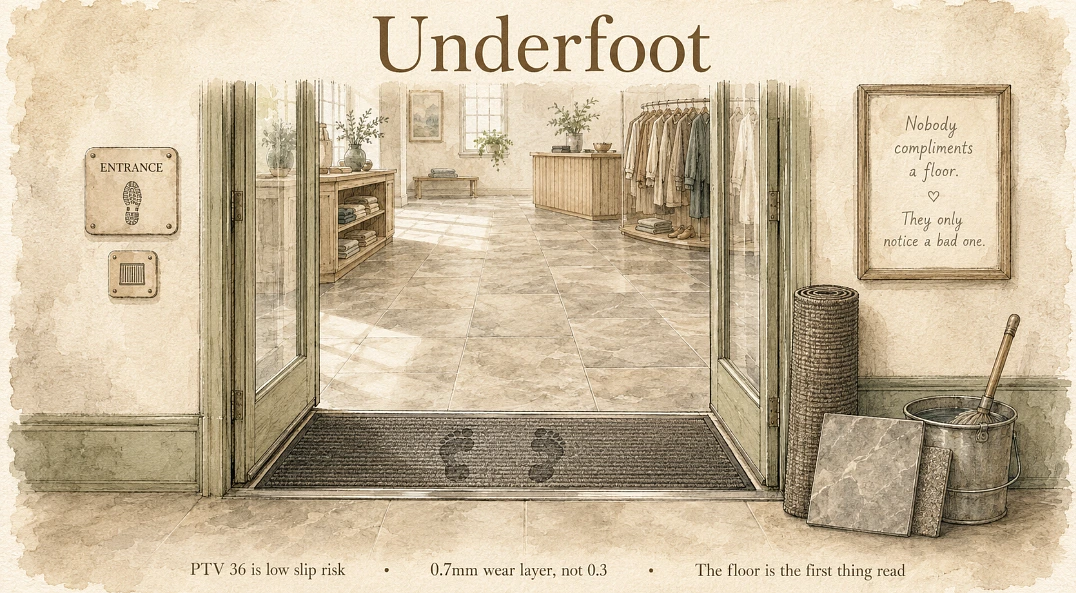
Customers never compliment a shop floor, they only ever notice a bad one.
And that’s really the whole argument for taking it seriously. The floor is the one surface every visitor stays in contact with from the door to the till, it takes more of a beating than any wall or fixture in the building, and when it’s wrong, scuffed, patched, lifting at the thresholds, people clock it without ever consciously thinking about flooring. Which makes choosing it a commercial decision dressed up as a design one.
Customers Read the Floor Before They Read Your Prices
Walk into any shop and your brain finishes its first verdict within a few seconds, long before you’ve checked a price tag. The floor sits inside that verdict whether the shopper knows it or not. A worn or badly patched floor quietly tells people the business has stopped caring about details, and if the building’s details are slipping, what does that say about the stock? It isn’t fair on the retailer, but that’s how perception works. A clean, consistent, well kept floor does the opposite job and backs up whatever the shelves and the branding are claiming. Brand perception wears through the same way a wear layer does, invisibly for ages and then suddenly all at once.
Different Shops Need Completely Different Floors
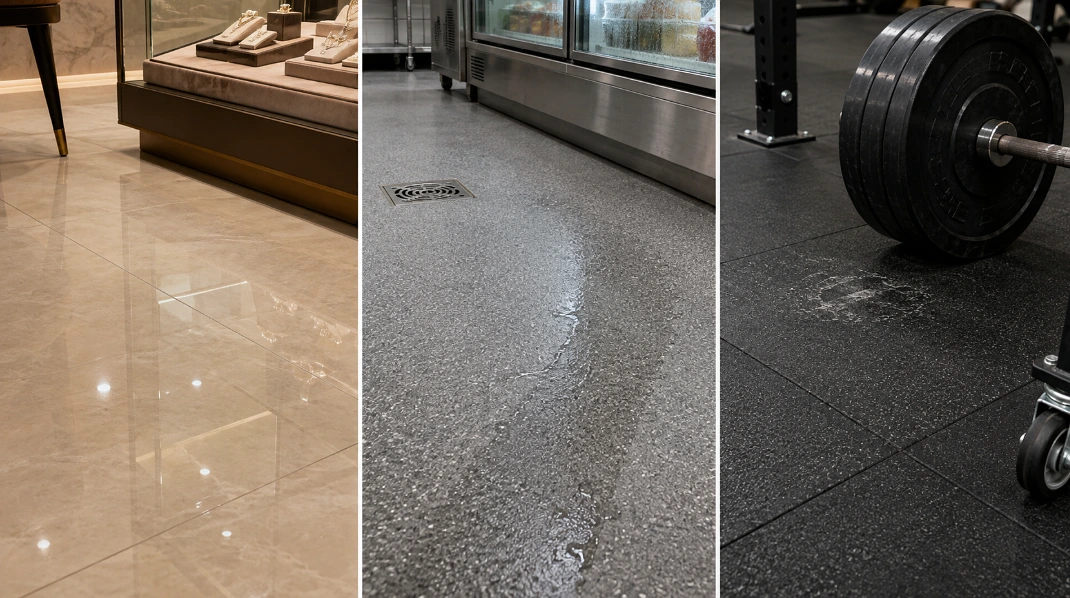
There’s no such thing as the best retail floor, only the right one for the trade happening on top of it:
- Premium fashion, jewellery and beauty lean on polished porcelain, stone or wood look LVT from the likes of Karndean and Amtico, because the floor has to look like the same price bracket as the stock.
- Food and drink retail needs safety vinyl, and Altro and Polyflor own that space, built for spills and constant wet mopping without turning into an ice rink.
- Gyms and sports retail run rubber or heavy duty vinyl that shrugs off dropped weights, cleats and trolley wheels all day.
Get the category wrong and the shop contradicts itself. A butcher on polished porcelain is a slip claim waiting for a date, and a jeweller on safety vinyl looks like a pop up that never left.
Commercial Grade Costs More Because It Has To
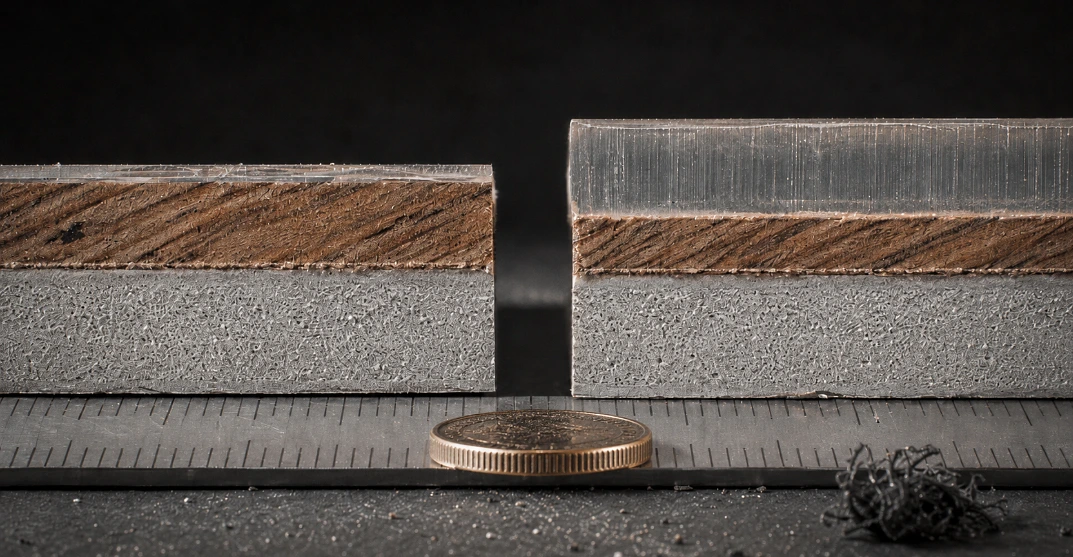
A retail unit sees footfall a house never will, thousands of pairs of shoes a week, wet ones half the year in Scotland, plus trolleys, deliveries and daily cleaning chemicals. Commercial products are built for that with thicker wear layers, roughly 0.55 to 0.7mm against the 0.3mm you’d find on a residential product, and the pricing follows.
What You’ll Pay Per Square Metre
Trade guides put LVT anywhere from £15 to £60 per square metre with the UK average around £40. Commercial grades start near the £20 mark supply only, and fitting usually adds another tenner to twenty five quid a metre depending on layout and how much subfloor work is hiding underneath.
Why Speccing Down Backfires
The temptation is to buy cheap at the start. What actually happens is the cheap floor shows wear paths inside a couple of years and you’re paying for replacement plus the disruption of fitting it during trading, which together cost far more than whatever you saved on day one. If you’re not sure what grade your unit honestly needs, ask a fitter who does shops every week rather than a showroom. Allfloors Glasgow handle retail jobs day in day out and will spec for the footfall you actually get, not the brochure.
The Slip Number That Matters Is 36
So what makes a floor legally defensible in the UK?
The HSE’s preferred measure is the pendulum test, a rig that swings a rubber slider across the wet floor and produces a score called the PTV. A PTV of 36 or above is classed as low slip risk, roughly a one in a million chance of a slip. Down at 27 the odds collapse to about one in 200. That gap is the entire reason entrances deserve attention, because rain walked in on a November afternoon turns a marginal floor into a claims generator. The compliance side comes down to three things:
- Proper matting at the door, long enough to strip the rain off shoes before they reach the sales floor.
- Managed transitions between floor types, so there’s no lip waiting to catch a toe.
- A written record of inspections, because that paperwork is what protects you if someone does go down, it shows the hazard was being managed rather than ignored.
Hard Floors Make Big Open Shops Loud
Large open units with hard flooring everywhere can become genuinely unpleasant, footsteps, trolley wheels and the music all bouncing off the surface until staff are half shouting their handovers. Acoustic underlays and sound dampening products pull the reverberation down without changing the look of the floor, and zoning helps as well, softer material in seating and consultation corners where people are meant to linger. Whether a quieter shop directly sells more is hard to prove, but people certainly leave an uncomfortable one faster, and a customer heading for the exit isn’t browsing.
The Fitting Plan Decides Whether You Keep Trading Through It
The floor itself is half the project. The other half is getting it laid without losing a week of takings, and that comes down to phasing, whether the store can trade at half footprint while sections go in, lead times on the material, and whether the subfloor needs levelling first, which is the cost that catches people out most often. Whoever fits it, get the milestones in writing before anyone lifts a tile. A promise to work around you means very little until it has dates attached, so pin those down before the job starts and the rest of it tends to behave.