

Blog
How to Create a More Relaxing Garden

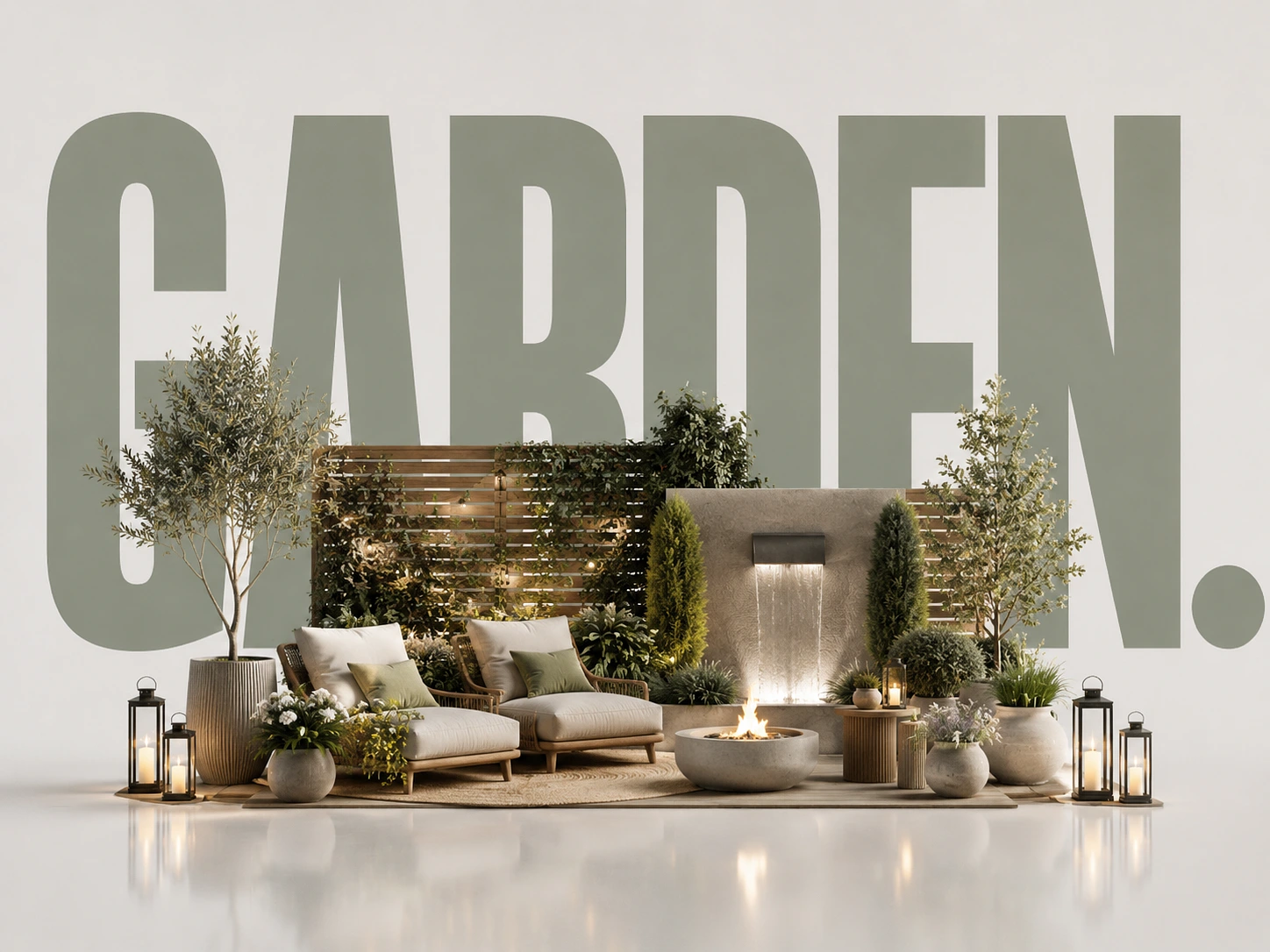
The garden looks good on paper. Fresh air, your own outdoor space, somewhere to sit with a drink at the end of the day. In practice, you walk out there and immediately clock the hedge that needs attention, the furniture that’s seen better days, the trampoline nobody’s touched since 2022. It’s supposed to be restful. It isn’t.
Most of what fixes this isn’t expensive. It’s mostly just deliberate.
Start by taking things away
The instinct when a space feels wrong is to add to it. New plants, new furniture, a feature of some kind. Usually the problem is the opposite — too much already, half of it serving no real purpose.
Go through the garden properly. The play equipment the kids grew out of. Broken chairs you keep meaning to repair. Ornaments that seemed like a good idea at the time. None of it needs to stay. A garden holding a lot of half-ignored objects is visually noisy even when you’re not consciously looking at any of it — and that constant low-level noise is a big part of why the space never quite settles.
Overgrown planting does the same thing. Hedges that have crept past where you want them, shrubs that have sprawled, trees that have got leggy — all of it crowds the space and makes it feel smaller than it actually is. A couple of evenings with secateurs handles most of it. No skip, no full weekend required.
Once there’s less competing for attention, every other decision gets easier.
Seating that actually fits how you use the garden
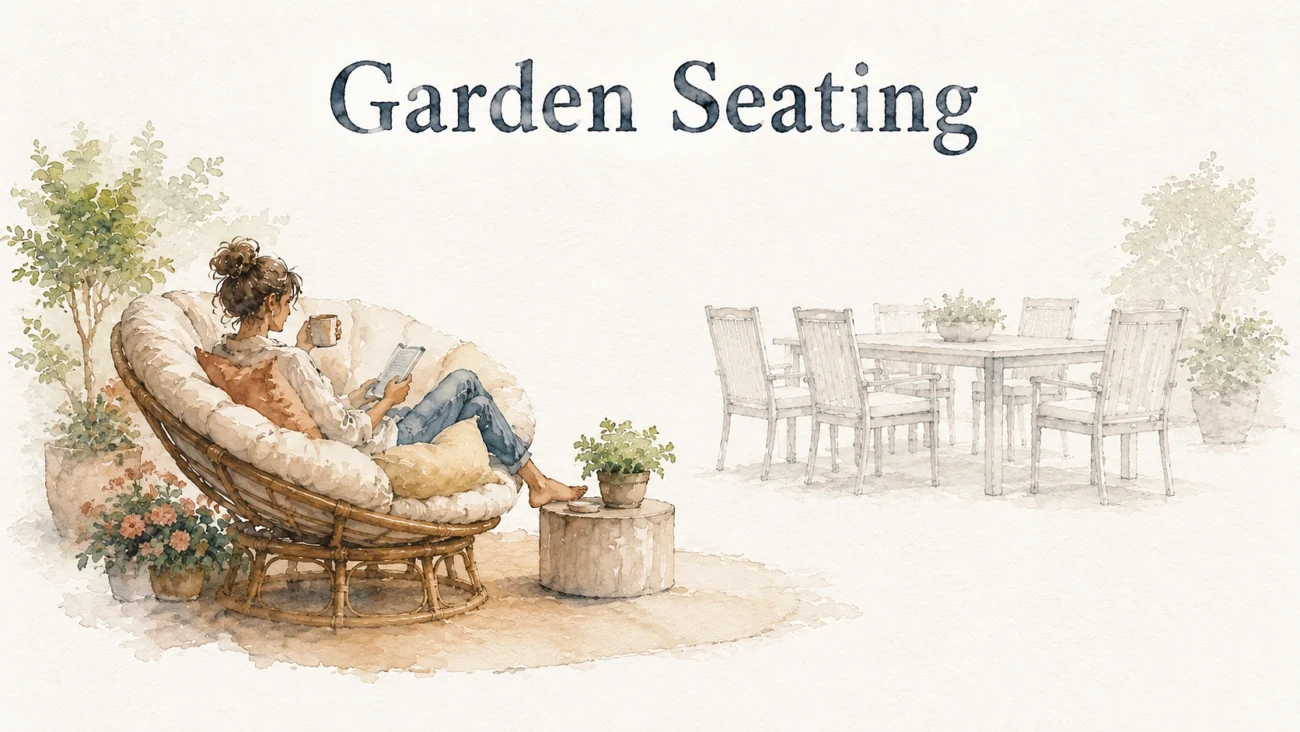
Most people buy garden furniture based on how it looks in the photograph. Then they sit in it, and it’s slightly too upright, or fine for twenty minutes and not much longer.
Be honest about the real pattern. Mostly solo — coffee, book, phone — then a single good lounger or a pair of deep chairs beats a six-person dining set you’ll pull out four times a year. If people come over regularly, you need enough seats that nobody ends up perching on a step, but that’s different from furnishing the place like a terrace bar.
Cushions matter more than the frame. They’re the part that determines whether you actually stay outside or drift back in. If you want to bring that same level of deep, indoor comfort out onto a covered veranda or summer house, investing in durable, weather-protected Koala Sofa Beds in UK can completely transform how you unwind in your outdoor space.
A hammock, if there are two solid anchor points, is one of the cheaper ways to add something genuinely relaxing. Harder to justify not having one if the space allows it.
Water
Running water does something useful in a garden — it fills in the background. Traffic noise, a neighbour’s music, whatever’s happening two streets over — a decent water feature doesn’t drown any of it out, but it gives your ear something else to land on. Attention drifts toward the closer, softer sound.
A pond is lovely but it’s real work. Digging, lining, pumps, blanketweed in summer, and if there are young children around, a constant low-level worry. Most of the acoustic benefit comes from something much simpler — a self-contained recirculating fountain, a millstone bubbler, anything that moves water without requiring a significant hole in the ground. Many run off a standard outdoor socket and need nothing more than an occasional top-up.
A birdbath takes this in a different direction. It brings birds in rather than generating sound itself, and birdsong in a garden is its own kind of quiet.
Shade, because a garden you can only use until noon isn’t much use
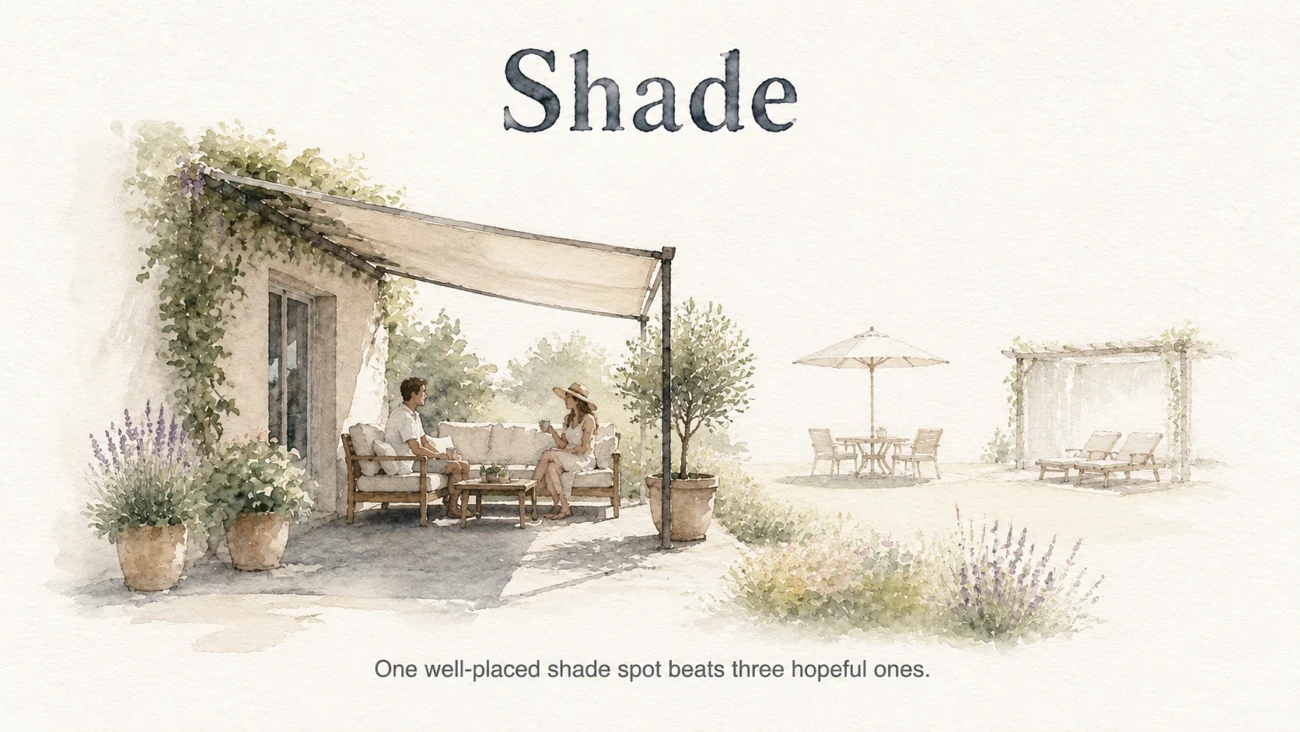
Spend some time watching where shade actually falls at different points of the day. From the house wall, a fence, a tree that’s been there since before you moved in. Position your main seating to use it.
Where natural shade is limited:
- Parasols — cheapest, moveable, fold away in wind, you can shift them as the sun moves
- Sail shades — a tensioned fabric panel fixed between anchor points, inexpensive, works well over a fixed seating area
- Pergolas and gazebos — more of a project, but they create a defined outdoor room and can carry climbing plants or lighting
- Retractable awnings — fitted to the house wall, tidiest option if you mostly sit near the building
One well-positioned shade solution over the spot you actually use beats three positioned optimistically around the garden.
Privacy — the thing people consistently underestimate
A garden you feel watched in is a garden you can’t fully switch off in. Not always because someone is watching. Just the feeling of it.
You rarely need to screen the whole boundary. What you actually need is one secluded spot — somewhere your chair can sit without a sightline from the neighbour’s upstairs window or the footpath. A section of slatted fence, a trellis with something growing on it, a few large pots planted with something tall and dense. Bamboo grows fast and does the job well. Tall ornamental grasses are slightly more interesting to look at. Pleached trees if you want something more architectural, though that’s a slower and more expensive route.
The Spruce has a thorough rundown of garden privacy ideas covering most of the main approaches and what each one involves.
The aim isn’t to block out the world. It’s one corner that feels like it belongs to you.
A sauna — worth thinking about more seriously than most people do
Everything above helps in the warmer months. A garden sauna changes the equation for the rest of the year.
This is a bigger decision. Cost varies considerably depending on size, type, and what groundwork the location needs. But the effect on how a garden gets used through winter is significant — a dark January evening becomes a reason to go outside rather than a reason not to.
A few things worth thinking through before buying:
- Location — needs a level base and access to power; infrared models have different electrical requirements to traditional wood-burning stoves
- Size — two people who’ll use it regularly beats a six-person cabin that mostly sits empty
- Type — traditional saunas heat via a stove and allow steam by throwing water on the stones; infrared models warm the body more directly, heat up faster, and generally cost less to run
- Planning permission — most garden saunas in England fall under permitted development, but worth checking if your property has any restrictions
Evenings — lighting and heat
A garden that closes at sunset is only getting half the year.
Lighting: softer is better. You’re not lighting a car park, you’re making the space feel like somewhere worth being once it’s dark. Festoon lights overhead, a few lanterns at ground level, solar stake lights along a path. Anything that picks out a planted area or a tree without flooding it. Security lighting belongs near the gate, not above the chairs.
Heat gets you the shoulder months — March evenings, October evenings, the nights that would otherwise be just slightly too cold. A fire pit handles this well and does double duty; a real flame tends to keep people outside longer than they planned. Chimineas and patio heaters both work. An outdoor stove if you want something more permanent.
Do the clearing first. That’s the part that changes the most for the least effort, and it costs nothing. Add the other pieces as it makes sense. A garden that gives you somewhere to properly unwind is mostly a matter of a few decisions made deliberately — not a big expensive project.