

Blog
Last Winter Schools Shut After Heating Problems, And What Buildings Can Check Before The Cold Comes Back

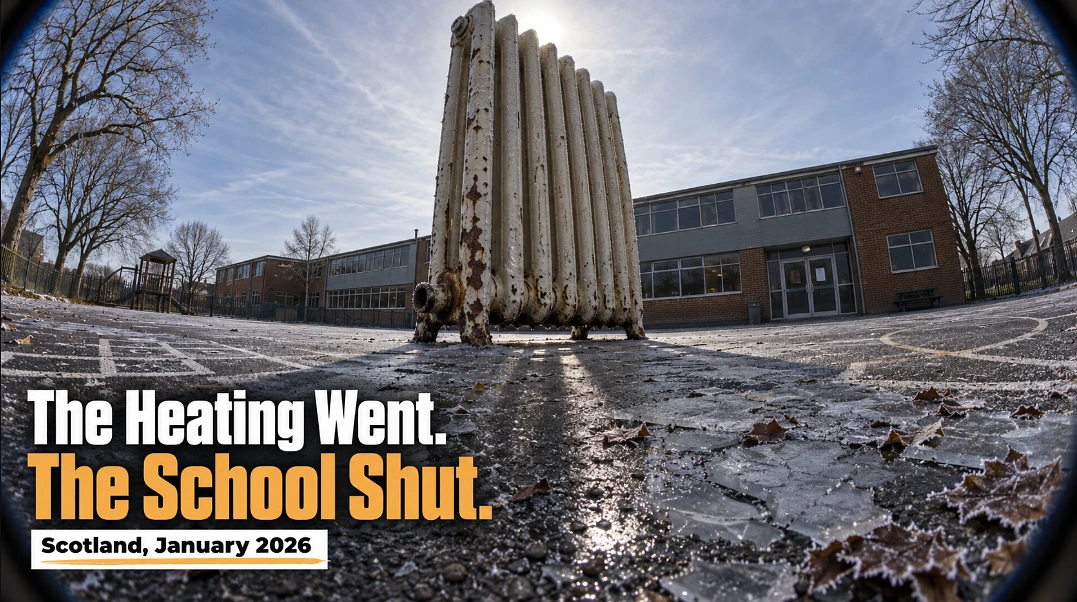
Heating is going back on in most buildings around about now, and last January is a pretty good example of what happens when it does not work. Schools shut, children got sent home, and parents had to sort out childcare with no notice at all. When you actually look at what went wrong, the causes were not all the same, flooding in one place and unstable heating systems in others, and one of the worst hit sites was barely 5 years old. What it does show is how fast a building goes cold once something gives, and how much it matters knowing what state the system is in and where the parts would come from before it is already cold.
What Happened In East Ayrshire In The First Week Of January
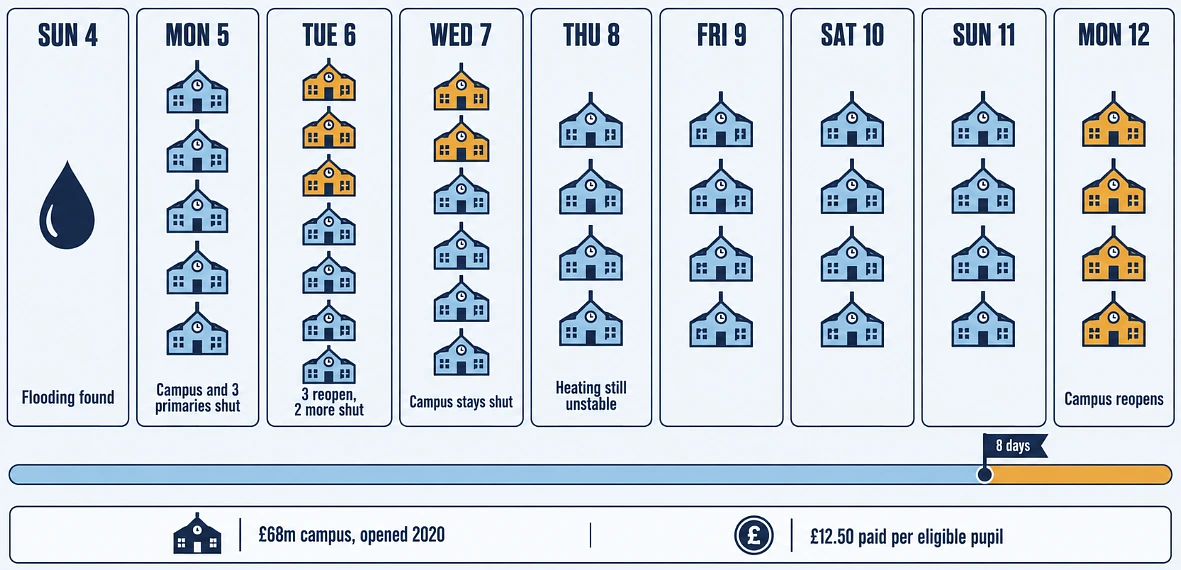
On the Sunday evening, 4 January 2026, East Ayrshire Council was made aware of significant flooding inside Barony Campus in Cumnock. At 5pm it said the Robert Burns Academy would be closed the next day because of flooding and everything else on the campus would open as normal, and then an hour later it put out another notice saying every establishment on the campus would be closed because of heating failure.
Over the next few days the list just kept growing.
- Hillside School, Lochnorris Primary and Cherry Trees were all shut on the Monday, as part of that campus closure
- Drongan Primary was closed that same Monday morning, because of heating problems as well, and so were Sorn and Catrine Primary, all 3 back open on the Tuesday
- Patna Primary and St Xavier’s Primary were closed on the Tuesday, again over heating problems, and got the all clear at 1.30pm that day to open on the Wednesday
- By the Wednesday the council had been hoping to partly open the campus again on the Thursday, but it could not, because the heating systems were still unstable, so parents were told the whole campus would stay shut until Monday 12 January
Within a single week, one council had several schools closed, mostly because the buildings could not be kept warm. The Robert Burns Academy was the exception, it was kept shut until 12 January because of flood damage inside, which is kind of the other thing about this one, the water problem and the heating problem turned up together on the same campus.
Barony Campus was not an old building either. It was a £68m build, handed over to the council in October 2020, so this was not a case of a tired boiler in a Victorian school. Because the closure ran so long, families of pupils getting free school meals because of low income were paid £12.50, which is £2.50 a day for the 5 days.
The School Where The Boiler Room Flooded
Robert Douglas Memorial School in Perth and Kinross is worth reading about a bit more carefully, because it shows how long it actually takes to get the heat back once it has gone. On Tuesday 27 January 2026 its boiler room flooded during the storm. The boilers stopped working, there was no heating and no hot water, and the council decided to close the school the next morning.
How long it took is the part to look at. The council went for a temporary boiler as the quickest option, which makes sense, but that boiler was not being delivered until Monday 2 February, and the work to get the heating back on was carrying on from Wednesday 4 February, if possible. That is about a week, at the very least, just for a temporary fix.
Money was not really the cost of that week. Staff did run online learning while the school was shut, but the council put engagement at only about 35% across the whole school, nursery included, which does not mean the rest got no learning at all, but it does tell you most children were not logging in, and that is the bit that never shows up on a repair bill. The council was also having to find oil-filled radiators so the children with significant and complex needs could get back in, and was looking at sending the P7 pupils to Perth Academy where 2 classrooms were free, which tells you how stuck they were.
Canonbie School in Dumfries and Galloway was a third one. It was fully closed over heating failure, with the council expecting to open it again at 8 in the morning on Wednesday 14 January. That makes three councils, in three different parts of Scotland, all inside the one month.
What The Law Says About How Cold A Building Is Allowed To Get
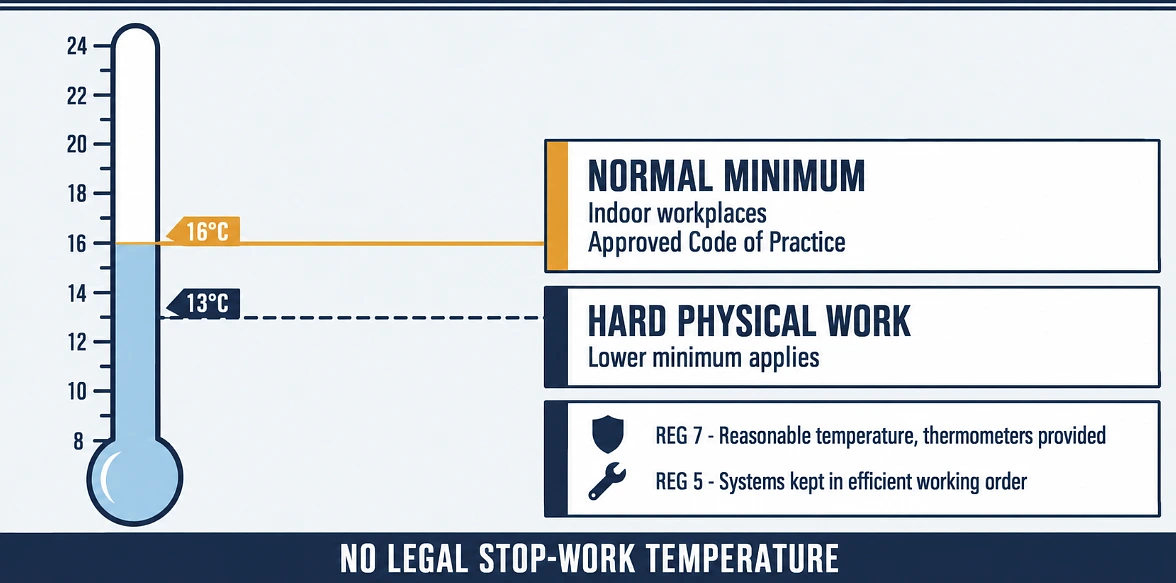
If you are wondering whether there is a legal temperature at which work automatically has to stop, there is not, and a lot of people get that wrong.
Under Regulation 7 of the Workplace (Health, Safety and Welfare) Regulations 1992, what there is instead is a duty: the temperature in an indoor workplace has to be reasonable, and there are meant to be enough thermometers about for the staff to actually check it. The Approved Code of Practice that goes along with those regulations then says the minimum should normally be at least 16 degrees, or 13 degrees if the work involves hard physical effort.
A reading of 16 degrees works more like a benchmark than a hard line. Nobody gets to down tools the second it drops to 15.9, but an employer who just ignores it is not meeting the duty either.
Regulation 5, which hardly anybody mentions, sits in those same regulations. It is about maintenance, and it says the workplace, the equipment and the systems have to be kept in an efficient state, in efficient working order and in good repair, and where it is appropriate, put under a suitable system of maintenance. Keeping the heating looked after is not just a nice idea, then, it is actually written into the same law.
Why A Small Fault Can Still Mean A Week Without Heat
Back at that Perth school, the hold up was never working out what to do. They knew what to do. Getting the equipment there was the problem, and that took a week, in the coldest part of the year.
Plenty of heating breakdowns can go the same way, honestly. A pump goes, or a control board, or a valve, and then the building just sits there cold, not because the fix is difficult but because the part is not on the van. Something that should take an afternoon ends up taking days, with everybody stood about in their coats.
Finding out before the winter whether whoever services your system can get the parts quickly is the practical thing here. Older systems are the bigger worry, because the parts for them can get harder to find as the years go on. Using a trade supplier that keeps proper stock of heating systems, spares and the bits that go with them can mean the engineer is not on the phone ringing round on a freezing Monday morning trying to track down a pump.
Asking at the next service is the easiest way to find out. If this part went tomorrow, how long would it take to get another one? The answer to that tells you a lot more than the service sticker does.
Not Every Fault Means A New Boiler
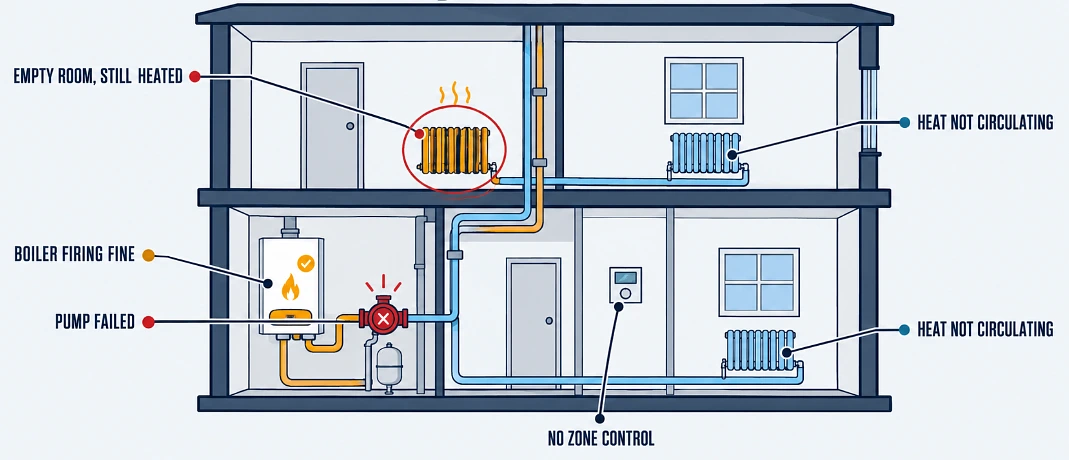
A lot of buildings end up wasting money at this point. When the heating goes, the first thought is usually that the whole boiler has had it, and sometimes, to be fair, it has. Quite often, though, the fault is one part, and the boiler itself is absolutely fine.
- A pump that is failing can stop the heat getting round the building, even when the boiler is firing perfectly well
- Old controls, or ones that do not work properly, can leave some rooms freezing while others are roasting
- Rooms nobody is even using can end up heated all day, every day, just because there is no way of turning them off on their own
Empty rooms being heated is a money thing as much as a comfort thing. The Energy Saving Trust has advice for small businesses on getting better control over heating schedules, so the heating only runs when and where it is needed and an empty meeting room is not being heated the same as the busy office right next door to it, which when you think about it is a bit mad that it happens at all.
Before anybody signs off on a whole new system, get an engineer to find out where the faults are actually coming from. It helps a lot if somebody has been writing things down, rising fuel bills, rooms that never seem to warm up, the same fault coming back every winter, because those are the clues the engineer needs.
What Changed In June For The Bigger Buildings
For the larger buildings there is also a rule change going on in the background. On 18 June 2026, the government confirmed it intends to require rented commercial buildings in England and Wales to reach an EPC rating of B or better from 2031, where it is cost effective, and it dropped the earlier plan that was asking for EPC C by 2027.
It only covers buildings over 1,000 square metres, though, and that matters. The smaller ones are set to stay at the EPC E minimum they are already on, with no deadline to go any further. The government reckons the change could save tenants in the biggest rented buildings somewhere around £360 million a year in energy costs by 2031, which is a big number, although it is spread over a lot of very big buildings.
Most small offices, shops and halls will not notice any change here. For the big ones, the heating is usually a big chunk of where the EPC rating comes from, so anybody planning a replacement now probably wants to be thinking about 2031 and not just about getting through this winter.
What To Check Before The First Cold Morning
Those closures last January all had different causes, and not every one of them could have been stopped by a service. What they do show is why it pays to know what condition the heating is in, what tends to go first, and how quickly a part or a temporary boiler could actually be got hold of.
- Get the service booked now, before the engineers get busy, rather than after the first breakdown
- Ask which parts on your system are the hardest to get hold of, and how long each one would take
- Go through the maintenance records and look for the same fault coming back
- Check whether you can actually turn the heating off in rooms nobody is using
- Make sure there are thermometers in the building, because without them nobody really knows if it is 16 degrees in there or 12
Those East Ayrshire schools were shut on the very first Monday back after Christmas. Worth having a look at your own building now, before that same Monday comes round again.