

Blog
Slatted Wall Panels: What Separates a Feature Wall From a Specification


The bulk of the literature on slatted panels is based on the feature wall of a living room․ But once we leave the house – for an office‚ for a school‚ for an airport lounge – the rules are different․ Timber is the least of them; the difference between decorative and specification versions is almost invisible on any given wall․ What goes behind the slats and whether the whole thing has been tested as one unit is what building control is looking for․
Start with the part every generic guide gets half right․
The slats are for the eye‚ the backing does the acoustic work
The wood slats globally scatter sound‚ rather than absorbing it․ The slats are proud of the surface‚ contributing to the breaking up of the flatness of the walls and allowing their scattering properties to diffuse flutter echo․ This absorption is useful‚ but it does not come from scattering; it comes from the porous backing behind the slats and the air gap․
That’s why the spec is what matters‚ not the photograph․ An NRC value is a number between 0 and 1․ The same slat panel was rated as 0․55 when fixed flat to the wall‚ but when fixed to battens with 50mm air gap behind it‚ the rating rose to around 0․80․ Same panel‚ very different result․
In a commercial application‚ the panel must be fire tested as a complete unit
It’s the line most consumer panels never cross․ In a public building the slat system isn’t judged on the timber alone‚ but on the slats‚ backing‚ and laminate as a whole․ A panel where only the wood is rated‚ or one cut to size on site‚ may be out-of-spec‚ making it difficult to sign off․
These exact specifications are used in the production of specification-grade systems such as the ARCHISLAT slatted panels‚ where they are tested to EN 13501 Part 1 as a complete panel and rated Euroclass B-s2‚d0 including the backing board․ The panels are supplied fully finished‚ cut to size․ There is no cutting on site‚ in order to preserve the fire integrity of the finish․ The difference between a signed off panel and one not signed off is the panel has been tested as a system․
Wider gaps absorb more so it is worth taking a look at the spec sheet․
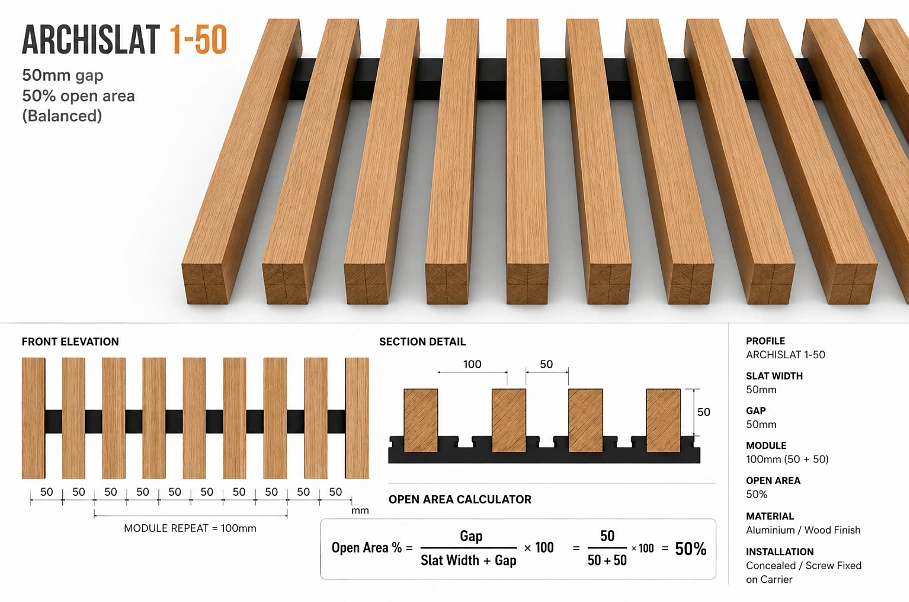
Acoustic performance is highly dependent on the open area‚ that is‚ how wide the gap is between the slats․ A higher open area means more sound reaches the backing‚ instead of reflecting from the slat fronts․ ARCHISLAT states that wider spacings between slats usually offer more favorable acoustical absorption․ It provides the open area of each of the profiles:
- ARCHISLAT 2-30‚ 30mm gap: 30% open area‚ most solid face‚ most reflective․

- ARCHISLAT 1-50‚ 50mm gap: 50% open area‚ balanced․
- ARCHISLAT 5-81‚ 81mm gap: 81% open area‚ most open‚ most absorptive․
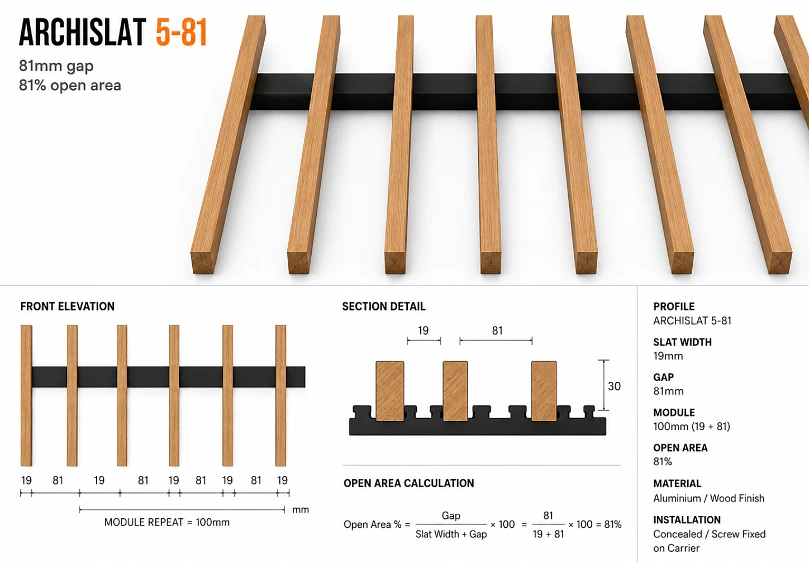
So the visual choice and the acoustic choice are the same decision․ In the 8 ARCHISLAT profiles‚ the open area ranges from 30% to 81%‚ which is the actual lever you’re pulling when you pick a look․
How it is used in interiors
They are most useful where a room needs to seem warm‚ but perform acoustically․ Slatted systems are used‚ for instance‚ in offices‚ lecture theatres‚ hotel lobbies‚ restaurants and airport terminals – hard glassy places where reverberation would be a problem․ They are used for walls‚ suspended ceilings‚ rafts and vertical screens‚ and the best of these are designed to work with rather than against lighting and other services such as sprinklers‚ speakers and air grilles; they are often demountable․
A feature wall panel is fine in a living room‚ but my questions then are: does it meet a fire test as an assembly‚ what is the backing‚ and how much open area will the room need? Once you’ve got those right‚ the timber look will take care of itself․