
Blog
The Evolution of Going Braless: Comfort, Confidence, and Choice

Underwire is miserable. Straps dig into shoulders. That weird pinching thing happens around 2 PM every single day. And at some point, millions of women looked at this daily ritual of discomfort and thought—wait, why am I doing this again?
The braless thing isn’t new. But something shifted recently, and it wasn’t a movement or a hashtag. It was just women quietly opting out.
The 1960s Get Too Much Credit
Everyone points to bra-burning feminists when this topic comes up. Slight problem: nobody actually burned any bras.
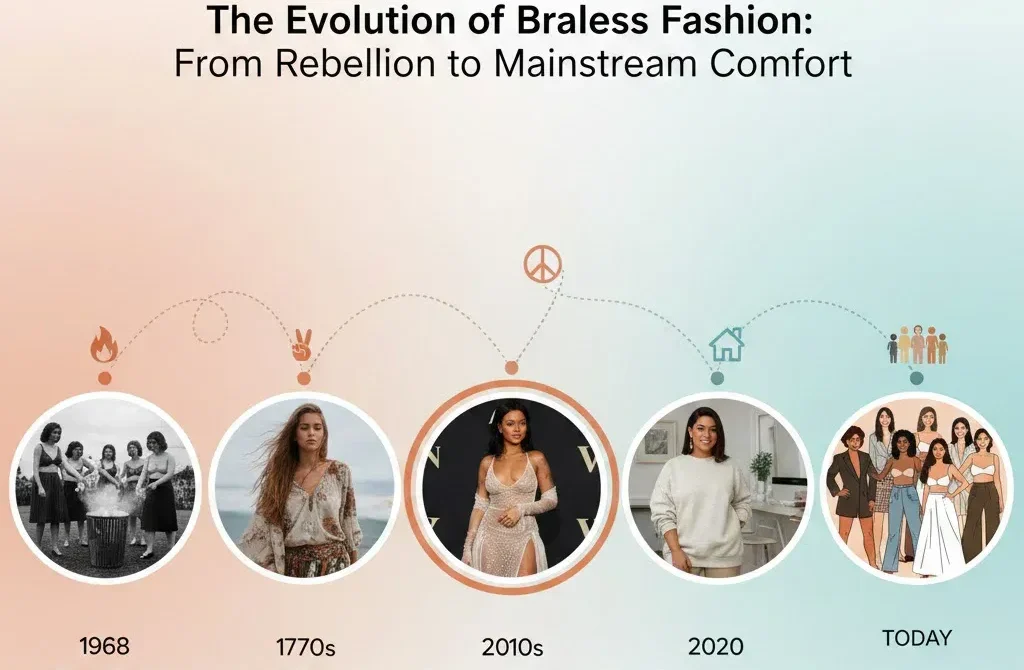
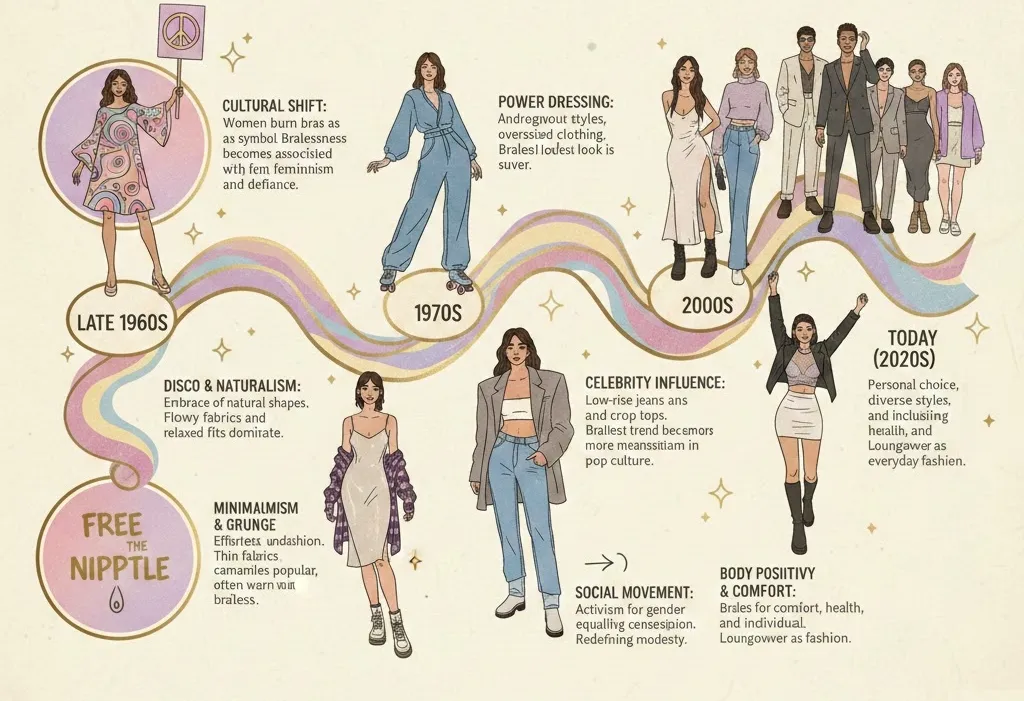
The 1968 Miss America Protest in Atlantic City involved a “Freedom Trash Can” where women tossed bras, girdles, high heels—symbols of expectations they never agreed to. Dramatic? Sure. Fire? Nope. A journalist made that part up because it sounded better, and the myth stuck for decades.
What actually happened matters more than the mythology anyway. Jane Birkin started showing up braless on red carpets. Brigitte Bardot did her thing in French cinema. The message wasn’t loud or angry—just women demonstrating that structured undergarments weren’t some requirement for looking good.
History.com covered this extensively. The protest mattered not because it changed behavior overnight, but because it cracked open a question nobody had really asked before: who decided bras were mandatory?
Doctors Never Actually Said You Need One
This part surprises people.
Dr. Jean-Denis Rouillon spent 15 years studying breast support at the University of Besançon in France. Fifteen years. His findings? Bras might actually make things worse. Women who went without developed stronger supporting muscles. Their nipples lifted slightly over time. The tissue adapted.
One study isn’t definitive proof of anything. But it does poke a hole in the assumption that breasts require external support to function properly or avoid sagging.
| What People Claim | What’s Actually True |
|---|---|
| Bras prevent sagging | Zero scientific evidence. Genetics, age, skin elasticity—those matter. Bras don’t. |
| Going braless hurts | Some larger-chested women need support for running or jumping. Daily wear? Most women feel better without. |
| Breasts need “training” | Breasts don’t contain muscle. This isn’t how anatomy works. |
Dr. Amber Guth, breast surgeon at NYU Langone, summed it up: “There’s no medical reason most women need to wear a bra.” Comfort and personal choice. That’s it. Not some biological necessity dressed up as common sense.
Free the Nipple Wasn’t Really About Bras
The 2012 campaign caught attention because it pointed out something absurd. Men’s nipples? Fine everywhere. Instagram, public pools, jogging shirtless through parks. Women’s nipples? Suddenly obscene.
The Guardian covered this extensively. The movement wasn’t telling women to ditch their bras—it was asking why the same body part gets treated completely differently based on who it’s attached to.
No Bra Day showed up around the same time, landing on October 13th during Breast Cancer Awareness Month. Started as a reminder about self-examinations. Turned into something else. BBC Lifestyle documented how it became an excuse for women to try bralessness in a context that felt socially “allowed.”
Then COVID happened and none of the social permission stuff mattered anymore.
Working from home meant sweatpants and nobody checking whether you’d put on real clothes. Loungewear replaced anything with structure. Millions of women spent months braless and realized—oh, this is just better.
Harper’s Bazaar ran a 2021 survey. 51% of women said they wore bras less after lockdowns started. A lot of them never went back.
Size Matters Less Than You’d Think
Small-chested women can go braless easily. That’s the assumption, right?
Partially true. A-B cups generally have the smoothest transition—most tops work, comfort isn’t an issue, nipple visibility stays manageable.
C-D range? Totally workable for most daily activities. High-impact exercise might need something, but walking around, sitting at a desk, running errands? Fine.
DD and up gets more individual. Some women find the movement uncomfortable or deal with back strain. Others adjust within weeks as supporting muscles strengthen. Wireless bralettes and supportive tanks exist for people who want something in between.
The “rules” about who can pull off bralessness are mostly invented. Body type creates different experiences, sure. But the option exists across the spectrum.
Actually Doing It
Deciding feels different than doing.
Spend a few days braless at home first. Your body needs adjustment time, and you’ll notice which movements feel strange without support. Reaching for high shelves. Going down stairs quickly. Little things.
Fabric choice matters early on. Ribbed cotton, textured knits, structured materials—these handle nipple visibility without effort. Thin silk or jersey? Harder to pull off when you’re still building confidence.
Layering helps. A cardigan or loose jacket gives you a fallback option. You probably won’t reach for it after a few weeks, but knowing it’s there makes the first outings easier.
Dark colors, patterns, high necklines, ruching—all of these draw attention away from the chest. Useful when you’re starting out.
Try low-stakes environments before high-stakes ones. Grocery store before office. Weekend brunch before client meeting.
When You Want Coverage Without the Cage
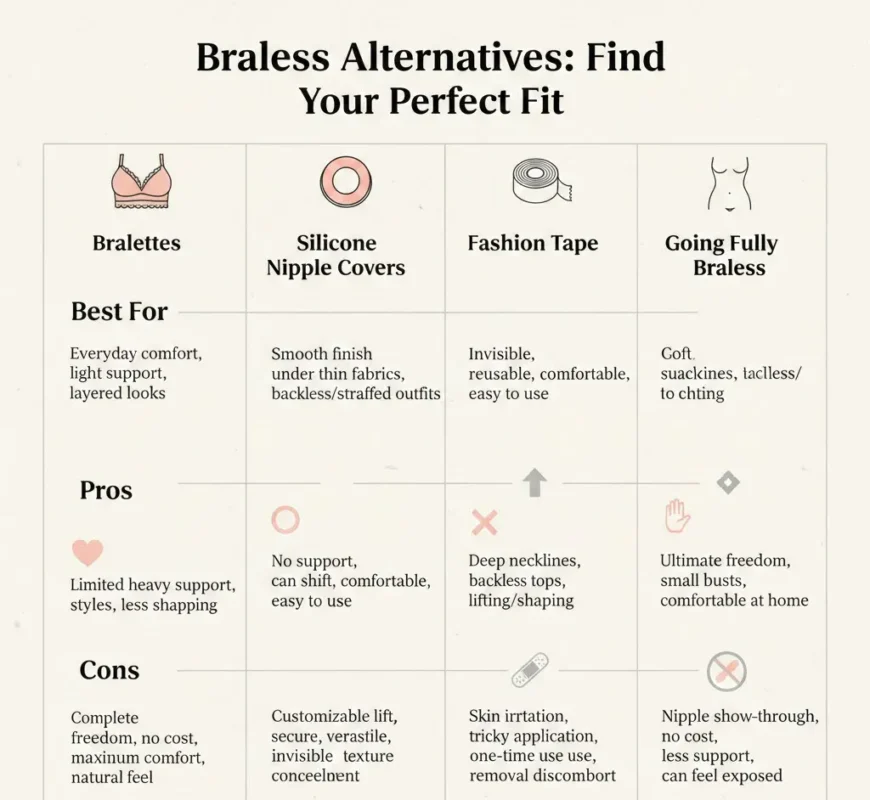
Some outfits need nipple coverage regardless of your braless commitment. Sheer tops. Backless dresses. Thin white fabric. This is where nipple covers earn their place.
Medical-grade silicone versions move with your skin and last months with decent care. Fabric options exist but tend to show edges under anything fitted. Matte finishes disappear better than shiny ones. Size should extend slightly past your areola for secure adhesion.
| Option | Works Best For | Upsides | Downsides |
|---|---|---|---|
| Silicone covers (Nippies, Bristols Six, Jolene) | Sheer fabrics, backless styles, daily wear | Invisible, reusable, zero pressure | No lift |
| Fabric covers | Sensitive skin, casual situations | Softer, breathable | Edges can show |
| Bralettes | Light support needs | Comfortable, cute options exist | Still visible under lots of clothes |
| Fashion tape | Deep necklines, events | Flexible positioning | One-time use, potential skin irritation |
| Built-in shelf bras | Casual tops and dresses | Nothing extra to deal with | Limited to specific garments |
Jolene Nipple Covers use premium silicone that contours naturally—reusable for months, works under wedding dresses and workout tanks alike. Brand matters less than finding covers that actually fit your body and stay put through a full day.
Outfit Situations
Casual days: Relaxed tees, sweaters, loose button-downs. Darker colors and busy patterns forgive a lot. No adjustments needed.
Office settings: Depends entirely on where you work. Structured blazers and thicker blouses provide coverage while letting you skip the bra underneath. Creative industries care less than corporate ones. Remote work obviously doesn’t care at all. If you’re uncertain, nipple covers remove the guesswork.
Formal events: Backless and strapless dresses basically require going braless. That’s literally what nipple covers and fashion tape were designed for. Structured bodices handle support on their own.
Working out: High-impact exercise still benefits from sports bras for most people. Yoga, walking, light movement—supportive tanks or nothing at all works fine.
Summer: Bralessness makes the most sense when it’s hot. Less fabric means less sweat pooling. Flowy sundresses and linen tops were practically designed for going without.
Work Dress Codes Haven’t Caught Up
InStyle surveyed women in 2023. 67% under 40 had gone braless to work at least once. Many still felt weird about whether they were “allowed” to.
Honest answer: it depends on your specific workplace, your specific role, your specific industry. Traditional corporate environments with client meetings operate differently than a startup with a ping pong table in the lobby.
Structured tops that don’t obviously reveal bralessness work as a testing ground. Nobody needs to know what’s happening underneath your clothes.
What Changed
Elle Magazine framed this as part of broader body acceptance and comfort-focused fashion trends. That’s probably accurate.
The conversation shifted from “should women wear bras” to “women can just decide for themselves.” Going braless in 2024 doesn’t mean anything unless you want it to mean something. For most women making this choice, it’s not political. The underwire hurts. The straps annoy. Nipple covers or nothing at all just works better for their actual lives.
Fashion and feminism have always been tangled together. The difference now is more options, less judgment, and products actually designed around what women want rather than what someone decided they should want.
Whether that means going completely free or grabbing Jolene Nipple Covers before a backless dress, the person wearing (or not wearing) the garment gets to decide.
Not a revolution. Just women choosing comfort over convention, one underwire-free day at a time.