

Blog
The Words “Alcohol Free” on a Hairspray Don’t Mean What Most People Think

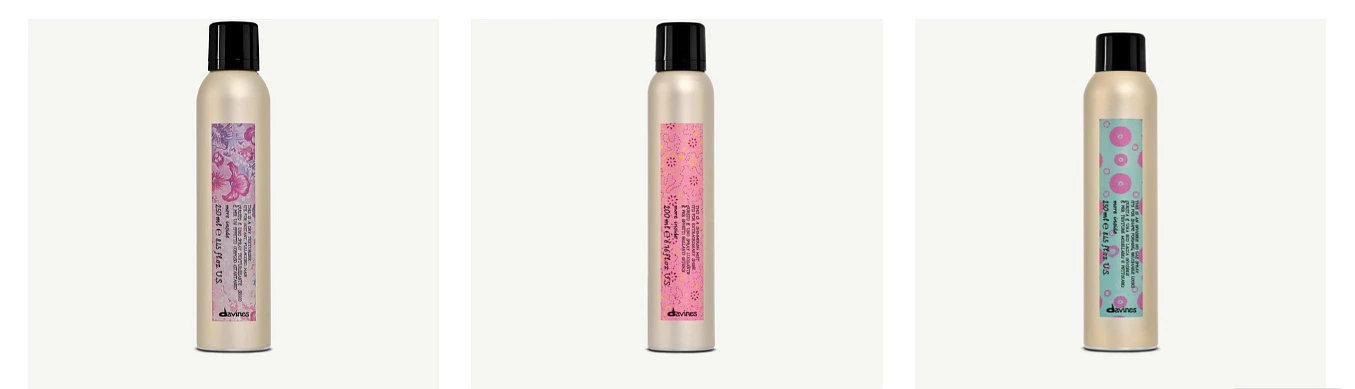
On a cosmetic label, “alcohol” on its own refers to one specific ingredient, ethyl alcohol, and a product can be labelled alcohol free while still containing other alcohols that behave completely differently. The US Food and Drug Administration spells this out: products labelled “alcohol free” may still contain fatty alcohols such as cetyl, stearyl, cetearyl or lanolin alcohol, whose effects are quite different from ethyl alcohol. So the real question was never alcohol versus no alcohol. It’s which alcohol, because the word covers two ingredients that do opposite things to your hair.
“Alcohol” on a Label Is Two Opposite Ingredients
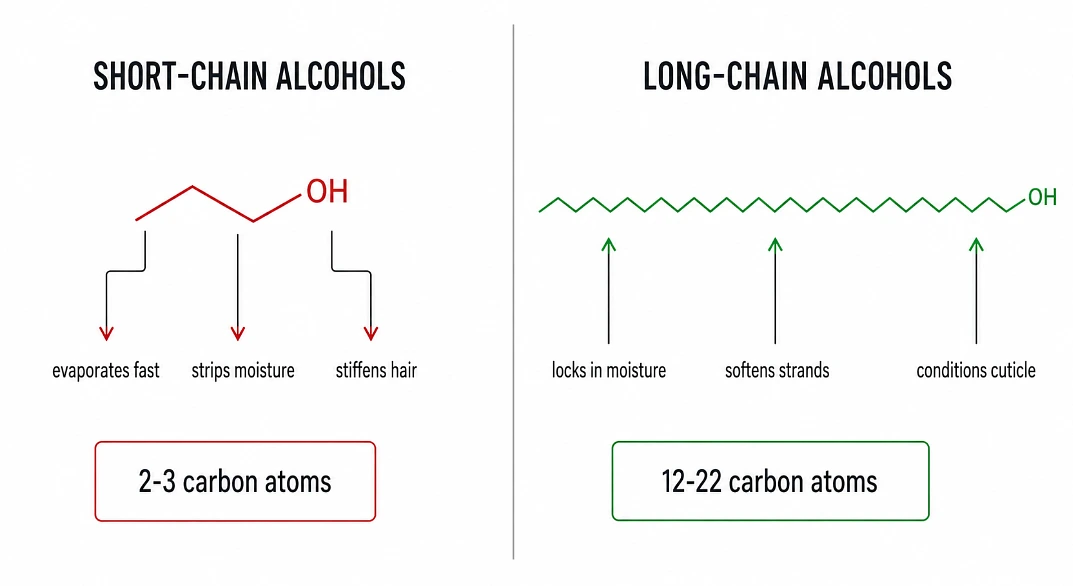
The drying kind and the conditioning kind share the same word, and most labels never tell you which one you’re looking at. One group evaporates fast and can pull moisture out of the hair. The other is waxy, plant derived, and actually softens and conditions. They sit on ingredient lists side by side.
The Drying Alcohols Worth Spotting
These are short chain alcohols. They evaporate quickly, which lets a product’s hold take effect almost immediately, but for many hair types, dry hair in particular, they can have a drying effect if overused. Look for:
- Ethanol
- Alcohol denat (denatured alcohol)
- SD alcohol 40
- Isopropyl alcohol
- Propanol
If one of these sits near the top of the list, it’s a meaningful part of the formula.
The Fatty Alcohols That Actually Condition
These are long chain alcohols, usually more than 12 carbon atoms, derived from coconut or palm oil. The higher carbon content gives them the opposite effect to their drying short chain cousins, providing lubrication, hydration and film forming properties that lock in moisture. No need to avoid:
- Cetyl alcohol
- Cetearyl alcohol
- Stearyl alcohol
- Myristyl and behenyl alcohol
Seeing one of these on a conditioner or spray is a good sign, not a warning.
Why Hairspray Leans on the Drying Kind in the First Place
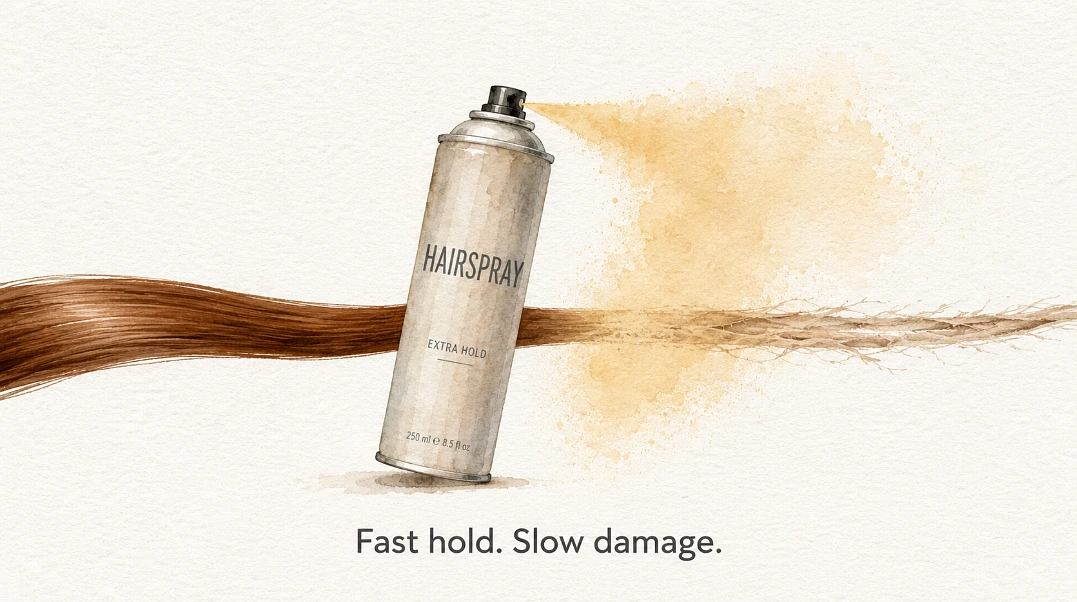
Short chain alcohol is what lets the spray leave the can and set almost instantly. That fast drying, moisture repelling behaviour is the whole reason old-school hairsprays hold on contact. The trade-off is that the same mechanism pulls surface moisture away, which is why heavy daily use leaves hair feeling stiff and progressively drier. It’s worth being fair here though: in a well formulated product with emollients added to counteract the dehydrating side effects, a small amount of alcohol denat is safe, and some products like aerosols need short chain alcohols to function at all. The problem is repeated use of formulas where drying alcohol is doing most of the work.
What Changes When You Switch to an Alcohol Free Formula
The hold comes from flexible film forming polymers instead of rapid moisture evaporation. These wrap the strand in a soft, bendable film that keeps the style without freezing it solid, so ranges built to hold through polymers and work with the hair’s natural movement tend to feel lighter at first and softer by the end of the day. That lighter initial feel isn’t weaker hold, it’s a different mechanism. The finish stays flexible enough to brush or restyle without the flaking that comes with rigid formulas.
Who Should Care Most About This
If your hair is dry, curly, or colour treated, drying alcohols hit hardest. Dry and curly hair types are naturally more prone to moisture loss, so drying alcohols can make dryness and frizz worse. There’s a colour angle too: drying alcohols can open the cuticle and let colour pigments escape, so colour treated hair fades faster and loses vibrancy. For fine hair that isn’t dry, drying alcohols in moderation are generally fine.
How to Read a Hairspray Label in Ten Seconds
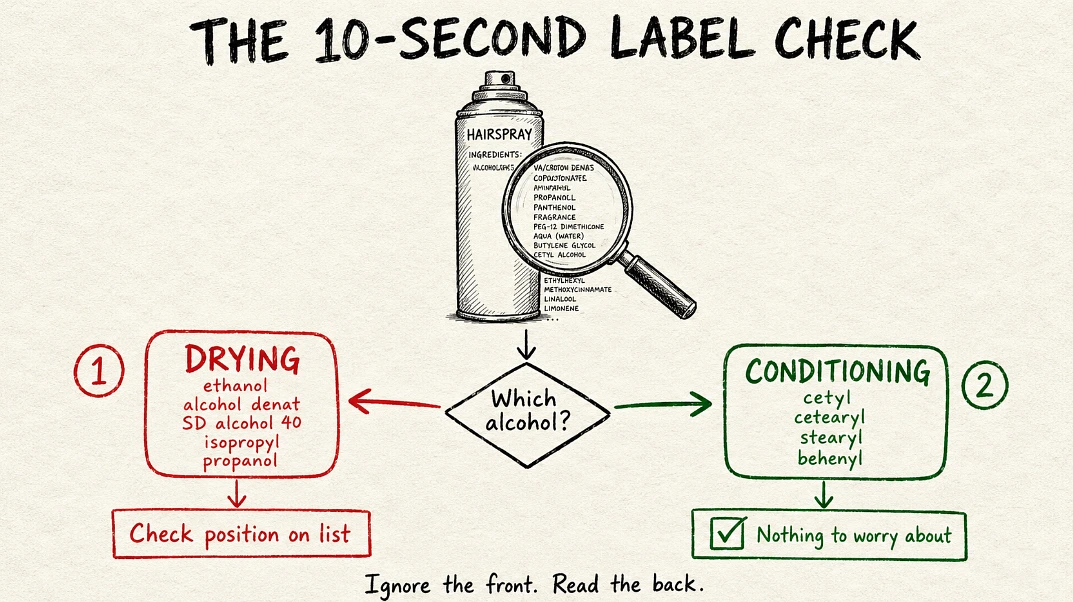
Scan the ingredient list, find any word with “alcohol” in it, and check which group it belongs to:
Drying, worth limiting if it’s high on the list: ethanol, alcohol denat, SD alcohol 40, isopropyl, propanol.
Conditioning, nothing to worry about: cetyl, cetearyl, stearyl, myristyl, behenyl.
That single check tells you more than any “alcohol free” claim on the front of the bottle, because the claim only refers to ethyl alcohol and says nothing about the rest of the formula. Once you can read the list, the marketing stops mattering and the ingredients do the talking.