

Blog
What Are the Three Stages of Female Thinning on the Ludwig Scale?
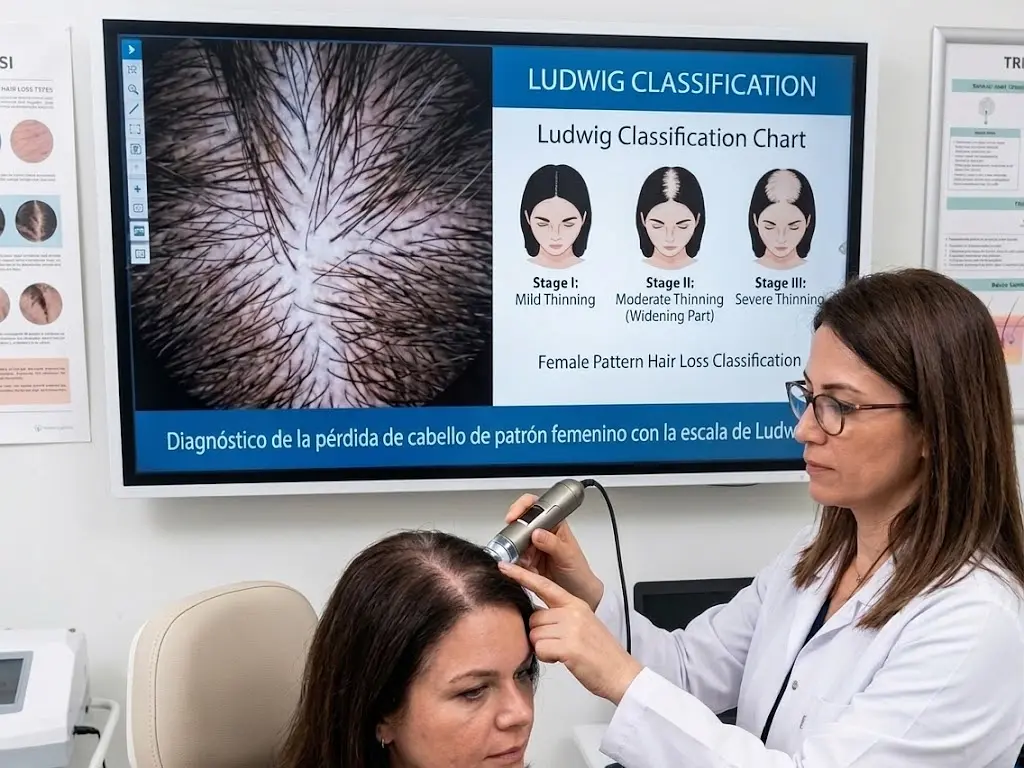
Diagnostic accuracy is vital for identifying the underlying cause of shedding in female patients. Specialists evaluate the scalp to see how the central parting has widened over several months or years. This objective assessment helps in selecting between medical therapies or surgical relocation procedures for permanent results.
How do doctors classify Grade 1 thinning in women?
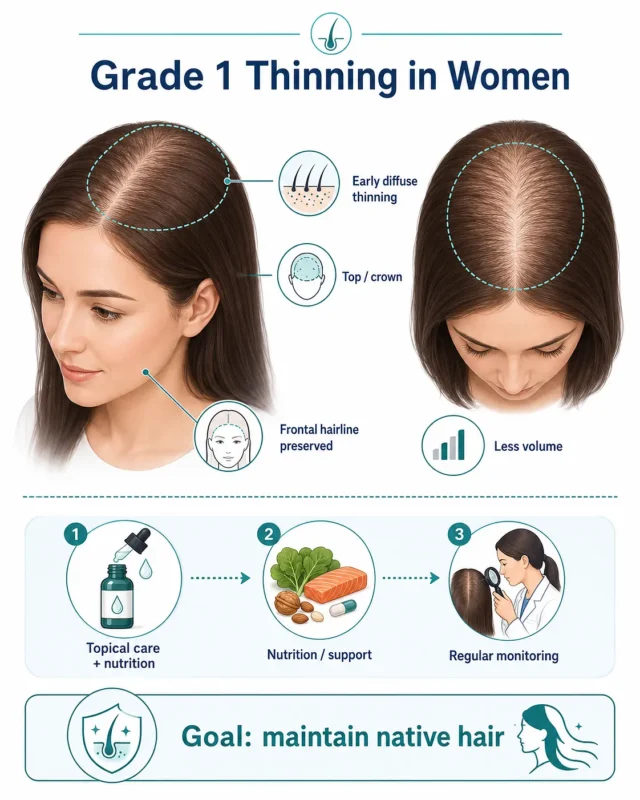
Grade one represents the earliest stage of diffuse thinning at the top of the scalp. Many patients notice that their hair becomes slightly less voluminous during their daily styling routines. The frontal hairline stays strong and unaffected, which distinguishes this condition from typical male recession patterns.
Medical professionals often recommend non-invasive options to stabilize the follicles at this specific level. Topical solutions or nutritional support can help maintain the current density and slow down the thinning process. Regular monitoring helps in tracking whether the condition stays stable or moves toward the next grade.
Detecting these changes early provides a wider range of clinical options for the patient. A thorough scalp examination identifies if the follicles are merely weakened or permanently inactive. Maintaining the health of the native hair is the primary goal during this initial phase of care.
What characterizes Grade 2 moderate density loss?
Grade two involves a more significant and visible decrease in hair volume across the mid-scalp. The central parting widens further, making the skin of the scalp more noticeable under direct or bright lighting. Patients often observe a change in the overall texture and thickness of their hair shafts.
Clinicians often compare these evolving patterns to The Norwood Scale to explain biological differences in hair loss. While men usually lose their hairline, women maintain their facial frame but lose density on the top. This moderate stage often requires a combination of biological support and professional intervention.
Surgical options become more relevant at this stage to fill the gaps between existing native hairs. High-precision techniques allow for the relocation of follicles without causing trauma to the surrounding roots. Achieving a natural look requires a deep understanding of the patient’s original hair growth direction.
When does thinning reach Grade 3 advanced loss?
Grade three is the most advanced stage of the Ludwig Scale where the top of the head shows extensive thinning. The skin becomes clearly visible through the remaining hair across the entire vertex and crown area. Even at this level, the hair at the sides and back usually remains genetically healthy and strong.
This permanent donor supply allows for a professional Hair Transplant to restore the lost visual volume. Surgeons move healthy follicles to the thinning zones to create a unified and dense appearance once again. The procedure focuses on achieving a realistic result that matches the patient’s facial structure and age.
Modern microsurgical methods provide a permanent solution for women who have reached this level of loss. The new hair grows naturally and stays resistant to the hormones that trigger pattern thinning. Reaching this stage highlights the importance of a well-designed surgical plan and a robust donor area.
| Ludwig Grade | Visual Thinning Pattern | Recommended Clinical Path |
| Grade 1 | Mild thinning along the central part | Medical support and scalp monitoring |
| Grade 2 | Moderate loss with wider parting | Biological therapy or micro-restoration |
| Grade 3 | Extensive thinning and scalp visibility | Surgical relocation and maintenance |
How does the diagnostic process for female thinning work?
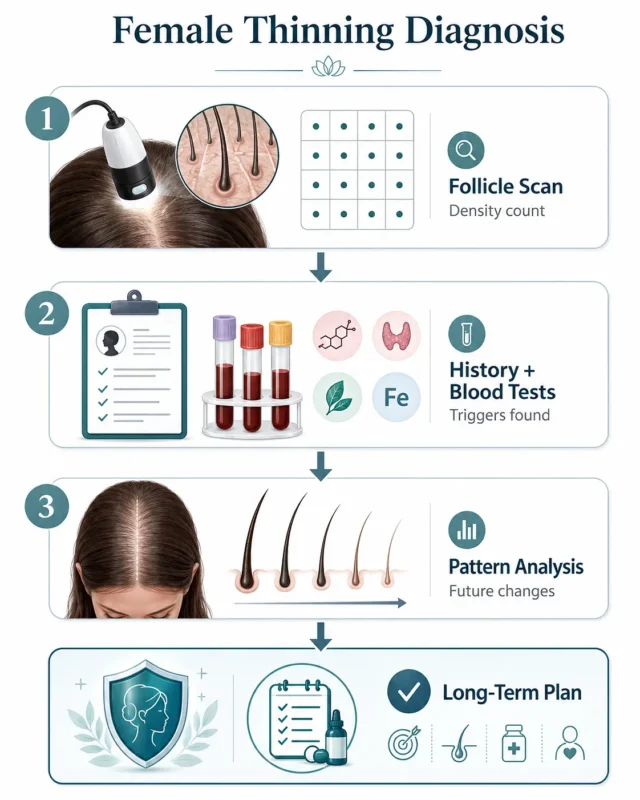
Medical teams utilize high-magnification tools to analyze the health of the individual hair follicles. They count the number of active hairs per square centimeter to quantify the exact level of density loss. This data-driven approach removes the guesswork from the initial clinical evaluation.
A thorough review of medical history and blood panels identifies potential internal triggers for the thinning. Hormonal imbalances or nutritional deficiencies can often accelerate the progression across the Ludwig stages. Correcting these biological gaps provides a stable foundation for any future surgical or medical treatment.
Identifying the specific shedding pattern helps in predicting how the hair might change in the future. Specialists look for signs of miniaturization where the hair shafts become progressively finer over time. This information is critical for designing a long-term strategy that protects both the new and native hair.
Why is post-surgical care vital for the final result?
The success of any relocation procedure depends on the biological integration of the new follicles. Following the Hair Transplant Aftercare Process provides the scalp with the environment it needs to heal properly. Patients must adhere to strict guidelines regarding washing, sleeping, and physical activity.
Medical staff conduct regular reviews to track the progress of the grafts and the health of the skin. This structured support prevents localized inflammation and supports the growth of the new hair. Continuity of care remains a hallmark of high-tier European clinical facilities catering to international patients.
Proper aftercare confirms that the patient achieves the best possible density and aesthetic satisfaction. The first few weeks are the most important for the survival of the delicate hair roots. A dedicated care team provides ongoing guidance to manage the recovery phase with full confidence.
Ludwig Scale FAQs
How often should I have my scalp checked?
A clinical review every six to twelve months is usually sufficient to track any changes in your thinning pattern. This regular monitoring allows your specialist to adjust your medical plan before the loss reaches the next grade. Early intervention is always the most effective way to preserve your natural density.
Can women use the Norwood Scale for diagnosis?
The Norwood Scale is designed specifically for male recession patterns and is not suitable for most female cases. Women should rely on the Ludwig classification which accurately tracks diffuse thinning across the crown. Your specialist will confirm which tool is most appropriate for your specific biological condition.
Is the donor area for women different from men?
The permanent donor zone at the back and sides of the head is similar for both men and women. These follicles are genetically resistant to the hormones that cause thinning and will continue to grow after relocation. A specialist will assess the density of your donor area to confirm if it can support a procedure.
What is the main benefit of the Delft facility?
The center in Delft adheres to strict Dutch healthcare protocols and high European medical safety standards. Patients receive local UK consultations combined with advanced surgical care from specialized Dutch teams. This integrated model provides a high level of security and professional follow-up throughout the recovery.
Are the results of female hair restoration permanent?
Yes, the transplanted follicles maintain their biological resistance and will grow naturally for the rest of your life. While your native hair may still thin as you age, the relocated hair provides a permanent foundation of density. Following a healthy scalp routine supports the long-term vitality of both the new and existing hair.