

Blog
What Renters Should Know Before Furnishing a Flat

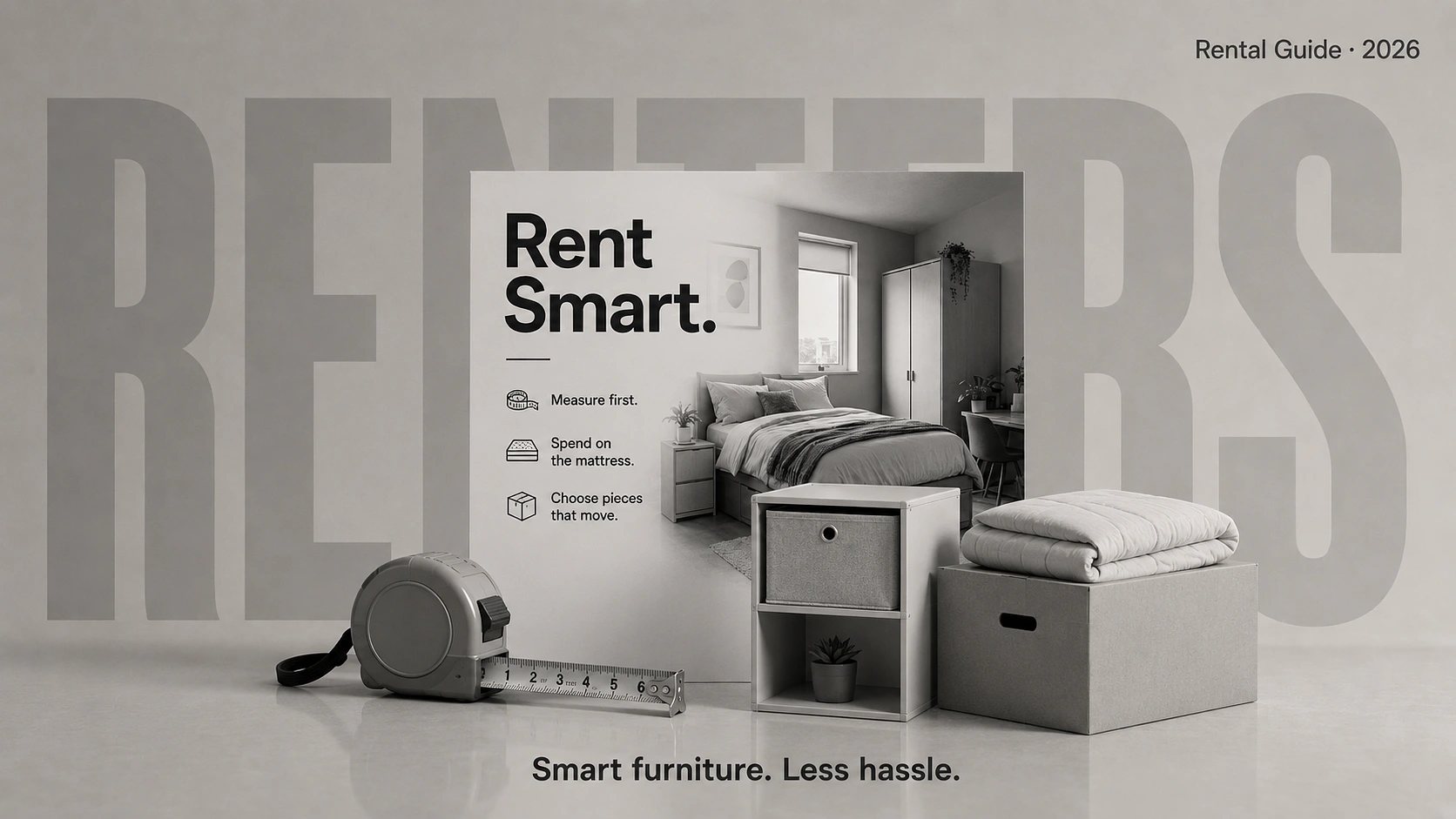
So you’ve just signed the lease and you’re realising the place is basically empty apart from the kitchen, and you’ve got a budget that doesn’t really stretch to doing this properly, and you don’t actually know if you’ll still be here in fourteen months or twenty-four. The bedroom is where most of the money ends up going, and it’s also the thing most renters give the least thought to, which is how you end up buying a cheap bed that lasts a year and then buying another one when you move because the first one fell apart in the van. This is the stuff worth thinking about before you spend anything.
Budget Allocation and What Things Actually Cost
The basic rule is you spend most on what gets used most, and what gets used most is the bed and the mattress. A six-hundred-pound mattress that lasts seven years works out cheaper per night than buying a two-hundred-pound one twice in the same period, and the cost of bad sleep doesn’t show up on the product listing but it absolutely shows up in how you feel at work three months in.
Realistic UK price bands for mattresses look something like this:
- Budget, around £150 to £400 — gets you started, you’ll be replacing it within two or three years
- Mid-range, £400 to £800 — pocket-sprung or hybrid, lasts five to seven years if you look after it
- Premium, £800 to £1,500-plus — a decade of life, makes sense if you’re planning to stay put
Pocket-sprung and orthopaedic builds hold up best under daily use, memory foam is comfortable when it’s new but develops body impressions faster on the cheaper models. Verify the warranty before you commit and check the return policy because some retailers collect returns for free and some charge a removal fee that can run into the hundreds, and you really want to know which one before you’ve signed for delivery rather than after.
Bed frames break down roughly like this:
- Flat-pack metal or basic wood — £80 to £300
- Divan with built-in drawers — £200 to £600
- Solid wood frames — £400 and up
The divan with storage is usually the smartest rental buy, honestly. It recovers floor space, splits in two for moving, and tends to outlast the cheaper frames by a fair margin.
Delivery is the bit that catches people out because the price varies wildly depending on what level of service you’re paying for:
- Kerbside drop-off — £20 to £50, they leave it at the door and that’s your problem from there
- Two-man delivery to the room — £50 to £100, they bring it up
- White-glove — £100 to £200, they unpack, assemble, and take the old mattress away
- Council bulky-waste collection — £15 to £40 per item if you’re getting rid of something
- Retailer take-back of the old mattress — often free if you’re buying a new one from them
Confirm all this before you check out, coming home to find a king-size mattress wedged in the building’s front lobby because the delivery team wouldn’t take it up the stairs is a frustration plenty of renters have experienced and it’s completely avoidable if you just ask the right question at the right time.
Lease Restrictions and Landlord Permissions
The thing about deposit disputes is they’re actually pretty rare, only about one in a hundred tenancies ever end up in a formal disagreement, but when they do happen the amounts involved are not small. The Tenancy Deposit Scheme is sitting on something like four point seven million protected bonds across England and Wales right now and the average deposit is around eleven hundred and seventy-five pounds, so when something goes wrong it tends to go wrong with real money attached.
What actually causes most of the rows is pretty consistent year after year, cleaning shows up in over half of all dispute cases, damage is close behind at about half, and redecoration comes in around a third. The thing nobody really tells you when you move in is that the photos you take on day one are basically the whole argument. Walls, floors, corners, behind the cooker, inside the cupboards, the lot. Dated and time-stamped on your phone. When adjudicators are deciding which way to call something they go with whoever has the better paperwork and that’s almost always going to be the tenant who spent twenty minutes documenting the place when they got the keys.
Fire safety is the other one that catches renters out, particularly if you’re buying anything second-hand. Every upholstered piece still needs a permanent compliance label sewn into it somewhere, the regulations were updated recently and they got rid of the swing-tag display label, but the sewn-in permanent one is still legally required and that includes anything you pick up at a charity shop or a Facebook Marketplace ad. The label is usually a small white tag inside a seam or stapled under the base, and if you can’t find one on a second-hand sofa you should probably just walk away because the insurance position gets messy if anything ever happens.
Space Planning and Bedroom Furniture for Renters
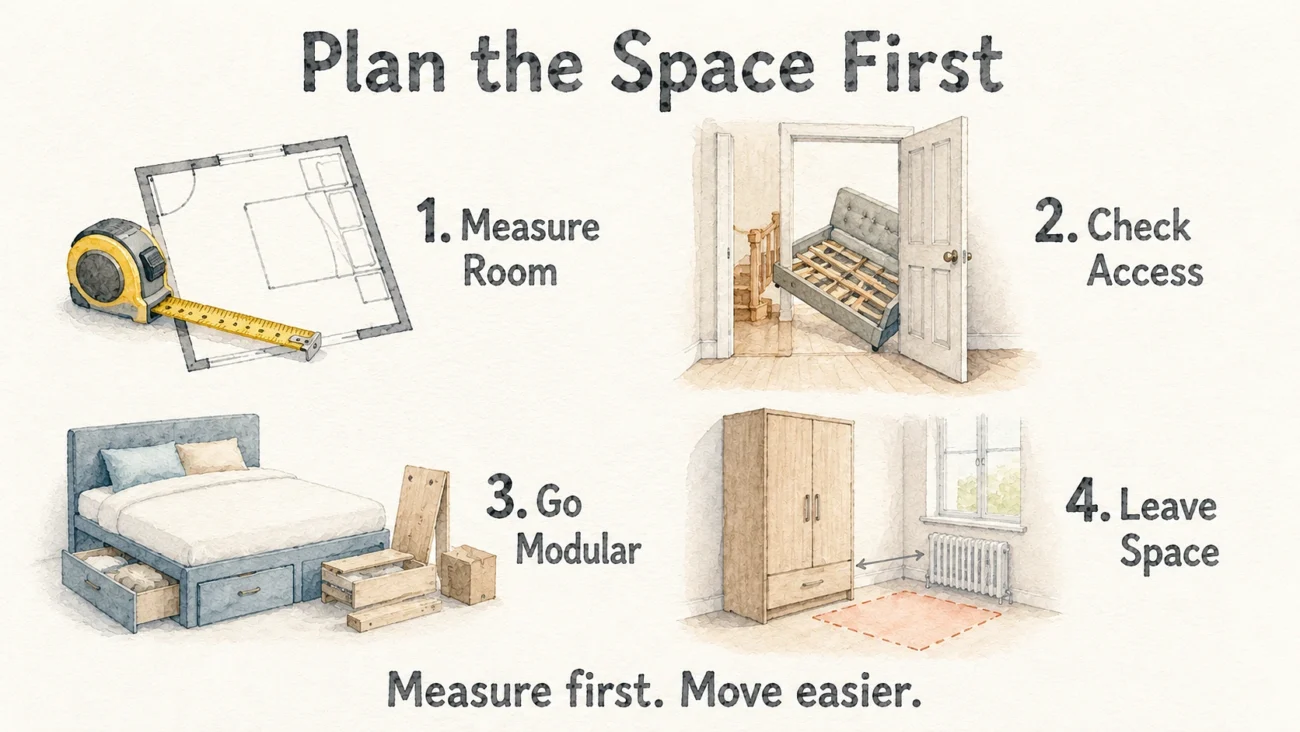
Measure the room, then measure the doorway, then the hallway and the stairwell. This sounds obvious until you’re standing in your new flat with a king-size frame that’s three centimetres too wide to get through the front door, and the delivery company is charging you a return fee and a redelivery fee, and you’re losing the whole afternoon. It happens regularly and retailers basically never volunteer the dimensions information you actually need.
Flat-pack and modular pieces are the way to go for most rental situations, you can break the whole thing down in about half an hour and it’ll fit in a regular Transit without you needing to hire specialist movers. Divan bases with built-in drawers do the same job plus they give you back the bit of floor space you’d otherwise lose to a separate chest of drawers, which matters more than people realise when the bedroom is barely big enough for the bed itself. Most divan bases also split into two sections for transport, so moving between flats becomes considerably less of a saga than dragging a solid slatted frame down three flights of stairs.
If you’re around the Manchester area and want to actually try a few options before committing, Bed Store is the kind of place where you can work through room dimensions and storage layouts in person, which catches the stuff product pages don’t tell you about, things like whether the frame will turn into the bedroom properly and whether the drawers will clear the skirting board once it’s in position.
The other thing worth saying is keep furniture away from radiators and windows. A wardrobe blocking a radiator pushes heating costs up noticeably across a full winter, and with UK energy bills still where they are that’s not a marginal thing. Stick to standard UK sizing too, single, double, king, super king, and don’t go a size up just because the price difference is small, a king mattress in a small bedroom blocks wardrobe access and makes the room feel smaller every single day.
Practical Furniture Selection for Renters
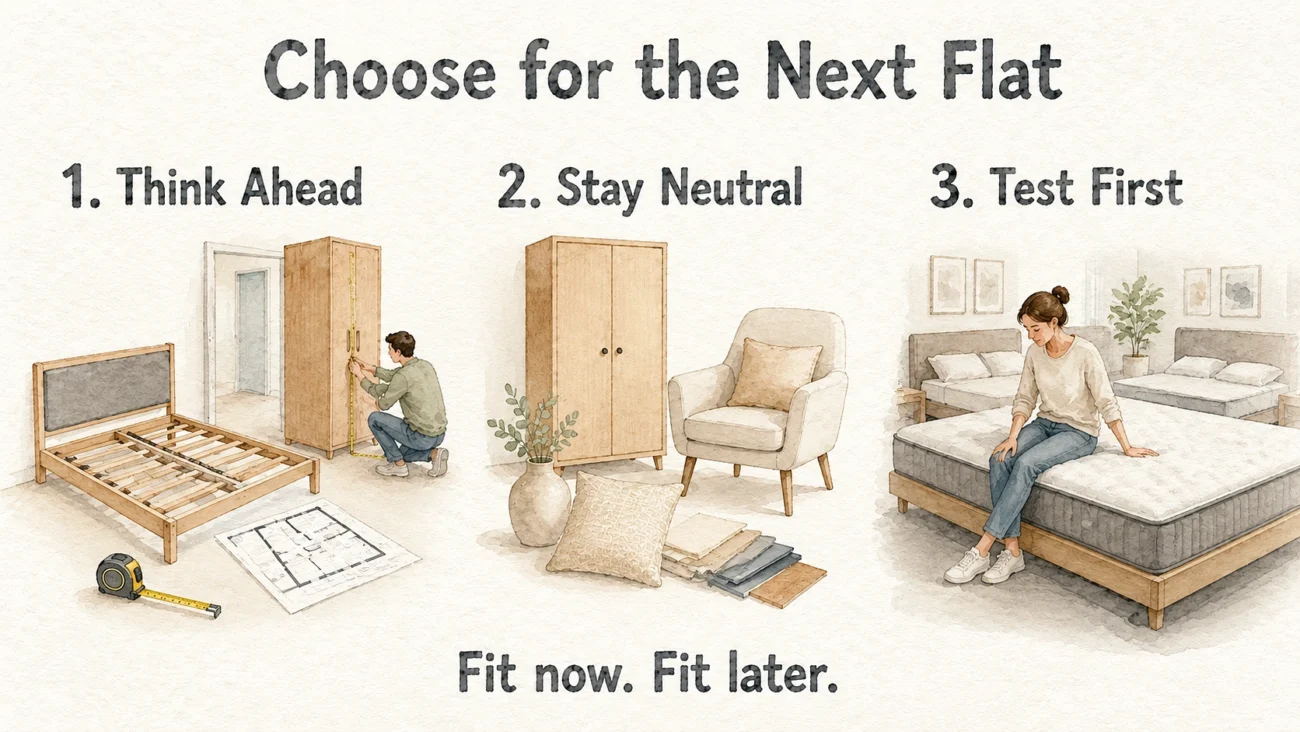
The thing about buying for a rental is you should be buying with the next flat in mind, not just this one. Most people don’t think this way until they’ve already moved twice and had to bin perfectly good furniture that didn’t fit through the new front door, but the people who do think this way save themselves a real amount of money over time. Check your dimensions against the current place and a realistic next place, and assume the next place will be smaller because most rental upgrades are sideways moves on space terms.
Neutral colours basically travel between properties without any friction, they work across more rooms, they resell more easily if you ever want to flip them, and they don’t fight whatever colour the landlord has painted the walls. That last bit matters more than renters expect until they’re standing in a new flat trying to make a bold wardrobe work against magnolia and realising the colour they loved in the previous place doesn’t work here.
Testing in person before buying is still one of the most reliable methods available, particularly for a mattress, no product description replicates the experience of actually lying on the thing for ten minutes. Showroom staff will answer warranty and trial-period questions on the spot too, and questions that get resolved before purchase don’t come back as complaints after delivery.
Short-Term Versus Long-Term Purchases
The maths on rental furniture has shifted a bit recently because of the Renters’ Rights Act, which abolished Section 21 no-fault evictions and converted tenancies to periodic. What that means practically is tenants now have more security than they used to, the old assumption that you’ll definitely be moving every twelve months is no longer the default, and a lot of tenancies are going to run longer than they did under the old fixed-term system.
For buying decisions that pushes things back towards quality over disposability. Second-hand furniture and short-term rental schemes still make sense if you genuinely know you’re only staying for a year or less, the entry cost is lower and the disposal at the end is simpler. But if you’re likely to be in the same place for two or three years the six-hundred-pound mattress argument gets stronger rather than weaker, because you’re spreading that cost across more nights of actual sleep.
For renters, the best furniture isn’t the cheapest one or the biggest one, it’s the piece that fits the room properly, survives the next move without falling apart, and doesn’t end up triggering a deposit deduction when you finally leave. Measure first, check the terms of the tenancy, test what matters, and buy with the next flat in mind. That’s roughly how a rental bedroom starts working without turning into a slow drain on the bank account.