

Blog
How to Tell a Story With a Single Photograph – For Must-Visit London Photo Spots

A photograph freezes a fraction of a second. But the best ones somehow contain hours, years, entire lifetimes. They make you wonder what happened just before the shutter clicked, and what came after. That’s the magic of visual storytelling—not showing everything, but showing just enough that the viewer’s imagination fills in the rest.
London is particularly good for this kind of photography. The city layers centuries on top of each other. Victorian brickwork sits next to glass towers. A businessman in a sharp suit walks past a busker who hasn’t moved from that same corner in twenty years. Every street offers contradictions, and contradictions make stories.
What Makes a Photograph Tell a Story
It’s not about cramming information into a frame. Actually, it’s the opposite. The strongest single-image stories focus on one idea, one feeling, one question. Everything else falls away.
Henri Cartier-Bresson called it the decisive moment—that split second when all the elements align. His famous photograph of a man leaping over a puddle at Gare Saint-Lazare captures someone mid-air, their reflection below them, the whole image suspended between before and after. You don’t need to see the landing. Your brain completes it automatically.
Three elements tend to make these photographs work: a subject (usually human, but not always), a setting that provides context, and something happening. A figure standing under an umbrella by the Thames at dusk. A half-drunk cup of tea abandoned on a café windowsill in Notting Hill. A skateboarder framed against the Southbank’s brutalist concrete. Each gives you enough to construct a narrative without spelling it out.
Composition as Narrative
Where you place things in the frame matters more than most people realise. The rule of thirds isn’t just aesthetic preference—it creates tension, movement, a sense that something is about to happen or just did. Centre your subject and everything feels static, resolved. Push them to the edge, and suddenly there’s somewhere for the eye to travel.
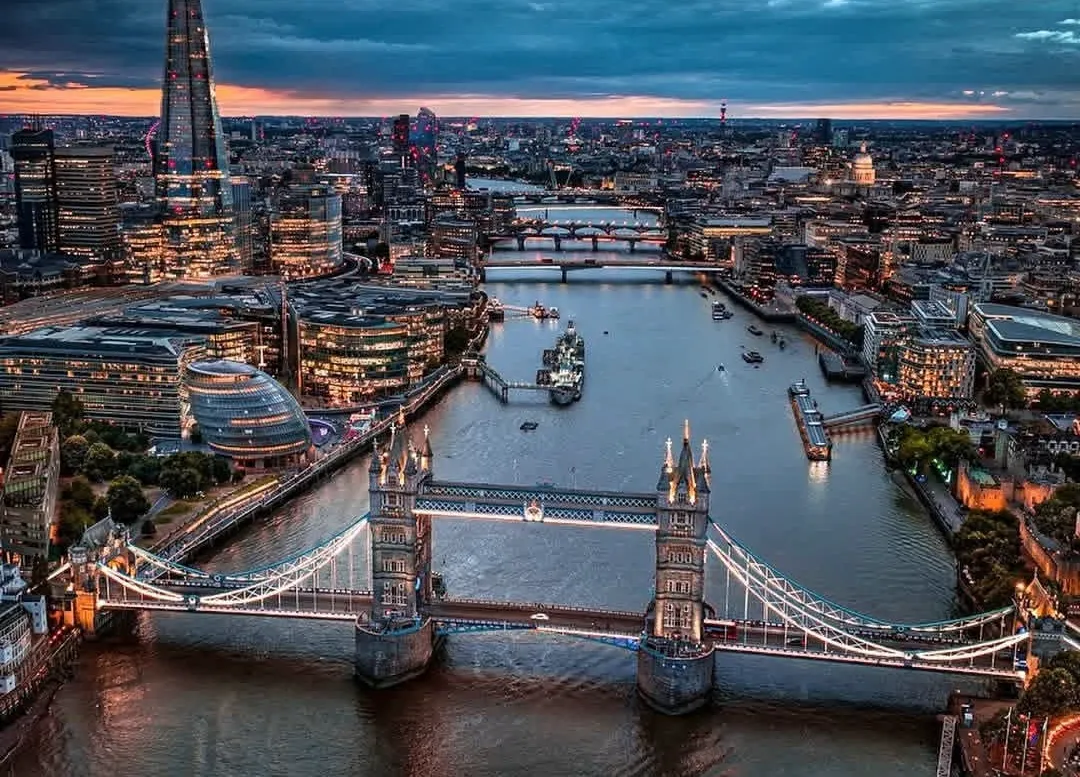
Leading lines work the same way. A road disappearing into fog. The curve of the Thames pulls your gaze toward Tower Bridge. These aren’t just pretty compositional tricks. They imply journey, direction, and time passing. The viewer follows the line and mentally continues the story beyond the frame.
Framing through doorways, arches, or windows does something interesting, too. It makes the viewer feel like they’re discovering something, peering into a moment they weren’t supposed to see. There’s a voyeuristic quality to it that draws people in.
London’s Light and Weather
Photographers who’ve shot in both London and, say, Los Angeles will tell you the light is completely different. London rarely gives you harsh shadows or blazing sunshine. Instead, you get soft, diffused light that wraps around subjects, flattens contrasts, and creates a mood that’s harder to achieve elsewhere. Overcast days—which London has plenty of—act like a giant softbox.
This matters for storytelling because mood is half the battle. A photograph taken in flat grey light feels contemplative, melancholic, and introspective. Golden hour along the river brings warmth and nostalgia. Blue hour, when the sky deepens, but the city lights haven’t fully taken over, gives you that liminal feeling of transition. Use them intentionally.
Rain helps too. Wet pavements reflect light, double your visual information, and add texture. A lone figure with an umbrella on a shining street tells a very different story than the same figure on a dry afternoon.
Where Stories Happen in London
Some spots practically hand you narratives. Others require more work. Here’s what different locations offer:
| Location | What It Gives You | Story Possibilities |
|---|---|---|
| Tower Bridge | Victorian engineering against modern crowds | Frame throughthe bridge railings at dusk. The Thames reflection implies something fleeting beneath all that permanence. |
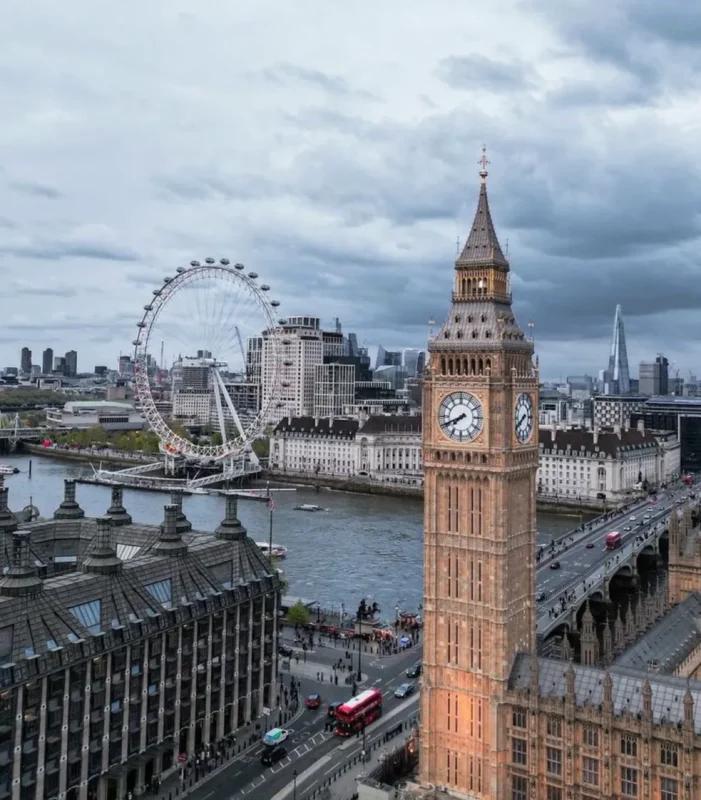
| Westminster and Big Ben | Power, tradition, reflection | Juxtapose the industrial past with the tourist present. The cables create natural leading lines, suggesting a crossing between eras. |
| St. Paul’s Cathedral | Spiritual weight in urban chaos | Shoot from Millennium Bridge. Tiny figures approaching the dome evoke pilgrimage, even if they’re just tourists. |
| Borough Market | Sensory overload, tradition | Close-up vendor interactions. Steam rising, colours everywhere. Abundance and human connection in one frame. |
| Leake Street Arches | Rebellion, creativity, shadows | Frame throughthe bridge railings at dusk. The Thames reflection implies something fleeting beneath all that permanence. |
| Brick Lane | Cultural layers, street life | Weekend mornings are chaotic in the best way. Markets, murals, faces—stories compete for attention. |
The trick with famous landmarks is avoiding the postcard shot. Everyone’s photographed Big Ben. What they haven’t photographed is the specific moment you witnessed there—the child tugging their parent’s hand, the couple arguing by the railing, the street performer nobody’s watching. Those details transform icons into stories.
People Make Photographs Breathe
Empty architecture is impressive but lifeless. Adding a human element—even a tiny figure in the distance—gives scale, yes, but more importantly gives the viewer someone to project onto. We instinctively imagine ourselves in photographs that contain people. We wonder about their lives, their reasons for being there, and where they’re going next.
You don’t need faces. A silhouette works. A figure seen from behind, walking away. Hands holding something. Body language carries enormous narrative weight. A slumped posture tells a different story than squared shoulders. Someone rushing tells a different story than someone lingering.
London street photographers like Matt Stuart have built entire bodies of work around fleeting coincidences—a red bus perfectly aligned with a phone booth, a gesture that mirrors a billboard, moments where randomness briefly becomes meaning. You can’t plan these. You can only be present enough to notice them.

Editing as Storytelling
Post-processing isn’t cheating. It’s writing. Just as a novelist chooses words carefully, a photographer chooses how warm or cool the tones run, how much shadow detail to reveal, and where the eye should land first.
Cropping changes the narrative completely. A wider frame shows context, environment, and the subject’s place in the world. A tighter crop isolates, creates intimacy, and forces focus on expression or detail. Both tell stories—different stories.
Whether working from your own shots or using curated stock photos, editing decisions shape how viewers interpret what they’re seeing. A slight vignette darkening the edges draws attention inward. Desaturation suggests memory, distance, and the past. These aren’t rules, just tools. Use them when they serve the story you’re trying to tell.
Learning From Photographs That Worked
Some images have become cultural shorthand for entire eras or emotions. Dorothea Lange’s Migrant Mother—a woman’s worried gaze, children turned away, the weight of the Depression in one face. Steve McCurry’s Afghan Girl—those green eyes carrying decades of conflict. These photographs didn’t need captions. The stories were already there.
For London specifically, look at work from the Magnum photographers who documented the city across the twentieth century. Look at contemporary street photographers capturing the Tube, the markets, the quiet corners that tourists miss. Study what works and ask yourself: What am I seeing that makes me feel something? Then try to understand the mechanics beneath the feeling.
Putting It Into Practice
Theory only gets you so far. Set yourself a challenge: fifteen minutes at one location, one story to tell. South Bank is perfect for this. You’ve got food vendors, river traffic, the skyline, street performers, and commuters. In one frame, try to capture something that implies commerce, community, the Thames-side life that’s been happening in some form for centuries.
Don’t overthink it. The best single-image stories often come from instinct, from noticing something that feels significant even before you understand why. The analysis comes later.
And remember that not every photograph needs to be a masterpiece. Some are practice. Some are near-misses that teach you something. The photographer who takes a thousand forgettable shots eventually takes one that stops people in their tracks. There’s no shortcut through that process.
Building Your Visual Library
Sometimes you’re not out shooting. Sometimes you’re at a desk, working on a project that needs visual storytelling without the time or budget for custom photography. This is where carefully chosen stock photos become genuinely useful—not as filler, but as narrative elements. A well-selected image of dawn mist over the South Bank or the controlled chaos of Piccadilly Circus can anchor a piece emotionally, giving readers something to feel rather than just something to see.
The same principles apply. Look for images with subjects, context, and implied action. Avoid anything too posed, too perfect, too obviously staged. The goal is photographs that could have been moments you witnessed yourself.
Why This Matters Now
We’re drowning in images. Everyone with a phone is a photographer, and billions of photographs get uploaded every day. Most disappear instantly, forgotten. The ones that stick are the ones that tell us something—about a place, a moment, a feeling, a person.
Single-image storytelling is a skill worth developing because it cuts through the noise. One photograph that makes someone stop scrolling, that makes them feel something, that plants a question in their mind they’ll carry with them—that’s worth more than a hundred technically perfect but emotionally empty shots.
London’s streets are full of stories waiting to be noticed. The next time you lift your camera, don’t just ask what’s in front of you. Ask what it means.