

Blog
Behind the Scenes of Bridal Beauty Prep: What the Polished Aisle Photo Doesn’t Show
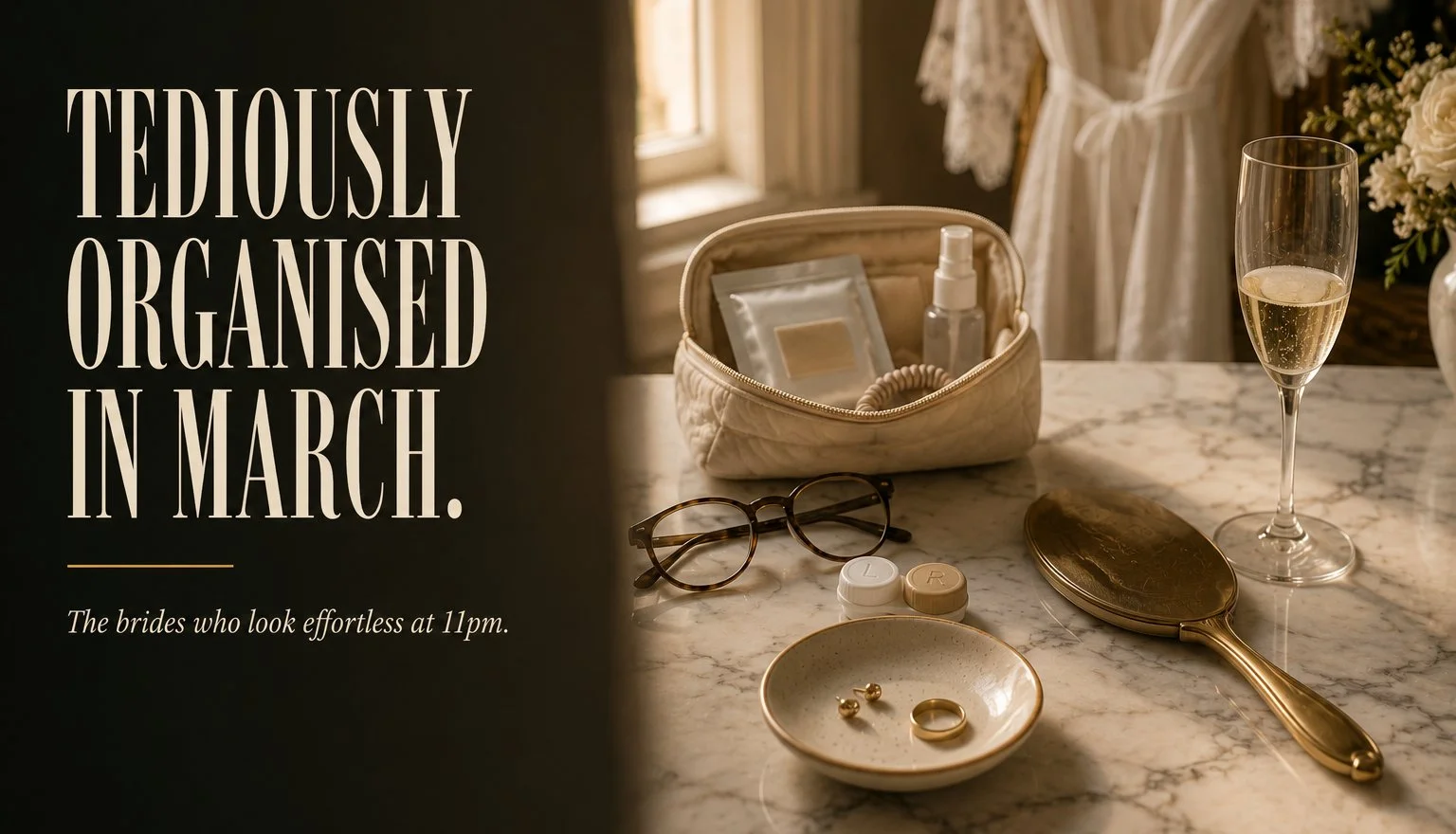
Everyone sees the same image on the day: the finished bride, hair and makeup somehow holding through six hours of hugging, dancing and flash photography. What nobody sees is that the photo was months in the making and that most of the work is not glamour at all. It’s scheduling, restraint and a series of small unphotogenic decisions that only reveal their value when nothing goes wrong.
The long game starts with the date
The moment a date exists, the clock starts on the two things that genuinely cannot be rushed. The first is the team. Good makeup artists and hairstylists book out months ahead, the genuinely in-demand names sometimes over a year and a bride who waits until the dress is sorted to think about hair has often already lost her first-choice stylist to someone more organised. The second is anything involving recovery time. Dental work, any serious skin treatment, anything a dermatologist would describe with the word “downtime,” belongs in the distant months, finished long before it can leave a trace.
Skin itself follows the same logic. The sensible version of a bridal skincare routine begins months out and then, counterintuitively, gets more boring as the day approaches. Nothing new inside the final six weeks. Not the miracle serum a friend swears by, not the facial with the waiting list. Skin that is calm and settled photographs better than skin that was ambitiously treated on Thursday and every experienced artist has a story about the bride who tried something new the week before and spent the morning being colour-corrected.
A loose style decision made early, classic and understated versus something bolder, quietly makes every later choice easier. It’s not a mood board obligation. It’s just that a bride who knows the destination argues less with herself at every fork.
Trials are for the camera, not the mirror
The trial run is where bridal prep parts ways with ordinary getting-ready and the part most first-time brides misunderstand is who the trial is actually for. It’s for the camera. A look can be lovely in the mirror and behave completely differently under flash and one specific culprit catches people out year after year: foundations with high SPF can bounce flash photography back as a pale, ghostly cast across the face, which is why artists shoot test photos with flash during the trial rather than trusting the mirror at all. Adjustments after seeing the pictures are normal. That’s the trial doing it’s job, not the look failing.
Hair gets the same treatment, tested for endurance rather than the first five minutes, because no other event asks a style to survive this many hours and this many photographs. And the bride’s own beauty prep rarely happens alone, since the bridesmaids usually run a simplified version of the same plan and the morning goes wrong at exactly the point where five people need the same two professionals. Coordinating the group’s timing weeks ahead is duller than choosing lipstick and matters more.
The decisions nobody thinks about until the photos come back
Glasses are the classic one. A bride who wears them daily has a real decision to make and either answer is fine, but it has to be made early. Lenses reflect flash, catch glare in outdoor light and slide during a long day of hugging and crying, which is why plenty of brides who otherwise live in their frames spend the day in contacts. The rule that matters: never make the wedding morning the first attempt. Choosing the right contact lens weeks ahead and wearing them through a few full practice days means the eyes have adapted and the comfort question is answered long before anyone is walking down an aisle. And the brides who love their glasses as part of their face should keep them, told to the photographer in advance so the lighting can be planned around them. The mistake isn’t either choice. It’s deciding at the last minute.
Comfort generally wins over appearance anywhere the two conflict and the brides who accept that early enjoy their day more than the ones who discover it at hour four. Shoes broken in or swapped for the reception. Undergarments chosen for eight hours, not eight photographs. Weather plans, humidity sprays and a rain contingency for outdoor shots, built quietly into the plan by any experienced team, which is precisely why weather so rarely becomes a visible problem.
The morning and the long day after it
The morning runs backwards from the photographer’s arrival: hair, then makeup, then final touches, with buffer time built in because something always overruns and it is never the thing anyone predicted. A good team manages more than faces. A room full of mothers, bridesmaids and mimosas has it’s own weather system and keeping the bride calm inside it is half the professional skill, since calm photographs better than any product.
The emergency kit earns it’s place after the ceremony, not before it. Blotting sheets, setting spray, safety pins, a spare hair tie, plasters for the shoes and the odds of finishing the night without opening it are close to nil. The initial look technically ends when the artist leaves. The actual look ends at midnight and the difference between the two is that unglamorous little bag.
None of this is a transformation story, whatever the aisle photo suggests. It’s a long string of small decisions made early enough to be boring and the brides who look effortless at 11pm are, almost without exception, the ones who were tediously organised in March.