

Blog
Who Hears A Hydraulic Rock Drill Wearing Out When There Is No One In The Cab

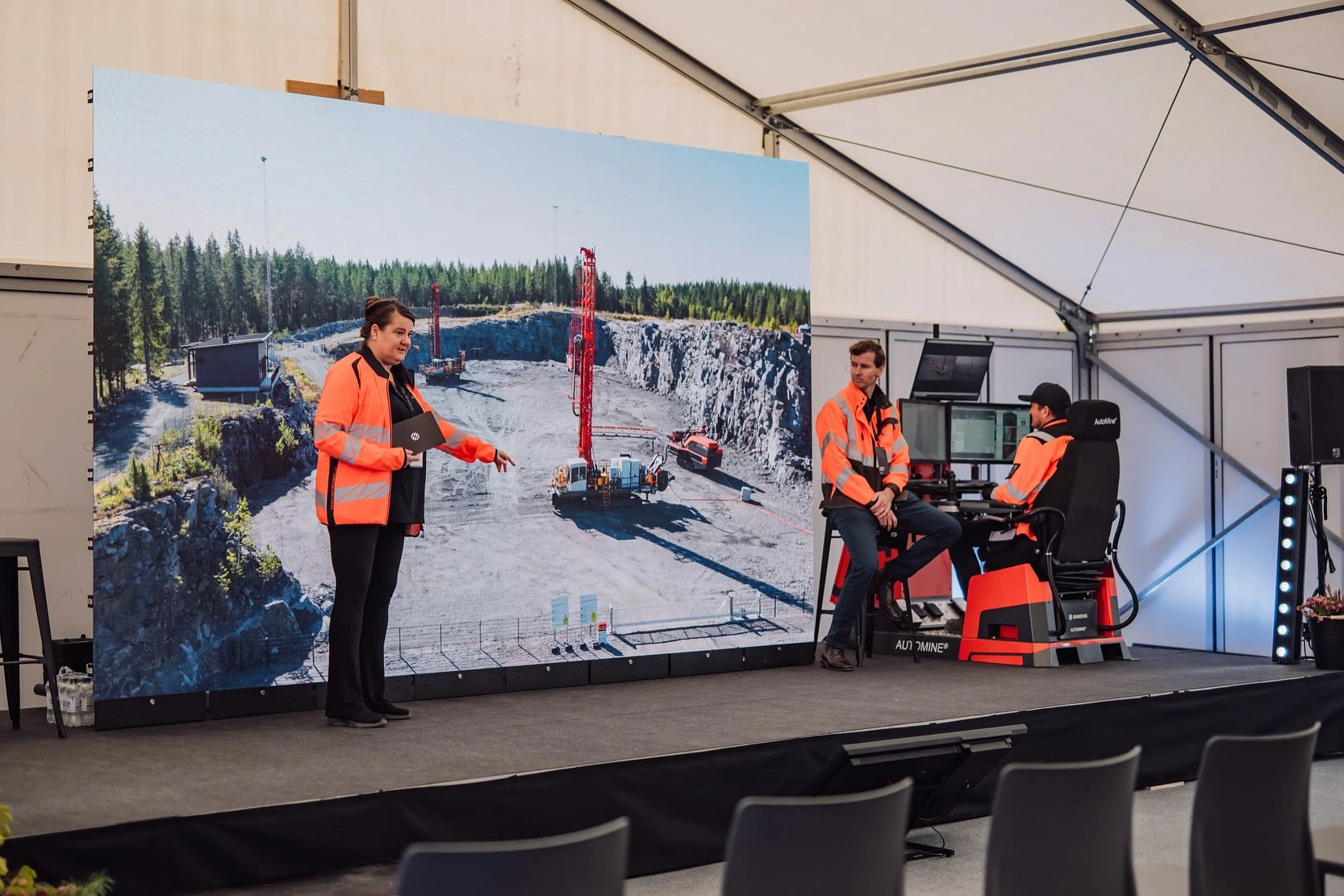
The sensors on a modern rig log the percussion pressure, the oil temperature, the flushing flow and the hours, and they will show an accumulator going soft before a person would, but the first sign of a bushing going or a shank about to crack is a sound, and a sound needs someone on the rig to hear it. So the mines starting to drill this year keep a person on the machine, whereas Sandvik’s newest concept has taken the seat out altogether.
Sami Has No Cab And No One On It To Notice The Sound Changing
At Future of Mining 2026 in Tampere, Sandvik showed a surface drill it has called Sami, which has no cab on it and no seat, because the machine was designed with no room for a person from the start. It runs on batteries and takes its instructions from an AI agent the company has named Sandi. Sandvik said on the day that Sami was a concept and could not be ordered, and its underground concept from 2022, Amelia, has not been given a price in the four years since, so the road from a stand to a heading is a long one in this category. The machine on the stand raised the question of who would notice when a drill started to go wrong, since on every rig in service that job has been done by whoever was sitting on it.
Cornwall’s South Crofty Starts Underground Drilling At 530 Metres This Quarter
South Crofty at Pool in Cornwall had been underwater since 1998 when Cornish Metals began pumping it out, and the water is now being drawn down towards the 400 level, about 730 metres below the surface, which the company expects to reach in the first half of next year. Pre production development at the 290 level, 530 metres down, begins this quarter and the underground drilling programme follows it. A £52 million credit line from the National Wealth Fund was agreed in May, and the plan is for about 4,700 tonnes of tin in concentrate a year over the first 5 years, which would make it the first primary tin producer in Europe. The drills going down there will have people on them.
Cornish miners had been listening to the rock in that district for 300 years before anyone put a hydraulic drill in it. They called what they heard the knockers, a knocking in the walls and timbers that came before a fall, and whether the knocking was a warning or the cause of the fall depended on which miner you asked. They left the last corner of the pasty in the level for them. Agricola kept the gnomes in De Re Metallica in 1556 when he had thrown out nearly everything else supernatural, and a mining engineer wrote in the Engineering and Mining Journal in 1920 that when he died he wanted to be cached on the bottom level with a pick beside him and left to be a tommy knocker for a hundred thousand shifts.
What Wears Out On A Hydraulic Rock Drill And How Fast
A top hammer drifter, which is what the crews call the rock drill on a jumbo, is a piston striking a steel shank at a rate that reads like a note on a piano. On Sandvik’s own range the RD535 shank is struck 107 times a second, the RD525 93 times, and the big RD1840C 39 times with 49 kW behind each blow, and the parts that take that are counted in percussion hours rather than calendar days.
- The shank adapter takes every blow and passes the energy into the rod, so it goes first and it is the cheapest part to change early.
- The front head bushings guide the shank, and once they have worn the shank wanders, and a wandering shank eats the rod thread and the piston face.
- The flushing seal matters more than any other seal on the drill, because when it fails the flushing water gets into the hydraulic oil and the oil turns milky by the end of the shift.
- The accumulator diaphragms hold nitrogen and smooth the pressure pulses, and a low charge lets every blow reach the hoses and the pump instead.
- The hoses fatigue at the flex point nearest the drill and give out with no warning once they are past it.
One operator habit wears a shank faster than any of those, and that is leaning on the drill so the bit does not rebound fully between blows, which lets the piston micro weld itself to the striking face and can destroy a new shank inside an hour. The shank also needs its own oil, an air and oil mist fed to the front head separately from the hydraulics, and if the mist stops the bushings follow the shank. The parts catalogue for the hydraulic rock drill range runs to 29 top hammer models, and the front end parts are what a mine keeps on the shelf.
Which Faults The Rig’s Sensors Pick Up
The monitoring on a current rig logs percussion pressure, rotation pressure, oil temperature, flushing flow and hours against the machine, so an accumulator going soft shows up as a change in the shape of the pressure trace, a pump running hot shows up on the temperature, and a drifter that has run past its front end interval shows up on the hours. A bushing in its early stage does not show up there, and a rod thread starting to gall does not either, and the flat sound a shank makes on the shift before it cracks is not in the data until the damage has begun. An operator has been catching those three by ear, and the cabinless concept has to catch them some other way before it moves from a stand in Tampere to a heading.
Sandvik Spent 260 Million Kronor Making More Drills Because They Wear Out
Sandvik has finished a SEK 260 million expansion of its rock drill factory in Tampere, with the new building, the machine tools and the automation now in place and production being ramped through this year and into next, and it has been making rock drills on that site for more than 50 years. The programme was planned in 2023 on the assumption that demand for rock drills would keep growing, which it does, because they wear out.