

Blog
Britain’s Hospitals Run on Filipino Nurses, and Their Money Runs Two Countries at Once
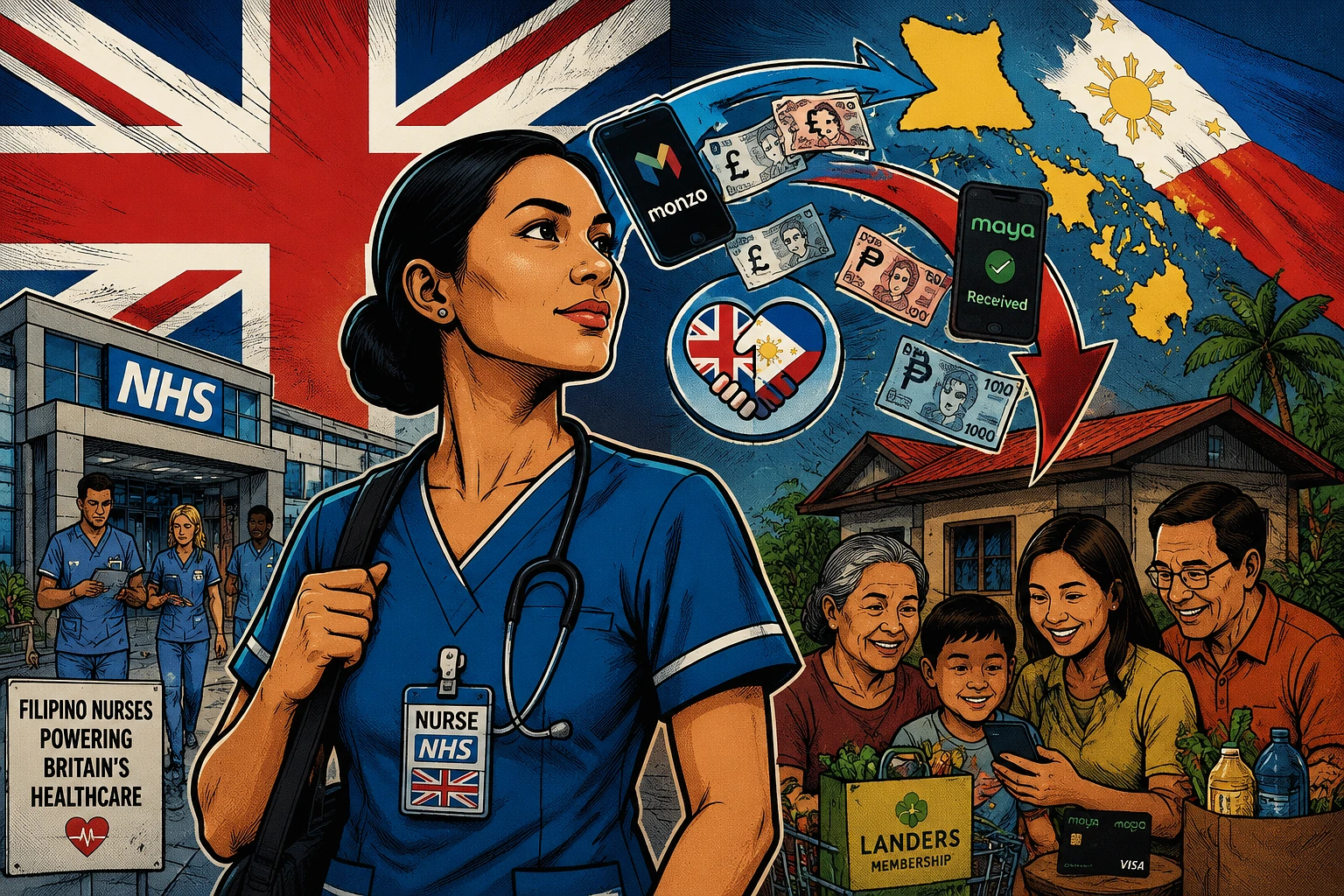
There are around two hundred thousand Filipinos living in Britain, most of them connected one way or another to the caring professions, and what I wanted to understand when I started reading into this community is a fairly simple thing, which is what actually happens to their pay. Because a Filipino nurse’s salary in Leeds is not really one salary. Part of it is rent and groceries in Leeds, and part of it belongs to a household seven thousand miles away, and once you follow the money properly the numbers get much bigger than I expected.
One Nurse in Thirteen
The NHS part first, since that is where most British people meet this community without necessarily registering it. Filipinos are the third largest nationality in the whole NHS workforce per the House of Commons Library’s workforce analysis, only British and Indian staff outnumber them, and they make up about 7.7% of all nurses and health visitors, which I worked out to roughly one nurse in thirteen and then went back to the workforce tables to check because the figure sounded too tidy. It holds. The 2020 count for England alone found 22,043 Filipino NHS staff, and once you add care homes and private healthcare the estimates for the whole country go past thirty thousand.
- And a detail worth keeping for the next pub quiz: when Margaret Keenan got the world’s first Covid vaccine outside of trials, Coventry, December 2020, the nurse giving it was May Parsons, a Filipina who had already spent close to two decades in the NHS by then.
There is a long history behind all of it. The Philippines has trained more nurses than any country on earth for generations, the training happens in English to standards British regulators accept, and the Health and Care Worker visa keeps the route open, so hospital trusts have been recruiting in Manila since the 1970s and never really stopped.
Getting Paid Monthly Takes Some Adjusting
Here is the part I found genuinely interesting, and it is a detail you only learn from the community’s own forums. Workers in the Philippines get paid on what everyone calls “kinsenas katapusan”, the 15th and the 30th, two paydays every month, and the entire budgeting culture is built on that rhythm. Britain pays one lump sum a month. So a newly arrived nurse is suddenly managing rent, food, transport and the electricity bill for the family home in Batangas from a single payday, on a system she has never used, and the Filipino nursing groups online spend a surprising amount of thread space walking new arrivals through exactly this adjustment. It reads like a small thing from the outside. The people going through it describe it as the first real shock of British life, ahead of the weather.
The two-household budget itself is just normal life in this community, and you can see it in person if you walk through Earl’s Court in London, where the stretch locals call Little Manila has a Jollibee, Filipino restaurants serving food on banana leaves, and plenty of conversations that come around, sooner or later, to the family arithmetic.
What the Remittance Numbers Show
So how much money are we talking about?
The Philippine central bank counted a record $35.63 billion in cash remittances from overseas Filipinos in 2025, up from $34.49 billion the year before. December alone moved $3.52 billion, because Christmas is the heaviest sending month of the year, and the full annual flow is worth 7.3% of the entire Philippine economy. The bank’s own list of top source countries includes the United Kingdom, sitting alongside the United States, Singapore, Saudi Arabia, Japan and the UAE. I sat with that GDP figure for a while, because Britain’s share of it is built out of night shifts in Wigan and care home rotas in Kent. The World Bank even tracks the cost of sending money on the UK to Philippines corridor as one of its monitored routes, fees, exchange margins, provider by provider, which tells you this flow is big enough for economists to watch even if it rarely makes the news here.
Both Ends of the Money Went Digital
The newest change in this story is how the money actually travels, and it changed on both sides within a few years of each other.
On the British side, the arriving nurse now banks the way any young Briton does. The relocation guides passed around Filipino nursing groups all give the same advice, which is to download Monzo or Starling before the flight and open the account in the first week with a passport and a residence permit, then sort a traditional bank later if at all. On the Philippine side, the family made a similar jump, because a country that used to queue at remittance counters has moved heavily into app banking, so the money from a Leeds night shift increasingly lands straight in a digital account in Manila.