

Blog
Dyson Put a Camera in a Toothbrush This Month, and the Most Interesting Answer to It Is Bubbles

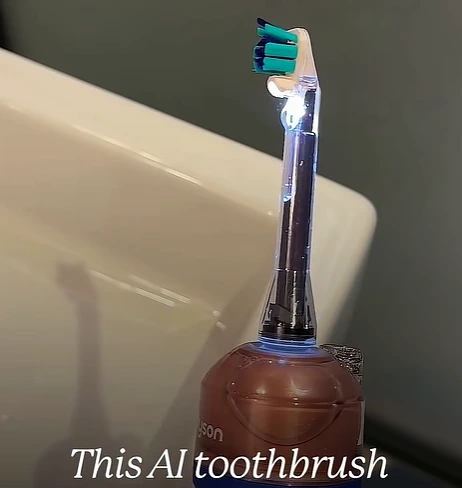
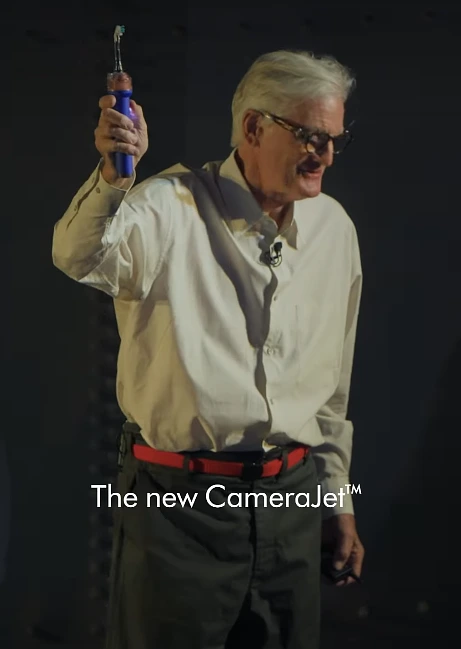
On 1 September, in Paris, James Dyson stood up and revealed his company’s first ever toothbrush. It has a camera in it. A real one, a 100,000 pixel lens watching the inside of your mouth at 28 images a second, spotting the gaps between your teeth and firing a little jet of mouthwash at each one it finds. The company spent six years building it, and it costs £419.99.
Cameras have been on a steady march through our lives for two decades now. Phones first, then doorbells, then cars, then fridges, and honestly the mouth was one of the last places left. So the jokes were always coming. But look closely at the engineering, because the details are genuinely more entertaining than the jokes.
The CameraJet Is Clever in Ways That Create New Problems
The best detail in the whole launch is one Dyson had to solve before anything else worked. Toothpaste foams, and foam blinds a camera. So a brush that watches your teeth cannot cope with ordinary toothpaste, and Dyson’s answer was to engineer its own non foaming toothpaste to go with the machine. Think about what that means for a second. The camera did not just join your bathroom, it demanded the toothpaste be redesigned around it, and now the brush comes with its own little supply chain, special paste, mouthwash for the tank in the handle, replacement heads at around $15 each in the American pricing.
The reviews from launch week have been fair and fairly funny. Forbes’ reviewer praised the cleaning and the app’s coverage maps, then noted the jet takes practice and, in his words, “don’t wear your best shirt” while learning it. Battery life runs about ten days. The dock holds a reservoir that tops up the handle. It is a genuinely impressive machine, and it is also a machine, with a login, an app, software updates and a camera that needs cleaning to keep seeing.
The Opposite Philosophy Was Already on Sale
And this is where the story gets properly interesting, because a challenger brand had already placed the opposite bet. RANVOO, a company that made its name in cooling tech, sells its AirJet brushes on a completely different idea, with no camera anywhere in the device and no software making any of the decisions. Instead the handle generates dense microbubbles and the head’s shape steers them along the curves of the teeth and into the gaps, borrowing a piece of fluid physics called the Coanda effect, the same principle that makes water hug the back of a spoon. The intelligence is baked into the shape of the thing, so nothing in it watches or thinks, the physics just runs the same way every time.
The practical contrasts are blunt, and worth a quick scan, with the numbers being each maker’s own claims:
- Price: around $128 for the AirJet X5 against $499.99 for the CameraJet.
- Battery: measured in weeks, up to sixty days by RANVOO’s count, against Dyson’s ten days.
- Brush heads: around $6.66 each against roughly $15.
- Consumables: none required, ordinary toothpaste works, against a proprietary non foaming paste and rinse.
RANVOO clearly knows exactly what moment this is, since its own site began publishing head to head comparisons within days of the Paris launch. Challenger brands dream of the giant entering their category, because the giant brings the attention and the challenger brings the price list.
The Two Bets Are Answering Different Questions
That is my honest read of this fight, and it is what makes it a better story than a spec sheet war.
Dyson’s bet is that feedback changes behaviour. A brush that shows you the plaque you missed is doing what step counters did for walking, turning an invisible habit into a visible score, and for some people that genuinely works. The cost of that bet is everything a camera drags in with it, the app, the account, the data policy you should read before a device earns permission to see inside your mouth, the software support that decides how long a £420 gadget stays smart, and a monthly relationship with proprietary supplies.
The bubble bet runs the other way, brushing is a habit, and habits hate homework. Two minutes, twice a day, half asleep, and any extra cleverness has to survive that reality without asking anything of you. Physics never asks you to log in or update anything, there is no privacy policy to read, and it works the same on day one thousand as day one. The cost of this bet is that nothing is measured, so you get the extra cleaning without the feedback, and you take the microbubble claims on the maker’s word rather than watching them work on a screen.
Do you need either of them?
Dentists have answered that one for decades, technique and consistency beat hardware, and a careful two minutes with a basic brush embarrasses a lazy two minutes with anything. But the gadget market has never run on need, and there is real meaning in where this fight is happening. When cameras and machine learning are being aimed at molars, the industry is telling you the big categories are finished and the frontier has moved into the bathroom. One company arrived at that frontier with a $500 seeing machine, while the other turned up with bubbles and a lower bill. Watching Britain’s bathrooms choose between them over the next year will say a lot about what we actually want from our machines, and my honest guess is that the shirt stains will be part of the verdict.