

Blog
How Professional Mental Health Programmes Build Recovery That Actually Holds

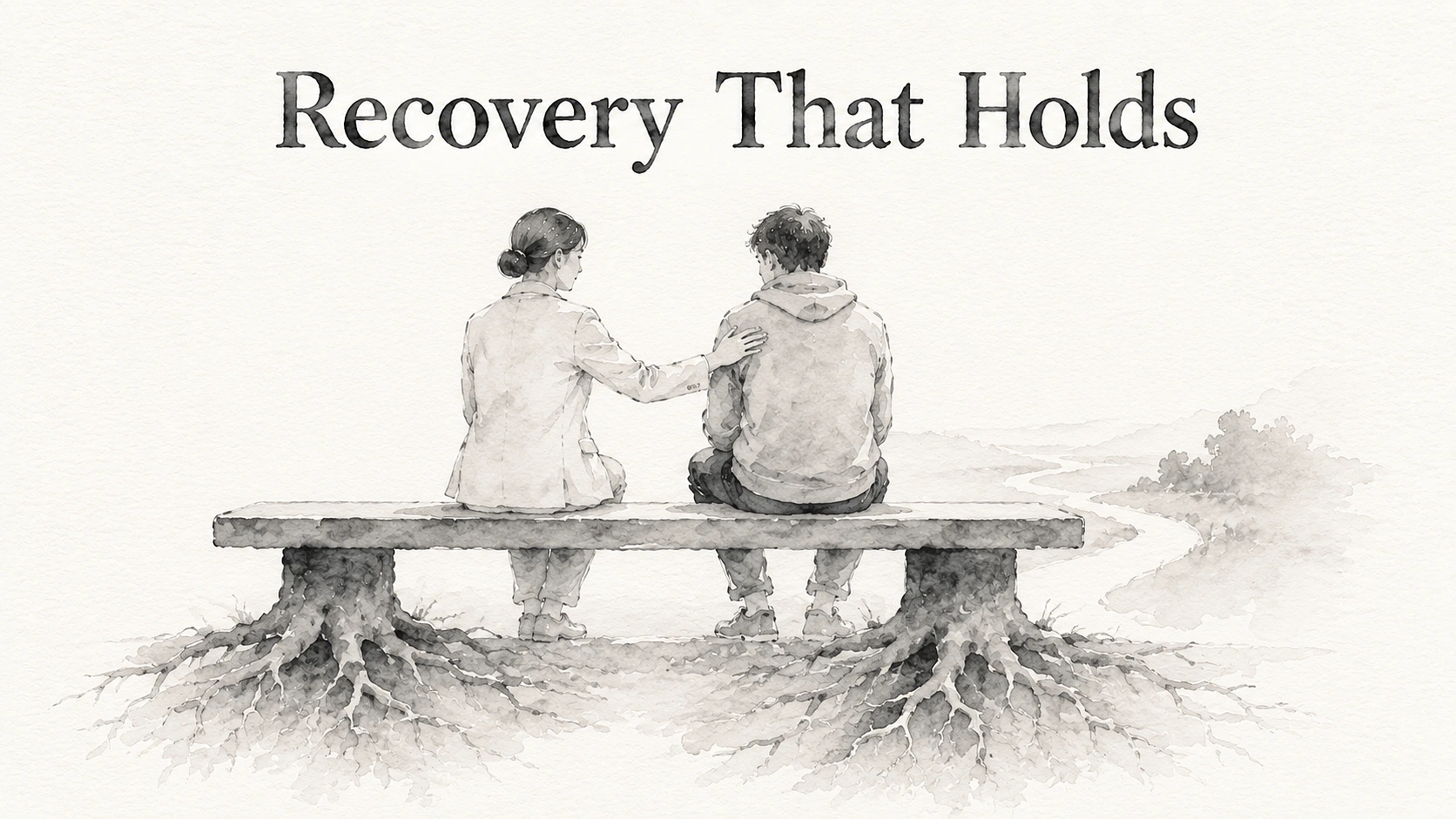
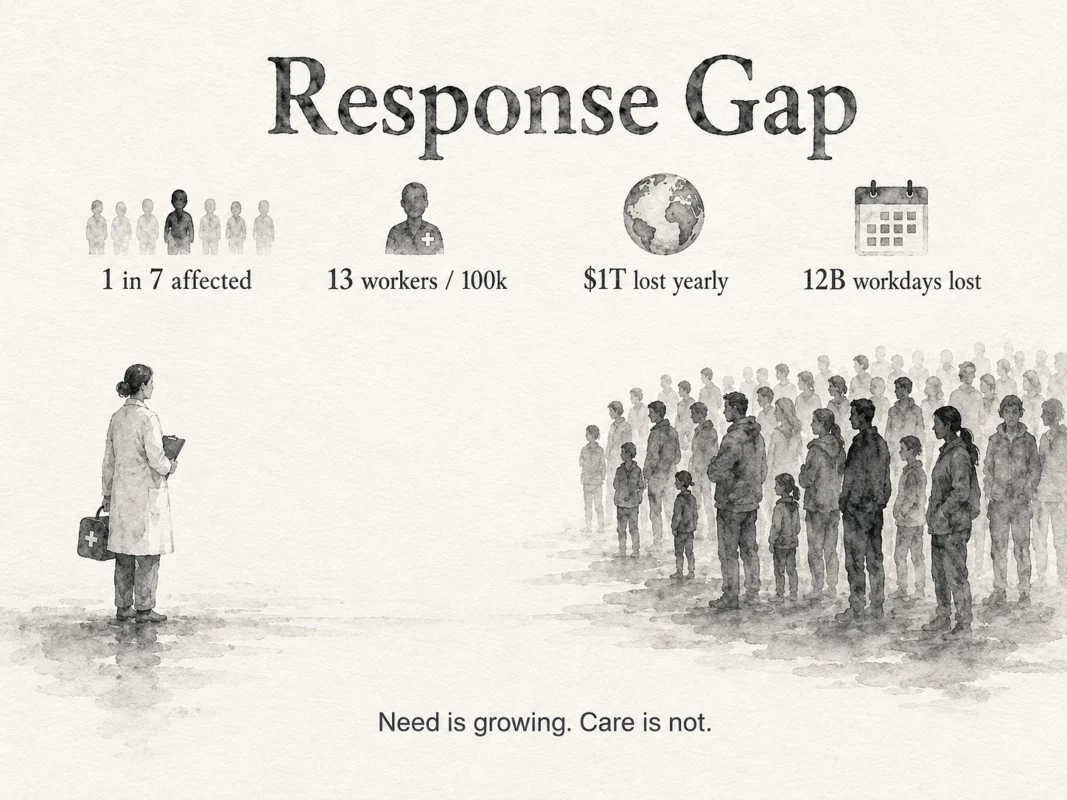
The World Health Organization put out two reports back in September that should have gotten more attention than they did. The newly updated Mental Health in Today’s World report and the 2024 Mental Health Atlas have quantified public health facts that the general public had only held vague perceptions of: more than 1 billion people across the globe are burdened by mental health problems. The United Nations High-Level Meeting on Noncommunicable Diseases and Mental Health, convened in New York on September 25, 2024, also released supporting corroborating data confirming that 1 in 7 people worldwide is affected by such conditions. These key policy milestones ought to have served as the core of public discourse.
Headlines have never received sufficient attention. A third-party report presented three core conclusions: the scale of these related health problems continues to expand, global response progress has failed to keep pace with demand, and the gap in outcomes between professional treatment and self-management is more significant than it was several years ago. The following discussion will empirically analyze the unique advantages of high-quality support programs based on empirical evidence.
1. The global response gap is wider than the diagnosis gap
The number that should worry policymakers more than the one billion figure is the workforce one. The WHO Mental Health Atlas puts the global median at thirteen mental health workers per hundred thousand people, with low and middle-income countries running on a tiny fraction of that. Workforce shortages are why most people who need help don’t get it, not because they’re hiding from treatment but because there’s nowhere to send them when they do come forward.
The economic side of this got an update too. The latest WHO and UN figures put the annual productivity cost of untreated anxiety and depression at around one trillion dollars globally, with twelve billion working days lost every year. That’s not an argument for treating mental health as a luxury, it’s the opposite, it’s the case for treating it as core infrastructure that’s currently underfunded almost everywhere.
What this means in practice is that the gap between somebody who lands in a properly structured programme and somebody who tries to self-manage isn’t a small one anymore. According to authoritative public health reports, the global transformation of mental health care has lagged seriously: fewer than 10% of countries have implemented genuine community-based care, and the prominent drawbacks of inpatient care have come to the fore.
A few specifics from the September data worth holding onto:
- One in seven people globally are living with a mental disorder right now
- Anxiety and depressive disorders make up more than two-thirds of all cases
- Nearly half of all mental disorders begin before age eighteen
- 727,000 people died by suicide in 2021, the most recent year with full data
- Suicide is the third leading cause of death among people aged 15 to 29
This study proposes that statistical data in the treatment field is the core of industry-wide discussions, defines the form of high-quality treatment, and also determines the logic used to build professional treatment programs.
2. What good treatment programmes actually do differently
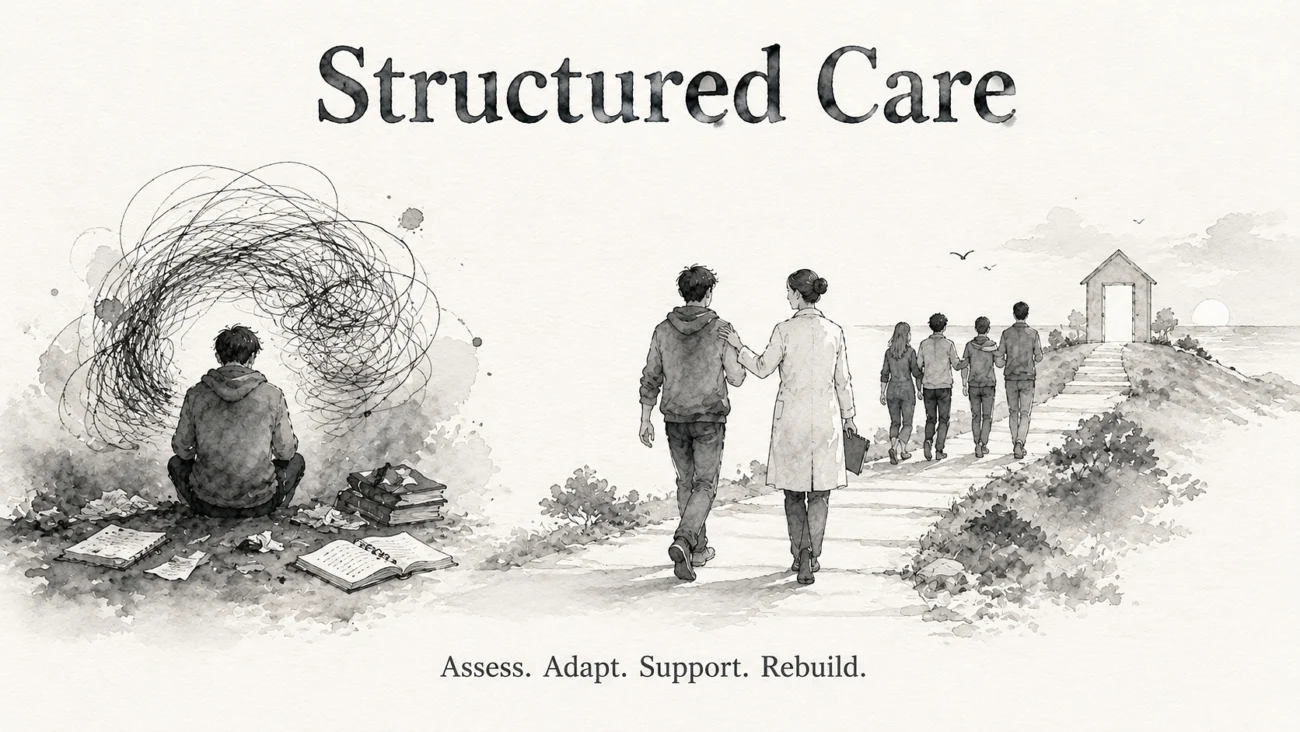
Honestly, the thing that separates a properly run treatment programme from self-help isn’t the diagnosis or the medication, it’s the structure of what happens after the diagnosis lands. Self-treatment tends to make the condition the centre of everything, which is exhausting and doesn’t really go anywhere. A trained clinical team works the other way round, they spend time understanding the person, what their life actually looks like, what they want it to look like, before locking in any kind of treatment direction.
That sounds soft, but it isn’t. It’s the bit that makes the difference between somebody completing a programme and going back to the same life that broke them in the first place, versus somebody coming out with a clearer sense of what they’re rebuilding towards. The current generation of evidence-based treatment programmes, particularly the residential ones, is built around that distinction more deliberately than it used to be. Some of the best mental health treatment centers operate this way, treating the structured assessment as the foundation rather than the first formality, and that shift in emphasis is reflected in the WHO’s own framework for what comprehensive mental health care should include.
The other thing professional programmes do that self-treatment can’t really replicate is the peer side of it. Support groups inside structured treatment work differently from online communities or self-help books because the people in them are at different stages of the same process, supervised by trained facilitators, working through similar material. The September WHO data noted that community-based care models produce better outcomes than purely inpatient ones, which is partly why the better residential programmes now incorporate group work as a core part of the day rather than an optional extra.
What you should look for if you’re assessing a programme, broadly:
- A proper clinical assessment before any treatment plan is set
- Treatment that adjusts as you progress rather than running on rails
- Structured group work supervised by trained clinicians, not just open discussion
- A clear plan for what happens after you leave, not a discharge and silence
- Evidence-based approaches, particularly for conditions like depression, anxiety, addiction and PTSD where the research base is strongest
3. The structure is what makes recovery hold
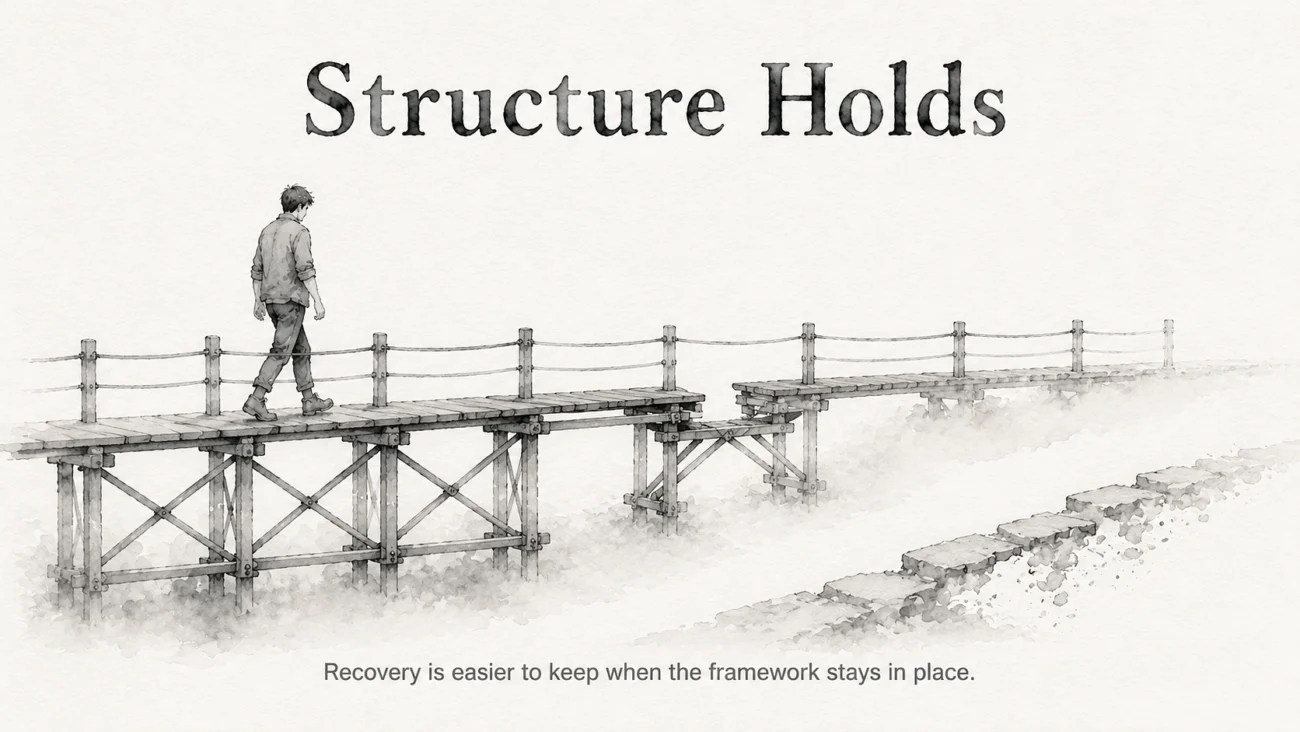
The reason a structured programme tends to outperform self-treatment isn’t because the techniques are secret, plenty of them are publicly available in books and online, it’s because consistency under stress is genuinely hard to do alone. Most people who try to self-treat will start strong, hold the routine for a few weeks, and then watch it fall apart when something difficult happens at work or in a relationship. Programmes built on regulated daily structure are designed specifically around that failure point, the structure is doing work the person doesn’t have to consciously sustain when their willpower is low.
The other piece is that recovery isn’t linear, and clinical teams know this in a way that internet self-help doesn’t really account for. If a patient relapses, the programme adjusts. The expectations get recalibrated, the support gets dialled up, the underlying triggers get examined, and the work continues from where things actually are rather than where the plan said they should be. That kind of dynamic response is hard to build into a self-directed approach because you’re trying to be both the patient and the clinician at the same time, which doesn’t really work when you’re in distress.
For severe conditions, particularly substance use disorders, this matters more than people realise. This study centers on medication-assisted treatment for opioid use disorder, and identifies two major barriers blocking its widespread adoption. The first is an information gap where the general public lacks understanding of this treatment; the second is the common misconception that “true recovery requires complete cessation of all medication use.” The structured intervention proposed in this study can correct these misunderstandings, develop customized, individually matched treatment plans, and integrate both medical and psychological support—capabilities that cannot be achieved by self-help treatments that rely on unassisted, self-initiated withdrawal.
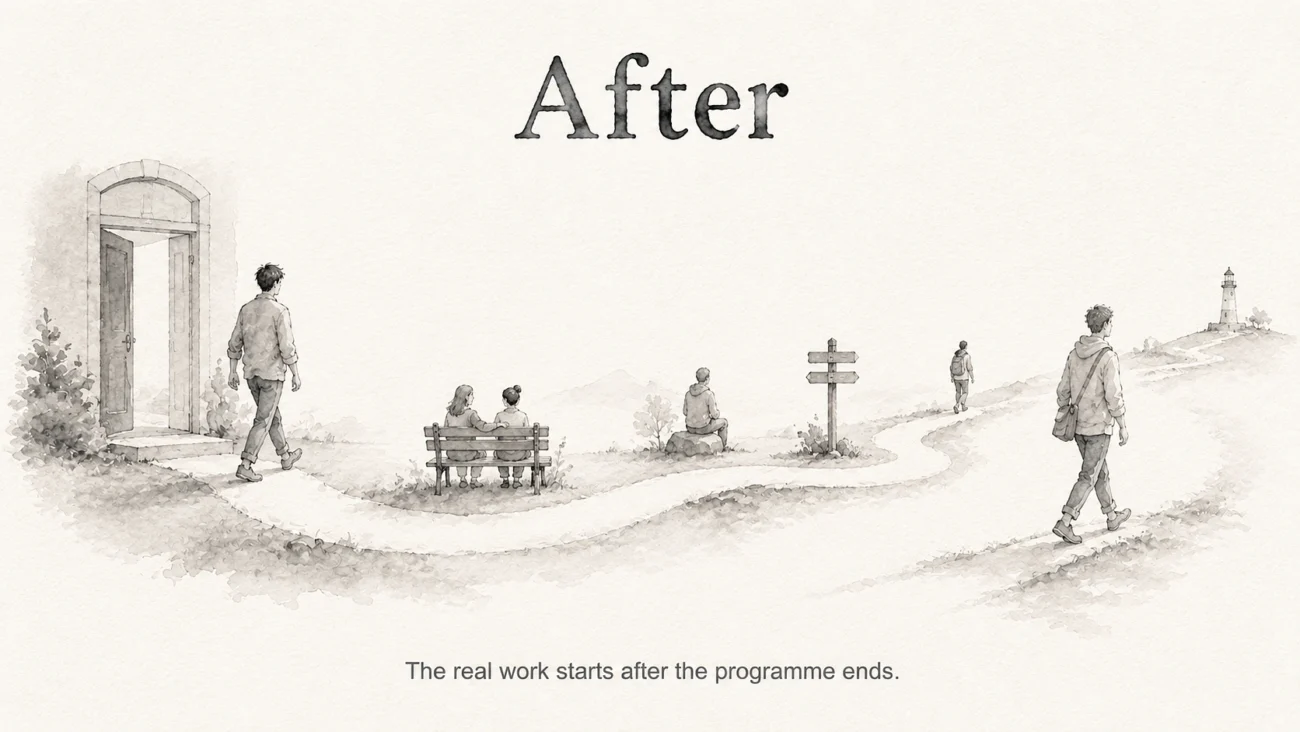
4. Where the real work happens is after the programme ends
The bit of the treatment journey that gets the least attention is also the bit that determines whether everything else holds. Programmes can do good work, sometimes excellent work, while somebody is inside the structure of them. What happens in the eighteen months after discharge is where the actual long-term outcome gets decided, and the better programmes design that into the experience from day one rather than tacking it on at the end.
Today’s post-treatment follow-up care has long diverged greatly from the traditional model. Formal post-operative care must meet five core requirements: gradually reducing follow-up frequency instead of ending contact abruptly, connecting patients to community support resources, developing clear response plans for symptom relapse, and maintaining continuous communication with at least some members of the original clinical team. At a United Nations conference held this September, clear requirements were issued that this type of stepped care must become a universal standard, rather than only serving as a value-added service exclusive to high-end groups. However, most countries have yet to meet this standard. Gaps in service provision within public healthcare systems have expanded the market space for private
medical institutions. Anyone planning to seek medical care for themselves or their family and friends must verify an institution’s post-operative care arrangements before finalizing any care program. Not the brochure version, the specific version. How often will check-ins happen, who runs them, what happens if you relapse six months out, and how long is the support window. The programmes that have good answers to those questions are the ones whose outcomes hold.
If you or somebody you know is in immediate distress, you don’t need to wait for a programme. The Samaritans are reachable on 116 123 in the UK and Republic of Ireland, free, twenty-four hours a day. The 988 Suicide and Crisis Lifeline is available across the US. Crisis support exists in most countries and is usually the right first call.