

Blog
How regular plumbing checks save you money

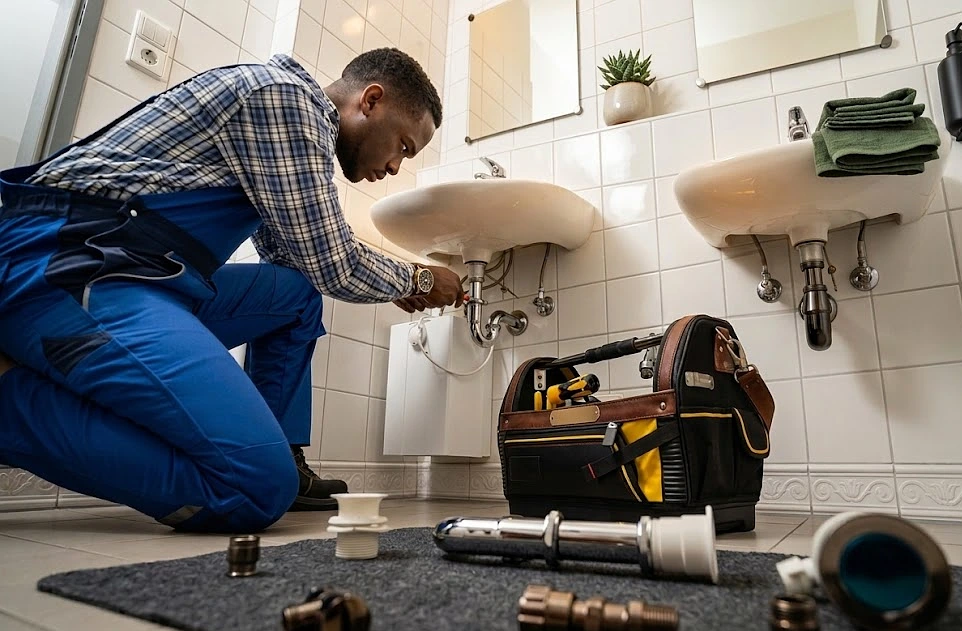
One in ten homes has leaks wasting at least 90 gallons of water a day, according to the EPA. That’s not dripping — that’s flooding in slow motion. And most of it is happening somewhere you can’t see. Turn off every tap and water-using appliance, then go look at your water metre. If it’s still moving, you’ve got a leak. Three minutes, costs nothing, tells you more than most initial inspections would.
Toilets waste more than people expect
A running toilet — the kind where the cistern keeps trickling — can burn through 200 gallons a day. You won’t hear it doing it. Drop food colouring in the cistern tank and leave it for 15 minutes without flushing. Colour in the bowl? The flapper valve is going and needs replacing. That’s it. The whole check takes less time than making tea.
Hard water damage
London, the South East, the Midlands — limescale builds silently inside pipes for years before it shows up as weak shower pressure or worse. By the time you notice, it’s already restricted the flow significantly. A plumber working in these areas should be descaling as part of any routine visit, not waiting to be asked. If yours isn’t mentioning it, ask.
Video inspection — feeding a camera through the pipework — is now standard practice and saves opening walls unnecessarily. For older cast iron or clay pipes especially, it’s the difference between knowing what’s actually happening inside and guessing.
Where your stopcock is
Majority of the population truly does not know. It is normally beneath the sink in the kitchen or in the point of entry of the service pipe. When a pipe bursts, that is the first thing you switch off – and the first time you come upon it with water streaming through a ceiling is not the time. Test it now, and see that it has not caught hold (old ones do), and be sure that everybody in the house knows where it is.
Catching things early costs less
Actual statistics on this. Early detection and repair of a weak joint in a pipe or a small leak can reduce repair fees by half to two-thirds when compared to allowing the issue to escalate. The more a slow leak is able to run behind a wall the more it is doing damp, mould, softened timber, and ultimately structural damage. The repair call doesn’t get cheaper as time passes.
Pre-1970s properties
The lead or iron work used in houses constructed prior to the 1970s is frequently patched temporarily at different places instead of being replaced. Here, inspections are more important. A professional can spot the point where an old fix might start to fail, and recommend partial re-piping – doing the most stressed parts first, not the entire house at once, which will keep the costs affordable.
Choosing someone reliable
Gas Safe registration is non-negotiable if the job touches anything near your boiler. Beyond that, WaterSafe approval and membership of the Chartered Institute of Plumbing and Heating Engineering are both genuine indicators of proper training in the UK. When reading reviews, the useful information isn’t in the five-star ones — it’s in how the company responded when something went wrong.