

Blog
Guide To Some Upcoming 2026 UK Poker Tournaments

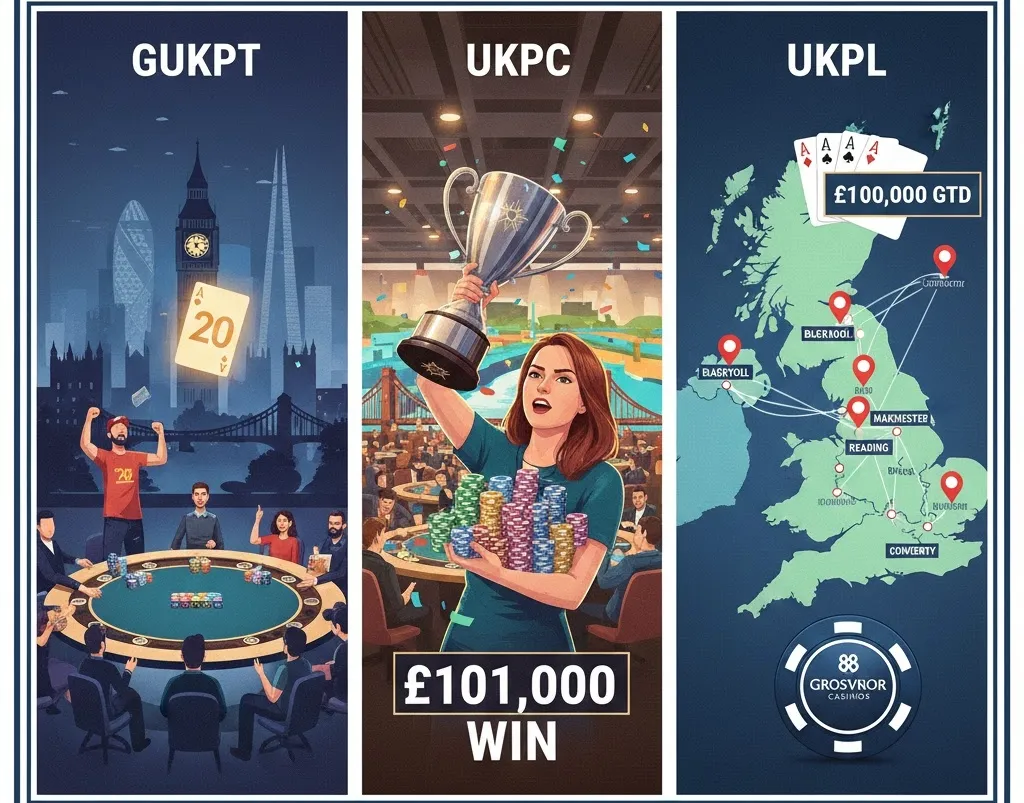
UK live poker has more going on in 2026 than it’s had in years. Grosvenor’s GUKPT is hitting its 20th season — twenty years running the same tour, which is mad when you think about how many poker brands have come and gone in that time. The UKPC at Dusk Till Dawn just wrapped its January festival with over 1,100 entries. And 888poker’s UKPL is back for a third season across five English cities.
Between all three circuits, Main Event guarantees alone clear £8 million. Side events push that comfortably toward eight figures. If you’re someone who likes to play popular online poker tournaments and satellite into live stuff, or you’d rather just rock up to a casino and buy in directly, there’s a route into basically every event on this list.
Here’s what’s confirmed.
GUKPT Season 20
The Grosvenor UK Poker Tour has been running since 2007. Praz Bansi won the very first one in Bolton for £75,000 off a £1,050 entry. The tour has barely missed a year since. Season 20 brings nine legs, plus three big standalone festivals — the UK Open, the Goliath, and the Behemoth.
One change this year: Edinburgh’s out, Glasgow’s in. First time the GUKPT has visited Glasgow in its entire history.
| Event | Dates | Venue | Buy-in | Guarantee |
|---|---|---|---|---|
| Leg 1 | 8–18 Jan | Victoria Casino, London | £1,250 | £250,000 |
| UK Open | 5–15 Feb | Coventry | £1,500 | £1,000,000 |
| Leg 2 | 26 Feb–8 Mar | Manchester Bury New Road | £1,250 | £250,000 |
| Leg 3 | 9–19 Apr | Victoria Casino, London | £1,250 | £250,000 |
| Leg 4 | 14–24 May | Luton | £1,250 | £250,000 |
| Goliath | 23 Jul–2 Aug | Coventry | £200 | ~£2,000,000 |
| Leg 5 | 13–23 Aug | Glasgow | £1,000 | £200,000 |
| Leg 6 | 3–13 Sep | Luton | £1,250 | £250,000 |
| Leg 7 | 24 Sep–4 Oct | Leeds | £1,250 | £250,000 |
| Leg 8 | 29 Oct–8 Nov | Blackpool | £1,250 | £250,000 |
| Grand Final | 19–29 Nov | Victoria Casino, London | £2,000 | £500,000 |
| Behemoth | 7–13 Dec | Coventry | £300 | £250,000 |
The Goliath deserves its own mention. £200 entry, roughly £2 million in the pool. Paul Worsley took last year’s edition and turned that £200 into £316,640. It’s consistently one of the biggest-field tournaments in Europe, and the buy-in means you don’t need to remortgage anything to have a crack at it.
New side events for 2026 include G300 tournaments (£300, £100,000 guaranteed) and G200s (£200, £50,000 guaranteed) running alongside the main legs. Grosvenor also overhauled the National Poker League — there’s now a Low Roller League for players sticking to events at £300 and under, with up to £5,000 in prizes for top finishers.
Satellites start at £1 on the Grosvenor platform. You win live event credit that works at any GUKPT stop.
UK Poker Championships
The UKPC ran January 17–26 at Dusk Till Dawn in Nottingham, with GGPoker backing it. The £560 Main Event had a £500,000 guarantee, drew 1,159 entries, and built a pool of £556,320.
Hong Pham won it. She came into Day 3 sitting on about nine big blinds — properly short — and ground her way through the field to take the title and £101,000. First female UKPC Main Event champion. Haydn Dickinson finished runner-up for £63,000.
DTD typically runs multiple UKPC festivals per year. The UKPC Masters, usually in May, features a £1,100 Main Event with a £1,000,000 guarantee. Exact 2026 dates haven’t dropped yet but DTD’s site will have them when they’re confirmed.
GGPoker’s satellite structure for UKPC events is genuinely good value. You can start at £0.01 and step through £5.50 and £55 stages into a £560 seat. They also run an online Day 1 — you play the opening from home on GGPoker, survive the levels, and only travel to Nottingham for Day 2 onward. Considering the Main Event just paid six figures at the top, that’s a serious return on a penny entry.
All UK poker operators, including GGPoker and Grosvenor, hold licences regulated by the Gambling Commission. If you’re curious about how UK gambling licensing and local authority guidance works behind the scenes, the Commission publishes everything publicly.
888poker UKPL
Third year running for the UK Poker League, jointly sponsored by 888poker and Grosvenor Casinos. Five stops across England between February and November, each with a £560 Main Event and a £100,000 guarantee. In 2025 the tour generated over £1.7 million in total prize pools across all events, so the format clearly pulls numbers.
| Stop | Venue | Main Event | GTD |
|---|---|---|---|
| Luton | Grosvenor Luton | £560 | £100,000 |
| Blackpool | Grosvenor Blackpool | £560 | £100,000 |
| Reading South | Grosvenor Reading | £560 | £100,000 |
| Manchester | Grosvenor Manchester | £560 | £100,000 |
| Coventry (Finale) | Grosvenor Coventry | £560 | £100,000 |
The league kicks off 17 February in Luton and wraps up 15 November in Coventry. Cash finishes across UKPL events earn National Poker League points, so there’s a season-long incentive beyond the individual prize pools.
888poker’s main LIVE tour also hits the UK twice — Glasgow in March (£1,100 Main, 12–22 March) and London at the Victoria Casino in October (8–18 October). Qualifiers for everything run on 888poker.com.
How to Get In Cheap
Every circuit runs satellites. That’s genuinely the smartest way to play any of these unless your bankroll comfortably handles four-figure buy-ins.
- GUKPT: £1 satellites on the Grosvenor platform. Win live event credit, use it at any stop on the tour. The credit doesn’t expire quickly either.
- UKPC: GGPoker steps from £0.01 up through £5.50 and £55 into the £560 Main. Online Day 1s mean you don’t spend money travelling unless you actually make it through.
- UKPL: 888poker runs qualifiers including freeroll routes where completing tournament challenges earns you a Main Event seat worth £560. Grosvenor venues also run live satellites during each festival.
Direct buy-ins at the casino desk are always an option. Cash or card at most venues.
Quick Bit on Tournaments vs Cash
If you’re planning which events to target, it helps to know the distinction. Tournaments have a fixed buy-in, rising blinds, and one objective — be the last one standing. Your downside is capped at whatever you paid to enter. Your upside is potentially massive. Hong Pham just proved that: £560 in, £101,000 out.
Cash games run at every festival alongside the tournaments. No rising blinds, no eliminations. Each chip is actual money and you leave whenever you want. It’s individual-hand poker, more grinding than glory. Plenty of players do both in the same trip — play a tournament during the day, sit cash in the evening.
Getting There
- Nottingham (DTD): Nottingham station has direct trains from London, Manchester, and Liverpool. East Midlands Airport is about 25 minutes by taxi. The QMC tram stop is a 10-minute walk from Dusk Till Dawn.
- London (Victoria Casino): Edgware Road tube. Central London, easy to reach from anywhere.
- Coventry, Luton, Manchester, Blackpool, Leeds, Glasgow: All Grosvenor venues sit near city centres with decent transport links.
- Accommodation: MainEventTravel.com is the official travel partner for both GUKPT and UKPC, and they sort hotel packages near each venue.
- ID: 18+ with valid photo ID at every UK venue. No exceptions.
The three events to circle if you can only pick a few: the Grosvenor UK Open in February (£1.5K entry, £1M guaranteed), the Goliath in July (£200 entry, ~£2M pool — that value is absurd), and the GUKPT Grand Final in November (£2K entry, £500K guaranteed). Between those and everything else running, there’s barely a week in 2026 without a decent tournament somewhere in the country.