

Blog
The Dental Goo Tray Is Dying Out, and Anyone Who Ever Had Braces Will Not Mourn It

Everyone who grew up with British orthodontics carries the same memory. The tray of cold pink putty, loaded like a builder’s trowel, pushed up against your teeth while a cheerful voice said “nearly done” at least four minutes before it was true. You sat there fighting your own throat, eyes watering, gripping the chair, while the alginate set at whatever speed it fancied. Then the pull, that awful suction pop, and the discovery that some of it was still in there somewhere, to be found at dinner.
That tray is quietly disappearing from dentistry, and its replacement is one of those rare technology stories where every single person involved is happier.
Science Finally Confirmed the Tray Was the Villain
The lovely thing about researching this piece is finding out how much formal effort has gone into proving what every child in the waiting room already knew. The clinical literature on alginate impressions lists the charges plainly, gag reflex, patient anxiety and discomfort, plus the practical sins, the moulds distort, the plaster models chip, and storing thousands of them fills actual rooms.
- And the detail worth keeping from all of it: a study running through early 2025 fitted children with heart rate and oxygen monitors during impressions, formally measuring whether the goo tray frightens them. Researchers with sensors, proving the putty was scary. Every eight year old could have saved them the funding.
The gag reflex finding matters beyond comedy though, because for plenty of people, children especially, that reflex made basic dental records genuinely distressing, and a treatment that starts with distress is a treatment people avoid booking.
The Replacement Is a Wand, and Watching It Work Is Half the Point
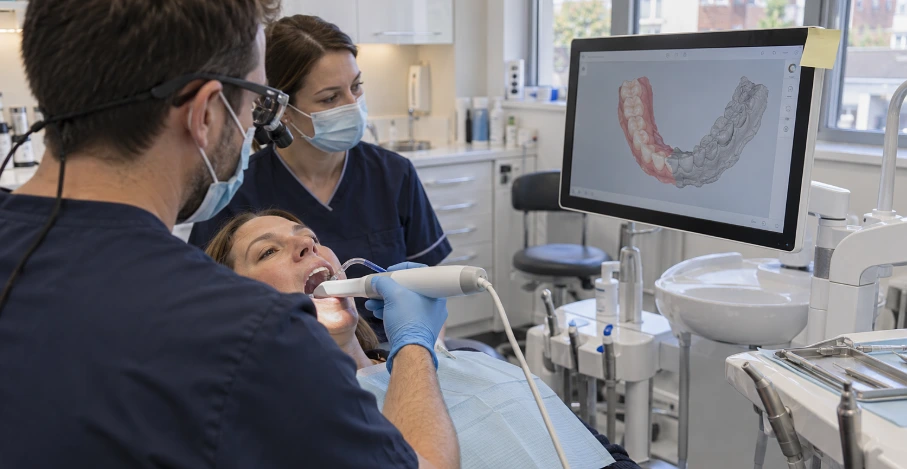
What killed the tray is the intraoral scanner, a small camera wand the dentist moves around your mouth while a full three dimensional model of your teeth builds itself on a screen in front of you, a complete arch in roughly 2 to 5 minutes, with no putty involved and nothing left to fight your throat over. Patients in the comfort studies preferred it for the obvious reason, and dentists gained something too, since a digital model never warps in a delivery van or chips on a shelf, and the industry’s own figures claim remake rates fell from several percent to under one, a number worth taking as the trade’s claim rather than gospel, but the direction of it rings true.
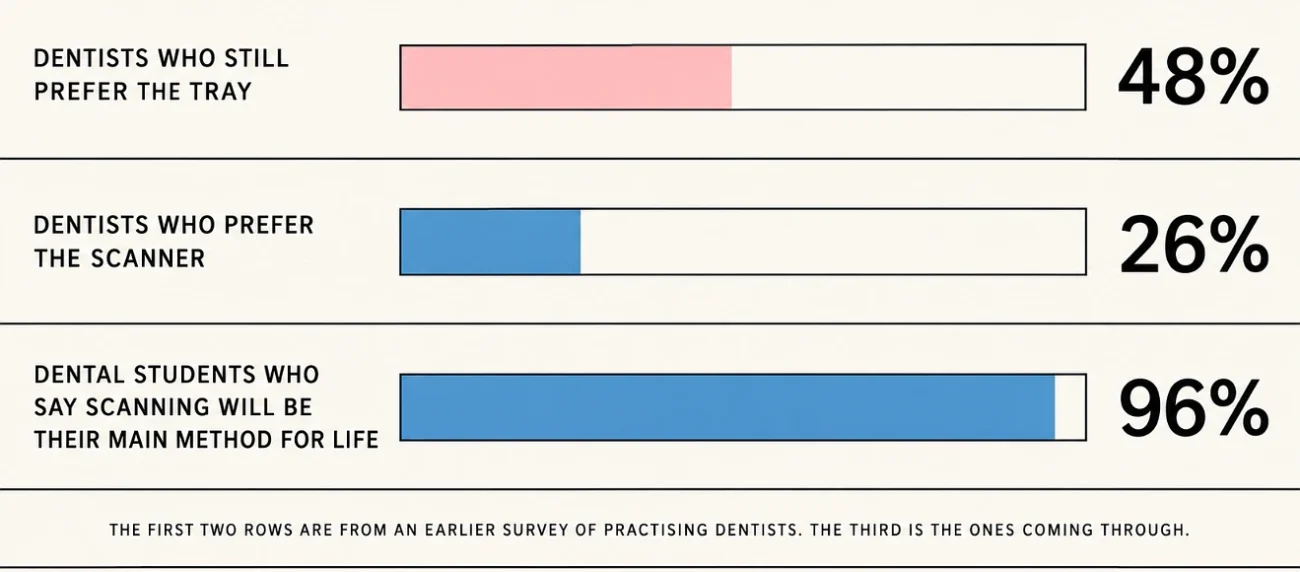
Adoption tells a generational story. Surveys in recent years put scanner use at around half of dentists and climbing, while one earlier study found 48% of practising dentists still preferred their trusty trays against just 26% backing the scanner, the machines cost real money and the learning curve is real. But ask the ones coming through, and the argument is already over, 96% of dental students in one study said scanning would be their main technique for their entire careers. The putty is simply being outlived rather than argued away.
The Rest of the Surgery Went Digital While No One Was Looking
Walk into a well equipped practice now and the scanner is just the start of it. Dental images appear on a screen seconds after they are taken instead of film being held up against a lightbox, panoramic imaging photographs the whole jaw in one sweep, some surgeries use an operating microscope for fiddly root canal work, and the cosmetic side has smile design software that can show a digital preview of what veneers or straightening might produce. One honest caution belongs with that last one, because a preview is a planning aid and the real teeth and gums get the final vote, so a practice presenting the picture as a guarantee deserves some suspicion.
Even the hygienist’s corner modernised, with air and powder systems now doing much of the polishing work that used to be pure scraping. Two warnings from the professional literature deserve passing on here because people genuinely do both things. Reading your own scans or dental images and self-diagnosing from them leads confidently to wrong conclusions, normal anatomy looks alarming to the untrained eye. And scraping your own tartar at home with metal tools, which the internet cheerfully demonstrates, damages enamel and gums for the sake of a job a hygienist does safely in minutes.
Has all this kit actually changed how people choose a dentist?
Noticeably, yes, and in a very modern way. Dental care gets researched like a purchase now, someone typing dentist in Hornsey into a phone tonight will scroll practice pages listing scanners and digital imaging the way car listings mention parking sensors, and the kit list has quietly become part of how surgeries compete for the next generation of patients, the same generation that remembers the putty and would rather not meet it again.
None of it replaces the human parts, since a scan still needs a dentist to read it and a plan still needs judgement, while the job of calming a nervous patient has never once been managed by a machine. But the direction only runs one way. The goo tray had a fifty year reign built entirely on there being no alternative, the alternative arrived, and somewhere in a supplier’s warehouse the last boxes of alginate are waiting for the older dentists to retire. Few pieces of medical kit will be buried with fewer tears.