

Blog
The Most Common Title Issues Buyers Are Discovering in 2026

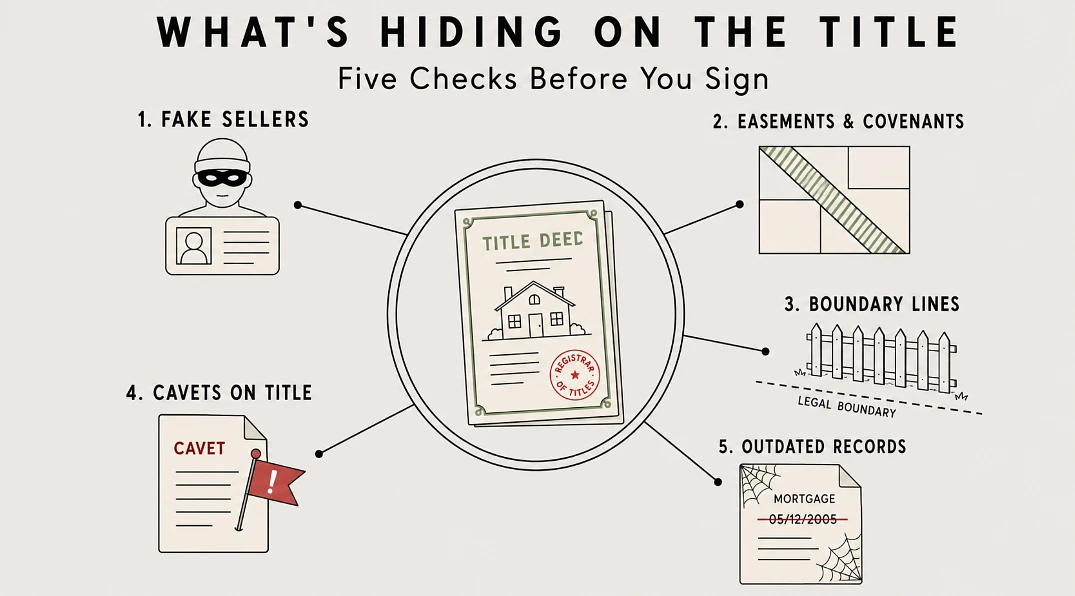
House hunting is already stressful enough when you’re just dealing with high prices and packed auctions. But lately, buyers are getting blindsided by a completely different set of obstacles. Hidden legal traps, sneaky title restrictions, and sophisticated identity fraud are causing major headaches long before the settlement date.
And the timing couldn’t be worse. With the ABS reporting the national housing market at a record $12.3 trillion, the financial risk of buying a home has never been greater. At these prices, a simple mistake on a property title can easily blow out into massive legal bills, severe delays, or ruin the purchase completely.
That’s why checking a property’s legal title is now just as essential as doing a building or pest inspection. Between hidden easements, messy boundary disputes, and the rise of fake-seller scams, the risks are simply too high to ignore. To avoid a massive financial headache after you sign, here is exactly what you should check on a title before moving forward.
The Biggest Title Challenges Buyers Are Facing in 2026
Fake Seller Fraud Is Making Title Checks Crucial
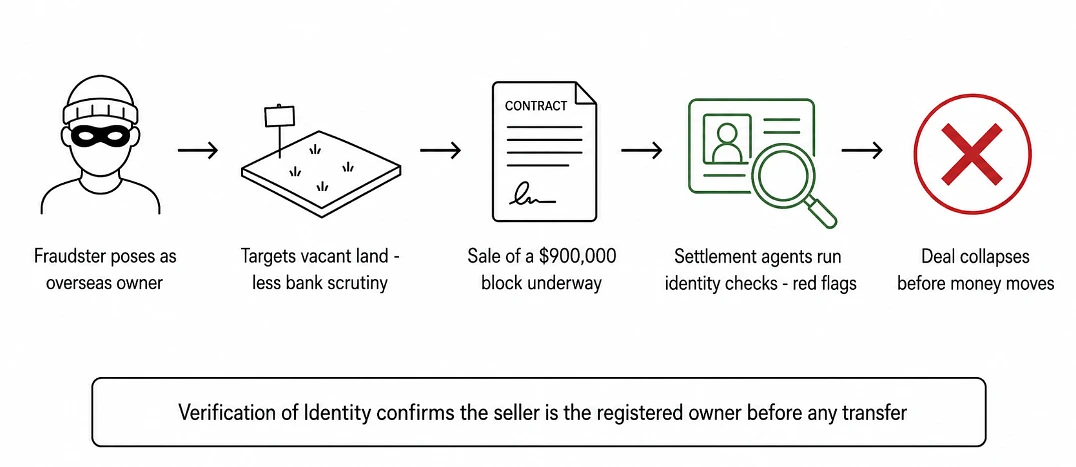
One of the scariest threats facing property buyers in 2026 is the rise of fake seller scams. Criminals are becoming incredibly bold with identity fraud. In May 2026, WA authorities had to put out an urgent warning over a near-miss scam. A fraudster pretended to be an overseas owner and actually tried to sell a $900,000 block of land in Yanchep out from under the original possessor.
The deal only fell through because sharp settlement agents noticed red flags during the identity check.
Many buyers now realise that verifying legal ownership is just as vital as a building inspection. Scammers usually target vacant land because these sales face less scrutiny from banks.
To protect yourself, have your legal team perform rigorous Verification of Identity protocols. This confirms the seller is the registered owner before any money is actually transferred.
Easements and Covenants Ruining Renovation Plans
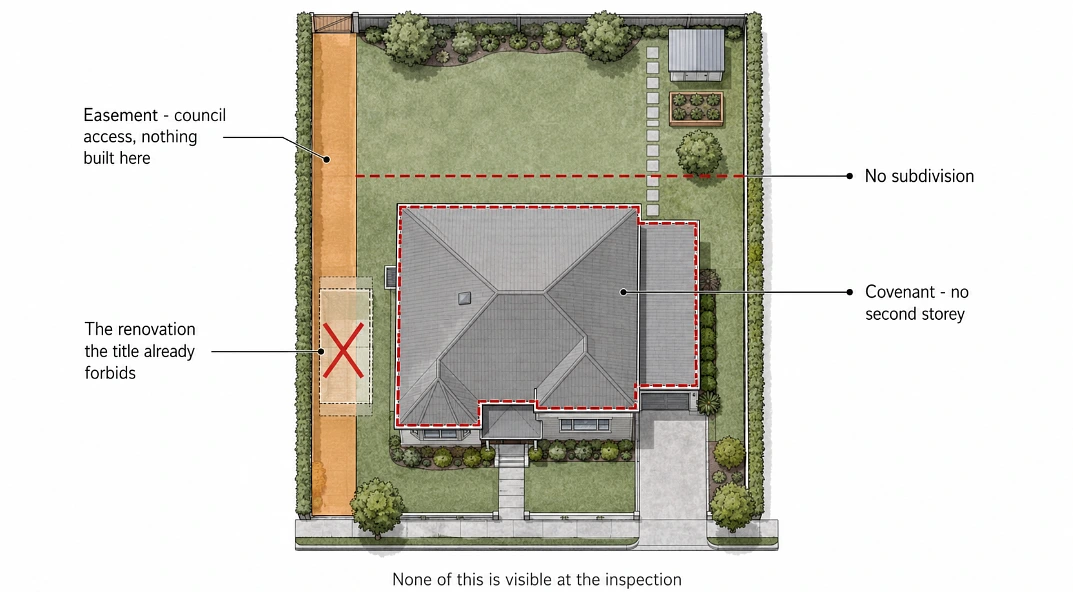
Sometimes the biggest catch with a property has nothing to do with who owns it. The real problem often lies in the hidden rules permanently attached to the block.
Recent easement disputes highlight why buyers cannot ignore title restrictions. Recent High Court proceedings have highlighted how long-standing land use arrangements can affect property rights through easement claims.
The case highlighted how access rights and historical agreements can continue to impact owners even years after a property changes hands.
An easement is a good example. It allows the local council or a neighbour to use a specific part of your land. Covenants may be even stricter. They limit what you may do with the property. For example, they may stop you from adding a second storey or subdividing the block. They can even prevent you from updating the front of your home.
You must never rely solely on the paperwork provided by the seller. Having your conveyancer conduct a land title search can reveal hidden easements, covenants and other registered interests before you commit your hard-earned deposit.
Boundary Errors and Misleading Fence Lines
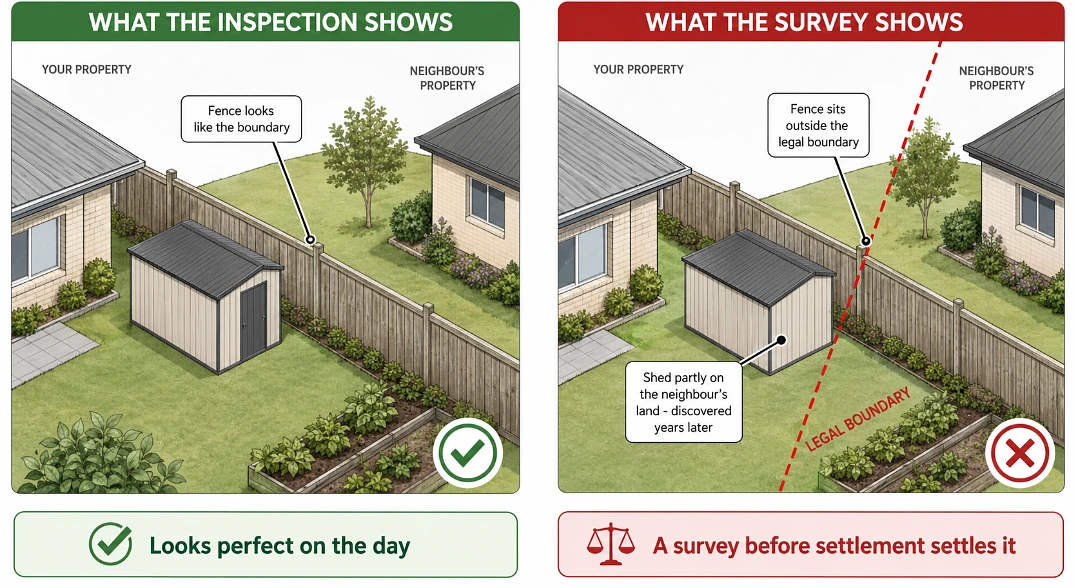
A property might look perfect during an inspection. Nonetheless, fence lines are often misleading. It’s pretty much common for older fences, garages, or retaining walls to sit slightly outside the legal property boundary. Most purchasers never notice the problem. It usually comes to light years later when they renovate, redevelop the block, or get a land survey done.
Discovering that a new shed is actually sitting on the neighbour’s land can lead to expensive and messy legal fights. It is much safer to confirm the exact boundaries through a professional survey before settlement. Relying on an old fence as the source of truth is simply too risky in today’s market.
Surprise Caveats Stalling Settlements
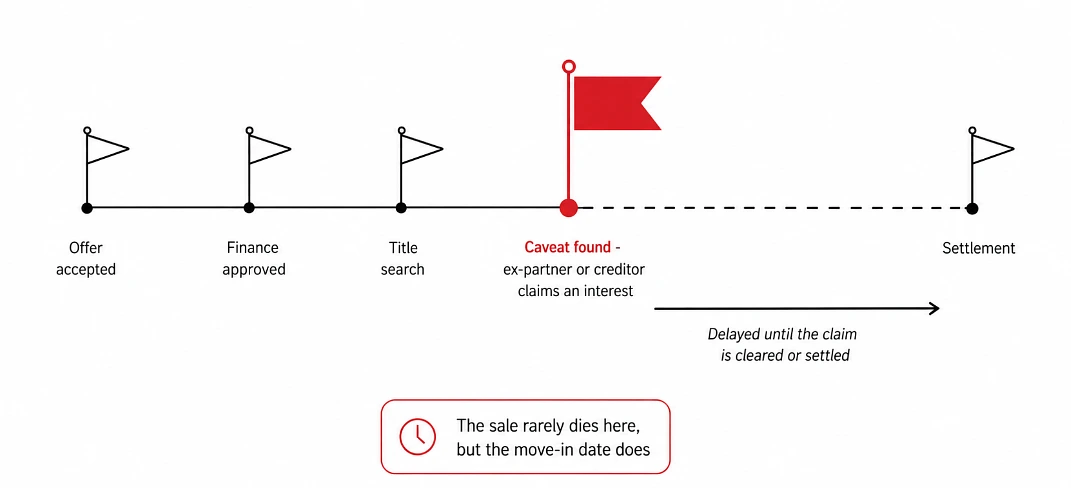
You might think a property sale is a done deal until a surprise caveat appears on the title. These are essentially legal warnings indicating that someone else, such as an ex-partner or a disgruntled creditor, asserts a claim to the property. While it does not always kill the sale, it will definitely stall your plans.
Recent caveat disputes show how a title warning can create uncertainty around ownership. In Western Australia, a court challenge involving a caveat lodged over a farm property highlighted how disputed claims can delay or complicate property transactions until legal issues are resolved.
Buyers are finding these more often lately in the middle of messy divorces or unpaid debt arguments. You simply can’t take ownership until the claim is totally cleared or settled. Catching such issues early gives you a much clearer idea of whether your move-in date is actually realistic or likely to be pushed back.
Outdated Paperwork Causing Last-Minute Stress
Sometimes the biggest holdup isn’t a scam but just a messy piece of outdated paperwork. It is surprisingly common to find titles that still list mortgages paid off years ago.
These administrative glitches can stall your settlement while government offices move slowly to fix the records. It may swiftly turn an exciting milestone into a stressful one. A title check offers the chance to deal with such roadblocks early, instead of scrambling to fix them just before settlement.
Closing Thoughts
Don’t rely on appearances alone. A land title search, along with other essential due diligence checks, can help you understand exactly what you’re buying before you commit. Make it a priority before signing the contract.