

Blog
The One Designer Piece Rule Every Modern Home Should Follow: The Minimum Luxury Principle

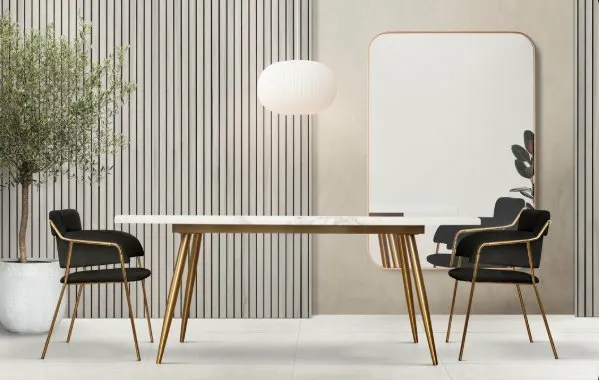
Most homes don’t feel wrong. They feel random. A sofa bought on sale. A rug that “kind of worked.” A side table added later. Nothing is terrible. But nothing truly leads the room either. In modern interior design, this is where the minimum luxury rule comes in.
Sometimes, all it takes to make your home unique is a Henge Light Ring hanging from the ceiling, or a Fiam Echo sideboard to store your shoes. It’s no secret that designer furniture has character and presence. And a designer item isn’t just something you put in a room. It’s something sought-after, something artisanal, something designed over time by a well-known artist.
What Is the Minimum Luxury Rule?
The minimum luxury rule is a recognized principle in interior design that states: Every home needs at least one intentional, high-quality designer piece to create structure, hierarchy, and identity. Not ten expensive items. Not a showroom aesthetic. Just one strong anchor. Because direction beats accumulation. The minimum luxury rule is not about spending more.
It’s about choosing better. In interior design, professionals often rely on one dominant piece to:
- Create a visual hierarchy
- Establish proportion
- Set the emotional tone of the room
- Reduce visual clutter
- Anchor the layout
When one element leads, everything else follows.
That’s why minimalist homes often feel complete. There is usually one strong focal point doing the heavy lifting.
Why One Designer Piece Changes Everything
- It Creates a Clear Focal Point: rooms need hierarchy. Without it, your eye keeps moving without landing anywhere. A statement sofa, sculptural lamp, or architectural sideboard gives the room a center of gravity. Suddenly, the space feels intentional.
- It Stops the Filler Furniture Trap: when a room feels unfinished, people compensate with extra cushions, small impulse side tables, decorative objects that don’t solve anything, trendy pieces that age quickly. This creates visual noise. A single designer anchor eliminates that urge. You buy with purpose instead of panic.
- It Upgrades Proportions Instantly: designer furniture is not just about branding. It’s about balanced geometry, material depth, negative space, structural clarity. These elements change how a room is perceived. An average apartment can feel architectural with one well-proportioned piece. That’s the real luxury.
- It Signals Taste Without Trying Too Hard: The minimum luxury rule is based on restraint. High-end pieces communicate through clean lines, tactile materials, refined finishes. It’s subtle. It’s controlled. It’s personal. And it never looks theatrical.
- It Moves Forever With You: people relocate more than ever. Most furniture doesn’t survive that transition. A well-designed piece adapts. It fits new layouts, new cities, new phases. It becomes continuity inside change. That’s long-term design thinking.
Where to Start: The Anchor Piece Strategy
If you’re applying the minimum luxury rule, start with one of these categories:
Sofa (Layout Setter): a sofa defines circulation, mood, and scale. A piece like the Westside Soft by Poliform establishes softness and structure at the same time.
Statement Armchair (Flexible Impact): Not ready for a full sofa commitment? A sculptural armchair such as the Cloudscape by Diesel with Moroso creates presence without dominating the room.
Quick Selection Checklist
Before buying your “one designer piece,” evaluate:
- Scale: Does the room still breathe?
- Comfort: Seat depth, arm height, back support matter.
- Material: Can you live with it daily?
- Longevity: Will it still work in 5 years?
If the answer is yes across the board, you’re aligned with the minimum luxury rule.
Lighting can embody the minimum luxury rule: one great lamp can upgrade a room more than multiple generic fixtures. Layer ambient, task, and accent light to add warmth, function, and depth. Think Campana by Edra above the table. Smart storage is just as powerful: a long, low sideboard removes clutter and gives the wall an architectural line. Choose pieces with precise closures and materials like wood, stone, or brushed metal. Even the entryway follows the same logic: a slim console like the Hanami by Gallotti&Radice creates order and sets the tone instantly.
The minimum luxury rule proves something simple: a room doesn’t need more objects. It needs direction. One intentional, well-designed piece can transform the way a space feels. Not louder. Not heavier. Just clearer. And clarity is what makes a modern home truly finished.