

Blog
Why Tai Chi Is Becoming One of the Most Popular Slow Fitness Trends in 2026

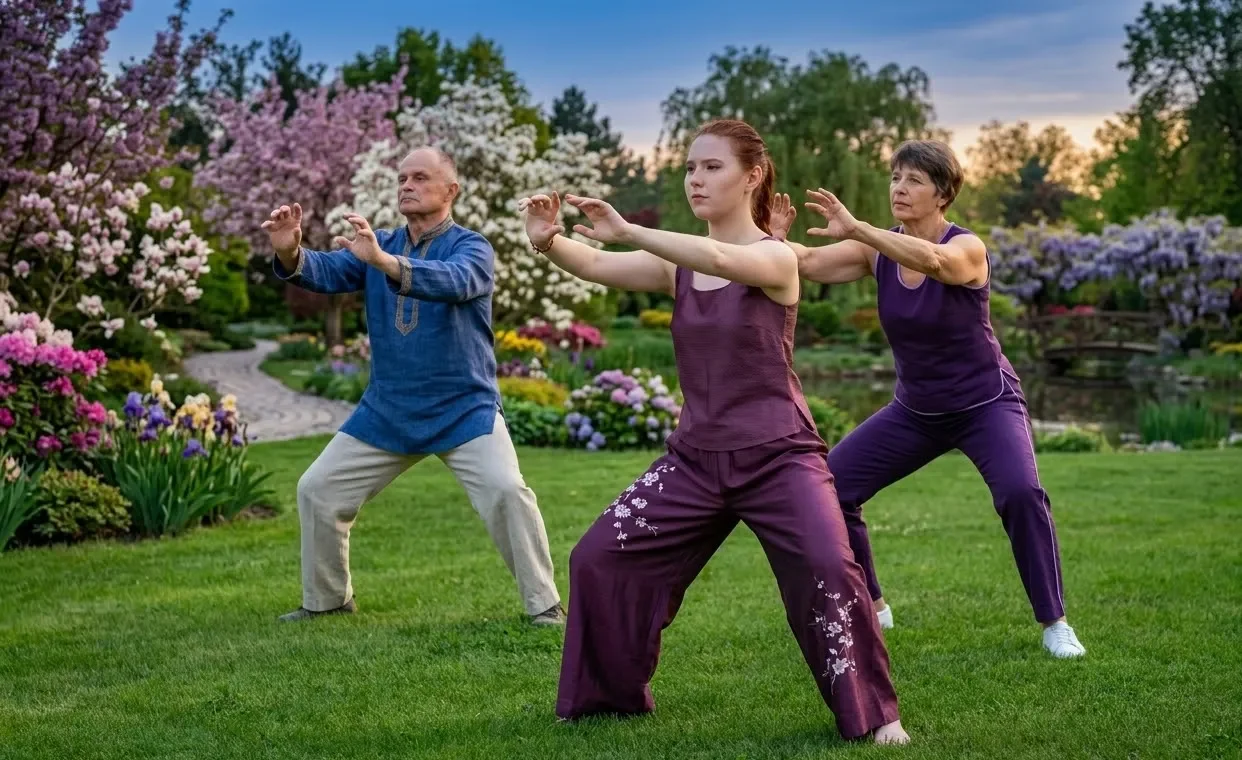
The ACSM’s 2026 fitness trends report, their 20th annual survey of 2,000 clinicians, researchers, and exercise professionals, put “Balance, Flow and Core Strength” in its top five for the year. That category covers yoga, pilates, barre, and tai chi. A few years ago, this stuff barely registered on the same list that was dominated by HIIT, wearables, and bodyweight training. Something shifted.
PureGym’s annual UK fitness report found that searches for “walking yoga” a blend of mindful walking and breathwork — jumped 2,414% in 2025. Japanese walking, a slow-fast interval walking method, grew nearly 3,000% in Google searches the same year. PureGym’s group marketing director James Gauduchon summed it up: people are moving away from super high-intensity workouts toward softer versions of fitness that consider the changing needs of their bodies and schedules.
Tai chi sits right in the middle of this wave. It’s not new, it’s centuries old. But it’s landing differently now because the fitness conversation around it has changed.
The Intensity Hangover
HIIT programs promised rapid results and delivered on cardiovascular conditioning. They also delivered something else: a lot of burned-out people. The “no pain, no gain” mentality pushed hard for years, and fitness culture embraced it completely. Competitive gym challenges, calorie-tracking obsession, performance metrics on every screen.
Then people started noticing they were exercising harder but not necessarily feeling better. Sleep quality suffered. Joints ached. Motivation tanked because sustaining that intensity week after week is genuinely exhausting for anyone who isn’t a professional athlete. One fitness industry analysis noted that the ‘no pain, no gain’ ethos has become a documented turn-off for younger generations and fuels feelings of “gymtimidation”.
A national survey found that 78% of exercisers now cite mental or emotional well-being as their top reason for working out, ahead of physical fitness or appearance goals. That’s a massive shift in motivation. When people exercise primarily for how it makes them feel rather than how it makes them look, the entire calculus of what “good exercise” means changes. Tai chi, which is essentially moving meditation, starts making a lot more sense.
What Tai Chi Is
It started as a martial art in China centuries ago. Yang Luchan popularised it during the 19th century, transforming internal martial arts into structured systems practiced for both self-defence and health. The movements are slow, continuous, and coordinated with breathing. You shift weight deliberately from one leg to another, rotate your torso, extend your arms in controlled arcs, all while maintaining a specific posture and staying mentally focused on what your body is doing.
It doesn’t look like exercise in any conventional sense. There’s no sweating, no panting, no visible strain. Someone watching from across a park might mistake it for slow-motion choreography. But the internal demand is real, balance, coordination, proprioception, controlled breathing, and sustained concentration for 20 to 45 minutes. Your muscles are working the entire time, just not in the way a squat rack demands.
Most people practise Yang style, which is the most common globally. Sun style is popular among older adults because the stances are higher and easier on the knees. The 24-form simplified tai chi, developed in China in the 1950s as a standardised version, is what most beginners learn.
The Research Is Substantial
This isn’t a wellness trend running on vibes. The evidence base for tai chi is genuinely large and growing.
The VA Evidence Synthesis Program published an updated evidence map in August 2025, reviewing 26 systematic reviews of tai chi and qigong from 2014 to 2024. Two reviews found high certainty of benefit, for hypertension and osteoporosis. Sixteen reviews found moderate certainty of benefit for chronic low back pain, diabetes, depression, falls, and knee osteoarthritis. No serious adverse events were generally reported across 69% of reviews that tracked them.
Falls prevention is where the data is strongest. A meta-analysis of 24 randomised controlled trials published in Frontiers in Public Health found that tai chi reduced the number of fallers by 24% (RR: 0.76). A separate randomised controlled trial from Portland, Oregon, 256 adults aged 70 to 92, found that the tai chi group had 55% lower risk of multiple falls compared to a stretching control group after six months. The tai chi group also had significantly fewer injurious falls (7% vs 18%).
A 2025 randomised controlled trial published in Scientific Reports tested 24-form tai chi on young adults and found improvements in alpha band brain wave power and physical fitness after 12 weeks, suggesting the cognitive benefits aren’t limited to older populations.
| Condition | Evidence Level | Source |
|---|---|---|
| Hypertension | High certainty of benefit | VA Evidence Map 2025 |
| Osteoporosis | High certainty of benefit | VA Evidence Map 2025 |
| Falls in older adults | 24% reduction in fallers | Frontiers meta-analysis, 24 RCTs |
| Chronic low back pain | Moderate certainty | VA Evidence Map 2025 |
| Depression | Moderate certainty | VA Evidence Map 2025 |
| Knee osteoarthritis | Moderate certainty | VA Evidence Map 2025 |
| Diabetes markers | Moderate certainty | VA Evidence Map 2025 |
Worth noting: tai chi isn’t being positioned as a cure for anything. The research frames it as a complementary practice that supports long-term quality of life. That distinction matters.
Parks, Not Gyms
One reason tai chi keeps spreading is that it requires absolutely nothing. No equipment. No membership. No special clothing. A patch of grass, a quiet corner of a park, a living room floor.
Early mornings in Hyde Park, Central Park, and public spaces across California and the Pacific Northwest regularly feature small groups moving through synchronised forms. These gatherings predate the current fitness trend by decades, Chinese communities in Western cities have been practising outdoor tai chi for generations. What’s changed is that younger, non-Chinese participants are joining in growing numbers, drawn by the mental health benefits and the appeal of exercise that doesn’t feel like punishment.
The social dimension is part of it too. Group tai chi in a park is a communal experience — strangers moving in sync, nobody competing, nobody performing. After COVID pushed people outdoors for exercise and made them rethink what physical activity meant to them, practices like tai chi that combine gentle movement with open-air community found a bigger audience than they’d had in years.
Why People Stick With It
Adherence is the unsexy metric that determines whether any exercise program actually works over time. You can have the most effective workout in the world, but if people quit after three months it doesn’t matter.
Tai chi has unusually high adherence rates. A critical analysis published in the Journal of Aging and Physical Activity found that 71-81% of community-dwelling older adults were adherent to class-based tai chi interventions, based on data from the Cochrane review. That’s substantially higher than most gym-based programs, which struggle with dropout rates especially after the initial enthusiasm fades.
The reasons are straightforward. Tai chi is low-impact, so it doesn’t produce the joint pain or fatigue that drives people away from higher-intensity programs. Progress is gradual and visible, better balance, smoother movement, calmer breathing, without requiring dramatic physical transformation. And because it works across age groups, people can start it at 35 and still be doing it at 75 without modification.
For anyone interested in understanding the philosophy and foundations of the practice more deeply, educational resources like Tai Chi Wuji offer structured introductions that connect traditional principles with practical training concepts, useful for beginners who want context alongside their first movements.
Where This Goes
The ACSM report for 2026 put “Fitness Programs for Older Adults” at number two on its trends list. As populations age globally and healthcare systems grapple with the cost of inactivity — estimated at $27 billion annually between 2020 and 2030, exercise that older adults will actually do consistently becomes more than a lifestyle preference. It becomes a public health priority.
Tai chi fits that need almost perfectly. Low injury risk. High adherence. Documented benefits for the conditions most associated with aging, falls, cognitive decline, joint pain, depression, hypertension. It can be practised alone or in groups, indoors or outdoors, with no financial barrier to entry.
The broader slow fitness movement isn’t replacing intense training. People who love lifting heavy or running hard aren’t going to stop. But the idea that exercise has to be painful or exhausting to be worthwhile is losing ground, and for a lot of people — especially those who gave up on fitness entirely because the intensity model didn’t work for them — tai chi is an entry point back in. Quiet, unhurried, no equipment, no competition. Just movement and breath, repeated until it becomes habit.